Kirjojen hintavertailu. Mukana 12 595 353 kirjaa ja 12 kauppaa.

Kirjailija

Matthew Moran

Kirjat ja teokset yhdessä paikassa: 10 kirjaa, julkaisuja vuosilta 2008-2025, suosituimpien joukossa Trust in Nuclear Disarmament Verification. Vertaile teosten hintoja ja tarkista saatavuus suomalaisista kirjakaupoista.

10 kirjaa

Kirjojen julkaisuhaarukka 2008-2025.

Coercing Syria on Chemical Weapons

Coercing Syria on Chemical Weapons

Matthew Moran; Wyn Q. Bowen; Jeffrey W. Knopf

OXFORD UNIVERSITY PRESS INC
2025
sidottu
In 2012, US President Barack Obama stated that Syrian government usage of chemical weapons on its population would cross a red line that would require the US government to reconsider its approach to the civil war then underway in Syria. Syria subsequently used such weapons, creating a policy dilemma for the United States about how to respond to Syrian President Bashar al-Assad's violation of the red line. In Coercing Syria on Chemical Weapons, Matthew Moran, Wyn Q. Bowen, and Jeffrey W. Knopf examine efforts by the United States, sometimes acting with France and the United Kingdom, to respond to Syria's possession and use of chemical weapons over the course of its civil war. In particular, they focus on US strategy, covering the presidencies of both Barack Obama and Donald Trump, which relied heavily on coercion involving both deterrent and compellent variants of that strategy. As the authors show, policies directed at the ruling Assad regime in Syria attempted to deter chemical weapons attacks and to compel Syria into giving up its chemical arsenal with mixed outcomes. Drawing on existing literature on deterrence and coercive diplomacy to identify three propositions--involving credibility, motivations, and assurances--the book explains the mixed record of coercive success and failure and examines how effective coercive strategies were at different points and why. Deriving lessons from the most significant attempt in the post-Cold War era to deter use of a weapon of mass destruction, this book offers theoretical and practical lessons for both security studies scholars and policymakers.
Coercing Syria on Chemical Weapons

Coercing Syria on Chemical Weapons

Matthew Moran; Wyn Q. Bowen; Jeffrey W. Knopf

OXFORD UNIVERSITY PRESS INC
2025
nidottu
In 2012, US President Barack Obama stated that Syrian government usage of chemical weapons on its population would cross a red line that would require the US government to reconsider its approach to the civil war then underway in Syria. Syria subsequently used such weapons, creating a policy dilemma for the United States about how to respond to Syrian President Bashar al-Assad's violation of the red line. In Coercing Syria on Chemical Weapons, Matthew Moran, Wyn Q. Bowen, and Jeffrey W. Knopf examine efforts by the United States, sometimes acting with France and the United Kingdom, to respond to Syria's possession and use of chemical weapons over the course of its civil war. In particular, they focus on US strategy, covering the presidencies of both Barack Obama and Donald Trump, which relied heavily on coercion involving both deterrent and compellent variants of that strategy. As the authors show, policies directed at the ruling Assad regime in Syria attempted to deter chemical weapons attacks and to compel Syria into giving up its chemical arsenal with mixed outcomes. Drawing on existing literature on deterrence and coercive diplomacy to identify three propositions--involving credibility, motivations, and assurances--the book explains the mixed record of coercive success and failure and examines how effective coercive strategies were at different points and why. Deriving lessons from the most significant attempt in the post-Cold War era to deter use of a weapon of mass destruction, this book offers theoretical and practical lessons for both security studies scholars and policymakers.
Trust in Nuclear Disarmament Verification

Trust in Nuclear Disarmament Verification

Wyn Q. Bowen; Hassan Elbahtimy; Christopher Hobbs; Matthew Moran

Springer International Publishing AG
2019
nidottu
This book explores how human factors, in particular the contested notion of trust, influence the conduct and practice of arms control verification. In the nuclear arena, disarmament verification is often viewed purely in terms of a dispassionate, scientific process. Yet this view is fundamentally flawed since the technical impossibility of 100 per cent verification opens the door to a host of complex issues and questions regarding the process and its outcomes. Central among these is the fact that those involved in any verification inspection process must inevitably conduct their work in a space that falls well short of absolute certainty. The lines between scientific enquiry and human psychology can become blurred and outcomes have the potential to be influenced by perceptions. Drawing on extensive empirical evidence, the authors explore the complex interplay between evidence-based judgements and perceptions of intentions that frames the science of verification. The book provides new insights into the role and influence of human factors in the verification process, shedding light on this ‘blind spot’ of verification research. It is an invaluable resource for practitioners, academics and students working in arms control and disarmament.
Trust in Nuclear Disarmament Verification

Trust in Nuclear Disarmament Verification

Wyn Q. Bowen; Hassan Elbahtimy; Matthew Moran

Springer International Publishing AG
2018
sidottu
This book explores how human factors, in particular the contested notion of trust, influence the conduct and practice of arms control verification. In the nuclear arena, disarmament verification is often viewed purely in terms of a dispassionate, scientific process. Yet this view is fundamentally flawed since the technical impossibility of 100 per cent verification opens the door to a host of complex issues and questions regarding the process and its outcomes. Central among these is the fact that those involved in any verification inspection process must inevitably conduct their work in a space that falls well short of absolute certainty. The lines between scientific enquiry and human psychology can become blurred and outcomes have the potential to be influenced by perceptions. Drawing on extensive empirical evidence, the authors explore the complex interplay between evidence-based judgements and perceptions of intentions that frames the science of verification. The book provides new insights into the role and influence of human factors in the verification process, shedding light on this ‘blind spot’ of verification research. It is an invaluable resource for practitioners, academics and students working in arms control and disarmament.
Living on the Edge

Living on the Edge

Wyn Bowen; Matthew Moran; Dina Esfandiary

Palgrave Macmillan
2016
sidottu
In this book, the authors explore the controversial Iranian nuclear programme through the conceptual lens of nuclear hedging. In 2002, revelations regarding undeclared nuclear facilities thrust Iran’s nuclear activities under the spotlight and prompted concerns that Tehran was pursuing nuclear weapons. Iran has always denied nuclear weapons aspirations, yet it cannot be disputed that the Islamic Republic has gone well beyond what is required for a civil nuclear programme based on energy production and scientific research. What, then, is the nature and significance of Iran's nuclear behaviour? Does it form part of a coherent strategy? What can Iran's actions in the nuclear field tell us about Tehran's intentions? And what does the Iranian case teach us about proliferation behaviour more generally? This book addresses these questions by exploring the nature of nuclear hedging and how this approach might be identified, before applying this logic to the Iranian case. It provides fresh insights into the inherently opaque area of nuclear proliferation and a more nuanced interpretation of the Iranian nuclear challenge.
Riots

Riots

Matthew Moran; David Waddington

Palgrave Macmillan
2015
sidottu
The past ten years have been marked by a series of high profile and heavily mediatised riots across the globe. From the overspill of racial tensions in Sydney to anti-police riots in London, democratic societies have witnessed powerful and costly outbursts of anger and violence. But what are the causes of these large-scale episodes of collective disorder? Do they share common features? And what can they tell us about the nature and significance of riots more broadly?In this book, the authors address these questions and more with a wide-ranging comparative study of rioting in five countries (Australia, England, France, Greece and the United States). Using a revised and expanded version of the Flashpoints Model of Public Disorder, Matthew Moran and David Waddington dissect these violent and ephemeral social phenomena, laying bare their internal logic and demonstrating the essentially political nature of riots.
Building Your I.T. Career

Building Your I.T. Career

Matthew Moran

Pearson IT Certification
2013
nidottu
Building Your I.T. Career A Complete Toolkit for a Dynamic Career in Any Economy Second Edition Break in. Move up. Earn more. Stay on top. Get the I.T. career edge you need right now! “They” say it’s tougher now to build a great career in I.T. “They” complain about outsourcing, cutbacks, and the tough economy. Don’t complain: act! Right this minute, outstanding I.T. jobs and careers are out there: You just have to know how to get them! This 100% I.T.-focused, up-to-the-minute toolkit delivers all the insider skills and insights you need to get your next great tech job now—and build lifelong success in the industry. It will help you plan your career, set achievable goals, organize them into practical action items, and make it happen! Totally updated for today’s newest hiring trends, Building Your I.T. Career, Second Edition is packed with examples from real I.T. pros and hiring decision-makers, it will help you get in, get promoted, get raises, and stay in demand—one easy step at a time! -- Focus on the I.T. careers you'll be happiest and most successful in -- Discover what opportunity looks like today—and how to take advantage of it -- Adopt the proactive attitudes associated with I.T. career success -- Master the personal communication skills you need to get a job—and succeed when you have it -- Develop more effective cover letters and resumes, and interview brilliantly -- Break in to I.T. for the first time -- Build your social media and offline networks, and use them to supercharge your job search -- Negotiate salary and employment agreements that get you what you deserve -- Learn (and do) what it takes to get promoted -- Take advantage of telecommuting and consulting options -- Move into management (if that's what you want) -- Use mentors and career coaches effectively -- Become a high-priced hourly consultant -- Gain the personal financial discipline that liberates you to choose your best career options -- Make yourself nearly indispensable
The Republic and the Riots

The Republic and the Riots

Matthew Moran

Peter Lang AG, Internationaler Verlag der Wissenschaften
2011
nidottu
In 2005, the deaths of two teenagers in Clichy-sous-Bois provoked three weeks of rioting in French banlieues. Cars were burned, buildings were damaged and young people clashed with the police in unprecedented scenes of violence. The government declared a state of emergency as the riots spread across France. Two years later, the French public were met with familiar images when riots broke out in the Parisian suburb of Villiers-le-Bel. What were the underlying causes of these episodes of extreme violence? What did the riots signify? What do they tell us about French society? This book takes the reader inside the world of the banlieues and explores the nature and causes of the riots. Drawing on qualitative fieldwork conducted in Villiers-le-Bel, the author offers a unique insight into the motivating factors behind the violence. On a larger scale, the book examines the relationship between the underprivileged suburbs and the French republican model. The author explores a triad of interconnections: between republican ideals and the reality of daily life in the banlieues; between national projections of unity and localized realities of disunity; and between figures of authority and ordinary citizens.
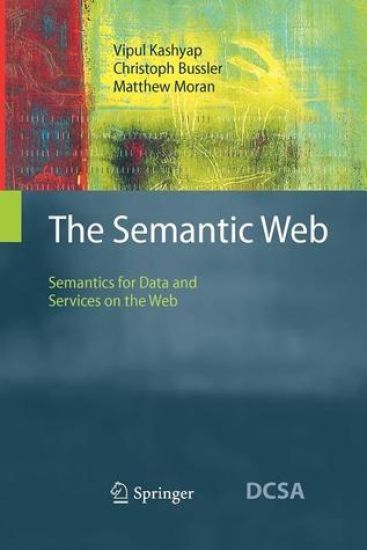
The Semantic Web

The Semantic Web

Vipul Kashyap; Christoph Bussler; Matthew Moran

Springer-Verlag Berlin and Heidelberg GmbH Co. K
2010
nidottu
A decade ago Tim Berners-Lee proposed an extraordinary vision: despite the p- nomenal success of the Web, it would not, and could not, reach its full potential unless it became a place where automated processes could participate as well as people. This meant the publication of documents and data to the web in such a way that they could be interpreted, integrated, aggregated and queried to reveal new connections and answer questions, rather than just browsed and searched. Many scoffed at this idea, interpreting the early emphasis on language design and reas- ing as AI in new clothes. This missed the point. The Grand Challenge of the Semantic Web is one that needs not only the information structure of ontologies, metadata, and data, but also the computational infrastructure of Web Services, P2P and Grid distributed computing and workflows. Consequently, it is a truly who- system and multi-disciplinary effort. This is also an initiative that has to be put into practice. That means a pragmatic approach to standards, tools, mechanisms and methodologies, and real, challenging examples. It would seem self-evident that the Semantic Web should be able to make a major contribution to clinical information discovery. Scientific commu- ties are ideal incubators: knowledge-driven, fragmented, diverse, a range of str- tured and unstructured resources with many disconnected suppliers and consumers of knowledge. Moreover, the clinicians and biosciences have embraced the notions of annotation and classification using ontologies for centuries, and have dema- ing requirements for trust, security, fidelity and expressivity.
The Semantic Web

The Semantic Web

Vipul Kashyap; Christoph Bussler; Matthew Moran

Springer-Verlag Berlin and Heidelberg GmbH Co. K
2008
sidottu
A decade ago Tim Berners-Lee proposed an extraordinary vision: despite the p- nomenal success of the Web, it would not, and could not, reach its full potential unless it became a place where automated processes could participate as well as people. This meant the publication of documents and data to the web in such a way that they could be interpreted, integrated, aggregated and queried to reveal new connections and answer questions, rather than just browsed and searched. Many scoffed at this idea, interpreting the early emphasis on language design and reas- ing as AI in new clothes. This missed the point. The Grand Challenge of the Semantic Web is one that needs not only the information structure of ontologies, metadata, and data, but also the computational infrastructure of Web Services, P2P and Grid distributed computing and workflows. Consequently, it is a truly who- system and multi-disciplinary effort. This is also an initiative that has to be put into practice. That means a pragmatic approach to standards, tools, mechanisms and methodologies, and real, challenging examples. It would seem self-evident that the Semantic Web should be able to make a major contribution to clinical information discovery. Scientific commu- ties are ideal incubators: knowledge-driven, fragmented, diverse, a range of str- tured and unstructured resources with many disconnected suppliers and consumers of knowledge. Moreover, the clinicians and biosciences have embraced the notions of annotation and classification using ontologies for centuries, and have dema- ing requirements for trust, security, fidelity and expressivity.