Kirjailija
Matthew Restall
Kirjat ja teokset yhdessä paikassa: 23 kirjaa, julkaisuja vuosilta 1999-2026, suosituimpien joukossa The Nine Lives of Christopher Columbus. Vertaile teosten hintoja ja tarkista saatavuus suomalaisista kirjakaupoista.
23 kirjaa
Kirjojen julkaisuhaarukka 1999-2026.
Christopher Columbus was born Cristoforo Colombo, in the autumn of 1451 in the Mediterranean port city of Genoa, and he died in the Spanish city of Valladolid in May 1506, as don Cristóbal Colón. More than five centuries later, we are still arguing over his life and its significance. Millions if not billions of people have learned his name. Most have some sense of what he did, that it was momentous, a great achievement, an act of primacy. But was his achievement “great” because he “discovered America” and thus made possible the hemisphere’s “great” nations? Or was it an apocalyptic catastrophe for tens of millions of Indigenous and African peoples? In The Nine Lives of Christopher Columbus, acclaimed historian Matthew Restall, perhaps the leading scholar of the Spanish Empire, presents a new, authoritative biography of Columbus, while at the same time tracing his many afterlives down into our own time. He explores the mysteries, many of them manufactured, that color our understanding of Columbus even in the twenty-first century—mysteries surrounding Columbus’s name, nationality, place of birth, ancestry, education, religion, intellectual vision, moral fiber, sexual proclivities, and current resting place. He shows how Columbus became an iconic American hero in the nineteenth century, and how a parallel hero emerged in the form of the Italian American Columbus. Restall takes us beyond polemic, sifting through the evidence across nations, languages, and five centuries to explore the many questions that make up what he calls “Columbiana.” He demonstrates that, far from a uniquely talented individual, Columbus was typical of the Iberian and northern Italian men of his day—a merchant mariner who became an explorer, slave-trader, and conquistador-settler. And Restall challenges the notion, deeply held to this day, that Columbus can be credited or blamed for all that happened after 1492. Whatever one’s views of Columbus, Restall’s book is the necessary, definitive account. It dispels the myths and gives us Columbus as he was. It shows how he has been distorted in the centuries since his death—and how we might come to understand him, and his legacies, anew.

Christopher Columbus, the Genoese navigator once considered a hero, is now blamed for bringing plunder and genocide to the Americas. In The Nine Lives of Christopher Columbus, Matthew Restall takes us beyond polemic, sifting through the evidence across nations, languages and five centuries to explore the central questions of Columbiana. He demonstrates that we know a great deal about Columbus’s life and that Columbus was not as remarkable as many have assumed—or as he himself believed. But his afterlives are another story: Restall narrates the international contest over Columbus’s bones and the dozens of claims on his birthplace, examines how he became a hero and more. The result is a kaleidoscopic account of a single man that becomes a new history of the modern world.
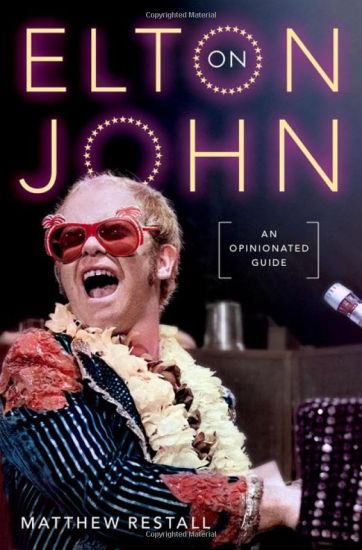
A lively and imaginative exploration of the career and music of the Rocket Man Elton John is not only "still standing," he is a living superlative, the ultimate record-breaking, award-winning survivor of the great era of pop and rock music that he helped to shape during his six decades in the music industry. Yet few of his numerous biographies and song guides take him as a historical subject worthy of scholarly study. In contrast, On Elton John approaches the artist seriously and analytically, while still couched in a highly accessible style. Author Matthew Restall offers a new way to explore Sir Elton's career and music within the contexts of other artists and of sweeping shifts in popular culture during his lifetime. Each of the ten chapters is anchored to an Elton song, rooted in its pop culture history, and advances a clear argument, pairing him with figures ranging from Bernie (Bernie Taupin, his lyricist) to Bennie (of the Jets), from "frenemy" David Bowie to artists like Rod Stewart, Aretha Franklin, and Dua Lipa, from Diana (the princess) to Jesus (yes, that one). Restall contends that Sir Elton's career offers us a novel way to see and understand the last half century of pop music and culture history--whether we call the era that of the album, of rock, of postmodernism, or of something else. The yellow brick road of Sir Elton's career has been long, winding, and bumpy, but, as Restall argues, his success has come not just despite but because of those challenges. The artist's transformations from Reg to Elton to Sir Elton to Uncle Elton, from ugly duckling to bedazzled swan, from the world's biggest rock star to creator of the world's largest AIDS fundraising organization, from tabloid punching bag to pop royalty, have all served as survival strategies that illuminate the era he has thereby navigated. A must-have for fans, On Elton John will appeal to a wide range of readers interested in music history, popular culture, and the social issues of our era.
Three music-obsessed, suburban London teenagers set out to make their own kind of pop music: Kate Bush became an overnight star, while success came to David Sylvian (and Japan), and to Mark Hollis (and Talk Talk) after years of struggle. But when their unique talents brought them international acclaim, they turned their backs on stardom. 'Just when I think I'm winning,' sang Sylvian on 'Ghosts,' a 1982 Japan hit, 'when my chance came to be king, the ghosts of my life grew wilder than the wind.' Haunted by doubt, spooked by fame, shocked by the industry's classism, sexism, and rapacity, Sylvian, Hollis, and Bush were driven to brave new destinations by multiple factors: creative originality and the inspiration of artists from every genre; the turmoil of personal relationships and inner psychological struggles. Along the way, as sacrifices were made - bands, friendships, marriages, the trappings of stardom - and experiments were pursued with dogged fearlessness, these musicians forged something new, changing how we hear pop music and the role of its creators in modern society. Ghosts uses the Sylvian, Hollis, and Bush journeys to define post-pop for the first time. Weaving together memoir, biography, musicology, cultural criticism, and history, the book shows how the story is both personal - as individual artists struggled with their own ghosts - and contextual, a larger history of pop music, popular culture, and the creative process itself. The post-pop story is about music and fame, ambition and fear, happiness and melancholy. As a journey from noise to silence, the journey to post-pop is ultimately about life itself.
The Friar and the Maya
Matthew Restall; Amara Solari; John F. Chuchiak; Traci Ardren
University Press of Colorado
2023
pokkari
The Friar and the Maya offers a full study and new translation of the Relación de las Cosas de Yucatán (Account of the Things of Yucatan) by a unique set of eminent scholars, created by them over more than a decade from the original manuscript held by the Real Academia de la Historia in Madrid. This critical and careful reading of the Account is long overdue in Maya studies and will forever change how this seminal text is understood and used. For generations, scholars used (and misused) the Account as the sole eyewitness insight into an ancient civilization. It is credited to the sixteenth-century Spanish Franciscan, monastic inquisitor, and bishop Diego de Landa, whose legacy is complex and contested. His extensive writings on Maya culture and history were lost in the seventeenth century, save for the fragment that is the Account, discovered in the nineteenth century, and accorded near-biblical status in the twentieth as the first “ethnography” of the Maya. However, the Account is not authored by Landa alone; it is a compilation of excerpts, many from writings by other Spaniards—a significant revelation made here for the first time. This new translation accurately reflects the style and vocabulary of the original manuscript. It is augmented by a monograph—comprising an introductory chapter, seven essays, and hundreds of notes—that describes, explains, and analyzes the life and times of Diego de Landa, the Account, and the role it has played in the development of modern Maya studies. The Friar and the Maya is an innovative presentation on an important and previously misunderstood primary source.
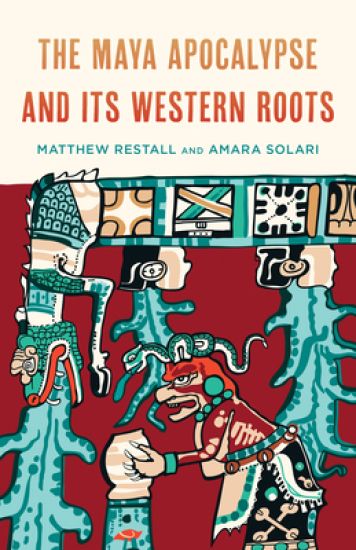
The Maya Apocalypse and Its Western Roots
Matthew Restall; Amara Solari
Rowman Littlefield
2021
nidottu
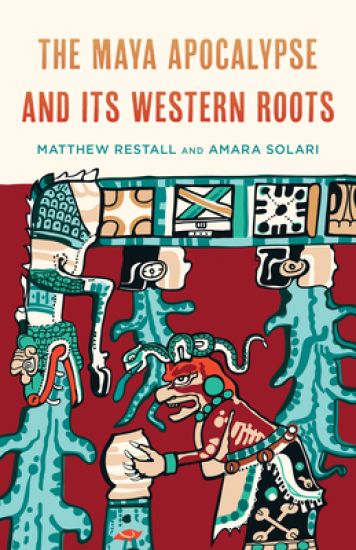
This fascinating history explores the cultural roots of our civilization’s obsession with the end of the world. Busting the myth of the ancient Maya prediction that time would end in 2012, Matthew Restall and Amara Solari build on their previous book, 2012 and the End of the World, to use the Maya case to connect such seemingly disparate historical events as medieval European millenarianism, Moctezuma’s welcome to Cortés, Franciscan missionizing in Mexico, prophetic traditions in Yucatan, and the growing belief today in conspiracies and apocalypses. In demystifying the 2012 phenomenon, the authors draw on their decades of scholarship to provide an accessible and engaging explanation of what Mayas and Aztecs really believed, how Judeo-Christian apocalypticism became part of the Indigenous Mesoamerican and modern American worlds, and why millions continue to anticipate an imminent Doomsday.
The Maya Apocalypse and Its Western Roots
Matthew Restall; Amara Solari
Rowman Littlefield
2021
sidottu
This fascinating history explores the cultural roots of our civilization’s obsession with the end of the world. Busting the myth of the ancient Maya prediction that time would end in 2012, Matthew Restall and Amara Solari build on their previous book, 2012 and the End of the World, to use the Maya case to connect such seemingly disparate historical events as medieval European millenarianism, Moctezuma’s welcome to Cortés, Franciscan missionizing in Mexico, prophetic traditions in Yucatan, and the growing belief today in conspiracies and apocalypses. In demystifying the 2012 phenomenon, the authors draw on their decades of scholarship to provide an accessible and engaging explanation of what Mayas and Aztecs really believed, how Judeo-Christian apocalypticism became part of the Indigenous Mesoamerican and modern American worlds, and why millions continue to anticipate an imminent Doomsday.
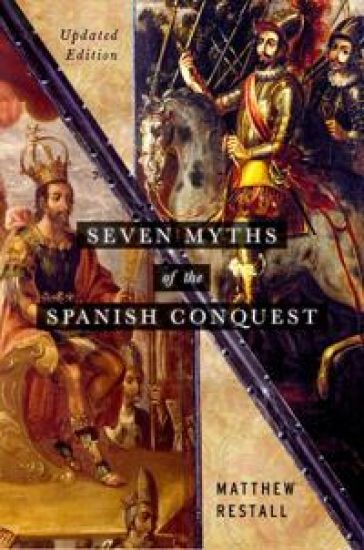
An update of a popular work that takes on the myths of the Spanish Conquest of the Americas, featuring a new afterword. Seven Myths of the Spanish Conquest reveals how the Spanish invasions in the Americas have been conceived and presented, misrepresented and misunderstood, in the five centuries since Columbus first crossed the Atlantic. This book is a unique and provocative synthesis of ideas and themes that were for generations debated or perpetuated without question in academic and popular circles. The 2003 edition became the foundation stone of a scholarly turn since called The New Conquest History. Each of the book's seven chapters describes one "myth," or one aspect of the Conquest that has been distorted or misrepresented, examines its roots, and explodes its fallacies and misconceptions. Using a wide array of primary and secondary sources, written in a scholarly but readable style, Seven Myths of the Spanish Conquest explains why Columbus did not set out to prove the world was round, the conquistadors were not soldiers, the native Americans did not take them for gods, Cortés did not have a unique vision of conquest procedure, and handfuls of vastly outnumbered Spaniards did not bring down great empires with stunning rapidity. Conquest realities were more complex--and far more fascinating--than conventional histories have related, and they featured a more diverse cast of protagonists-Spanish, Native American, and African. This updated edition of a key event in the history of the Americas critically examines the book's arguments, how they have held up, and why they prompted the rise of a New Conquest History.
The Maya forged one of the greatest societies in the history of the ancient Americas — and in all of human history. Long before contact with Europeans, Maya communities built spectacular cities with large, well-fed large populations. They mastered the visual arts, and developed a sophisticated writing system that recorded extraordinary knowledge in calendrics, mathematics, and astronomy. The Maya achieved all this without area-wide centralized control. There was never a single, unified Maya state or empire, but always numerous, evolving ethnic groups speaking dozens of distinct Mayan languages. The people we call "Maya" never thought of themselves as such; yet something definable, unique, and endlessly fascinating - what we call Maya culture - has clearly existed for millennia. So what was their self-identity and how did Maya civilization come to be "invented?" With the Maya historically subdivided and misunderstood in so many ways, the pursuit of what made them "the Maya" is all the more important. In this Very Short Introduction, Restall and Solari explore the themes of Maya identity, city-state political culture, art and architecture, the Maya concept of the cosmos, and the Maya experience of contact with — including invasion by — outsiders. Despite its brevity, this book is unique for its treatment of all periods of Maya civilization, from its origins to the present.
By 1976, Elton John was the best-selling recording artist and the highest-grossing touring act in the world. With seven #1 albums in a row and a reputation as a riveting piano-pounding performer, the former Reggie Dwight had gone with dazzling speed from the London suburbs to the pinnacles of rock stardom, his songs never leaving the charts, his sold-out shows packed with adoring fans. Then he released Blue Moves, and it all came crashing down.Was the commercially disappointing and poorly reviewed double album to blame? Can one album shoot down a star? No, argues Matthew Restall; Blue Moves is a four-sided masterpiece, as fantastic as Captain Fantastic, as colorful as Goodbye Yellow Brick Road, a showcase for the three elements--piano-playing troubadour, full orchestra, rock band--with which Elton John and his collaborators redirected the evolution of popular music. Instead, both album and career were derailed by a perfect storm of circumstances: Elton’s decisions to stop touring and start his own label; the turbulent shiftings of popular culture in the punk era; the minefield of attitudes toward celebrity and sexuality. The closer we get to Blue Moves, the better we understand the world into which it was born--and vice versa. Might that be true of all albums?
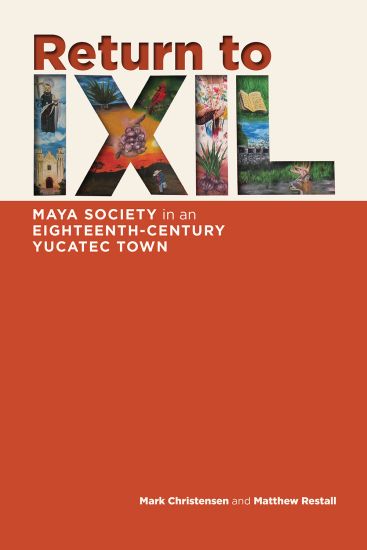
Return to Ixil is an examination of over 100 colonial-era Maya wills from the Yucatec town of Ixil, presented together and studied fully for the first time. These testaments make up the most significant corpus of Maya-language documents from the colonial period. Offering an unprecedented picture of material and spiritual life in Ixil from 1738 to 1779, they are rare and rich sources for the study of Maya culture and history. Supplemented with additional archival research, the wills provide new and detailed descriptions of various aspects of life in eighteenth-century Ixil. In each chapter, authors Mark Christensen and Matthew Restall examine a different dimension of Ixil’s colonial history, including the role of notaries, Maya participation in a coastal militia, economy and modes of production, religious life and records, and the structures and patterns of familial relationships. These details offer insight into the complex network of societies in colonial Yucatan, colonial Mesoamerica, and colonial Latin America. Including an appendix presenting the original Maya texts as well as translations by Christensen and Restall, Return to Ixil not only analyzes the largest body of substantive wills in any Mayan language known today but also provides a rare closeup view of the inner workings of a colonial Maya town and the communal and familial affairs that made up a large part of the Maya colonial experience. It will be of great interest to Mayanists as well as to students and scholars of history, anthropology, ethnohistory, linguistics, and social history. The publication of this book is supported in part byBrigham Young University and Penn State University.
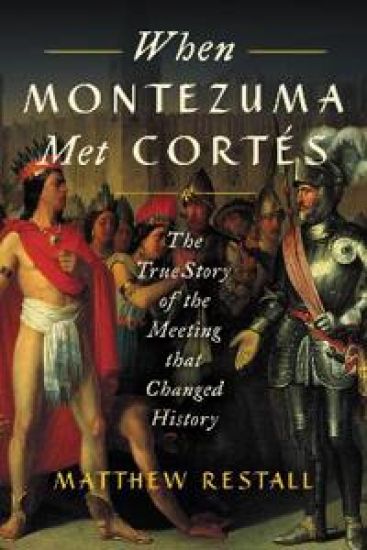
A dramatic rethinking of the encounter between Montezuma and Hernando Cortés that completely overturns what we know about the Spanish conquest of the AmericasOn November 8, 1519, the Spanish conquistador Hernando Cortés first met Montezuma, the Aztec emperor, at the entrance to the capital city of Tenochtitlan. This introduction—the prelude to the Spanish seizure of Mexico City and to European colonization of the mainland of the Americas—has long been the symbol of Cortés’s bold and brilliant military genius. Montezuma, on the other hand, is remembered as a coward who gave away a vast empire and touched off a wave of colonial invasions across the hemisphere.But is this really what happened? In a departure from traditional tellings, When Montezuma Met Cortés uses “the Meeting”—as Restall dubs their first encounter—as the entry point into a comprehensive reevaluation of both Cortés and Montezuma. Drawing on rare primary sources and overlooked accounts by conquistadors and Aztecs alike, Restall explores Cortés’s and Montezuma’s posthumous reputations, their achievements and failures, and the worlds in which they lived—leading, step by step, to a dramatic inversion of the old story. As Restall takes us through this sweeping, revisionist account of a pivotal moment in modern civilization, he calls into question our view of the history of the Americas, and, indeed, of history itself.
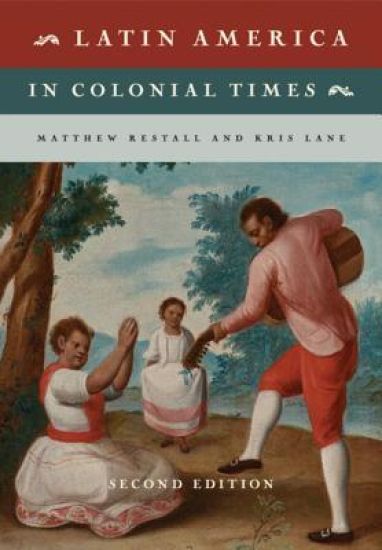
Few milestones in human history are as momentous as the meeting of three great civilizations on American soil in the sixteenth century. The fully revised textbook Latin America in Colonial Times presents that story in an engaging but informative new package, revealing how a new civilization and region - Latin America - emerged from that encounter. The authors give equal attention to the Spanish and Portuguese conquerors and settlers, to the African slaves they brought across the Atlantic, and to the indigenous peoples whose lands were invaded. From the dawn of empires in the fifteenth century, through the conquest age of the sixteenth and to the end of empire in the nineteenth, the book combines broad brushstrokes with anecdotal details that bring the era to life. This new edition incorporates the newest scholarship on Spain, Portugal, and Atlantic Africa, in addition to Latin America itself, with indigenous and African views and women's experiences and contributions to colonial society highlighted throughout.
On November 8th, 1519, the Spanish conquistador Hernando Cortés first met Montezuma, the Aztec emperor, at the entrance to the capital city of Tenochtitlan. This introduction—the prelude to the Spanish seizure of Mexico City and to European colonization of the mainland of the Americas—has long been the symbol of Cortés’s bold and brilliant military genius. Montezuma, on the other hand, is remembered as a coward who gave away a vast empire and touched off a wave of colonial invasions across the hemisphere. But is this really what happened? In a departure from traditional tellings, When Montezuma Met Cortés uses “the Meeting”—as Restall dubs their first encounter—as the entry point into a comprehensive reevaluation of both Cortés and Montezuma. Drawing on rare primary sources and overlooked accounts by conquistadors and Aztecs alike, Restall explores Cortés’ and Montezuma’s posthumous reputations, their achievements and failures, and the worlds in which they lived—leading, step by step, to a dramatic inversion of the old story. As Restall takes us through this sweeping, revisionist account of a pivotal moment in modern civilization, he calls into question our view of the history of the Americas, and indeed, of history itself.
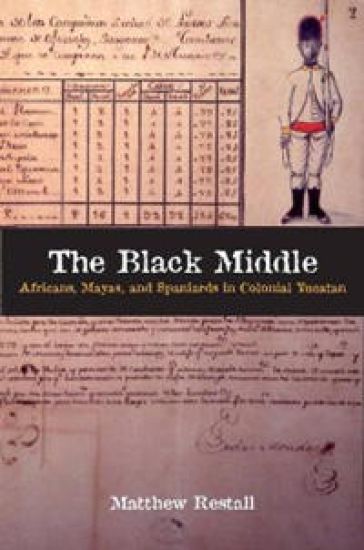
Winner of the Conference on Latin American History's 2010 Mexican History Book Prize. The Black Middle is the first full-length study of black African slaves and other people of African descent in the Spanish colonial province of Yucatan. Matthew Restall makes expert use of Spanish and Maya language documents from the sixteenth through the nineteenth centuries, found in a dozen different archives. His goal is to discover what life was like for a people hitherto ignored by historians. He explores such topics as slavery and freedom, militia service and family life, bigamy and witchcraft, and the ways in which Afro-Yucatecans (as he dubs them) interacted with Mayas and Spaniards. Restall concludes that, in numerous ways, Afro-Yucatecans lived and worked in a middle space between—but closely connected to—Mayas and Spaniards. The book's "black middle" thesis has profound implications for the study of Africans throughout the Americas.
The Conquistadors
Matthew Restall; Felipe Fernandez-Armesto
Oxford University Press Inc
2012
nidottu
With startling speed, Spanish conquistadors invaded hundreds of Native American kingdoms, took over the mighty empires of the Aztecs and Incas, and initiated an unprecedented redistribution of the world's resources and balance of power. They changed the course of history, but the myth they established was even stranger than their real achievements. This Very Short Introduction deploys the latest scholarship to shatter and replace the traditional narrative. Chapters explore New World civilizations prior to the invasions, the genesis of conquistador culture on both sides of the Atlantic, the roles black Africans and Native Americans played and the consequences of the invasions. The book reveals who the conquistadors were and what made their adventures possible. ABOUT THE SERIES: The Very Short Introductions series from Oxford University Press contains hundreds of titles in almost every subject area. These pocket-sized books are the perfect way to get ahead in a new subject quickly. Our expert authors combine facts, analysis, perspective, new ideas, and enthusiasm to make interesting and challenging topics highly readable.
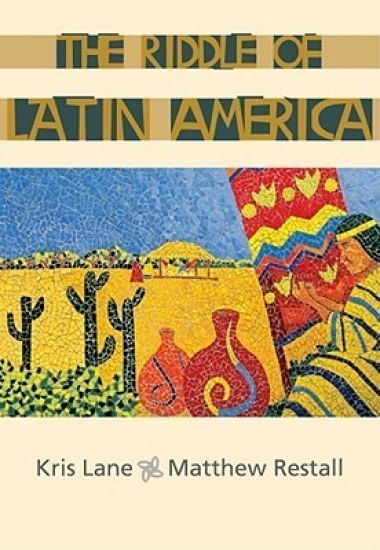
THE RIDDLE OF LATIN AMERICA explores the promise and paradox of Latin America in a novel way by giving equal weight to the colonial and national periods. This is essential because in Latin America colonialism started early and independence came late. The aim of this book is to provide unfamiliar readers with a more balanced, interpretive view of Latin America’s long and complex history by identifying key patterns and trends and tracing them across time and space. Within chapters THE RIDDLE OF LATIN AMERICA takes a regional rather than country-by-country approach, treating, for example, the Greater Caribbean, Mexico and Central America, the Andes, the Southern Cone, and Brazil.
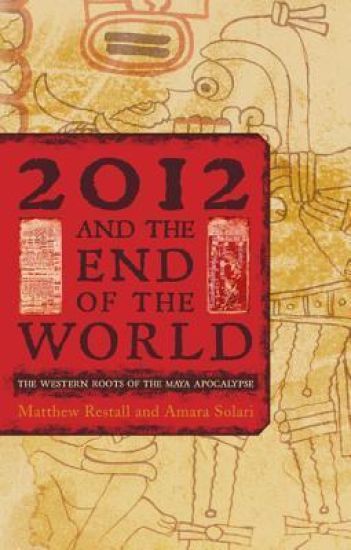
Did the Maya really predict that the world would end in December of 2012? If not, how and why has 2012 millenarianism gained such popular appeal? In this deeply knowledgeable book, two leading historians of the Maya answer these questions in a succinct, readable, and accessible style. Matthew Restall and Amara Solari introduce, explain, and ultimately demystify the 2012 phenomenon. They begin by briefly examining the evidence for the prediction of the world's end in ancient Maya texts and images, analyzing precisely what Maya priests did and did not prophesize. The authors then convincingly show how 2012 millenarianism has roots far in time and place from Maya cultural traditions, but in those of medieval and Early Modern Western Europe. Revelatory any myth-busting, while remaining firmly grounded in historical fact, this fascinating book will be essential reading as the countdown to December 21, 2012, begins.
Winner of the Conference on Latin American History's 2010 Mexican History Book Prize. The Black Middle is the first full-length study of black African slaves and other people of African descent in the Spanish colonial province of Yucatan. Matthew Restall makes expert use of Spanish and Maya language documents from the sixteenth through the nineteenth centuries, found in a dozen different archives. His goal is to discover what life was like for a people hitherto ignored by historians. He explores such topics as slavery and freedom, militia service and family life, bigamy and witchcraft, and the ways in which Afro-Yucatecans (as he dubs them) interacted with Mayas and Spaniards. Restall concludes that, in numerous ways, Afro-Yucatecans lived and worked in a middle space between—but closely connected to—Mayas and Spaniards. The book's "black middle" thesis has profound implications for the study of Africans throughout the Americas.