Kirjailija
Matthew Wilson
Kirjat ja teokset yhdessä paikassa: 37 kirjaa, julkaisuja vuosilta 2007-2024, suosituimpien joukossa Symbole in der Kunst (ART ESSENTIALS). Vertaile teosten hintoja ja tarkista saatavuus suomalaisista kirjakaupoista.
37 kirjaa
Kirjojen julkaisuhaarukka 2007-2024.

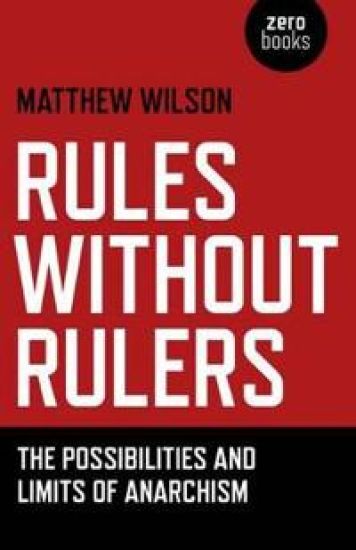
Rules Without Rulers – The Possibilities and Limits of Anarchism
Matthew Wilson
John Hunt Publishing
2014
nidottu
This book is about the possibility of organising society without the state, but, crucially, it makes the claim, contrary to much anarchist theory, that such a life would not entail absolute freedom; rather, as the title suggests, it would mean creating new forms of social organisation which, whilst offering more freedom than state-capitalism, would nonetheless still entail certain limits to freedom. In making this argument, a secondary point is made, which highlights the book's originality; namely, that, whilst anarchism is defended by an increasing number of radicals, the reality of what an anarchist society might look like, and the problems that such a society might encounter, are rarely discussed or acknowledged, either in academic or activist writings.


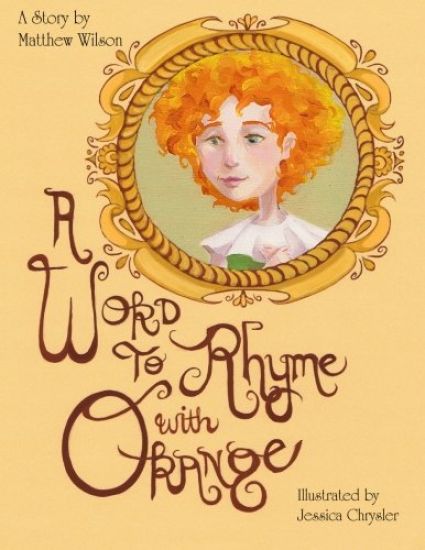
Suppose you live in a world where the only way to court a girl is to write her a rhyming poem, but the girl you're in love with has a name that doesn't rhyme with anything. What would you do if you had to find a new word? This is the plot of "A Word to Rhyme with Orange", a story told in rhyme with hand painted illustrations. A treat for fairy tale lovers of all ages.
A Handful of Fears Held Together By A Few Joys is a small collections of poems and short stories created over the course of the last four years of my life. The themes mostly include tragedy, recollection, understanding, struggle, resentment, and (of course) a few joyful scenarios. This collection was mainly published as a facet of personal reflection, but I feel the themes covered in the book may be more universal and relatable to a wider audience.
Paranormal Horror: An Anthology
Katanie Duarte; Matthew Wilson; Jenean McBrearty
Createspace Independent Publishing Platform
2012
nidottu
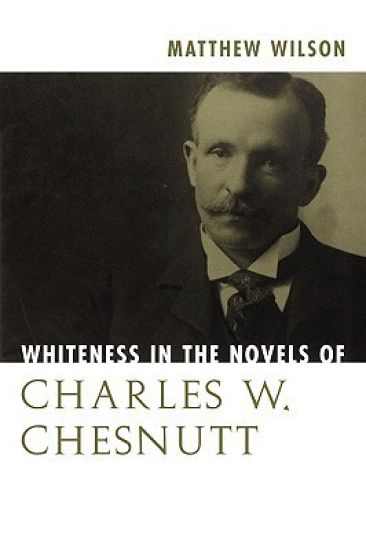
Whiteness in the Novels of Charles W. Chesnutt
Matthew Wilson
University Press of Mississippi
2009
nidottu
Charles W. Chesnutt (1858-1932), critically acclaimed for his novels, short stories, and essays, was one of the most ambitious and influential African American writers of the late nineteenth and early twentieth centuries. Today recognized as a major innovator of American fiction, Chesnutt is an important contributor to de-romanticizing trends in post-Civil War Southern literature, and a singular voice among turn-of-the-century realists who wrote about race in American life. Whiteness in the Novels of Charles W. Chesnutt is the first study to focus exclusively on Chesnutt's novels. Examining the three published in Chesnutt's lifetime-The House Behind the Cedars, The Marrow of Tradition, and The Colonel's Dream-as well as his posthumously published novels, this study explores the dilemma of a black writer who wrote primarily for a white audience. Throughout, Matthew Wilson analyzes the ways in which Chesnutt crafted narratives for his white readership and focuses on how he attempted to infiltrate and manipulate the feelings and convictions of that audience. Wilson pays close attention to the genres in which Chesnutt was working and also to the social and historical context of the novels. In articulating the development of Chesnutt's career, Wilson shows how Chesnutt's views on race evolved. By the end of his career, he felt that racial differences were not genetically inherent, but social constructions based on our background and upbringing. Finally, the book closely examines Chesnutt's unpublished manuscripts that did not deal with race. Even in these works, in which African Americans are only minor characters, Wilson finds Chesnutt engaged with the conundrum of race and reveals him as one of America's most significant writers on the subject. Matthew Wilson is a professor of humanities and writing at Penn State University, Harrisburg. He is the editor of Charles W. Chesnutt's Paul Marchand, F.M.C. (University Press of Mississippi).