
Kirjailija
Matthew Wright
Kirjat ja teokset yhdessä paikassa: 39 kirjaa, julkaisuja vuosilta 2001-2026, suosituimpien joukossa Fake-Checking. Vertaile teosten hintoja ja tarkista saatavuus suomalaisista kirjakaupoista.
39 kirjaa
Kirjojen julkaisuhaarukka 2001-2026.
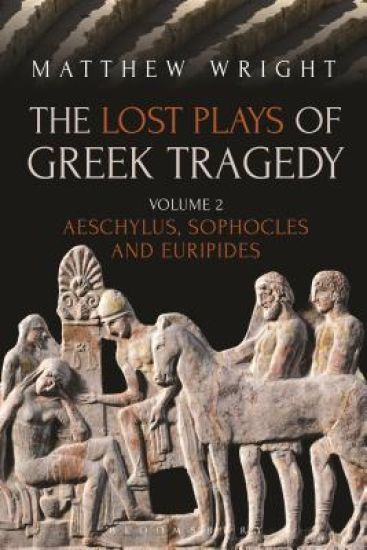
The surviving works of Aeschylus, Sophocles and Euripides have been familiar to readers and theatregoers for centuries; but these works are far outnumbered by their lost plays. Between them these authors wrote around two hundred tragedies, the fragmentary remains of which are utterly fascinating. In this, the second volume of a major new survey of the tragic genre, Matthew Wright offers an authoritative critical guide to the lost plays of the three best-known tragedians. (The other Greek tragedians and their work are discussed in Volume 1: Neglected Authors.) What can we learn about the lost plays of Aeschylus, Sophocles and Euripides from fragments and other types of evidence? How can we develop strategies or methodologies for ‘reading’ lost plays? Why were certain plays preserved and transmitted while others disappeared from view? Would we have a different impression of the work of these classic authors – or of Greek tragedy as a whole – if a different selection of plays had survived? This book answers such questions through a detailed study of the fragments in their historical and literary context. Making use of recent scholarly developments and new editions of the fragments, The Lost Plays of Greek Tragedy makes these works fully accessible for the first time.

The surviving works of Aeschylus, Sophocles and Euripides have been familiar to readers and theatregoers for centuries; but these works are far outnumbered by their lost plays. Between them these authors wrote around two hundred tragedies, the fragmentary remains of which are utterly fascinating. In this, the second volume of a major new survey of the tragic genre, Matthew Wright offers an authoritative critical guide to the lost plays of the three best-known tragedians. (The other Greek tragedians and their work are discussed in Volume 1: Neglected Authors.) What can we learn about the lost plays of Aeschylus, Sophocles and Euripides from fragments and other types of evidence? How can we develop strategies or methodologies for ‘reading’ lost plays? Why were certain plays preserved and transmitted while others disappeared from view? Would we have a different impression of the work of these classic authors – or of Greek tragedy as a whole – if a different selection of plays had survived? This book answers such questions through a detailed study of the fragments in their historical and literary context. Making use of recent scholarly developments and new editions of the fragments, The Lost Plays of Greek Tragedy makes these works fully accessible for the first time.
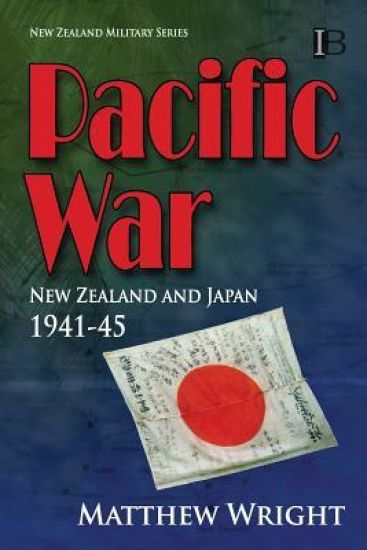
In December 1941, Japan attacked the British Empire and the United States, turning the European war that had raged since 1939 into a global conflict. For a few desperate months during early 1942, the Kiwis faced crisis. Australia had its own threat to face. Britain was stretched to the utmost against Germany, and the United States - with millions still unemployed - took time to turn its huge industry to war production.Despite heavy commitment to the European war, New Zealanders eventually fought the Japanese on land, sea and air, from Malaya to the Solomons and, finally, in Japanese home waters. Kiwis contributed in many other ways, providing bases and recreation facilities for US forces, food for the whole campaign, even sending physicists to work on the atomic bomb project.This book is an essential summary of that far-reaching effort - New Zealand's Pacific war.
Motivation and Productivity Guide: Find Methods for Self-Motivation, Time Planning, Goal Achieving and Personal Productivity
Matthew Wright
Createspace Independent Publishing Platform
2018
nidottu
Motivation occupies a front row seat in our minds most of the time. However, it is shocking to discover that we do not truly understand it. What does it mean to be motivated? What role does motivation play in achieving success? What difference would it make if I am not motivated? These questions frequently plague many people because it is imperative to first understand what motivation is.Motivation and Productivity Guide book discusses the relationship between motivation and productivity. "There is no productivity without proper motivation." Do you lack motivation and have no energy to accomplish anything despite so much of what is waiting for you?Matthew Wright's Golden guide to self-motivation and productivity reveals happiness as a key to having great productivity. With blunt honesty acting as a major tool in the production of this life-changing book. Wright reveals more than enough ways to "Be your own champion" with amazing story references made. One would be amazed at how far the right motivation can yield unexpected results to get us our set goals. This awesome piece will expose ways to become one of those happy, successful people who seem always enthusiastic and productive.
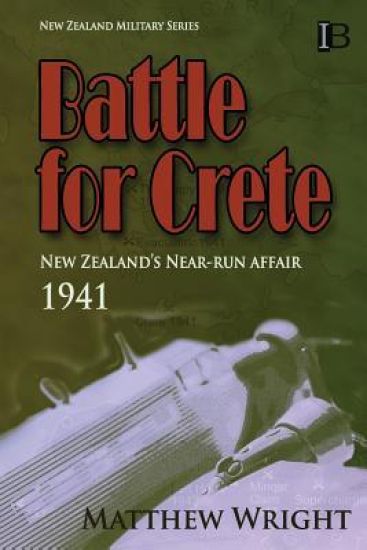
Confronting the might of the Luftwaffe New Zealand soldiers arrived in Crete during early May 1941, short of equipment after a hasty evacuation from Greece. Three weeks later Germany invaded from the air, and the fate of New Zealand's primary armed force lay in the balance on an island half a world away from home. Exactly why the island fell to German paratroop assault has prompted intense debate then and since. In this gripping account of New Zealand's part in the battle for Crete, Matthew Wright draws on a wide range of archival sources to refute criticism both of the calibre of the New Zealand forces and of decisions made by the man in charge of the defence, Major-General Bernard Freyberg.
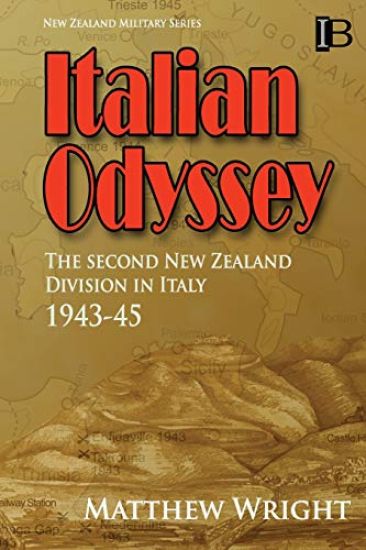
Italian Odyssey: The Second New Zealand Division in Italy 1943-45
Matthew Wright
Intruder Books
2018
nidottu
"Wright is one who has been able to place himself within the culture and sense the history...This new book is a worthy contribution to our understanding..."- Frank Glen, 'The Southland Times', 14 June 2003."Author Matthew Wright... has brought the Italian campaign alive. The book is as important as it is highly readable - so much better than the standard military histories".- Graeme Hunt, 'The National Business Review', 17 October 2003. In September 1943, the Second New Zealand Division landed in Italy, beginning a twenty month ground campaign that took the New Zealanders from Taranto to Trieste. It was dominated by the two-month siege of Cassino, a bitter struggle in the depths of winter that remains controversial even seventy years on.In this short account of the New Zealand part in the Italian campaign of the Second World War, historian Matthew Wright argues that Cassino was not the defeat it is often claimed to be. Adverse weather, the politics of the Anglo-American alliance, and sheer lack of numbers on the ground made it a difficult fight. Ultimately the question is not whether New Zealand failed - but how they achieved as much as they did under the circumstance.The real strengths of the New Zealand force- mobility and speed - were finally put to use in the last weeks of the war, when the division led the charge that shattered German positions in the Lombardy plain. In a three week blitzkrieg the New Zealanders broke the German line and surged into Trieste, ending the campaign with a flourish - and the first confrontation of the Cold War.
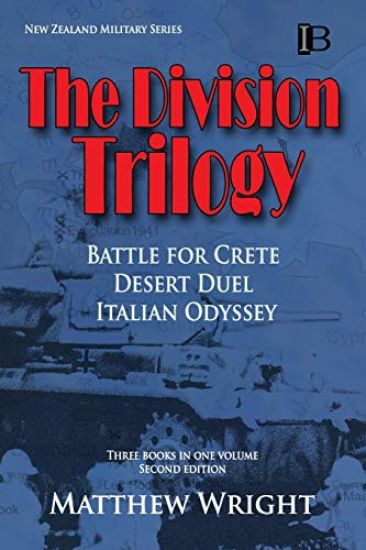
The Division Trilogy: The Second New Zealand Division 1940-45
Matthew Wright
Intruder Books
2018
nidottu
This omnibus volume brings 'Battle for Crete', 'Desert Duel' and 'Italian Odyssey' together in one binding - a trilogy that traces the story of the Second New Zealand Division during the Second World War. Their journey took them from Greece and Crete to Egypt, the Western Desert, Libya and Tunisia. And then, with the Eighth Army, they landed in Italy, fighting in the bitter siege of Cassino, but ending their war with a flourish in the race to Trieste, where the New Zealanders were in the first confrontation of the Cold War."Wright is one who has been able to place himself within the culture and sense the history...This new book is a worthy contribution to our understanding..."- Frank Glen, The Southland Times, 14 June 2003."Author Matthew Wright... has brought the Italian campaign alive. The book is as important as it is highly readable - so much better than the standard military histories".- Graeme Hunt, The National Business Review, 17 October 2003.
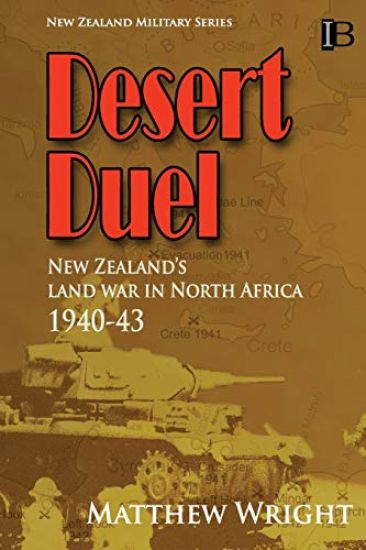
Desert Duel: New Zealand's Land War in North Africa, 1940-43
Matthew Wright
Intruder Books
2018
nidottu
For three years from 1940 the Second New Zealand Division, led by Lieutenant-General Sir Bernard Freyberg, fought in the North African desert against a combined German-Italian army and its formidable leader, Field-Marshal Erwin Rommel.Rommel regarded the Kiwis as the elite of the British army, and their General was officially classified as a 'dangerous opponent.' During the desperate months of mid-1942, the New Zealand Division was almost all that stood between Rommel and Egypt.It was a hard-fought campaign. Yet the North African campaign was also a human story. Ordinary New Zealanders from civilian walks of life - accountants, lawyers, plumbers, labourers, teachers, musicians, even politicians - found unexpected strength within themselves to meet the demands of the war.Their battlegrounds - Sidi Rezegh, Ruweisat Ridge, Mingar Qaim, El Alamein, Tebaga Gap and Takrouna - are also part of New Zealand's history. 'In the battle which is sure to come within a few days, the] outcome depends almost entirely upon Freyburg's sic] division and air support. New Zealand Division is by far the best fighting unit in the Middle East. Freyburg sic] is a very great leader of men, possessed of tremendous courage and sound judgement.'- US Army Forces in Middle East, official report, 27 June 1942The New Zealanders...are trained and led by General Freyberg, a dangerous opponent. They are specialists in night fighting, they fight on a wide front, and...have learnt to follow up closely under the heavy artillery barrages which they use...They are also capable, in difficult country, of fighting without tank support...- German staff assessment of 2 NZ Division
The Authority of the Church: Rediscovering the Power of the Holy Spirit
Matthew Wright
Independently Published
2018
nidottu
In the Gospels and the book of Acts we see miracle after miracle happening as they proclaim the Gospel but in today's age those miracles seem to be far off stories that happen few and far between. Why don't miracles happen more often? Why don't we see the power of God on a more regular basis? Matthew Wright attempts to answer this question by laying out the radical life mandated by Jesus in the Gospels. He breaks it down into three major steps, building a relationship with Jesus, going beyond the relationship, and living out the mission assigned to us.
Numerous books have been written about Greek tragedy, but almost all of them are concerned with the 32 plays that still survive. This book, by contrast, concentrates on the plays that no longer exist. Hundreds of tragedies were performed in Athens and further afield during the classical period, and even though nearly all are lost, a certain amount is known about them through fragments and other types of evidence. Matthew Wright offers an authoritative two-volume critical introduction and guide to the lost tragedies. This first volume examines the remains of works by playwrights such as Phrynichus, Agathon, Neophron, Critias, Astydamas, Chaeremon, and many others who have been forgotten or neglected. (Volume 2 explores the lost works of Aeschylus, Sophocles and Euripides.)What types of evidence exist for lost tragedies, and how might we approach this evidence? How did these plays become lost or incompletely preserved? How can we explain why all tragedians except Aeschylus, Sophocles and Euripides became neglected or relegated to the status of ‘minor’ poets? What changes and continuities can be detected in tragedy after the fifth century BC? Can the study of lost works and neglected authors change our views of Greek tragedy as a genre? This book answers such questions through a detailed study of the fragments in their historical and literary context. Including English versions of previously untranslated fragments as well as in-depth discussion of their significance, The Lost Plays of Greek Tragedy makes these works accessible for the first time.

Numerous books have been written about Greek tragedy, but almost all of them are concerned with the 32 plays that still survive. This book, by contrast, concentrates on the plays that no longer exist. Hundreds of tragedies were performed in Athens and further afield during the classical period, and even though nearly all are lost, a certain amount is known about them through fragments and other types of evidence. Matthew Wright offers an authoritative two-volume critical introduction and guide to the lost tragedies. This first volume examines the remains of works by playwrights such as Phrynichus, Agathon, Neophron, Critias, Astydamas, Chaeremon, and many others who have been forgotten or neglected. (Volume 2 explores the lost works of Aeschylus, Sophocles and Euripides.)What types of evidence exist for lost tragedies, and how might we approach this evidence? How did these plays become lost or incompletely preserved? How can we explain why all tragedians except Aeschylus, Sophocles and Euripides became neglected or relegated to the status of ‘minor’ poets? What changes and continuities can be detected in tragedy after the fifth century BC? Can the study of lost works and neglected authors change our views of Greek tragedy as a genre? This book answers such questions through a detailed study of the fragments in their historical and literary context. Including English versions of previously untranslated fragments as well as in-depth discussion of their significance, The Lost Plays of Greek Tragedy makes these works accessible for the first time.

It remains one of the most remarkable breakthroughs in music history. The nervous and dishevelled figure who played his punk-blues song 'Dog House Boogie' before Jools Holland and his dumbstruck Hootenanny audience that New Year's Eve 2006 seemed to have emerged from nowhere. Apparently a sixty-five-year-old former hobo, Steve played his trademark threestring guitar (aka The Three-String Trance Wonder) and stomped on a wooden box with a Mississippi motorcycle plate stuck on (aka The Mississippi Drum Machine). His Norwegian studio had recently failed, he'd had a heart attack, and he was only known among a tiny community of hardcore blues fans, yet by the next morning he was famous. His album Dog House Music, recorded in his kitchen, sold out overnight. 2007 brought a MOJO, Reading and Glastonbury, and 2008 worldwide success and his major label debut. The rest, they say, is history. Or perhaps not. Everyone loved the grit and authenticity of Steve's songs about life on the road. His roots in the Deep South were celebrated across the media, and BBC Four took Steve round Mississippi for a documentary. But look a little closer, and a very different musical - and personal - journey rears its head. In this groundbreaking new biography, Matthew Wright draws on new information and some musical collaborators to create a startling life story, teasing out crucial details to turn the regular story of a hobo's wanderings in the wilderness on its head and bring Seasick Steve's life in from the cold. The real Steve was not a blue-collar amateur who got lucky, but a committed professional, steeped in a variety of ever-changing, era-defining musical traditions throughout his life, from the moment his dad played him boogie-woogie piano as a baby. This is a career that's touched an astonishing range of lives, from Albert King and Lighnin' Hopkins to Jimi Hendrix, from Janis Joplin to Kurt Cobain and Slash of Guns N' Roses. Ramblin' Man tells the tale of the extraordinary life of this musical polymath, as he wound a course through some of the most epochal moments in music history of the twentieth century. The myth was astonishing; the real story is even better.
Endless Worlds Volume I: Seven Stories of Fantasy, Horror, and Science Fiction
E. R. Robin Dover; S. J. Bryant; Matthew Wright
Createspace Independent Publishing Platform
2016
nidottu
Some of the best evidence for the early development of literary criticism before Plato and Aristotle comes from Athenian Old Comedy. Playwrights such as Eupolis, Cratinus, Aristophanes and others wrote numerous comedies on literary themes, commented on their own poetry and that of their rivals, and played around with ideas and theories from the contemporary intellectual scene. How can we make use of the evidence of comedy? Why were the comic poets so preoccupied with questions of poetics? What criteria emerge from comedy for the evaluation of literature? What do the ancient comedians' jokes say about their own literary tastes and those of their audience? How do different types of readers in antiquity evaluate texts, and what are the similarities and differences between 'popular' and 'professional' literary criticism? Does Greek comedy have anything serious to say about the authors and texts it criticizes? How can the comedians be related to the later literary-critical tradition represented by Plato, Aristotle and subsequent writers? This book attempts to answer these questions by examining comedy in its social and intellectual context, and by using approaches from modern literary theory to cast light on the ancient material.
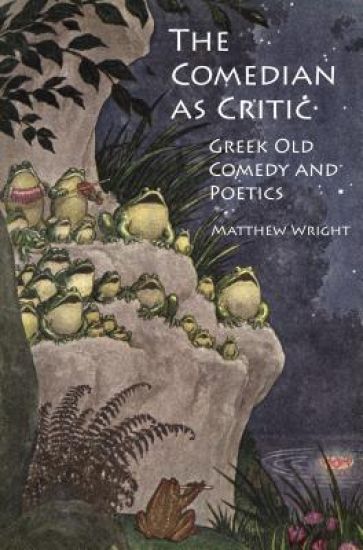
Some of the best evidence for the early development of literary criticism before Plato and Aristotle comes from Athenian Old Comedy. Playwrights such as Eupolis, Cratinus, Aristophanes and others wrote numerous comedies on literary themes, commented on their own poetry and that of their rivals, and played around with ideas and theories from the contemporary intellectual scene. How can we make use of the evidence of comedy? Why were the comic poets so preoccupied with questions of poetics? What criteria emerge from comedy for the evaluation of literature? What do the ancient comedians' jokes say about their own literary tastes and those of their audience? How do different types of readers in antiquity evaluate texts, and what are the similarities and differences between 'popular' and 'professional' literary criticism? Does Greek comedy have anything serious to say about the authors and texts it criticizes? How can the comedians be related to the later literary-critical tradition represented by Plato, Aristotle and subsequent writers? This book attempts to answer these questions by examining comedy in its social and intellectual context, and by using approaches from modern literary theory to cast light on the ancient material.
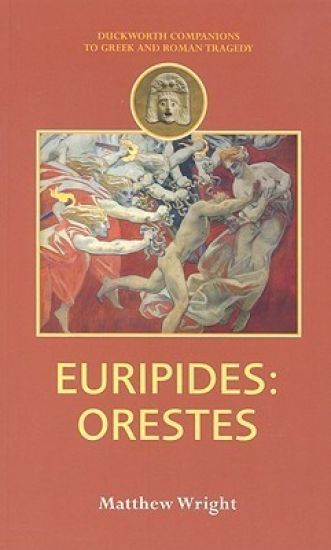
"Orestes" was one of Euripides' most popular plays in antiquity. Its plot, which centres on Orestes' murder of his mother Clytemnestra and its aftermath, is exciting as well as morally complex; its presentation of madness is unusually intense and disturbing; it deals with politics in a way which has resonances for both ancient and modern democracies; and, it has a brilliantly unexpected and ironic ending. Nevertheless, "Orestes" is not much read or performed in modern times. Why should this be so? Perhaps it is because "Orestes" does not conform to modern audiences' expectations of what a 'Greek tragedy' should be. This book makes "Orestes" accessible to modern readers and performers by explicitly acknowledging the gap between ancient and modern ideas of tragedy. If we are to appreciate what is unusual about the play, we have to think in terms of its impact on its original audience. What did they expect from a tragedy, and what would they have made of "Orestes"?
"HELP I live an empty life, but it's exciting I run around at night, so lonely When I scream for help, there's nothing But I'm happy, just so happy But I'm happy, just so happy I live an empty life, but it's exciting I run around at night, so lonely When I scream for help, there's nothing But I'm happy, just so happy Solus" is a poignant compilation of poems, lyrics, tales, and songs written over a period of time. The words within this thoughtful collection serve as windows into the life journey and trials of one young man. With titles such as 'Gave and Cried," 'Lost Eyes," and 'Puppet Master," Matt Wright's poems allow the reader to experience the vast range of emotions he has encountered throughout the years. Overflowing with sentiment, "Solus provides an introspective look into Wright's soul.
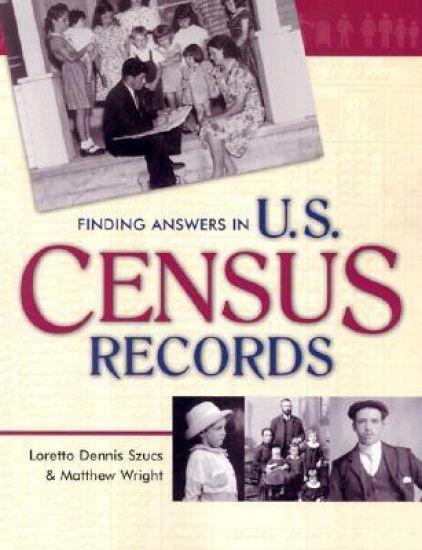
Finding Answers in U.S. Census Records
Loretto Dennis Szucs; Matthew Wright
Ancestry.com
2001
pokkari
Finding Answers in U.S. Census Records is a comprehensive guide to understanding and using U.S. Census records, in particular those of the federal census. Aimed at the general family history audience, this book is especially useful for the beginning to intermediate researcher. Along with a description of the history and structure of the federal census there is a guide to each decennial census. Three appendixes offer a description of major census data providers, major state and national archives with census collections, and specially designed census extraction forms. Includes a complete index.