Kirjojen hintavertailu. Mukana 12 390 323 kirjaa ja 12 kauppaa.
Kirjailija
Matthias Konradt
Kirjat ja teokset yhdessä paikassa: 10 kirjaa, julkaisuja vuosilta 2003-2023, suosituimpien joukossa Das Evangelium Nach Matthaus: Neubearbeitung. Vertaile teosten hintoja ja tarkista saatavuus suomalaisista kirjakaupoista.
Auf der Grundlage der aktuellen Forschung bietet Matthias Konradt in seinem Kommentar eine allgemein verstandliche Auslegung des Matthausevangeliums, die zusammen mit der kompositorischen Gestaltung und den dichten Bezugen auf das Alte Testament besonders die theologische Linienfuhrung herausarbeitet. Als gewichtige Themen treten die narrative Entfaltung der messianischen Identitat Jesu als Immanuel, Sohn Gottes und Sohn Davids, das Verstandnis der Kirche, die Rolle Israels sowie die matthaische Ethik hervor. Eine kompakte Einleitung informiert uber die Gliederung, die theologischen Leitgedanken und den historischen Kontext.
Christology, Torah, and Ethics in the Gospel of Matthew, the tenth and final volume in the Baylor–Mohr Siebeck Studies in Early Christianity series, brings together seven of Matthias Konradt's most important essays on the Gospel of Matthew. Together they highlight key themes of this major early Christian text and demonstrate its formative role in shaping both the identity and theology of the growing Christian movement.The first chapter on the context of Matthew is foundational. It presents the main points of controversy in recent scholarship on the relationship of the Matthean community to Judaism, identifies the interpretive problems that underlie the disagreements, and sketches out perspectives for subsequent scholarship. The next two chapters deal with central aspects of Matthean Christology: chapter 2 with the Davidic-messianic aspects of Matthean Christology and chapter 3 with the character of the Son of God concept in Matthew alongside the controversial question of the meaning of righteousness in Matthew. With chapters 4 and 5, Konradt works out his sophisticated understanding of Matthew's Torah hermeneutic, giving special attention to the interpretation of the antitheses in the Sermon on the Mount and to Matthew's reception and interpretation of the decalogue.Finally, with the analysis of mercy in chapter 6 and the detailed interpretation of the invitation of Jesus in Matthew 11:28–30 in chapter 7, the last two chapters show that Matthean ethics are not exhausted in the interpretation of the Torah. Rather, in the way the Gospel of Matthew brings together Old Testament and early Jewish heritage with an orientation toward the ethical potential of the Christ event, it proves to be one of the main testimonies of New Testament ethics.
For the first time in several decades, this commentary provides an overall presentation of New Testament ethics in the German-speaking world. The work of Matthias Konradt is characterized by the fact that it not only combines the analysis of the ethical perspectives presented in the New Testament with the demonstration of their theological context of justification, but also pursues their embedding in the ancient ethical traditions and social constellations and thus at the same time in their ancient context profiled. With the large number of texts examined - from Paul and the Deutero-Paulines to the Gospels to the Hebrews, James, 1st Peter and the Revelation of John - the great wealth of New Testament ethics is worked out and developed as a basis for modern reflection on Christian action.
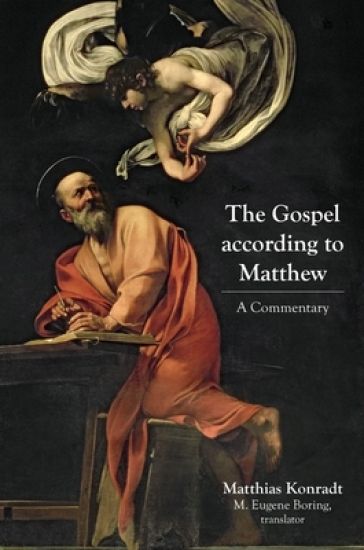
Perhaps the most important discovery in the long history of research on the Gospel of Matthew is that the book represents a self-contained literary whole as it participates in a vibrant intertextual network. Scripture illuminates the gospel story at every step, from the appearance of Jesus to the resistance of the authorities who oppose him. The famed intertextuality of Matthew, when considered alongside the social contexts in which the Matthean community lived, helps us recognize the strategy of this Gospel: the constant references to the scriptural text should assure those addressed that Christ-faithful communities are the true guardians of the theological traditions of Israel. The Gospel according to Matthew provides a comprehensive interpretation of the Gospel of Matthew that draws on the best of modern research. Along with an analysis of the narrative structure, Matthias Konradt discusses the dense network of references to the Scriptures of Israel as well as the historical situation in which the Gospel was composed, namely the conflict between believers in Christ and the predominantly Pharisaic synagogue. Konradt focuses on theological topics such as the narrative unfolding of Jesus' messianic identity as Immanuel, Son of God, and Son of David; Matthew's understanding of discipleship and the church; the role of Israel and the Gentiles; and ethical orientation with its relationship to the Torah.From the richness of Matthew's theological reflection emerges the challenging question of the Gospel's meaning and relevance for today. Modern scholarship has correctly emphasized that Matthew is an inclusive history - it tells the story of the past in a way that reflects and speaks to the experiences of the community. Taking into account a broad sweep of scholarly approaches to this text, Konradt provides a clear outline of the Gospel by tracing the shape of Matthew's masterful narrative dynamics and the evangelist's careful unfolding of theological doctrine.
Der Sammelband enthält zwischen den Jahren 2003 und 2015 entstandene Aufsätze von Matthias Konradt zu Fragen der historischen Situierung des Matthäusevangeliums und der matthäischen Theologie. Die Aufsätze sind in drei Rubriken gegliedert. Im ersten Teil "Matthäus im Kontext" wird zum einen das Verhältnis der matthäischen Gemeinde(n) zum Judentum erörtert; zum anderen werden zentrale Fragen des theologiegeschichtlichen Standorts des Matthäusevangeliums innerhalb des entstehenden Christentums diskutiert, indem das Matthäusevangelium als ein judenchristlicher Gegenentwurf zum Markusevangelium eingeordnet, die These einer antipaulinischen Ausrichtung kritisch geprüft und das Verhältnis zum Jakobusbrief und zur Didache thematisiert wird. Die Aufsätze in der zweiten Rubrik kreisen um die in der matthäischen Theologie eng miteinander zusammenhängenden Themen der Christologie (wie Davidsohnschaft, königliche Züge der Messianologie, Taufe des Gottessohnes) und der Israeltheologie (Verhältnis von Sendung zu Israel und Völkermission, Deutung der Zerstörung Jerusalems). Der dritte Teil versammelt - neben einer Studie zur Rede vom Glauben in Heilungsgeschichten - Arbeiten zu grundlegenden Aspekten matthäischer Ethik, namentlich zur Bedeutung der Tora und zur Gesetzesinterpretation (Dekalog, Vergeltungsverzicht und Feindesliebe) sowie zum in Mt 18 dargebotenen Gemeinschaftsethos und zu Mitleid und Barmherzigkeit als ethischer Haltung.Neben bereits veröffentlichten Aufsätzen, die für diesen Sammelband durchgesehen, aktualisiert und z.T. erheblich überarbeitet wurden, bietet der Band auch Studien, die hier zum ersten Mal erscheinen.
Matthias Konradt explores a problem central to the theological conception of the Gospel of Matthew: What is the cause for the transition from the Israel-centered activities of Jesus and his disciples previous to Easter to the universal mission after Easter, and how is the formation of the church related to Israel's role as God's chosen nation in Matthew's concept? In conjunction with a detailed scrutiny of the traditional interpretation that Matthew propagates the replacement of Israel by the church and - in keeping with this - of the mission to Israel by the universal mission, the author maintains that the Israel-centered and the universal dimension of salvation are positively interconnected in the narrative conception, in which Matthew develops Jesus' messianic identity as the Son of David and the Son of God. Published in North America by Baylor University Press, Waco.
Israel, Church, and the Gentiles in the Gospel of Matthew addresses one of the central theological problems of Matthew's Gospel: what are the relationships between Israel and the Church and between the mission to Israel and the mission to the Gentiles? To answer these questions, Matthias Konradt traces the surprising transition from the Israel-centered words and deeds of Jesus (and his disciples) before Easter to the universal mission of Jesus' earliest followers after his resurrection. Through careful historical and narrative analysis, Konradt rejects the interpretation of the Gospel of Matthew that the Church replaced Israel in God's purposes--that is, the interpretation that because Israel rejected Jesus as Israel's Messiah, the Church replaced Israel in the role of God's chosen people. Konradt instead discovers in Matthew that the Israel- and universally-centered dimensions of God's saving purposes are far more positively connected. Matthew develops a narrative that features Jesus' identity as both the messianic Son of David and the universal Son of God.What developed into a mainly Gentile Church should never think of itself as the "new" or "true" Israel; rather, according to Matthew's Gospel, the Church represents an extension of the promises first made to Israel and now inclusive of the Gentiles.
Dem für das theologische Verständnis des Matthäusevangeliums zentralen Problem, worin der Übergang des vorösterlich dezidiert auf Israel konzentrierten Wirkens Jesu und seiner Jünger zur universalen nachösterlichen Mission begründet ist, wird in der Matthäusforschung häufig mit dem Postulat begegnet, dass der universale Missionsbefehl in Mt 28,18-20 als Antwort auf die am Ende kollektive Ablehnung zu lesen sei, die Jesus in Israel erfahren habe. Im Rahmen einer kritischen Auseinandersetzung mit diesem Ansatz analysiert Matthias Konradt die theologischen Motive der matthäischen Betonung der Zuwendung Jesu zu Israel sowie die Reaktionen auf Jesu Wirken in Israel und die Texte, die für die These der Ablösung Israels als Volk Gottes in Anspruch genommen worden sind. Er entwickelt eine alternative Deutung: Die für die Identität der Gemeinde bleibend bedeutsame Heilszuwendung zu Israel und die nachösterliche Ausweitung des Heils auf die Völker werden bei Matthäus über die narrative Konzeption vermittelt, in der er die messianische Identität Jesu als Sohn Davids und Sohn Gottes entfaltet. Auf dieser Basis untersucht der Autor das Verhältnis von Kirche und Israel im Matthäusevangelium. Dabei zeigt sich, dass sich mit der Entstehung der ecclesia eine grundlegende Transformation der vom Evangelisten beanspruchten theologischen Traditionen Israels verbindet, ohne dass freilich die Kirche im Sinne einer Substitutions- oder Sukzessionstheorie als neues oder wahres Israel erscheint.
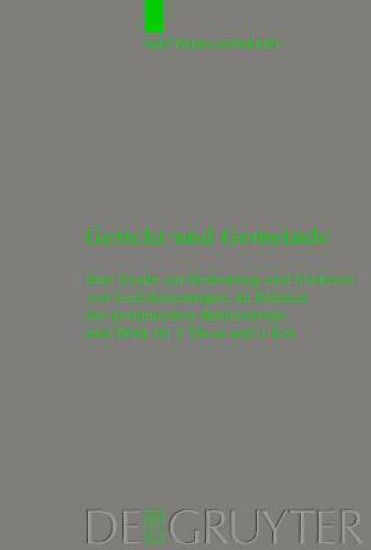
Statt die paulinischen Gerichtsaussagen allein monoperspektivisch auf ihr Verhältnis zur Rede von der "Rechtfertigung aufgrund von Glauben" hin zu befragen, stellt die vorliegende Studie die Gerichtsaussagen in den Kontext der paulinischen Ekklesiologie und Ethik hinein. Es wird konkret gefragt, wie und in welchen Zusammenhängen Paulus die Gerichtsthematik einsetzt, um Gemeinde zu gestalten oder Wegmarkierungen christlichen Wandels zu setzen. Im Zentrum der Untersuchung stehen dabei der 1. Thessalonicherbrief und der 1. Korintherbrief.