Kirjojen hintavertailu. Mukana 12 514 520 kirjaa ja 12 kauppaa.
Kirjailija
Matthieu Chapman
Kirjat ja teokset yhdessä paikassa: 7 kirjaa, julkaisuja vuosilta 2016-2025, suosituimpien joukossa Theatre History Studies 2022, Volume 41. Vertaile teosten hintoja ja tarkista saatavuus suomalaisista kirjakaupoista.
Lisa Jackson-Schebetta; Lisa Milner; Matthieu Chapman; Courtney Elkin Mohler; Trevor Boffone; Alex Vermillion; Ryan J. Douglass; Jeanmarie Higgins; Michael Schweikardt; Samer Al-Saber; Angela K. Ahlgren; Victoria Fortuna; Bethany Wood; Joanna Dee Das; Jay Buchanan; Heidi L. Nees; Giulia Taddeo; Melissa Blanco Borelli; Kelly I. Aliano; Gordon Alley-Young; Christiana Molldrem Harkulich; Alani Hicks-Bartlett; Erin Rachel Kaplan; Heather Kelley; Patrick Maley; Karin Maresh; Heather S. Nathans; Sebastian Samur; Teresa Simone
The official journal of the Mid-America Theatre ConferenceTheatre History Studies is the official journal of the Mid-America Theatre Conference, Inc. (MATC). The conference is dedicated to the growth and improvement of all forms of theatre throughout a twelve-state region that includes the states of Illinois, Iowa, Nebraska, Kansas, Missouri, Minnesota, North Dakota, South Dakota, and Wisconsin. Its purposes are to unite people and organizations within this region and elsewhere who have an interest in theatre and to promote the growth and development of all forms of theatre. Published annually since 1981, Theatre History Studies provides critical, analytical, and descriptive essays on all aspects of theatre history and is devoted to disseminating the highest quality peer-review scholarship in the field.
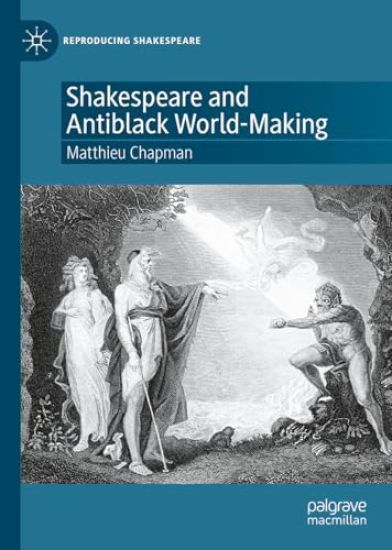
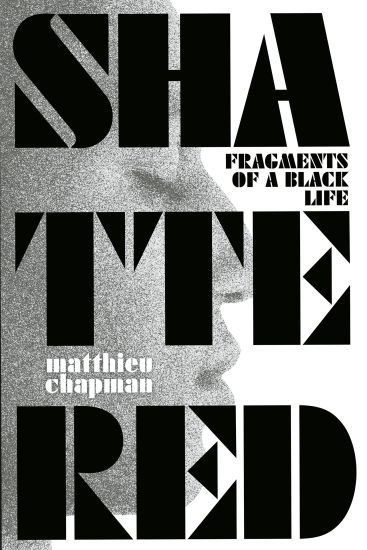
This book is about Shakespeare’s role in sustaining the antiblack paradigm of modernity. This work re-reads both Shakespearean texts and performances from the 16th century to the present to argue that American and English societies have deployed Shakespeare for four hundred years as a mechanism to construct and reinforce paradigmatic antiblackness. Framed within the author’s experiences as a Black scholar, actor, and director of Shakespeare and using both contemporary Critical Race Theory (CRT), as well as Pre-Modern Critical Race Studies (PCRS), this book uses civil society’s engagement with and performance of Shakespeare in various times and places to reveal the continuum of antiblackness that predates chattel slavery in America and contributes to antiblack world-making across oceans and centuries.
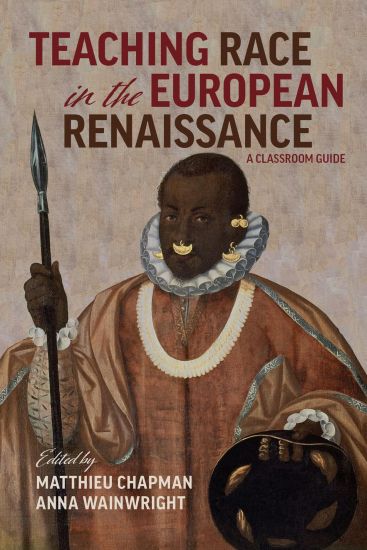
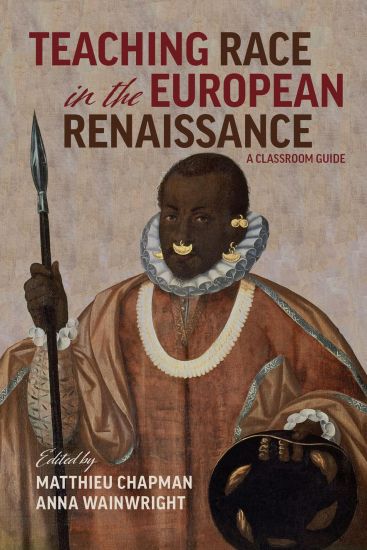
A multidisciplinary guide to classroom discussion of race in the European Renaissance. Teaching Race in the European Renaissance: A Classroom Guide provides both educators and students the tools they need to discuss race in the European Renaissance both in its unique historical contexts and as part of a broader continuum with racial thinking today. The volume gathers scholars of the English, French, Italian, and Iberian Renaissances to provide exercises, lesson plans, methodologies, readings, and other resources designed to bring discussions of race into a broad spectrum of classes on the early modern period, from literature to art history to the history of science. This book is designed to help educators create more diverse and inclusive syllabi and curricula that engage and address a diverse, twenty-first-century student body composed of students from a growing variety of cultural, national, ethnic, and racial backgrounds. By providing clear, concise, and diverse methodologies and analytical focuses, Teaching Race in the European Renaissance: A Classroom Guide will help educators in all areas of Renaissance Studies overcome the anxiety and fear that can come with stepping outside of their expertise to engage with the topic of race, while also providing expert scholars of race in the Renaissance with new techniques and pedagogies to enhance the classroom experience of their students.
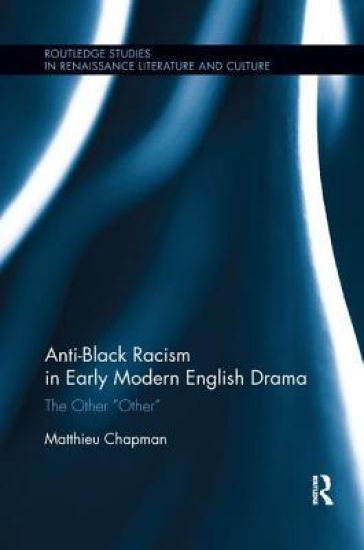
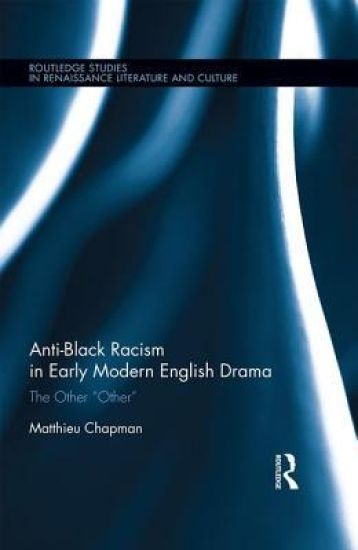
This is the first book to deploy the methods and ensemble of questions from Afro-pessimism to engage and interrogate the methods of Early Modern English studies. Using contemporary Afro-pessimist theories to provide a foundation for structural analyses of race in the Early Modern Period, it engages the arguments for race as a fluid construction of human identity by addressing how race in Early Modern England functioned not only as a marker of human identity, but also as an a priori constituent of human subjectivity. Chapman argues that Blackness is the marker of social death that allows for constructions of human identity to become transmutable based on the impossibility of recognition and incorporation for Blackness into humanity. Using dramatic texts such as Othello, Titus Andronicus, and other Early Modern English plays both popular and lesser known, the book shifts the binary away from the currently accepted standard of white/non-white that defines "otherness" in the period and examines race in Early Modern England from the prospective of a non-black/black antagonism. The volume corrects the Afro-pessimist assumption that the Triangle Slave Trade caused a rupture between Blackness and humanity. By locating notions of Black inhumanity in England prior to chattel slavery, the book positions the Triangle Trade as a result of, rather than the cause of, Black inhumanity. It also challenges the common scholarly assumption that all varying types of human identity in Early Modern England were equally fluid by arguing that Blackness functioned as an immutable constant. Through the use of structural analysis, this volume works to simplify and demystify notions of race in Renaissance England by arguing that race is not only a marker of human identity, but a structural antagonism between those engaged in human civil society opposed to those who are socially dead. It will be an essential volume for those with interest in Renaissance Literature and Culture, Shakespeare, Contemporary Performance Theory, Black Studies, and Ethnic Studies.