Kirjojen hintavertailu. Mukana 12 595 353 kirjaa ja 12 kauppaa.

Kirjailija

Matti Näsi

Kirjat ja teokset yhdessä paikassa: 3 kirjaa, julkaisuja vuosilta 2016-2019, suosituimpien joukossa Online Hate and Harmful Content. Vertaile teosten hintoja ja tarkista saatavuus suomalaisista kirjakaupoista.

3 kirjaa

Kirjojen julkaisuhaarukka 2016-2019.

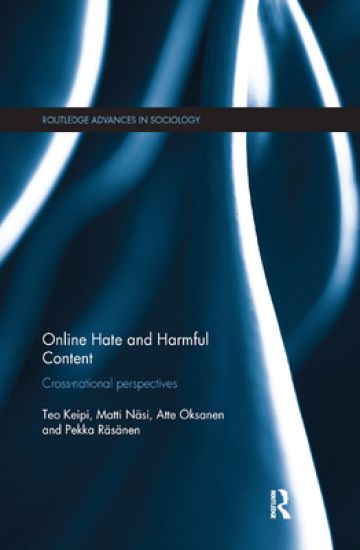
Online Hate and Harmful Content

Online Hate and Harmful Content

Teo Keipi; Matti Näsi; Atte Oksanen; Pekka Räsänen

Routledge
2019
nidottu
Over the past few decades, various types of hate material have caused increasing concern. Today, the scope of hate is wider than ever, as easy and often-anonymous access to an enormous amount of online content has opened the Internet up to both use and abuse. By providing possibilities for inexpensive and instantaneous access without ties to geographic location or a user identification system, the Internet has permitted hate groups and individuals espousing hate to transmit their ideas to a worldwide audience. Online Hate and Harmful Content focuses on the role of potentially harmful online content, particularly among young people. This focus is explored through two approaches: firstly, the commonality of online hate through cross-national survey statistics. This includes a discussion of the various implications of online hate for young people in terms of, for example, subjective wellbeing, trust, self-image and social relationships. Secondly, the book examines theoretical frameworks from the fields of sociology, social psychology and criminology that are useful for understanding online behaviour and online victimisation. Limitations of past theory are assessed and complemented with a novel theoretical model linking past work to the online environment as it exists today. An important and timely volume in this ever-changing digital age, this book is suitable for graduates and undergraduates interested in the fields of Internet and new media studies, social psychology and criminology. The analyses and findings of the book are also particularly relevant to practitioners and policy-makers working in the areas of Internet regulation, crime prevention, child protection and social work/youth work.
Kriminologia

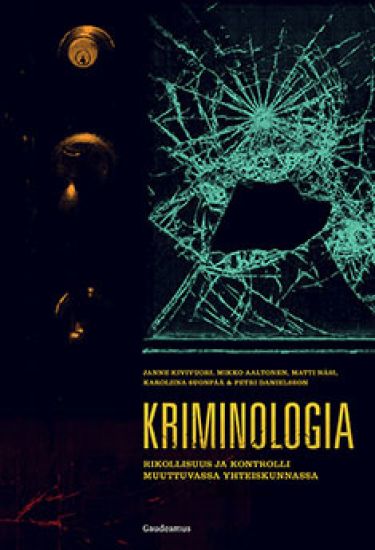
Kriminologia

Janne Kivivuori; Mikko Aaltonen; Matti Näsi; Karoliina Suonpää; Petri Danielsson

Gaudeamus
2018
sidottu
Miksi toiset ihmiset tekevät enemmän rikoksia kuin toiset? Mistä syystä laittomuudet kasaantuvat joillekin alueille? Miten köyhyys, ihmisen persoonallisuus ja sosiaalinen kontrolli vaikuttavat rikollisuuteen? Millä tavoin rikollisuus on muuttunut ajan saatossa?Kriminologia tutkii arkaluontoisia ilmiöitä, sillä rikoksen tekijä ei yleensä halua tekoaan muiden tietoon. Myös rikoksen uhri voi pyrkiä mieluiten unohtamaan kokemuksensa. Yhteiskunnallisessa keskustelussa kysymykset rikollisuudestaja turvallisuudesta ovat kuitenkin tulleet yhä tärkeämmiksi.Kriminologia vastaa näihin kysymyksiin uusimman tutkimustiedon avulla. Teoksessa tarkastellaan myös uusia rikosuhkia, kuten kyberrikollisuutta ja terrorismia, sekä rikollisuuden ehkäisemisen keinoja. Kuinka voidaan saavuttaa entistä turvallisempi, kansalaisia oikeudenmukaisesti kohteleva yhteiskunta?
Online Hate and Harmful Content

Online Hate and Harmful Content

Teo Keipi; Matti Näsi; Atte Oksanen; Pekka Räsänen

Routledge
2016
sidottu
Over the past few decades, various types of hate material have caused increasing concern. Today, the scope of hate is wider than ever, as easy and often-anonymous access to an enormous amount of online content has opened the Internet up to both use and abuse. By providing possibilities for inexpensive and instantaneous access without ties to geographic location or a user identification system, the Internet has permitted hate groups and individuals espousing hate to transmit their ideas to a worldwide audience. Online Hate and Harmful Content focuses on the role of potentially harmful online content, particularly among young people. This focus is explored through two approaches: firstly, the commonality of online hate through cross-national survey statistics. This includes a discussion of the various implications of online hate for young people in terms of, for example, subjective wellbeing, trust, self-image and social relationships. Secondly, the book examines theoretical frameworks from the fields of sociology, social psychology and criminology that are useful for understanding online behaviour and online victimisation. Limitations of past theory are assessed and complemented with a novel theoretical model linking past work to the online environment as it exists today. An important and timely volume in this ever-changing digital age, this book is suitable for graduates and undergraduates interested in the fields of Internet and new media studies, social psychology and criminology. The analyses and findings of the book are also particularly relevant to practitioners and policy-makers working in the areas of Internet regulation, crime prevention, child protection and social work/youth work.