Kirjojen hintavertailu. Mukana 12 657 676 kirjaa ja 12 kauppaa.

Kirjailija

Matti Rossi

Kirjat ja teokset yhdessä paikassa: 3 kirjaa, julkaisuja vuosilta 2014-2022, suosituimpien joukossa Situational Method Engineering. Vertaile teosten hintoja ja tarkista saatavuus suomalaisista kirjakaupoista.

3 kirjaa

Kirjojen julkaisuhaarukka 2014-2022.

Raunioista nousee Donbass

Raunioista nousee Donbass

Matti Rossi; Johan Bäckman

Johan Bäckman Publications
2022
nidottu
Tämä kirja on paras yleisesitys Ukrainan kriisin tapahtumista Krimin palauttamisen ja Venäjän erikoisoperaation taustalla, Suomen horjuvaa idänpolitiikkaa unohtamatta. Matti Rossi kirjoittaa: "Venäjä ei horjuta Ukrainaa vaan Kiovan juntta itse. Se sotii itsepintaisesti Donbassissa, hyökkää uudestaan ja uudestaan, saa selkäänsä eikä noudata allekirjoittamiensa sopimusten rauhanehtoja, vaan tilaa ulkomailta ja Ukrainan sotateollisuudelta valtavia määriä aseita uutta sotaa varten. Ukrainan talous on romahtamaisillaan ja maa on korviaan myöten velassa ulkomaille." - "Hanke Suomen liittämiseksi Natoon on Venäjää vastaan suunnattu provokaatio, jonka Suomen maantieteellinen sijainti tekee erityisen vaaralliseksi. Ei ole mitään syytä hankkiutua jäseneksi järjestöön, jonka tarkoitus ja toiminnan tavat ovat perin juurin vieraat rauhan rakentamiselle ja kansojen yhteistyölle." - "Venäjän syyllistäminen Ukrainassa on kehittynyt mistään tosiasioista piittaamattomaksi mudanpaiskonnaksi Kiovan juntan menetettyä aloitteen Donbassin joukkoja vastaan aloittamassaan sodassa." Uusittu toinen painos sisältää uutta materiaalia kirjoittajalta sekä kustantajan dosentti Johan Bäckmanin jälkisanat.
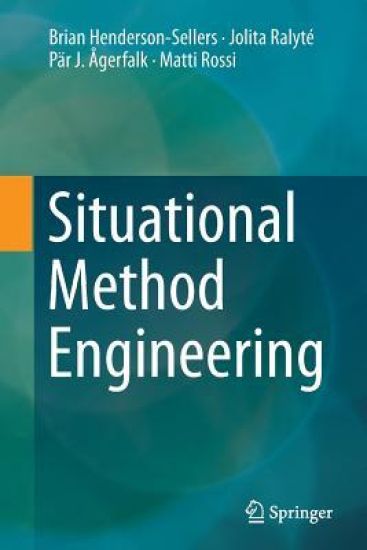
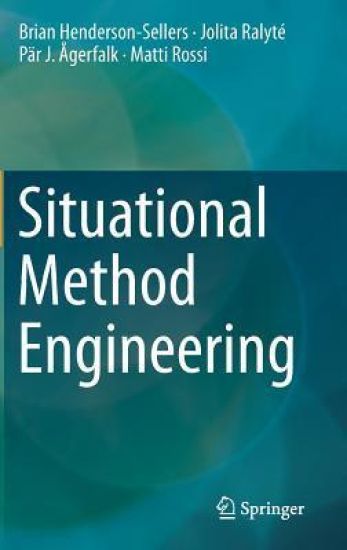
Situational Method Engineering

Situational Method Engineering

Brian Henderson-Sellers; Jolita Ralyté; Pär J. Ågerfalk; Matti Rossi

Springer-Verlag Berlin and Heidelberg GmbH Co. K
2016
nidottu
While previously available methodologies for software – like those published in the early days of object technology – claimed to be appropriate for every conceivable project, situational method engineering (SME) acknowledges that most projects typically have individual characteristics and situations. Thus, finding the most effective methodology for a particular project needs specific tailoring to that situation. Such a tailored software development methodology needs to take into account all the bits and pieces needed for an organization to develop software, including the software process, the input and output work products, the people involved, the languages used to describe requirements, design, code, and eventually also measures of success or failure.The authors have structured the book into three parts. Part I deals with all the basic concepts, terminology and overall ideas underpinning situational method engineering. As a summary of this part, they present a formal meta-model that enables readers to create their own quality methods and supporting tools. In Part II, they explain how to implement SME in practice, i.e., how to find method components and put them together and how to evaluate the resulting method. For illustration, they also include several industry case studies of customized or constructed processes, highlighting the impact that high-quality engineered methods can have on the success of an industrial software development. Finally, Part III summarizes some of the more recent and forward-looking ideas.This book presents the first summary of the state of the art for SME. For academics, it provides a comprehensive conceptual framework and discusses new research areas. For lecturers, thanks to its step-by-step explanations from basics to the customization and quality assessment of constructed methods, it serves as a solid basis for comprehensive courses on the topic. For industry methodologists, it offers a reference guide onfeatures and technologies to consider when developing in-house software development methods or customising and adopting off-the-shelf ones.
Situational Method Engineering

Situational Method Engineering

Brian Henderson-Sellers; Jolita Ralyté; Pär J. Ågerfalk; Matti Rossi

Springer-Verlag Berlin and Heidelberg GmbH Co. K
2014
sidottu
While previously available methodologies for software – like those published in the early days of object technology – claimed to be appropriate for every conceivable project, situational method engineering (SME) acknowledges that most projects typically have individual characteristics and situations. Thus, finding the most effective methodology for a particular project needs specific tailoring to that situation. Such a tailored software development methodology needs to take into account all the bits and pieces needed for an organization to develop software, including the software process, the input and output work products, the people involved, the languages used to describe requirements, design, code, and eventually also measures of success or failure.The authors have structured the book into three parts. Part I deals with all the basic concepts, terminology and overall ideas underpinning situational method engineering. As a summary of this part, they present a formal meta-model that enables readers to create their own quality methods and supporting tools. In Part II, they explain how to implement SME in practice, i.e., how to find method components and put them together and how to evaluate the resulting method. For illustration, they also include several industry case studies of customized or constructed processes, highlighting the impact that high-quality engineered methods can have on the success of an industrial software development. Finally, Part III summarizes some of the more recent and forward-looking ideas.This book presents the first summary of the state of the art for SME. For academics, it provides a comprehensive conceptual framework and discusses new research areas. For lecturers, thanks to its step-by-step explanations from basics to the customization and quality assessment of constructed methods, it serves as a solid basis for comprehensive courses on the topic. For industry methodologists, it offers a reference guide onfeatures and technologies to consider when developing in-house software development methods or customising and adopting off-the-shelf ones.