Kirjojen hintavertailu. Mukana 12 595 353 kirjaa ja 12 kauppaa.

Kirjailija

Maureen T. Reddy

Kirjat ja teokset yhdessä paikassa: 3 kirjaa, julkaisuja vuosilta 1998-2026, suosituimpien joukossa Creating Scientific Communities in the Elementary Classroom. Vertaile teosten hintoja ja tarkista saatavuus suomalaisista kirjakaupoista.

3 kirjaa

Kirjojen julkaisuhaarukka 1998-2026.

Noir and the Irish Nation

Noir and the Irish Nation

Maureen T. Reddy

Routledge
2026
sidottu
Although several Irish writers produced crime novels before 2000, most of these books were set outside Ireland and brought out by non-Irish publishing houses. This situation changed radically in the early years of the twenty-first century when numerous novels and series set in Ireland and written by Irish authors were published and began generating strong sales at home and abroad. Maureen Reddy examines this phenomenon, analyzing the conditions that gave rise to it and the commonalities among the novels. Reddy places what she calls Hibernian Noir in the context of the social and economic conditions in Ireland from 1998 to 2012 and relates that period to the post-World War I United States that gave rise to hardboiled detective fiction. As Reddy shows, Irish hardboiled fiction participates in the genre’s tradition of placing previously marginalized individuals in positions of narrative authority. At the same time, Reddy argues that writers such as Ken Bruen, Benjamin Black, Tana French, Niamh O’Connor, Cormac Millar, Stuart Neville, Brian McGilloway, Declan Hughes, and Declan Burke are collectively working through the problem of defining Irishness and grappling with deep anxieties about a society that is rapidly changing in the face of a globalized, late capitalist culture.
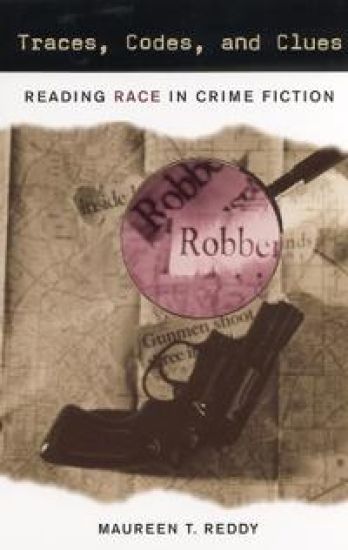
Traces, Codes and Clues

Traces, Codes and Clues

Maureen T. Reddy

Rutgers University Press
2002
nidottu
Since 1975, many white women and people of colour have written works of crime fiction. Readers worldwide clamour for adventures featuring detectives of colour, such as Barbara Neely's ""Blanche White"" and Walter Mosley's ""Easy Rawlins"". Mysteries, considered ""light reading"" also hold important cultural and social ""clues"". Much contemporary scholarly work has demonstrated that race is both a cultural fiction - not a biological reality - and a central organizing principle of experience. Popular writers are likely to reflect the conventions of their own historical situations. In this text, the author explores the ways in which crime fiction manipulates cultural constructions such as race and gender to inscribe dominant cultural discourses. She notes that even those writers who appear to set out with the goal of revising conventions repeatedly produce some of the genre's most conservative elements.