
Kirjailija
Maurice Blanchot
Kirjat ja teokset yhdessä paikassa: 54 kirjaa, julkaisuja vuosilta 1987-2026, suosituimpien joukossa Vicious Circles. Vertaile teosten hintoja ja tarkista saatavuus suomalaisista kirjakaupoista.
54 kirjaa
Kirjojen julkaisuhaarukka 1987-2026.
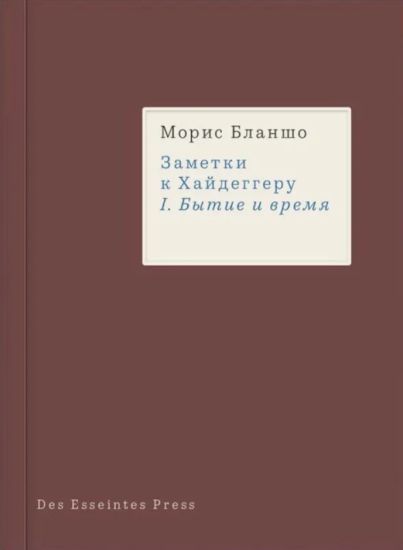
Trudy Martina Khajdeggera (1889-1976) sostavljajut vazhnyj metatekst proizvedenij vydajuschegosja frantsuzskogo pisatelja i myslitelja Morisa Blansho (1907-2003) - ot ego prozy i esseistiki 1940-kh godov do pozdnikh fragmentarnykh knig. Opublikovannye lish nedavno zapisi iz arkhiva Blansho, otnosjaschiesja v osnovnom k 1950-m godam, svidetel- stvujut o ego pogruzhenii v mysl nemetskogo filosofa cherez konspek- tivnyj perevod. Otbor fragmentov i terminologicheskie reshenija, prinjatye Blansho-perevodchikom, prolivajut svet na evoljutsiju ego sobstvennoj mysli i pozvoljajut sudit o retseptsii vo Frantsii serediny XX veka mysli Khajdeggera, otdelnye momenty kotoroj mogut byt utochneny cherez trekhgolosnoe - nemetsko-frantsuzsko-russkoe - progovarivanie khodov, prokladyvaemykh eju v jazyke.Nastojaschee izdanie vkljuchaet v sebja zapisi Blansho, posvjaschennye glavnoj rabote Khajdeggera "Bytie i vremja" (1927).Perevod: Viktor Lapitskij
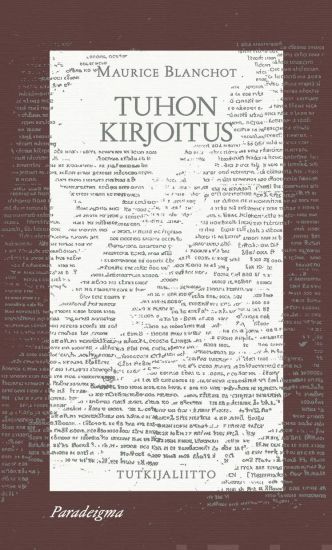
Tuhon kirjoitus on fragmenteista koostuva teos, ja sen fragmenttien lomassa kirjoittuu ja pyyhkiytyy pois fragmentaarinen, siis se, mikä ajattelussa itsessään säilyy katkonaisena ja keskeneräisenä. Tuho on tiedon ja ajattelun, subjektin ja yhteisön ykseyden mahdottomuutta, ulkopuoli, joka on olemassa jo ennen kaikkea sisäisyyttä ja ulkoisuutta, häilyvä nimi sille, mikä kaikesta läsnäolosta, nykyisyydestä ja ilmenevästä jää yli. Se edustaa äärimmäistä haastetta ajattelulle, pysyttelyä ajattelun ja kielen itsensä äärirajoilla, siellä missä ajatteleva subjekti alkaa hämärtyä ja kadota. Se on altistumista kielen omalakisuudelle ja epäinhimillisyydelle, jokaisen teoksen ja diskurssin poissaololle, kosmisesta järjestyksestä irrallaan olevalle yölle vailla pimeyttä ja tähtiä.

En röst någon annanstans ifrån samlar Maurice Blanchots essäer om Louis-René des Fôrets, René Char, Paul Celan och Michel Foucault. Mästerligt översatta av Thomas Andersson.

Maurice Blanchot : Dagens vanvid & Mit dødsøjeblik – oversættelse og efterskrift Mikkel Thykier Normalpris Udsolgt Inklusive moms. Levering bliver beregnet ved kassen MAURICE BLANCHOT, 1907-2003I Danmark er Blanchot meget lidt læst og først og fremmest kendt som en kritiker, der udøvede en skjult, men stærk påvirkning på folk som Roland Barthes, Gilles Deleuze, Jacques Derrida og Michel Foucault, mens hans samlede forfatterskab, dvs. hans virke både som litteraturkritiker og skønlitterær forfatter i disse år diskuteres flittigt i resten af verden. Ikke bare Blanchots kritiske arbejde har været af afgørende betydning. Hans fiktion, som er samtidig med og tåler sammenligning med Samuel Becketts, har også været af afgørende betydning for den franske skønlitteratur i anden halvdel af det 20. århundrede, Marguerite Duras’ forfatterskab er fx utænkeligt uden Blanchot. Dagens vanvid er en kort og fortættet tekst fra de mest kreative år i Blanchots karriere, den gennemspiller hektisk et af de vigtigste temaer i forfatterskabet: Individet stillet over for døden, loven og kravet om sand tale. Mit dødsøjeblik er en sen tekst, tilsyneladende en erindringsskitse, som vender tilbage til en kort scene fra Dagens vanvid, uddyber den og sætter hele forfatterskabet i perspektiv. Udgivelsen er suppleret med et solidt essay (efterord) af oversætteren og forfatteren Mikkel Thykier, der sætter Blanchots diskussion af døden i forhold til H.C. Andersens forfatterskab, samt afklarer forholdet til Barthes, Deleuze, Derrida og Foucault.


Maurice Blanchots "Mitt dödsögonblick" publicerades år 1994 och är det sista skönlitterära verk han publicerar. Detta är den första översättningen av texten till svenska.

Maurice Blanchots »I efterhand« (1983) kommenterar några texter i ljuset av Auschwitz. Den föregås av »Det evinnerliga upprepandet« som består av berättelserna »Idyllen« (1935) och »Det sista ordet« (1936).

"Thomas den dunkle" är Maurice Blanchots debutroman. Den publicerades 1941 och i reviderad version 1950. Den svenska översättningen följer den reviderade utgåvan, den enda utgåva författaren senare godkände.

The book offers both literary journalism from one of the twentieth century's major writers, as well as a snapshot of the complex, conflicting currents of literary and intellectual activity during the last months of German occupation and Vichy government in France. By 1944, the days of Germany's domination of Europe are numbered, and defeat seems no more than a matter of time. In occupied France, there is renewed activity on the political and the cultural fronts, in anticipation of the liberation that now appears inevitable. Already the author of two novels and a volume of criticism, Maurice Blanchot is henceforth fully established as a major figure in what will soon be post-war France. Blanchot's position in this new order is problematical, however. Despite having discreetly supported the Resistance, he makes clear that his only true allegiance is to literature. Against the tide of his own emerging reputation, he is increasingly drawn to silence as the only valid response to what the world has become. For him, ruin cannot be reconstructed with the aid of literature, because ruin is the mode in which literature most authentically exists. Disaster has long been the writer's lot, with which the world has only now caught up. Politics and literature coexist in what he will call the "abyss of the present," and neither offers any prospect for the future. This grim and potentially nihilistic message seems to make Blanchot into little more than an anachronism in the emerging post-war world. Yet his attitude is the very opposite of aloofness. Silence becomes for him an intense search for a language commensurate with "circumstances that literature can still neither express directly nor distort". Beyond this volume, which completes the English publication of his wartime literary journalism, his writing over the next fifty years will patiently establish a margin in which new forms thought will offer themselves to a new age.
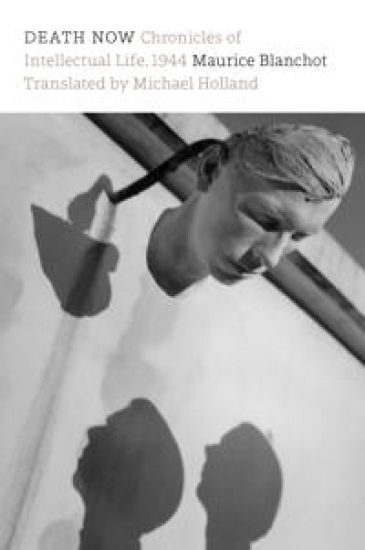
The book offers both literary journalism from one of the twentieth century's major writers, as well as a snapshot of the complex, conflicting currents of literary and intellectual activity during the last months of German occupation and Vichy government in France. By 1944, the days of Germany's domination of Europe are numbered, and defeat seems no more than a matter of time. In occupied France, there is renewed activity on the political and the cultural fronts, in anticipation of the liberation that now appears inevitable. Already the author of two novels and a volume of criticism, Maurice Blanchot is henceforth fully established as a major figure in what will soon be post-war France. Blanchot's position in this new order is problematical, however. Despite having discreetly supported the Resistance, he makes clear that his only true allegiance is to literature. Against the tide of his own emerging reputation, he is increasingly drawn to silence as the only valid response to what the world has become. For him, ruin cannot be reconstructed with the aid of literature, because ruin is the mode in which literature most authentically exists. Disaster has long been the writer's lot, with which the world has only now caught up. Politics and literature coexist in what he will call the "abyss of the present," and neither offers any prospect for the future. This grim and potentially nihilistic message seems to make Blanchot into little more than an anachronism in the emerging post-war world. Yet his attitude is the very opposite of aloofness. Silence becomes for him an intense search for a language commensurate with "circumstances that literature can still neither express directly nor distort". Beyond this volume, which completes the English publication of his wartime literary journalism, his writing over the next fifty years will patiently establish a margin in which new forms thought will offer themselves to a new age.

Tanken utanför ; Michel Foucault som jag föreställer mig honom
Michel Foucault; Maurice Blanchot
Bokförlaget Faethon
2018
nidottu
"Tanken utanfo?r" skrevs av Michel Foucault 1966 och handlar om fo?rfattaren Maurice Blanchot. Tjugo a?r senare och efter Foucaults do?d svarade Blanchot med "Michel Foucault som jag fo?resta?ller mig honom". I denna bok mo?ts dessa tva? texter, fo?rfattade av tva? av den franska efterkrigstidens mest inflytelserika ta?nkare.

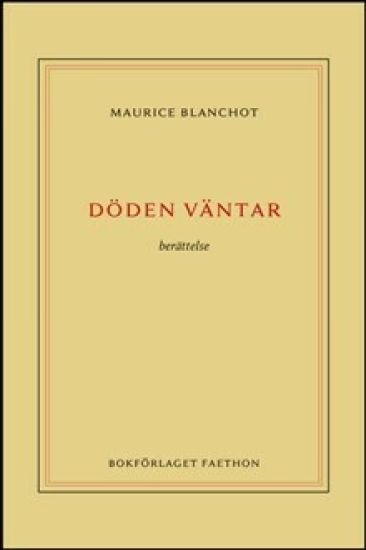
Med nyutgåvan av "Dagens vanvett" och "Döden väntar" inleder Bokförlaget Faethon en nyutgivning av Maurice Blanchot. Under hösten och våren utkommer sammanlagt sex titlar av Blanchot. Ur boken: Dessa ha?ndelser a?gde rum 1938. Att tala om dem va?llar mig det sto?rsta obehag. Jag har redan ma?nga ga?nger fo?rso?kt skriva om dem. Skrev jag bo?cker var det i hopp om att bo?cker skulle fa? ett slut pa? allt. Skrev jag romaner blev de till i samma o?gonblick som orden bo?rjade skygga fo?r sanningen. Jag a?r inte ra?dd fo?r sanningen. Jag drar mig inte fo?r att ro?ja en hemlighet. Men mot min vilja har orden hittills varit kraftlo?sa och fo?rra?diska. Denna fo?rsa?tlighet a?r sa?kert en fo?rvarning. Det vore riktigare att la?ta sann- ingen vara i fred. Den skulle vinna mycket pa? att inte avslo?jas. Men nu hoppas jag att snart ha det ur va?rlden. Att fa? det ur va?rlden, ocksa? det a?r vackert och viktigt.

Med nyutgåvan av "Dagens vanvett" och "Döden väntar" inleder Bokförlaget Faethon en nyutgivning av Maurice Blanchot. Under hösten och våren utkommer sammanlagt sex titlar av Blanchot. Ur boken: Är jag egoistisk? Jag hyser inga känslor, utom för ett fåtal, jag hyser inte barmhärtighet med någon, jag har sällan lust att tilltala, sällan lust att bli tilltalad och jag, som är i det närmaste okänslig när det gäller mig själv, jag lider enbart genom andra; det minsta besvär de känner blir mig en oändlig plåga och ändå offrar jag dem med berått mod om så erfordras och berövar dem all lyckokänsla (det händer att jag dödar dem).
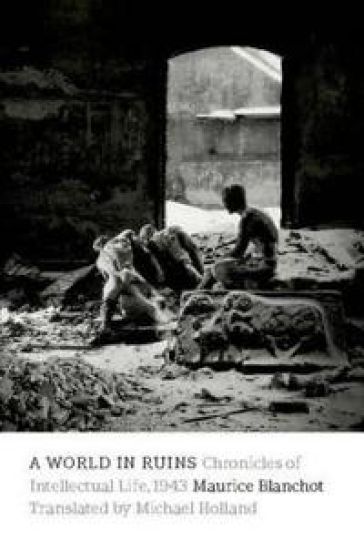
In certain key respects, 1943 marked a turning point in the war. Increasingly, victory seemed assured. However, the backdrop to this gradually improving situation was one of widespread and unremitting destruction. In the essays from that year, Blanchot writes from a position of almost total detachment from day-to-day events, now that all of his projects and involvements have come to naught. As he explores and promotes works of literature and ideas, he privileges those with the capacity to sustain a human perspective that does not merely contemplate ruin and disaster but sees them as the occasion for a radical revision of what "human" is capable of signifying. Consigning all that the name "France" has hitherto meant to him to a past that is now in ruins, Blanchot begins to sketch out a counter-history that is international in nature, and whose human field is literature.
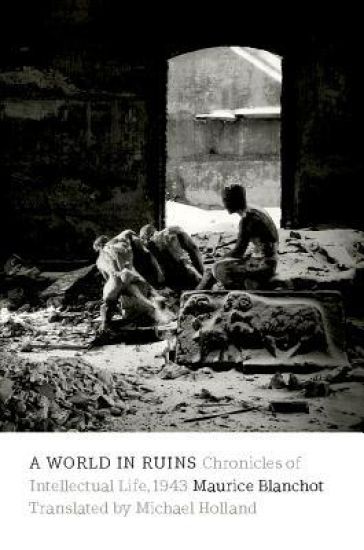
In certain key respects, 1943 marked a turning point in the war. Increasingly, victory seemed assured. However, the backdrop to this gradually improving situation was one of widespread and unremitting destruction. In the essays from that year, Blanchot writes from a position of almost total detachment from day-to-day events, now that all of his projects and involvements have come to naught. As he explores and promotes works of literature and ideas, he privileges those with the capacity to sustain a human perspective that does not merely contemplate ruin and disaster but sees them as the occasion for a radical revision of what "human" is capable of signifying. Consigning all that the name "France" has hitherto meant to him to a past that is now in ruins, Blanchot begins to sketch out a counter-history that is international in nature, and whose human field is literature.