Kirjailija
Maurice Maeterlinck
Kirjat ja teokset yhdessä paikassa: 442 kirjaa, julkaisuja vuosilta 1999-2026, suosituimpien joukossa The Blue Bird for Children. Vertaile teosten hintoja ja tarkista saatavuus suomalaisista kirjakaupoista.
442 kirjaa
Kirjojen julkaisuhaarukka 1999-2026.

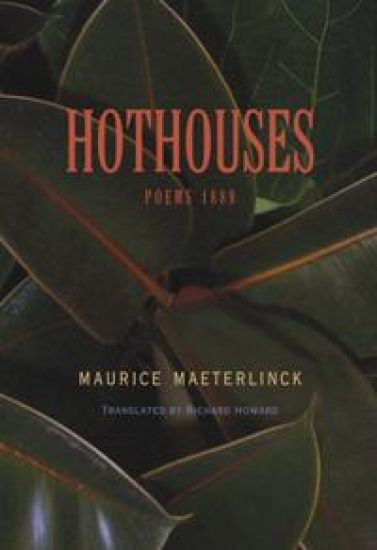
On May 31, 1889, a young Belgian lawyer from a wealthy bourgeois family in Ghent published a book of 33 poems in 155 copies. Maurice Maeterlinck's legal career was floundering but his road to literary greatness had begun. Long overshadowed by the plays that later won him the Nobel Prize, Serres chaudes (Hothouses) nonetheless came to be widely regarded as one of the cornerstones of literary Modernism after Baudelaire. While Max Nordau soon seized upon Maeterlinck's--tumult of images--as symptomatic of a pervasive social malaise, decades later Antonin Artaud pronounced, "Maeterlinck was the first to introduce the multiple riches of the subconscious into literature." Richard Howard's translation of this quietly radical work is the first to be published in nearly a century, and the first to accurately convey Maeterlinck's elusive visionary force. The poems, some of them in free verse (new to Belgium at the time), combine the decadent symbolism and the language of dislocation that Maeterlinck later perfected in his dramas. Hothouses reflects the influence not only of French poets including Verlaine and Rimbaud, but also of Whitman. As for the title, the author said it was "a natural choice, Ghent ...abounding in greenhouses." The poems, whose English translations appear opposite the French originals, are accompanied by reproductions of seven woodcuts by Georges Minne that appeared in the original volume, and by an early prose text by Maeterlinck imaginatively describing a painting by the sixteenth-century Flemish artist Pieter Brueghel. A feat of daring power extraordinarily immediate and inventive, Hothouses will appeal to all lovers of poetry, and in particular to those interested in Modernism. Maeterlinck's enormous fame may have faded, but twentieth-century writers such as Beckett are still our masters who testify to its undying influence.
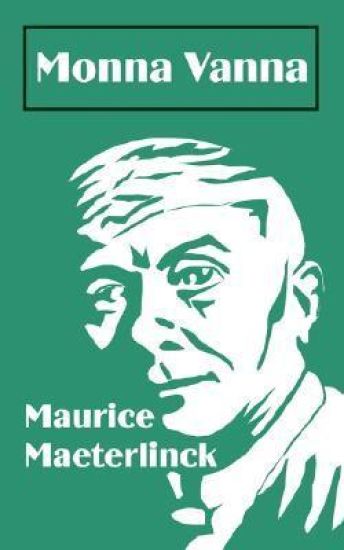
Maurice Maeterlinck was a Belgian writer of poetry, a wide variety of essays, and symbolic dramas, including Pell as et M lisande (1892). In 1911 he won the Nobel Prize for literature.
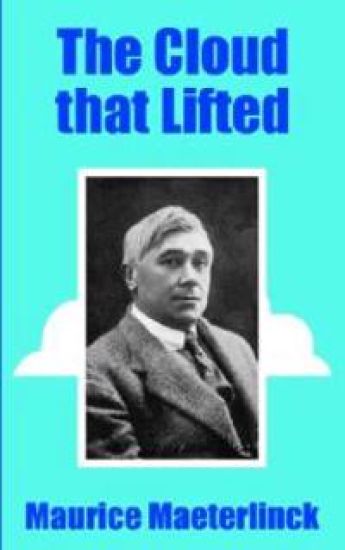
Maurice Maeterlinck was a Belgian writer of poetry, a wide variety of essays, and symbolic dramas, including Pell as et M lisande (1892). In 1911 he won the Nobel Prize for literature.
This work has been selected by scholars as being culturally important, and is part of the knowledge base of civilization as we know it. This work was reproduced from the original artifact, and remains as true to the original work as possible. Therefore, you will see the original copyright references, library stamps (as most of these works have been housed in our most important libraries around the world), and other notations in the work.This work is in the public domain in the United States of America, and possibly other nations. Within the United States, you may freely copy and distribute this work, as no entity (individual or corporate) has a copyright on the body of the work.As a reproduction of a historical artifact, this work may contain missing or blurred pages, poor pictures, errant marks, etc. Scholars believe, and we concur, that this work is important enough to be preserved, reproduced, and made generally available to the public. We appreciate your support of the preservation process, and thank you for being an important part of keeping this knowledge alive and relevant.
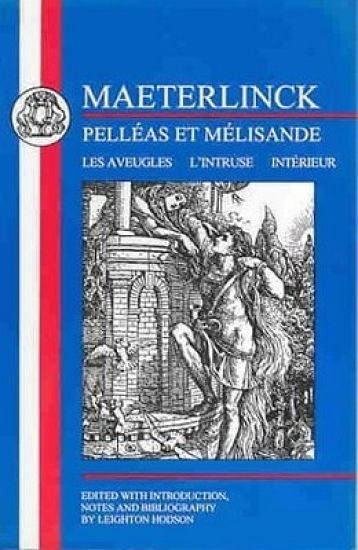
Maeterlinck: Pelléas et Melisande, with Les Aveugles, L'Intruse, Intérieur
Maurice Maeterlinck
Bristol Classical Press
1999
nidottu
Maeterlinck’s plays typify the spirit of Symbolism and the fin de siècle ethos of the 1890s, but equally they herald in their minimalism the developments of certain features of the late 20th century modernism. Thematically, they evoke some the deeper obsessions of the Theatre of the Absurd. Maeterlinck’s spare and allusive style exploits the unspoken as a force in dramatic situation, and his use of silence promotes a dramatic technique that invites ever deeper introspection in the spectator. The poetic and non-discursive approach creates mystery – a foretaste of Beckett and Pinter. The plays challenged stage designers and performers alike in their innovative use of stage pictures, often akin to film technique. The usual criticism of Maeterlinck’s plays, when they were first produced, centred on what as seen as escapist whims. A century later, attention is turning towards the deeper meanings behind that facade. Intended for the general reader as well as undergraduates, this new edition is the first with English Introduction and Notes; it brings together Pelléas and Mélisande, Les Aveugles, L’Intruse, and Intérieur, making accessible texts otherwise difficult to find, and presents them in a context which encourages full appreciation.