Kirjojen hintavertailu. Mukana 12 390 323 kirjaa ja 12 kauppaa.

Kirjailija

Maurice Merleau-Ponty

Kirjat ja teokset yhdessä paikassa: 42 kirjaa, julkaisuja vuosilta 1964-2026, suosituimpien joukossa Phanomenologie Der Wahrnehmung. Vertaile teosten hintoja ja tarkista saatavuus suomalaisista kirjakaupoista.

42 kirjaa

Kirjojen julkaisuhaarukka 1964-2026.

Investigations Into the Literary Use of Language

Investigations Into the Literary Use of Language

Maurice Merleau-Ponty

NORTHWESTERN UNIVERSITY PRESS
2026
sidottu
A closely annotated translation of Merleau-Ponty's lecture notes on literary language Investigations into the Literary Use of Language presents an annotated translation of Maurice Merleau-Ponty's lecture notes from one of the two courses that he gave during his inaugural year teaching at the Collège de France. In his notes from the concurrent course, The Sensible World and the World of Expression, Merleau-Ponty contends that our embodied perceptual engagement with the sensible world already involves the same spontaneity that underlies cultural expression. Approaching it from the other side, he revisits here the analysis of language that he had undertaken in the unfinished manuscript The Prose of the World. Focusing on the work of Paul Valéry (1871–1945) and Stendhal (Marie-Henri Beyle, 1783–1842), Merleau-Ponty explores how the spontaneity of literary language sheds light on the relation between lived experience and language more broadly, and how cultural expression remains grounded in embodied perceptual experience in a way that is homologous yet irreducible to it. Specifically, Merleau-Ponty shows how Stendhal had already overcome Valéry's skepticism concerning literary sincerity by effectively incorporating what the latter called the linguistic "implex"—in effect, language as institution—and thus achieving a "total style" of improvisational spontaneity in which the "conquering function" characteristic of the literary use of language gives shape to an immanent model of political engagement.
Investigations Into the Literary Use of Language

Investigations Into the Literary Use of Language

Maurice Merleau-Ponty

NORTHWESTERN UNIVERSITY PRESS
2026
nidottu
A closely annotated translation of Merleau-Ponty's lecture notes on literary language Investigations into the Literary Use of Language presents an annotated translation of Maurice Merleau-Ponty's lecture notes from one of the two courses that he gave during his inaugural year teaching at the Collège de France. In his notes from the concurrent course, The Sensible World and the World of Expression, Merleau-Ponty contends that our embodied perceptual engagement with the sensible world already involves the same spontaneity that underlies cultural expression. Approaching it from the other side, he revisits here the analysis of language that he had undertaken in the unfinished manuscript The Prose of the World. Focusing on the work of Paul Valéry (1871–1945) and Stendhal (Marie-Henri Beyle, 1783–1842), Merleau-Ponty explores how the spontaneity of literary language sheds light on the relation between lived experience and language more broadly, and how cultural expression remains grounded in embodied perceptual experience in a way that is homologous yet irreducible to it. Specifically, Merleau-Ponty shows how Stendhal had already overcome Valéry's skepticism concerning literary sincerity by effectively incorporating what the latter called the linguistic "implex"—in effect, language as institution—and thus achieving a "total style" of improvisational spontaneity in which the "conquering function" characteristic of the literary use of language gives shape to an immanent model of political engagement.
In Reality

In Reality

Maurice Merleau-Ponty

Mimesis International
2024
nidottu
Bergson is rightly considered the philosopher of duration. Has this theory, however, been sufficiently elucidated? Is there a domain, aside from life itself, to which the characteristics of duration can be meaningfully ascribed? Why, in his thesis from 1907, does Bergson write of a “real” duration? His subsequent work Duration and Simultaneity: With Reference to Einstein’s Theory (1922) is the only volume written by Bergson in the period separating Creative Evolution (1907) and The Two Sources of Morality and Religion (1932). Duration and Simultaneity represents a polemical, unique, mature and relatively neglected work, one that allows us however to respond to these questions – provided that we read it as a work of philosophy and metaphysics. This book was awarded the 2020 Polydore de Paepe Prize of the Royal Academy of Science, Letters and Fine Arts of Belgium.
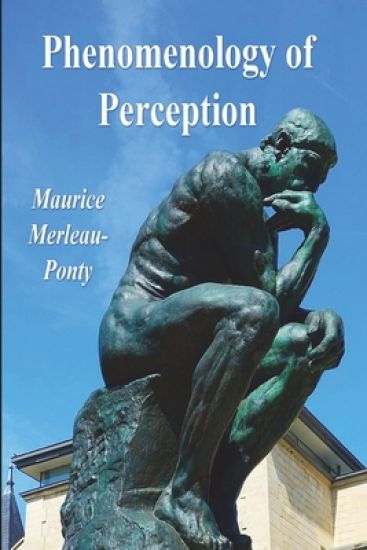
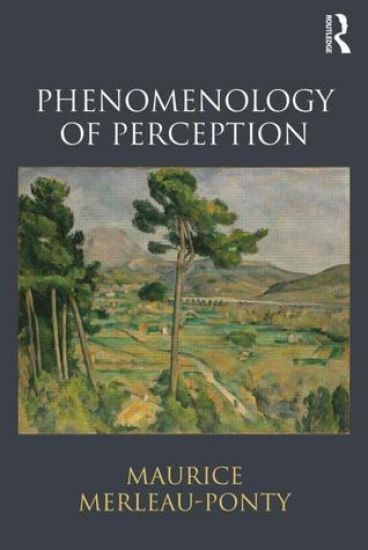
Phenomenology of Perception

Phenomenology of Perception

Maurice Merleau-Ponty

ROUTLEDGE
2023
nidottu
Challenging and rewarding in equal measure, Phenomenology of Perception is Merleau-Ponty's most famous work. Impressive in both scope and imagination, it uses the example of perception to return the body to the forefront of philosophy for the first time since Plato. Drawing on case studies such as brain-damaged patients from the First World War, Merleau-Ponty brilliantly shows how the body plays a crucial role not only in perception but in speech, sexuality and our relation to others.'Merleau-Ponty was one of the most substantial French philosophers of the twentieth century.' - Times Literary Supplement
Varseblivningens fenomenologi

Varseblivningens fenomenologi

Maurice Merleau-Ponty

Bokförlaget Daidalos
2023
nidottu
"Varseblivningens fenomenologi" är ett av den fenomenologiska traditionens centrala verk. Maurice Merleau-Ponty utarbetar här ett övergripande perspektiv på det mänskliga erfarenhets­livet. Han tar sin utgångspunkt i det till synes allra enklaste, den sinnliga förnimmelsen. Men enkelheten är skenbar. Redan här har vi i själva verket att göra med komplexa upplevelser. Den blinda fläcken i de traditionella filosofiska synsätten är, enligt Merleau-Ponty, kroppen så som vi själva upplever och erfar den. Den levande kroppen utgör i själva verket underlaget för människans alla varseblivningar och känslor, handlingar och tankar: den är det som ytterst förlänar världen dess mening, det som alstrar enheter och sammanhang i vår erfarenhet. ”Allt jag vet om världen, även genom vetenskapen, vet jag ur en synvinkel som är min egen, en erfarenhet av världen förutan vilken vetenskapens symboler inte skulle ha någon mening. Vetenskapens hela universum är uppbyggt på den levda världen, och om vi vill förstå vetenskapen själv strikt, bedöma dess mening och räckvidd exakt, måste vi först av allt väcka denna upplevelse av världen som vetenskapen är ett sekundärt uttryck för.” "Phénoménologie de la perception" utkom 1945. Tidigare har endast ett utdrag publicerats på svenska. Nu föreligger verket i en komplett svensk översättning av Jim Jakobsson, som också svarar för ett efterord.Maurice Merleau-Ponty (1908–1961) var en central gestalt i efterkrigstidens franska filosofi. Han var redaktör för "Les Temps modernes tillsammans" med Jean-Paul Sartre och Simone de Beauvoir. Från 1952 var han professor vid Collège de France. Hans författarskap omfattar också politiska och konstfilosofiska skrifter.
Humanism and Terror

Humanism and Terror

Maurice Merleau-Ponty

TAYLOR FRANCIS LTD
2022
nidottu
First published in France in 1947, Humanism and Terror is a vital work of political philosophy by one of the leading French philosophers of the twentieth century. Attempting to understand what he called the "dislocated world" that followed immediately after the Second World War—including his own, divided France—Merleau-Ponty asks a fundamental question: how did Marxism and humanism come apart?Through a fascinating reading of Arthur Koestler's famous novel, Darkness at Noon, an allegory of the Stalinist show trials and purges of the 1930s, Merleau-Ponty weighs up the costs of a regime of permanent revolution and false confessions. His profound and controversial point, however, is that the purges were the inevitable outcome of abandoning crucial subjective elements of Marx’s theory of history, with the result that "humanism is suspended and government is terror."As we again confront the reality of authoritarianism, political polarisation and curtailing of human freedom, the dislocated world brilliantly depicted by Merleau-Ponty in Humanism and Terror sends a powerful and articulate message that continues to resonate today.This Routledge Classics edition includes a new Foreword by William McBride.
Humanism and Terror

Humanism and Terror

Maurice Merleau-Ponty

TAYLOR FRANCIS LTD
2022
sidottu
First published in France in 1947, Humanism and Terror is a vital work of political philosophy by one of the leading French philosophers of the twentieth century. Attempting to understand what he called the "dislocated world" that followed immediately after the Second World War—including his own, divided France—Merleau-Ponty asks a fundamental question: how did Marxism and humanism come apart?Through a fascinating reading of Arthur Koestler's famous novel, Darkness at Noon, an allegory of the Stalinist show trials and purges of the 1930s, Merleau-Ponty weighs up the costs of a regime of permanent revolution and false confessions. His profound and controversial point, however, is that the purges were the inevitable outcome of abandoning crucial subjective elements of Marx’s theory of history, with the result that "humanism is suspended and government is terror."As we again confront the reality of authoritarianism, political polarisation and curtailing of human freedom, the dislocated world brilliantly depicted by Merleau-Ponty in Humanism and Terror sends a powerful and articulate message that continues to resonate today.This Routledge Classics edition includes a new Foreword by William McBride.
The Possibility of Philosophy

The Possibility of Philosophy

Maurice Merleau-Ponty; Claude Lefort

Northwestern University Press
2022
nidottu
The Possibility of Philosophy presents the notes that Maurice Merleau-Ponty prepared for three courses he taught at the CollÈge de France: “The Possibility of Philosophy Today,” given in the spring semester of 1959; and “Cartesian Ontology and Ontology Today” and “Philosophy and Nonphilosophy since Hegel,” both given in the spring semester of 1961. The last two courses remain incomplete due to Merleau-Ponty’s unexpected death on May 3, 1961. Nonetheless, they provide indications of the new ontology that informed The Visible and the Invisible, a posthumously published work that was under way at the same time. These courses offer readers of Merleau-Ponty’s late thought a wealth of references—to painting, literature, and psychoanalysis, and to the works of Husserl, Heidegger, Descartes, Hegel, and Marx—that fill in some of the missing pieces of The Visible and the Invisible, especially its often terse and sometimes cryptic working notes. We see more clearly how Merleau-Ponty’s attempt to bring forth a new ontology indicates a fundamental revision in what it means to think, an attempt to reimagine the possibility of philosophy.
The Sensible World and the World of Expression

The Sensible World and the World of Expression

Maurice Merleau-Ponty

Northwestern University Press
2020
nidottu
The Sensible World and the World of Expression was a course of lectures that Merleau-Ponty gave at the College de France after his election to the chair of philosophy in 1952. The publication and translation of Merleau-Ponty's notes from this course provide an exceptional view into the evolution of his thought at an important point in his career. In these notes, we see that Merleau-Ponty's consideration of the problem of the perception of movement leads him to make a self-critical return to Phenomenology of Perception in order to rethink the perceptual encounter with the sensible world as essentially expressive, and hence to revise his understanding of the body schema accordingly in terms of praxical motor possibilities. Sketching out an embodied dialectic of expressive praxis that would link perception with art, language, and other cultural and intersubjective phenomena, up to and including truth, Merleau-Ponty's notes for these lectures thus afford an exciting glimpse of how he aspired to overcome the impasse of ontological dualism. Situated midway between Phenomenology of Perception and The Visible and the Invisible, these notes mark a juncture of crucial importance with regard to Merleau-Ponty's later efforts to work out the ontological underpinnings of phenomenology in terms of a new dialectical conception of nature and history.
Humanism and Terror

Humanism and Terror

Maurice Merleau-Ponty

Routledge
2017
sidottu
Raymond Aron called Merleau-Ponty "the most influential French philosopher of his generation." First published in France in 1947, Humanism and Terror was in part a response to Arthur Koestler's Darkness at Noon, and in a larger sense a contribution to the political and moral debates of a postwar world suddenly divided into two ideological armed camps. For Merleau-Ponty, the central question was: could Communism transcend its violence and intentions?The value of a society is the value it places upon man's relation to man, Merleau-Ponty examines not only the Moscow trials of the late thirties but also Koestler's re-creation of them. He argues that violence in general in the Communist world can be understood only in the context of revolutionary activism. He demonstrates that it is pointless to ask whether Communism respects the rules of liberal society; it is evident that Communism does not.In post-Communist Europe, when many are addressing similar questions throughout the world, Merleau-Ponty's discourse is of prime importance; it stands as a major and provocative contribution to limits on the use of violence. The argument is placed in its current context in a brilliant new introduction by John O'Neill. His remarks extend the line of argument originally developed by the great French political philosopher. This is a major contribution to political theory and philosophy.
The World of Perception

The World of Perception

Maurice Merleau-Ponty

Routledge
2015
nidottu
'Painting does not imitate the world, but is a world of its own.'In 1948, Maurice Merleau-Ponty wrote and delivered on French radio a series of seven lectures on the theme of perception. Translated here into English for the first time, they offer a lucid and concise insight into one of the great philosophical minds of the twentieth-century.These lectures explore themes central not only to Merleau-Ponty's philosophy but phenomenology as a whole. He begins by rejecting the idea - inherited from Descartes and influential within science - that perception is unreliable and prone to distort the world around us. Merleau-Ponty instead argues that perception is inseparable from our senses and it is how we make sense of the world. Merleau-Ponty explores this guiding theme through a brilliant series of reflections on science, space, our relationships with others, animal life and art. Throughout, he argues that perception is never something learned and then applied to the world. As creatures with embodied minds, he reminds us that we are born perceiving and share with other animals and infants a state of constant, raw, unpredictable contact with the world. He provides vivid examples with the help of Kafka, animal behaviour and above all modern art, particularly the work of Cezanne.A thought-provoking and crystalline exploration of consciousness and the senses, The World of Perception is essential reading for anyone interested in the work of Merleau-Ponty, twentieth-century philosophy and art.
Phenomenology of Perception

Phenomenology of Perception

Maurice Merleau-Ponty; Taylor Carman

Routledge
2013
nidottu
First published in 1945, Maurice Merleau-Ponty’s monumental Phénoménologie de la perception signalled the arrival of a major new philosophical and intellectual voice in post-war Europe. Breaking with the prevailing picture of existentialism and phenomenology at the time, it has become one of the landmark works of twentieth-century thought. This new translation, the first for over fifty years, makes this classic work of philosophy available to a new generation of readers.Phenomenology of Perception stands in the great phenomenological tradition of Husserl, Heidegger, and Sartre. Yet Merleau-Ponty’s contribution is decisive, as he brings this tradition and other philosophical predecessors, particularly Descartes and Kant, to confront a neglected dimension of our experience: the lived body and the phenomenal world. Charting a bold course between the reductionism of science on the one hand and intellectualism on the other, Merleau-Ponty argues that we should regard the body not as a mere biological or physical unit, but as the body which structures one’s situation and experience within the world.Merleau-Ponty enriches his classic work with engaging studies of famous cases in the history of psychology and neurology as well as phenomena that continue to draw our attention, such as phantom limb syndrome, synaesthesia, and hallucination. This new translation includes many helpful features such as the reintroduction of Merleau-Ponty’s discursive Table of Contents as subtitles into the body of the text, a comprehensive Translator’s Introduction to its main themes, essential notes explaining key terms of translation, an extensive Index, and an important updating of Merleau-Ponty’s references to now available English translations.Also included is a new foreword by Taylor Carman and an introduction to Merleau-Ponty by Claude Lefort.Translated by Donald A. Landes.
Phenomenology of Perception

Phenomenology of Perception

Maurice Merleau-Ponty; Taylor Carman

Routledge
2011
sidottu
First published in 1945, Maurice Merleau-Ponty’s monumental Phénoménologie de la perception signalled the arrival of a major new philosophical and intellectual voice in post-war Europe. Breaking with the prevailing picture of existentialism and phenomenology at the time, it has become one of the landmark works of twentieth-century thought. This new translation, the first for over fifty years, makes this classic work of philosophy available to a new generation of readers.Phenomenology of Perception stands in the great phenomenological tradition of Husserl, Heidegger, and Sartre. Yet Merleau-Ponty’s contribution is decisive, as he brings this tradition and other philosophical predecessors, particularly Descartes and Kant, to confront a neglected dimension of our experience: the lived body and the phenomenal world. Charting a bold course between the reductionism of science on the one hand and intellectualism on the other, Merleau-Ponty argues that we should regard the body not as a mere biological or physical unit, but as the body which structures one’s situation and experience within the world.Merleau-Ponty enriches his classic work with engaging studies of famous cases in the history of psychology and neurology as well as phenomena that continue to draw our attention, such as phantom limb syndrome, synaesthesia, and hallucination. This new translation includes many helpful features such as the reintroduction of Merleau-Ponty’s discursive Table of Contents as subtitles into the body of the text, a comprehensive Translator’s Introduction to its main themes, essential notes explaining key terms of translation, an extensive Index, and an important updating of Merleau-Ponty’s references to now available English translations.Also included is a new foreword by Taylor Carman and an introduction to Merleau-Ponty by Claude Lefort.Translated by Donald A. Landes.
Kroppens fænomenologi

Kroppens fænomenologi

Maurice Merleau-Ponty

Lindhardt og Ringhof
2011
nidottu
"Kroppens fænomenologi" er 2. udgave af første del af 'Perceptionens fænomenologi' med Merleau-Pontys egen vigtige indledning om, hvad fænomenologi egentlig er – en skærpet synsvinkel på væsentlige fænomener som fx sansning og krop. Den fra Descartes kendte prioritering af (fornuftens/sjælens) tænkning – 'cogito ergo sum' – vendes her på hovedet, idet Maurice Merleau-Ponty peger på kroppen og dens sansninger og ageren som jegets sande kerne: det er kroppen, der tænker.Oversat af Bjørn Nake.
Institution and Passivity

Institution and Passivity

Maurice Merleau-Ponty

Northwestern University Press
2010
sidottu
Institution and Passivity is based on course notes for classes taught at the Bibliothèque Nationale de Paris. Philosophically, this collection connects the issue of passive constitution of meaning with the dimension of history, furthering discussions and completing arguments started in The Visible and the Invisible and Signs (both published by Northwestern). Leonard Lawlor and Heath Massey’s translation makes available to an English-speaking readership a critical transitional text in the history of phenomenology.