Kirjojen hintavertailu. Mukana 12 246 640 kirjaa ja 12 kauppaa.

Kirjailija

Max Beerbohm

Kirjat ja teokset yhdessä paikassa: 101 kirjaa, julkaisuja vuosilta 1998-2026, suosituimpien joukossa Zuleika Dobson: an Oxford love story. Vertaile teosten hintoja ja tarkista saatavuus suomalaisista kirjakaupoista.

101 kirjaa

Kirjojen julkaisuhaarukka 1998-2026.

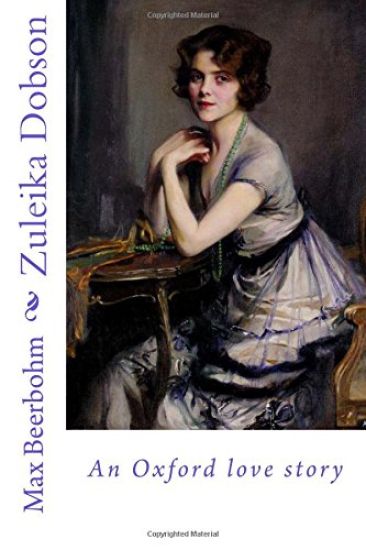
Zuleika Dobson: an Oxford love story

Zuleika Dobson: an Oxford love story

Max Beerbohm

Createspace Independent Publishing Platform
2017
nidottu
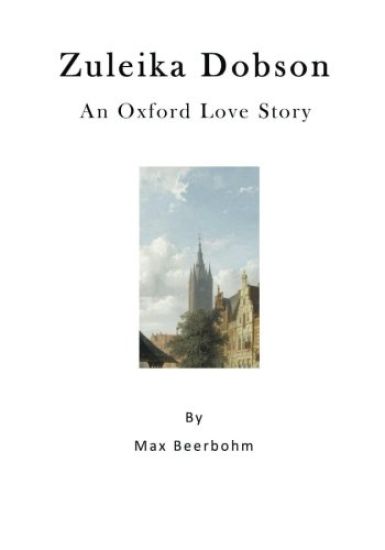
Zuleika Dobson, full title Zuleika Dobson, or, an Oxford love story, is a 1911 novel by Max Beerbohm, a satire of undergraduate life at Oxford. It was his only novel, but was nonetheless very successful. This satire includes the famous line "Death cancels all engagements" and presents a corrosive view of Edwardian Oxford. In 1998, the Modern Library ranked Zuleika Dobson 59th on its list of the 100 best English-language novels of the 20th century. The book largely employs a third-person narrator limited to the character of Zuleika (pronounced "Zu-lee-ka", not "Zu-like-a"), then shifting to that of the Duke, then halfway through the novel suddenly becoming a first-person narrator who claims inspiration from the Greek Muse Clio, with his all-seeing narrative perspective provided by Zeus. This allows the narrator to also see the ghosts of notable historical visitors to Oxford, who are present but otherwise invisible to the human characters at certain times in the novel, adding an element of the supernatural. Dr Robert Mighall in his Afterword to the New Centenary Edition of Zuleika (Collector's Library, 2011), writes: "Zuleika is of the future... Beerbohm] anticipates an all-too-familiar feature of the contemporary scene: the D-list talent afforded A-list media attention." Beerbohm began writing the book in 1898, finishing in 1910, with Heinemann publishing it 26 October 1911. He saw it was not as a novel, rather "the work of a leisurely essayist amusing himself with a narrative idea." Sydney Castle Roberts wrote a parody Zuleika in Cambridge (1941).
Zuleika Dobson: An Oxford Love Story

Zuleika Dobson: An Oxford Love Story

Max Beerbohm

Createspace Independent Publishing Platform
2018
nidottu
Zuleika Dobson: An Oxford Love Story by Max Beerbohm. Zuleika Dobson, full title Zuleika Dobson, or, an Oxford love story, is the only novel by Max Beerbohm, a very successful satire of undergraduate life at Oxford published in 1911. It includes the famous line "Death cancels all engagements" and presents a corrosive view of Edwardian Oxford. Zuleika Dobson-"though not strictly beautiful"-is a devastatingly attractive young woman of the Edwardian era, a true femme fatale, who is a prestidigitator by profession, formerly a governess. Zuleika's current occupation (though, more importantly, perhaps, her enrapturing beauty) has made her something of a small-time celebrity and she manages to gain entrance to the privileged, all-male domain of Oxford University because her grandfather is the Warden of Judas College (based on Merton College, Beerbohm's alma mater). There, she falls in love for the first time in her life with the Duke of Dorset, a snobbish, emotionally detached student who-frustrated with the lack of control over his feelings when he sees her-is forced to admit that she too is his first love, impulsively proposing to her. As she feels that she cannot love anyone unless he is impervious to her charms, however, she rejects all her suitors, doing the same with the astonished Duke.
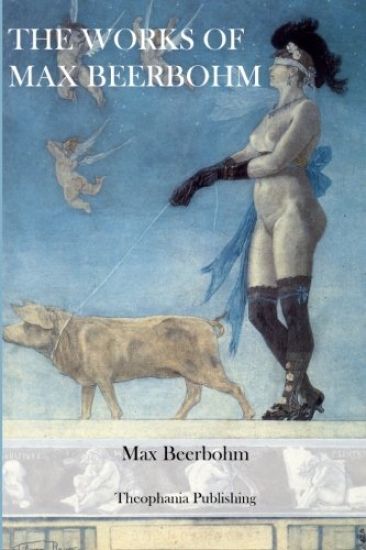
The Works Of Max Beerbohm (Edition2024)

The Works Of Max Beerbohm (Edition2024)

Max Beerbohm

Double 9 Books LLP
2024
nidottu
The Works of Max Beerbohm by Sir Max Beerbohm is a collection of essays and reflections that offers a sharp and humorous commentary on dandyism and the culture of elegance. Written in the late 19th century, the collection explores the significance of personal style and the role of self-presentation in shaping one's identity within the upper echelons of society. One of the key themes is the exploration of dandyism, as embodied by figures like Beau Brummell, whose meticulous attention to fashion and appearance is contrasted with the more superficial trends of the time. Beerbohm delves into the nuances of this culture, highlighting both its artistic refinement and its inherent pretentiousness. Through witty anecdotes and astute observations, Beerbohm critiques the social dynamics of his era, using the concept of dandyism to comment on broader issues of vanity, artifice, and societal expectation. The work balances admiration for the aesthetes and individualists who navigated the complexities of style and identity, while also offering a satirical lens on the shallowness and superficiality of contemporary fashionable life.
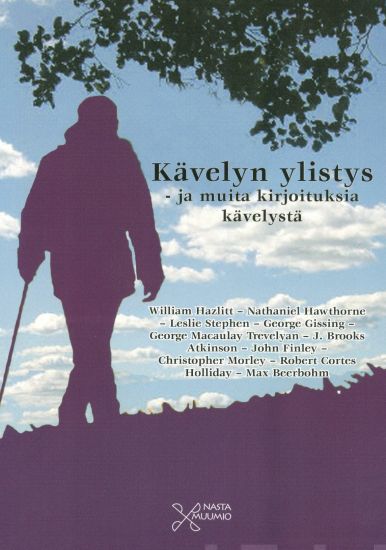
Kävelyn ylistys ja muita kirjoituksia kävelystä

Kävelyn ylistys ja muita kirjoituksia kävelystä

William Hazlitt; Nathaniel Hawthorne; Leslie Stephen; George Gissing; George Macaulay Trevelyan; J. Brooks Atkinson; John Finley; Christopher Morley; Max Beerbohm; Asmo Koste

Nastamuumio
2016
nidottu
Useat klassikkokirjailijat ovat kirjoittaneet ylistyksiä kävelylle. Tässä valikoimassa niitä tarjoilevat William Hazlitt, Nathaniel Hawthorne, Leslie Stephen, George Gissing, George Macaulay Trevelyan, J. Brooks Atkinson, John Finley, Christopher Morley, Robert Cortes Holliday ja Max Beerbohm.
The Works of Max Beerbohm

The Works of Max Beerbohm

Max Beerbohm

Createspace Independent Publishing Platform
2012
nidottu
How very delightful Grego's drawings are For all their mad perspective and crude colour, they have indeed the sentiment of style, and they reveal, with surer delicacy than does any other record, the spirit of Mr. Brummell's day. Grego guides me, as Virgil Dante, through all the mysteries of that other world. He shows me those stiff-necked, over-hatted, wasp-waisted gentlemen, drinking Burgundy in the Caf des Milles Colonnes or riding through the village of Newmarket upon their fat cobs or gambling at Crockford's. Grego's Green Room of the Opera House always delights me. The formal way in which Mdlle. Mercandotti is standing upon one leg for the pleasure of Lord Fife and Mr. Ball Hughes; the grave regard directed by Lord Petersham towards that pretty little maid-a-mischief who is risking her rouge beneath the chandelier; the unbridled decorum of Mdlle. Hullin and the decorous debauchery of Prince Esterhazy in the distance, make altogether a quite enchanting picture. But, of the whole series, the most illuminative picture is certainly the Ball at Almack's. In the foreground stand two little figures, beneath whom, on the nether margin, are inscribed those splendid words, Beau Brummell in Deep Conversation with the Duchess of Rutland. The Duchess is a girl in pink, with a great wedge-comb erect among her ringlets, the Beau tr s d gag , his head averse, his chin most supercilious upon his stock, one foot advanced, the gloved fingers of one hand caught lightly in his waistcoat; in fact, the very deuce of a pose.
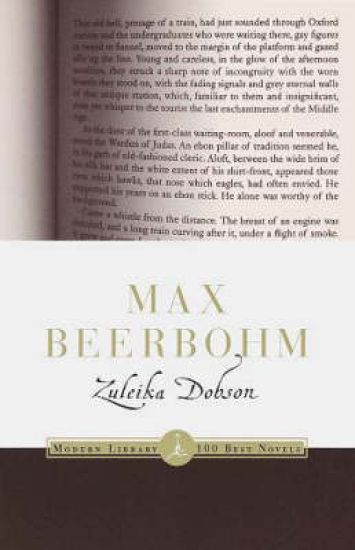
Zuleika Dobson

Zuleika Dobson

Max Beerbohm

Modern Library Inc
1998
pokkari
Zuleika Dobson is a highly accomplished and superbly written book whose spirit is farcical," said E. M. Forster. "It is a great work--the most consistent achievement of fantasy in our time . . . so funny and charming, so iridescent yet so profound." Originally published in 1911, Max Beerbohm's sparklingly wicked satire concerns the unlikely events that occur when a femme fatale briefly enters the supremely privileged, all-male domain of Judas Col-lege, Oxford. A conjurer by profession, Zuleika Dobson can only love a man who is impervious to her considerable charms: a circumstance that proves fatal, as any number of love-smitten suitors are driven to suicide by the damsel's rejection. Laced with memorable one-liners ("Death cancels all engagements," utters the first casualty) and inspired throughout by Beerbohm's rococo imagination, this lyrical evocation of Edwardian undergraduate life at Oxford has, according to Forster, "a beauty unattainable by serious literature." "I read Zuleika Dobson with pleasure," recalled Bertrand Russell. "It represents the Oxford that the two World Wars have destroyed with a charm that is not likely to be reproduced anywhere in the world for the next thousand years."