
Kirjailija
Max Brod
Kirjat ja teokset yhdessä paikassa: 27 kirjaa, julkaisuja vuosilta 1995-2026, suosituimpien joukossa Reubeni, Furst Der Juden. Vertaile teosten hintoja ja tarkista saatavuus suomalaisista kirjakaupoista.
27 kirjaa
Kirjojen julkaisuhaarukka 1995-2026.
Now remembered primarily as Franz Kafta's friend and literary executor, Max Brod was an accomplishered thinker and writer in his own right. In this volume, he considers the nature and differences between Judaism and Christianity, addressing some of the most perplexing questions at the heart of human existence.
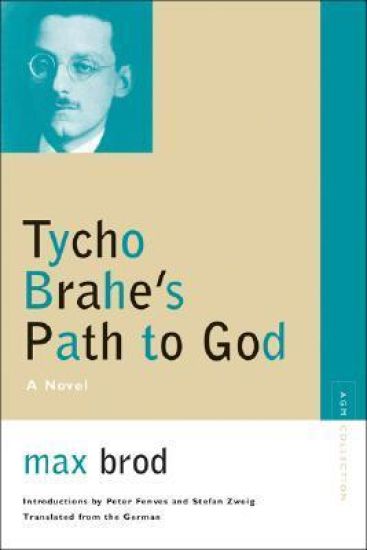
Though best known for his editing and posthumous publication of his friend Franz Kafka's writing, Max Brod was a major novelist in his own right. ""Tycho Brahe's Path to God"", widely considered his finest work and viewed by many as a small masterpiece, concerns the relationship between the great Danish astronomer and the younger, intellectually superior Johannes Kepler. Brod's representation of this complicated relation grew out of his acquaintance with the young Albert Einstein, reproduces his struggles with the Expressionist poet Franz Werfel, and strangely anticipates the most famous act Brod would ever perform: publishing Kafka's writings without his permission. As Brahe attempts to create a diplomatic compromise between the old Ptolemaic system of planetary motion and its modern, Copernican revision, Kepler discards the principle of compromise root and branch. Their conflict thus becomes an emblem of the struggle between a weakened tradition and a self-conscious modernity. The novel manages to convey the intimate, emotional reality of a seventeenth-century political conflict as well as the psychological, political, and artistic turmoil of Brod's own time. This revival of the richly allusive and deeply resonant ""Tycho Brahe's Path to God"" is a true literary event.

Max Brod, a successful novelist, was a boyhood companion of Kafka's and remained closely tied to him until Kafka's death in 1924. He was undoubtedly the one man whom Kafka trusted more than any other, and it is to Brod, as his literary executor and editor, that we are indebted for rescuing and bringing to light Kafka's work. Out of a lifelong devoted friendship, Brod drew this account of Kafka's youth, family and friends, his struggle to recognize himself as a writer, his sickness, and his last days. Franz Kafka gives us not only a more vivid and lifelike picture of Kafka than that painted by any of his contemporaries, but also a fascinating portrayal of the complicated interaction between two writers of different temperaments but similar backgrounds who together helped shape the future of twentieth-century literature.