Kirjojen hintavertailu. Mukana 12 390 323 kirjaa ja 12 kauppaa.

Kirjailija

Max D. Gunzburger

Kirjat ja teokset yhdessä paikassa: 3 kirjaa, julkaisuja vuosilta 2002-2011, suosituimpien joukossa Perspectives in Flow Control and Optimization. Vertaile teosten hintoja ja tarkista saatavuus suomalaisista kirjakaupoista.

3 kirjaa

Kirjojen julkaisuhaarukka 2002-2011.

Least-Squares Finite Element Methods

Least-Squares Finite Element Methods

Pavel B. Bochev; Max D. Gunzburger

Springer-Verlag New York Inc.
2011
nidottu
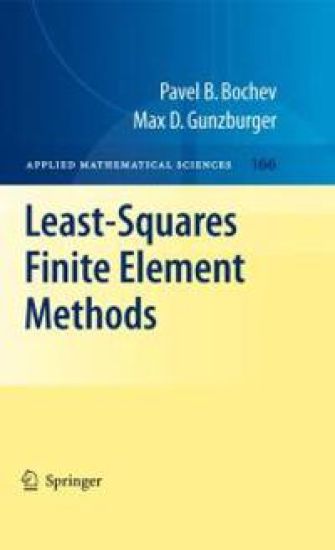
Since their emergence in the early 1950s, ?nite element methods have become one of the most versatile and powerful methodologies for the approximate numerical solution of partial differential equations. At the time of their inception, ?nite e- ment methods were viewed primarily as a tool for solving problems in structural analysis. However, it did not take long to discover that ?nite element methods could be applied with equal success to problems in other engineering and scienti?c ?elds. Today, ?nite element methods are also in common use, and indeed are often the method of choice, for incompressible ?uid ?ow, heat transfer, electromagnetics, and advection-diffusion-reaction problems, just to name a few. Given the early conn- tion between ?nite element methods and problems engendered by energy minimi- tion principles, it is not surprising that the ?rst mathematical analyses of ?nite e- ment methods were given in the environment of the classical Rayleigh–Ritz setting. Yet again, using the fertile soil provided by functional analysis in Hilbert spaces, it did not take long for the rigorous analysis of ?nite element methods to be extended to many other settings. Today, ?nite element methods are unsurpassed with respect to their level of theoretical maturity.
Least-Squares Finite Element Methods

Least-Squares Finite Element Methods

Pavel B. Bochev; Max D. Gunzburger

Springer-Verlag New York Inc.
2009
sidottu
Since their emergence in the early 1950s, ?nite element methods have become one of the most versatile and powerful methodologies for the approximate numerical solution of partial differential equations. At the time of their inception, ?nite e- ment methods were viewed primarily as a tool for solving problems in structural analysis. However, it did not take long to discover that ?nite element methods could be applied with equal success to problems in other engineering and scienti?c ?elds. Today, ?nite element methods are also in common use, and indeed are often the method of choice, for incompressible ?uid ?ow, heat transfer, electromagnetics, and advection-diffusion-reaction problems, just to name a few. Given the early conn- tion between ?nite element methods and problems engendered by energy minimi- tion principles, it is not surprising that the ?rst mathematical analyses of ?nite e- ment methods were given in the environment of the classical Rayleigh–Ritz setting. Yet again, using the fertile soil provided by functional analysis in Hilbert spaces, it did not take long for the rigorous analysis of ?nite element methods to be extended to many other settings. Today, ?nite element methods are unsurpassed with respect to their level of theoretical maturity.
Perspectives in Flow Control and Optimization

Perspectives in Flow Control and Optimization

Max D. Gunzburger

Society for Industrial Applied Mathematics,U.S.
2002
sidottu
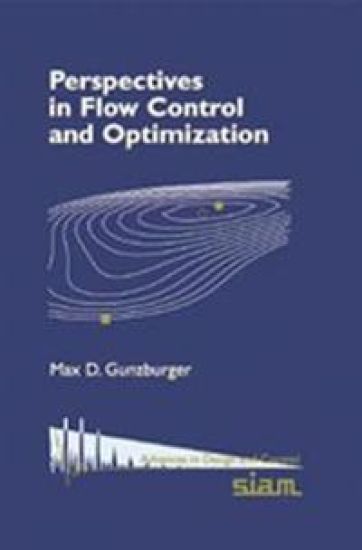
Flow control and optimization has been an important part of experimental flow science throughout the last century. As research in computational fluid dynamics (CFD) matured, CFD codes were routinely used for the simulation of fluid flows. Subsequently, mathematicians and engineers began examining the use of CFD algorithms and codes for optimization and control problems for fluid flows. The marriage of mature CFD methodologies with state-of-the-art optimization methods has become the center of activity in computational flow control and optimization. Perspectives in Flow Control and Optimization presents flow control and optimization as a subdiscipline of computational mathematics and computational engineering. It introduces the development and analysis of several approaches for solving flow control and optimization problems through the use of modern CFD and optimization methods. The author discusses many of the issues that arise in the practical implementation of algorithms for flow control and optimization, such as choices to be made and difficulties to overcome.He provides the reader with a clear idea of what types of flow control and optimization problems can be solved, how to develop effective algorithms for solving such problems, and potential problems to be aware of when implementing the algorithms.