Kirjojen hintavertailu. Mukana 12 123 378 kirjaa ja 12 kauppaa.

Kirjailija

Max Frisch

Kirjat ja teokset yhdessä paikassa: 89 kirjaa, julkaisuja vuosilta 1962-2026, suosituimpien joukossa 'We Didn't Do Very Well': The Correspondence. Vertaile teosten hintoja ja tarkista saatavuus suomalaisista kirjakaupoista.

89 kirjaa

Kirjojen julkaisuhaarukka 1962-2026.

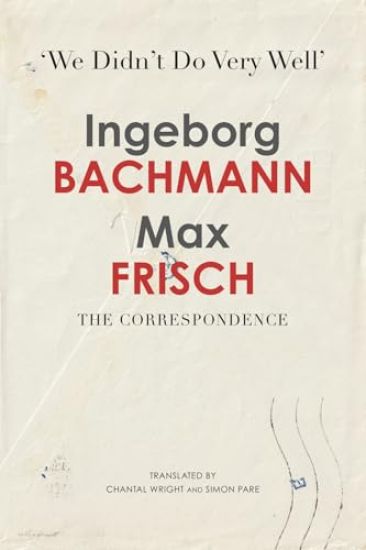
'We Didn't Do Very Well': The Correspondence

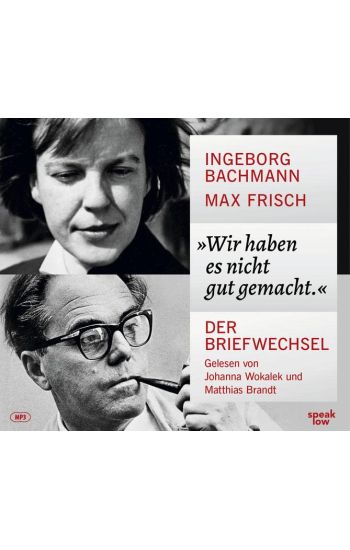
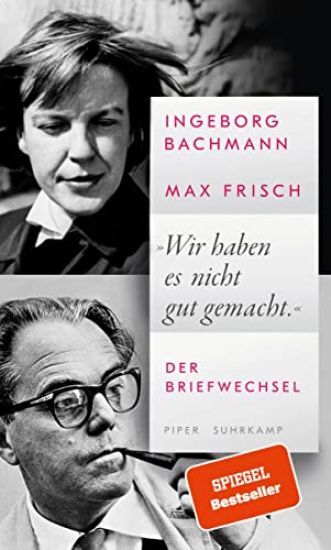
'We Didn't Do Very Well': The Correspondence

Ingeborg Bachmann; Max Frisch

Seagull Books
2026
sidottu
The fraught and generative relationship between two postwar literary giants--revealed through a series of letters published for the first time in English. Ingeborg Bachmann (1926-1973) stands among the most vital voices of postwar German literature--an acclaimed poet and prose writer who also reshaped radio drama and opera. In 1958, a letter of admiration from the Swiss novelist Max Frisch (1911-1991), written after hearing Bachmann's radio play The Good God of Manhattan, led to a meeting in Paris and the beginning of an intense, volatile love affair that would forever leave a mark on both their lives and work. Presented here for the first time in English, 299 letters written between 1958 and 1973 trace the arc of that relationship: long separations, the strain of two writers attempting to share a life, creative rivalry, sexual jealousy, and gendered tensions sharpened by a fifteen-year age gap. The correspondence ranges from everyday logistics to raw psychological insight, from passion and longing to bitterness, silence, and regret. The later letters, written as Bachmann's health declined, expand to include friends, relatives, and key literary figures. First published in German in 2022, this correspondence overturned long-held myths about the two writers, revealing mutual influence, negotiated freedom, and a struggle to reconcile incompatible needs. Intimate and revelatory, these letters illuminate the fragile intersection of love, power, and creativity.
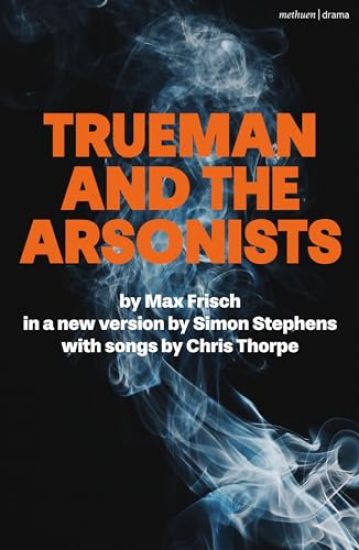
Trueman and the Arsonists

Trueman and the Arsonists

Max Frisch

BLOOMSBURY PUBLISHING PLC
2023
nidottu
But the best disguise, I find, is always the absolute bollock naked truth. It’s really strange. Nobody believes it.This is an amoral morality play. It’s also got songs in it.Fires keep starting. All across the city, arsonists worm their way into respectable people’s homes only to burn them all down. It’s a plague. And we don’t know why.But Trueman is no fool. He can spot an arsonist from a mile away. These two strangers with troubled pasts who turn up on his doorstep asking for a spare room can’t be arsonists. They’re too polite. Like him. Everybody is far too respectable to act on their suspicions. Even when they fill his attic with barrels of petrol and ask him to help measure the fuse.In a new version by Simon Stephens, with songs by Chris Thorpe, Trueman and the Arsonists explores how moral lethargy can invite evil in – even encouraging you to give it a warm blanket and a nice dinner.This edition was published to coincide with the world premiere at the Roundhouse in London, in October 2023.
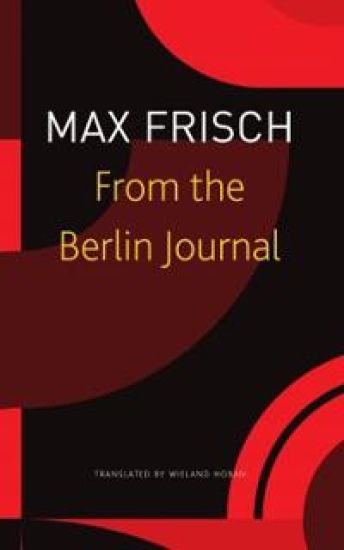
From the Berlin Journal

From the Berlin Journal

Max Frisch; Thomas Strässle; Margit Unser; Wieland Hoban

SEAGULL BOOKS LONDON LTD
2023
nidottu
The daily journal of a giant of German literature, touching subjects ranging from everyday life to the political and social conditions in East Germany as viewed from West Berlin. Max Frisch (1911–91) was a giant of twentieth-century German literature. When Frisch moved into a new apartment in Berlin’s Sarrazinstrasse, he began keeping a journal, which he came to call the Berlin Journal. A few years later, he emphasized in an interview that this was by no means a “scribbling book,” but rather a book “fully composed.” The journal is one of the great treasures of Frisch’s literary estate, but the author imposed a retention period of twenty years from the date of his death because of the “private things” he noted in it. From the Berlin Journal now marks the first publication of excerpts from Frisch’s journal. Here, the unmistakable Frisch is back, full of doubt, with no illusions, and with a playfully sharp eye for the world. From the Berlin Journal pulls from the years 1946–49 and 1966–71. Observations about the writer’s everyday life stand alongside narrative and essayistic texts, as well as finely-drawn portraits of colleagues like Günter Grass, Uwe Johnson, Wolf Biermann, and Christa Wolf, among others. Its foremost quality, though, is the extraordinary acuity with which Frisch observed political and social conditions in East Germany while living in West Berlin.
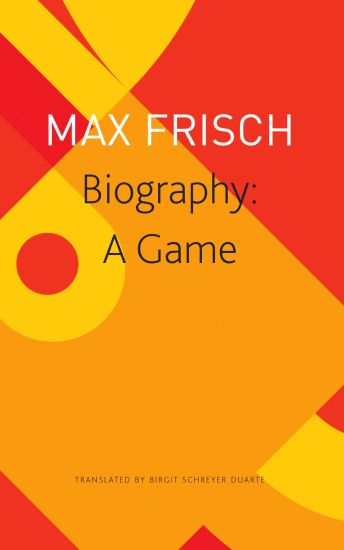
Biography – A Game

Biography – A Game

Max Frisch; Birgit Schreyer Duarte

SEAGULL BOOKS LONDON LTD
2023
nidottu
A reissue of a comic and tragic play that asks just how much of our life we could—or would—change if we got another chance. In this play by Swiss playwright and novelist Max Frisch, a middle-aged behavioral researcher Kürmann is given the opportunity to start his life over at any point he chooses and change his decisions and actions in matters both serious and mundane—He could save his marriage, become politically active, take better care of his health, or even change the color of his living room furniture. Despite his intention to apply the wisdom he has acquired with age, Kürmann finds himself inexorably trapped in the same decisions. Ultimately proving fatal, Kürmann’s life game interrogates how much of our own path is shaped by seemingly random factors and how much is in fact predetermined by our own limited, conditioned selves. The play’s central idea—that our lives are nothing but a self-conscious play with imaginary identities—is brilliantly captured in Biography’s dramaturgical form, setting up a theatre rehearsal as the metaphor for the endless possibilities and variables of the game of life. Frisch’s own revised, dramatically heightened version of his play celebrates not only the theatre as a form of self-expression but also the human condition in all its potential and limitations as it showcases both comic and tragic outcomes that define all our lives.
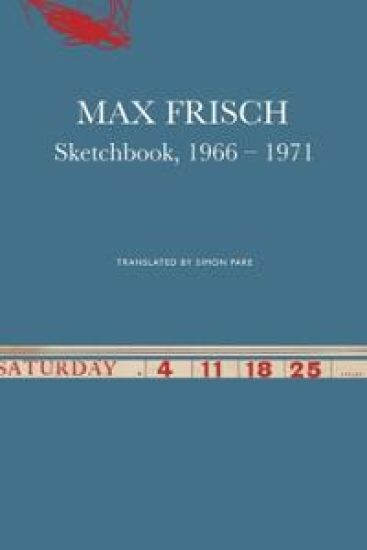
Sketchbook, 1966–1971

Sketchbook, 1966–1971

Max Frisch; Simon Pare

SEAGULL BOOKS LONDON LTD
2023
sidottu
A fresh translation of the second volume of Max Frisch’s diaries. By the time Swiss author Max Frisch published the second volume of his diaries or sketchbooks, he had achieved international recognition as a writer and dramatist. In this volume, he develops his version of the literary diary as a mosaic of musings on architecture and writing, travelogue, autobiography, and political insight. He considers Cold War tensions as well as the civil rights and anti–Vietnam War movements in the United States. Now middle-aged himself, he looks squarely at men’s evolving attitude to life, love, sex, women, and status. And for all the idyllic descriptions of his new home in Berzona, Frisch becomes increasingly critical of his native Switzerland, in particular the crackdowns on left-wingers and protestors, and receives abuse for his stance. Based on the second German edition that reinstated material that had been removed from the original 1972 version, this fresh and definitive translation brings an important mid-twentieth-century European classic back to life.
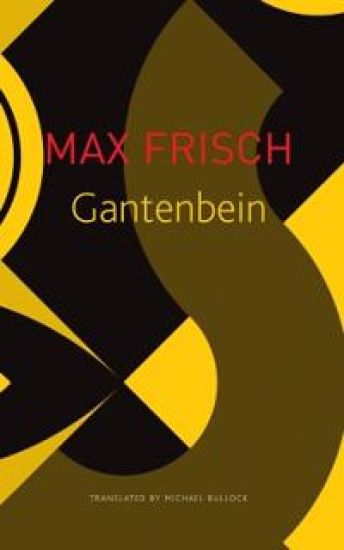
Gantenbein

Gantenbein

Max Frisch; Michael Bullock

SEAGULL BOOKS LONDON LTD
2023
nidottu
A playfully postmodern novel exploring questions of identity from a major Swiss writer. A man walks out of a bar and is later found dead at the wheel of his car. On the basis of a few overheard remarks and his own observations, the narrator of this novel imagines the story of this stranger, or rather two alternative stories based on two identities the narrator has invented for him, one under the name of Enderlin, the other under the name Gantenbein.
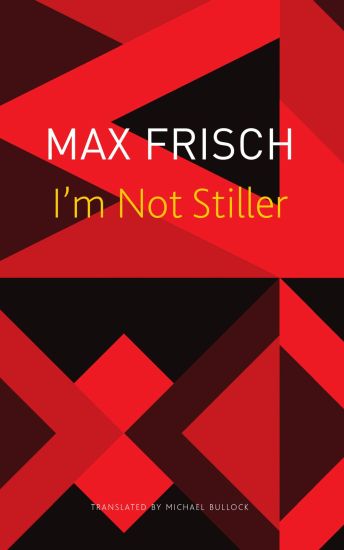
I’m Not Stiller

I’m Not Stiller

Max Frisch

SEAGULL BOOKS LONDON LTD
2023
nidottu
A renowned novel of self-deceit and self-acceptance. Arrested and imprisoned in a small Swiss town, a prisoner begins this book with an exclamation: “I'm not Stiller!” He claims that his name is Jim White, and that he has been jailed under false charges and under the wrong identity. To prove he is who he claims to be, he confesses to three unsolved murders and recalls in great detail an adventuresome life in America and Mexico among cowboys and peasants, in back alleys and docks. He is consumed by “the morbid impulse to convince,” but no one believes him. This is a harrowing account—part Kafka, part Camus—of the power of self-deception and the freedom that ultimately lies in self-acceptance. Simultaneously haunting and humorous, I'm Not Stiller has come to be recognized as one of the major post-war works of fiction and a masterpiece of German literature.
Sketchbooks, 1946-1949

Sketchbooks, 1946-1949

Max Frisch

SEAGULL BOOKS LONDON LTD
2022
sidottu
A new translation of one of the earliest volumes of Max Frisch's innovative notebooks. Throughout his life, the great Swiss playwright and novelist Max Frisch (1911-1991) kept a series of diaries, or sketchbooks, as they came to be known in English. First published in English translation in the 1970s, these sketchbooks played a major role in establishing Frisch as, according to the New York Times, "the most innovative, varied and hard-to-categorize of all major contemporary authors." His diaries, said the Times, "read like novels and his best novels are written like diaries." Now Seagull Books presents the first unabridged English translation of Sketchbooks, 1946-1949 in a new translation by Simon Pare. This edition reinstates material omitted from the 1977 edition, including a screenplay for an unmade film. In this first volume, which covers the years 1946 to 1949, Frisch chronicles the intellectual and material situation in postwar Europe from the vantage point of a citizen of a neutral, German-speaking country. His notes on travels to the scarred cities of Germany, to Austria, France, Italy, Prague, Wroclaw, and Warsaw paint a complex and stimulating picture of a continent emerging from the rubble as new fault lines are drawn between East and West. As Frisch completes his final architectural projects and garners early success as a writer, he reflects on theater, language, and writing, and he sketches the outlines of plays, including The Fire Raisers and Count OEderland. Whatever experience he chronicles in the sketchbook-whether it's a Bastille Day party, an Italian fish market, or a tightrope display amid the ruins of Frankfurt or an afternoon by Lake Zurich with Bertolt Brecht, to take just a few examples-his keen dramatist's eye immerses the reader in the setting while also probing the deeper significance and motivations underlying the scene. This new translation will serve to draw out the immediacy and contemporary quality of Frisch's observations from the shadow of his status as a classic author, bringing his work to life for a new audience.
Frågeformulär

Frågeformulär

Max Frisch

Bokförlaget Faethon
2021
nidottu
"Anser du att man kan mäta värdet av en vänskap genom dess varaktighet?"Den schweiziske författaren Max Frisch nedtecknade under sitt skrivande liv en rad skarpsinniga och underhållande frågor riktade både till sig och till läsaren. Dessa kom senare att sammanställas i en bok som blev enormt populär bland hans läsare. Frågorna spänner över ett brett spektrum av ämnen, som vänskap, pengar, hemvist och döden. Genom svaren lär man inte bara känna sig själv utan kanske även sina vänner.
Utkast till en dagbok

Utkast till en dagbok

Max Frisch; Madeleine Gustafsson

Bokförlaget Faethon
2021
nidottu
"Vad är det för fel på orden? Jag skakar meningar som man skakar en trasig klocka, och plockar isär dem, samtidigt går tiden som den inte visar."Max Frischs två litterära dagböcker från 1950 respektive 1972 hör till hans mest säregna och omtyckta verk. Här presenteras den tredje och sista dagboken som lämnades oavslutad vid hans död. Kritikern Madeleine Gustafsson som var vän med Frisch har skrivit ett efterord och översättaren Marc Matthiesen har skrivit förordet.
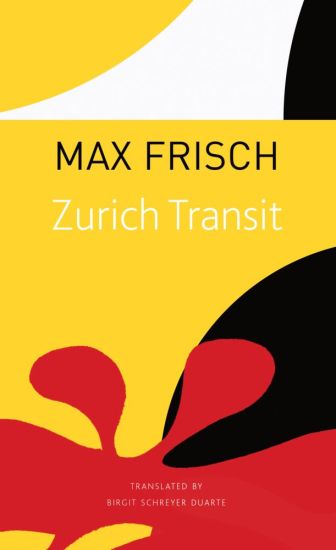
Zurich Transit

Zurich Transit

Max Frisch

Seagull Books London Ltd
2021
nidottu
This screenplay by Swiss playwright and novelist Max Frisch was developed from an episode in his 1964 novel Gantenbein, or A Wilderness of Mirrors. At the center of both works is Theo Ehrismann, a man who cannot seem to change his life no matter how many times he resolves to do so. Chance comes to Theo one day upon returning from a trip abroad—he arrives home to read his own obituary in the paper. He shows up just on time for his own funeral and observes the attending mourners, and yet he is not able to reveal himself to them, and especially not to his wife. “How does one say that he is alive,” wonders Theo.Life, as Frisch said, “is the sum of events that happen by chance, and it always could as well have turned out differently; there is not a single action or omission that does not allow for variables in the future.” Zurich Transit presents Frisch at the height of his dramatic powers and exemplifies his ardent believe in a dramaturgy of coincidence rather than causality.