Kirjojen hintavertailu. Mukana 12 390 323 kirjaa ja 12 kauppaa.

Kirjailija

Max Jacob

Kirjat ja teokset yhdessä paikassa: 7 kirjaa, julkaisuja vuosilta 2000-2023, suosituimpien joukossa Advice to a Young Poet. Vertaile teosten hintoja ja tarkista saatavuus suomalaisista kirjakaupoista.

7 kirjaa

Kirjojen julkaisuhaarukka 2000-2023.

The Dice Cup

The Dice Cup

Max Jacob

WAKEFIELD PRESS
2023
nidottu
The most important prose-poem collection of the 20th century, available in a trade publication for the first time Max Jacob’s role in French modernity was essential, and with this second volume of his work from Wakefield Press, it can now be fully and properly assessed. First published in 1917, The Dice Cup stands alongside Baudelaire’s Paris Spleen, Rimbaud’s Illuminations and Pierre Reverdy’s Prose Poems as one of the most important and foundational books of prose poetry. Jacob has been identified as a “cubist poet,” but this collection and its shifting style escape any such easy definition: dream accounts are rendered in playful prose that thumbs its nose at the fabular tradition of Baudelaire and Mallarmé and the Romantic disorder of Rimbaud, and subverts both poetic and narrative expectations in favor of dream logic, allusion, transformed autobiography and nonsensical parody. At once mystical and burlesque, the prose poems of Dice Cup are consciously constructed, yet as unstable and unfixed as both Jacob’s personality and our own. Max Jacob (1876–1944) was a French poet, painter, writer and critic. A key figure of bohemian Montmartre and the Cubist era, he rubbed shoulders with Apollinaire and Modigliani and was a lifelong friend to Picasso, Gris and Cocteau. Jacob converted from Judaism to Christianity in 1915. Arrested by the Gestapo in 1944, he died in a deportation camp of pneumonia. Rosanna Warren's critically acclaimed biography of Jacob was published in 2020.
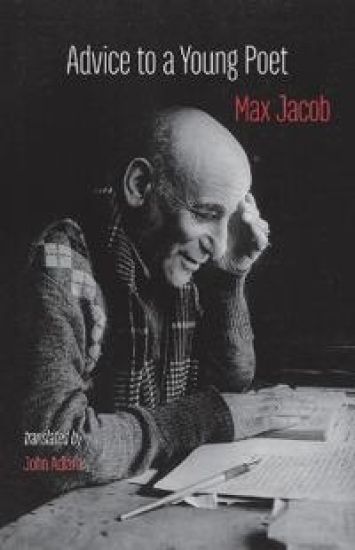
Advice to a Young Poet

Advice to a Young Poet

Max Jacob

Shearsman Books
2023
nidottu
'Advice to a Young Poet' is an English translation, first published on the centenary of the author's birth in 1967, of Max Jacob's posthumous 'Conseils a un jeune poete'. This was Jacob's last major statement on poetry, the culmination of a lifetime's reflection on and practice of the art. This book makes his great personal as well as literary influence on many poets and writers easier to understand. The translator, John Adlard, supplies an introduction which is a valuable contribution to the understanding of Jacob. The book is completed by a deeply personal preface from the pen of Edmond Jabes, and a historically important afterword by the "young poet" himself, Jacques Evrard, the first time he had expressed himself on the subject. "In 'Advice to a Young Poet' Max sets out to answer a question posed by the young man's father: 'What is a lyrical line?' It is his last major statement on poetry, the final development of the thinking of twenty-five years. 'Men used to believe,' he wrote in the 1916 preface to 'Le Cornet a Des', 'that artists are inspired by angels and that there are different categories of angels.' By 1941, after the years of prayer and contemplation at Saint-Benoit-sur-Loire, this is no longer what 'men used to believe', but a fact in the interior life of a poet, the interior life without which a poet cannot be permeable. Only in a mind that is permeable is that conflagration possible ('the conflagration,' he called it in his 'Art Poetique' of 1922, 'after the encounter of a harmonious man with himself') which produces the lyrical line, the 'consecrated line' identified by its euphoria and its euphony." -from John Adlard's introduction
The Central Laboratory

The Central Laboratory

Max Jacob

WAKEFIELD PRESS
2022
nidottu
The first English translation of the Cubist poet’s most important collection of verse poems—a wild grab bag of contradictory styles When Max Jacob published The Central Laboratory in 1921, Parisian Dada had just officially come to an end and Surrealism was yet to be born. The poetic scene in Paris was between definitions, and Jacob embodied that moment. The Central Laboratory is distinctly modern, yet utterly discordant with anything else that had been published before: a grab bag of popular genres, operettas, Breton folk song, nonsense poetry, nursery rhyme, doggerel, parody and puns in which sound often trumps sense and Jacob changes register on a dime. Employing Symbolist obscure reference, Cubist fracturing of perspective and Dadaist discontinuity, Jacob’s art of mixed signals and mocked allegory formulates a camp sensibility, a “queering” of literary style as riddled with contradiction as Jacob himself had been in his lifetime. A century after its initial publication in French, the book remains utterly peculiar and lost for too long in the shadow of Jacob’s more famous book of prose poems, The Dice Cup. Jacob himself said of The Central Laboratory: “it sums up 20 years and reflects 20 states of soul, often 20 styles either suffered or created by me.” Max Jacob (1876–1944) was a French poet, painter, writer and critic. A key figure of bohemian Montmartre and the Cubist era, he rubbed shoulders with such figures as Apollinaire and Modigliani, and was a lifelong friend to Picasso, Gris and Cocteau. Jacob converted from Judaism to Christianity in 1915. Arrested by the Gestapo in 1944, he died in a deportation camp of pneumonia. Rosanna Warren's critically acclaimed biography of Jacob was published in 2020.
Stikhotvorenija / Poesies
Maks Zhakob (1876-1944) - odna iz kljuchevykh figur vo frantsuzskoj poezii XX veka. "Pevets so mnozhestvom golosov", on byl chelovekom kontrastov i v zhizni, i v stikhakh. Svetskij dendi, on budet mechtat ob odinochestve, greshnik - stremitsja k svjatosti, mistifikator - stanet mistikom i umret muchenikom. Zhakob - svidetel i uchastnik vazhnejshikh sobytij "Prekrasnoj epokhi", drug Pikasso, Apollinera, Kokto. Ego tvorchestvo mnogoobrazno: stikhi v proze, belye stikhi, sonety, klassicheskij aleksandrijskij stikh, ballady, romany, pesy, novelly, skazki. Zhakob zanimal vazhnoe mesto v krugu parizhskoj bogemy nachala veka; vposledstvii on zhil otshelnikom pri monastyre v malenkom gorodke na Luare i umer v peresylnom lagere Dransi pod Parizhem. Pod stat izmenchivoj sudbe Zhakoba - ego stikhi: chereda masok, kostjumov, intonatsij.Perevodchik: Smirnova Alla
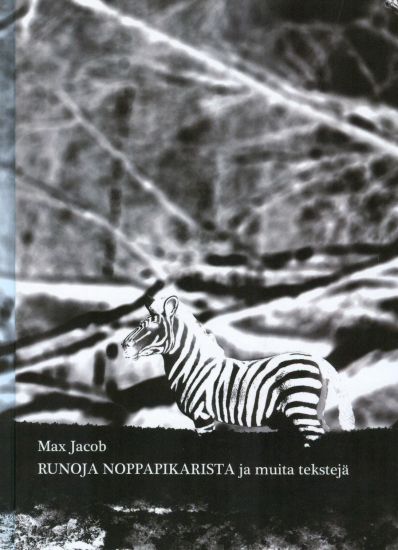
Runoja noppapikarista ja muita tekstejä

Runoja noppapikarista ja muita tekstejä

Max Jacob

Osuuskunta Poesia
2016
sidottu
Lisää runoja noppapikarista täydentää Max Jacobin aiempaa, kulttiasemaan kohonnutta käännöstä Runoja noppapikarista (1977, suom. Pekka Parkkinen ja Jaakko Ahokas), joka tarjoili ratkaisevia yllykkeitä 2000-luvun suomalaiselle proosarunobuumille. Jacobin sielukkaasti hulluttelevat proosarunot on suomentanut Tommi Nuopponen. Teos sisältää satakunta runoa ja proosarunon lajiteorian merkittävimpiin lukeutuvan esseen.Max Jacob (1876-1944) kuuluu proosarunon kehittäjiin ja ranskalaisen modernismin kärkinimiin. Jacobin runous yhdistelee herkullisen ristiriitaisia elementtejä, kuten katolista mystiikkaa ja absurdia komiikkaa.
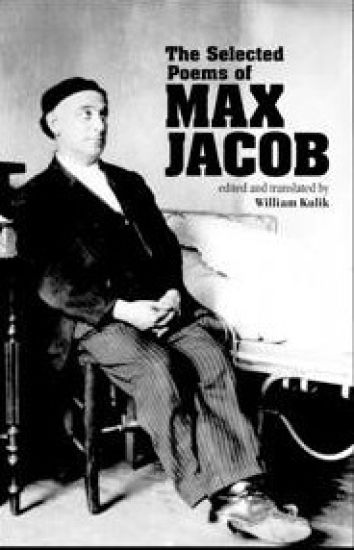
The Selected Poems of Max Jacob

The Selected Poems of Max Jacob

Max Jacob

Oberlin College Press
2000
nidottu
Even though he was an important founder of modernism, companion to Picasso, Modigliani, Apollinaire, and the early Surrealists, Max Jacob has remained a somewhat neglected and little-known figure. Now this delightful and utterly original poet has been given a detailed and careful presentation in English.