Kirjojen hintavertailu. Mukana 12 390 323 kirjaa ja 12 kauppaa.

Kirjailija

Max Lawton

Kirjat ja teokset yhdessä paikassa: 3 kirjaa, julkaisuja vuosilta 2022-2024, suosituimpien joukossa Red Pyramid. Vertaile teosten hintoja ja tarkista saatavuus suomalaisista kirjakaupoista.

3 kirjaa

Kirjojen julkaisuhaarukka 2022-2024.

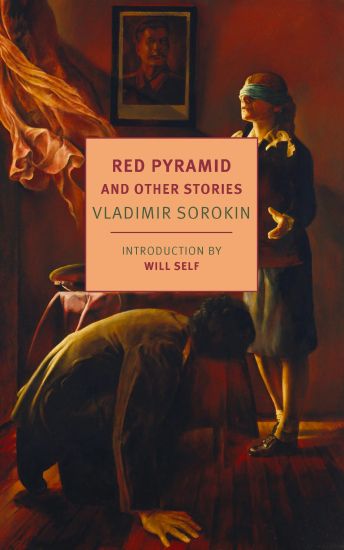
Red Pyramid

Red Pyramid

Vladimir Sorokin; Max Lawton

New York Review Books
2024
nidottu
Provocative, hilarious, and tender stories about sex, violence, politics from one of the greatest Russian writers of the post-Soviet era. Red Pyramid is a sort of "greatest hits" collection of short stories from across Vladimir Sorokin's career, beginning with juvenilia like "The Pink Tuber," composed with no expectation of either publication or readership; moving on to scatological conceptual texts like "An Obelisk"; then plunging into the more even-tempered, but still quite uncanny, delights of his post-Soviet work. Stories like "A Month in Dachau" earn Sorokin his moniker as the "Russian De Sade," while others, like "Timka," are shockingly tender--despite their graphic depictions of mass shootings and anal sex. This collection also contains the infamous "Nastya," a story about a family cannibalizing its daughter on the eve of the twentieth century, for which Sorokin was nearly put on trial; "Horse Soup," which was the first translation from the Russian to win an O'Henry Prize; as well as stories published in Anglophone magazines such as The New Yorker, n+1, Harper's, and The Baffler to great acclaim. Translated by Max Lawton with equal attention to chewiness and pop flair, Red Pyramid is introduced brilliantly, brutally, and as always, unexpectedly by Will Self. Red Pyramid is perhaps the best place to begin a dive into Sorokin's arch detonation of Russian violence.
Blue Lard

Blue Lard

Vladimir Sorokin; Max Lawton

New York Review Books
2024
nidottu
The Russian master's most infamous novel, a dystopian fever dream about cloning, alternative histories, and world domination. Vladimir Sorokin's Blue Lard is the most iconic and iconoclastic Russian novel of the last forty years. Thanks in part to its depiction of Stalin and Khrushchev having sex, which inspired a Putinist youth group to throw shredded copies of the author's books into an enormous toilet erected in front of Moscow's Bolshoi Theater, Blue Lard is the novel that tore Sorokin out of the Moscow Conceptualist underground and into the headlines. The book begins in a futuristic laboratory where genetic scientists speak in a Joycean dialect of Russian mixed with Chinese--peppered with ample neologisms--and work to clone famous Russian writers, who are then made to produce texts in the style of their forebears. The goal of this "script-process" is not the texts themselves, but the blue lard that collects in the small of their backs as they write. This substance is to be used to power reactors on the moon--that is, until a sect of devout nationalists breaks in to steal the blue lard, planning to send it back in time to an alternate version of the Soviet Union, one that exists on the margins of a Europe conquered by a long-haired Hitler with the ability to shoot electricity from his hands. What will come of this blue lard? Who will finally make use of its mysterious powers? Blue Lard is a stylistically acrobatic book, translated by Max Lawton into an English idiom just as bizarre as the Russian original. Evoking both Pulp Fiction and the masterpieces of the Marquis de Sade, Sorokin's novel is a brutal, heady trip that annihilates all of its twentieth- (and twenty-first-) century competition in the Russian canon--and that annihilates Russia itself in a resounding act of heavy-metal dissidence.
Telluria

Telluria

Vladimir Sorokin; Max Lawton

New York Review Books
2022
nidottu
In the warring, neo-feudal society of this cross-genre novel for fans of Cormac McCarthy and William Gibson, the greatest treasure is a dose of tellurium--a magical drug administered by a spike through the brain. Telluria is set in the future, when a devastating holy war between Europe and Islam has succeeded in returning the world to the torpor and disorganization of the Middle Ages. Europe, China, and Russia have all broken up. The people of the world now live in an array of little nations like puzzle pieces, each cultivating its own ideology or identity, a neo-feudal world of fads and feuds, in which no one power dominates. What does, however, travel everywhere is the appetite for the special substance tellurium. A spike of tellurium, driven into the brain by an expert hand, offers a transforming experience of bliss; incorrectly administered, it means death. The fifty chapters of Telluria map out this brave new world from fifty different angles, as Sorokin, always a virtuoso of the word, introduces us, among many other figures, to partisans and princes, peasants and party leaders, a new Knights Templar, a harem of phalluses, and a dog-headed poet and philosopher who feasts on carrion from the battlefield. The book is an immense and sumptuous tapestry of the word, carnivalesuqe and cruel, and Max Lawton, Sorokin's gifted translator, has captured it in an English that carries the charge of Cormac McCarthy and William Gibson.