Kirjojen hintavertailu. Mukana 12 390 323 kirjaa ja 12 kauppaa.

Kirjailija

Maxime Rodinson

Kirjat ja teokset yhdessä paikassa: 4 kirjaa, julkaisuja vuosilta 1981-2021, suosituimpien joukossa Muhammad. Vertaile teosten hintoja ja tarkista saatavuus suomalaisista kirjakaupoista.

4 kirjaa

Kirjojen julkaisuhaarukka 1981-2021.

Muhammad

Muhammad

Maxime Rodinson; Anne Carter

The New York Review of Books, Inc
2021
nidottu
A classic, secular history of the prophet Muhammad that vividly recreates the fascinating time in which Islam was born. Maxime Rodinson, both a maverick Marxist and a distinguished professor at the Sorbonne, first published his biography of Muhammad in 1960, and in the last half century the book has been widely read and established as a classic in its field. Rodinson, deeply familiar with the historical record and scholarly research into the Prophet's life, did not seek to add to it here but to introduce Muhammad, first of all, as "a man of flesh and blood" who led a life of extraordinary drama and shaped history as few others have. Equally, he sought to lay out an understanding of Muhammad's legacy and Islam as what he called an ideological movement, similar to the universalist religions of Christianity and Buddhism as well as the secular movement of Marxism, but possessing a singular commitment to "the deeply ingrained idea that Islam offers not only a path to salvation but (for many, above all) the ideal of a just society to be realized on earth." Rodinson's book begins by introducing the specific land and the larger world into which Muhammad was born and the development of his prophetic calling. It then follows the steps of his career and the way his leadership gave birth to a religion and a state. A final chapter considers the world as Islam has transformed. The book as a whole offers a vivid and indispensable account of an extraordinary man and his achievement.
Muhammed

Muhammed

Maxime Rodinson; Jan Hjärpe

Alhambra Förlag AB
2018
nidottu
”Muhammed” är inte bara redogörelsen för en mans liv. Det är också en studie av en religions uppkomst och inverkan på ett samhälle. 600-talets Arabien var splittrat och i många avseenden primitivt, men på väg från ett nomadsamhälle till ett bofast sådant trots stammarnas ständiga inbördes strider. Islam, som manar till underkastelse under Guds vilja, sammangöt denna nation till en enhet och entusiasmerade den till att bli en erövrande kraft som inom ett sekel efter profetens död lagt under sig det enorma området från Pyrenéer­na till Kinas gräns. Rodinsons livfulla och läsvärda biografi om islams profet, Muhammed, vilar på en kritisk tolkning av de arabiska källor som finns, kombinerat med hans bruk av annat material, latinska, grekiska, syriska och andra källors uppgifter som då belyser skeendena på Arabiska halvön och Mellanöstern under den här epoken. Han har också gått genom den tidigare forskningen och tar kritiskt ställning till dess olika resultat. Hans enorma beläsenhet kommer verkligen fram i den fascinerande skildring som han ger oss här. Maxime Rodinson (1915-2004), som här uppvisar sin välkända lärdom, insikt och intelligens, har skrivit en bok som inte bara har blivit ett värdefullt tillskott till samhällsvetarnas och histori­kernas bokhyllor utan också fängslande läsning för lekmannen.
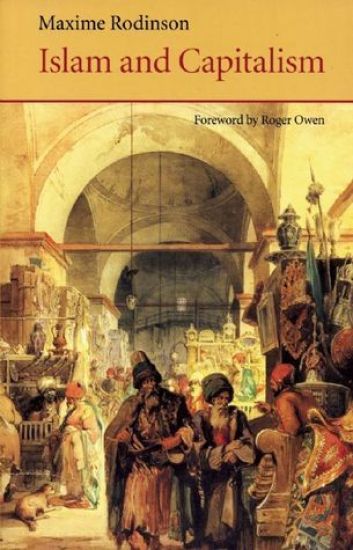
Islam and Capitalism

Islam and Capitalism

Maxime Rodinson

Saqi Books
2007
nidottu
Islam and Capitalism is a learned, engaged rebuttal of the cultural reductionism of Max Weber and others who have tried to explain the politics and society of the Middle East by reference to some unchanging entity called 'Islam,' typically characterised as instinctively hostile to capitalism. Maxime Rodinson looks at the facts, analysing economic texts with his customary common sense, to show that Muslims never had any trouble making money.
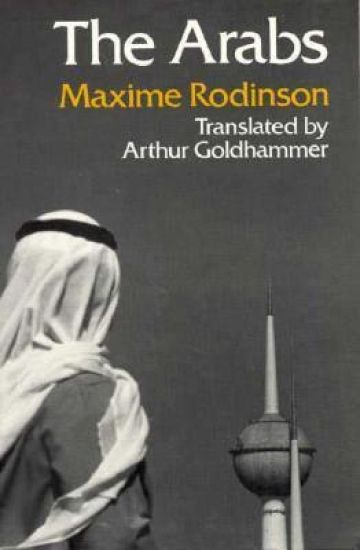
The Arabs

The Arabs

Maxime Rodinson

University of Chicago Press
1981
nidottu
Maxime Rodinson has long been known in Europe as one of the foremost interpreters of Arab history and thought. In this concise overview of the Arab people and their distinctive culture, the author discusses the extend to which Arabs can be defined by religion, language, or race; surveys the Arab diaspora; examines modern Arab nationalism; and questions the degree to which it is possible to generalize about the Arab people and their "personality."