Kirjojen hintavertailu. Mukana 12 595 353 kirjaa ja 12 kauppaa.

Kirjailija

Medbh McGuckian

Kirjat ja teokset yhdessä paikassa: 12 kirjaa, julkaisuja vuosilta 1995-2024, suosituimpien joukossa My Loved Has Fared Inland. Vertaile teosten hintoja ja tarkista saatavuus suomalaisista kirjakaupoista.

12 kirjaa

Kirjojen julkaisuhaarukka 1995-2024.

The Thankless Paths to Freedom

The Thankless Paths to Freedom

Medbh McGuckian

Wake Forest University Press
2024
nidottu
Has there been a more thankless path in recent history than the one we are on now? Medbh McGuckian's newest volume asks this question, conceived in the years between the centenary anniversaries of the 1916 Rising and the establishment of the Northern Irish State in 1921. Poems are preoccupied with imprisonment, from the County Down Maze Prison to the sentencing of revolutionary nationalist Constance Markievicz, as violence mingles with a dreamlike glow: " The unintended beauty of this map / of bomb damage." McGuckian's familiar angels flutter at the edges of poems alongside images of Mars and the earth-like alternate universe of Kepler452b. An invisible illness haunts many of the poems-- " One longs to go to a hospital and have something / cut out." Written between personal and public histories, based in both borrowings and startling associations, McGuckian continues to craft a singular lyric subjectivity open to the multiplicity of experience: When I was in my right mind my body was doing its best without me-- when I say ' talking to myself' I mean there are two of me. -- From " The Plume Trade"
Her Other Language

Her Other Language

Lucy Caldwell; Susannah Dickey; Jan Carson; Medbh McGuckian; Anne Devlin; Sophia Hillan; Leontia Flynn; Kerry Hardie

ARLEN HOUSE
2021
nidottu
This pioneering anthology goes beyond awareness building to engage seriously with the societal prevalence of sexist abuse and domestic violence, and the legacies of that abuse and violence in the lives of survivors. Approaching difficult subject matter with candor, sensitivity, and grace, the volume is timely, and deeply moving.
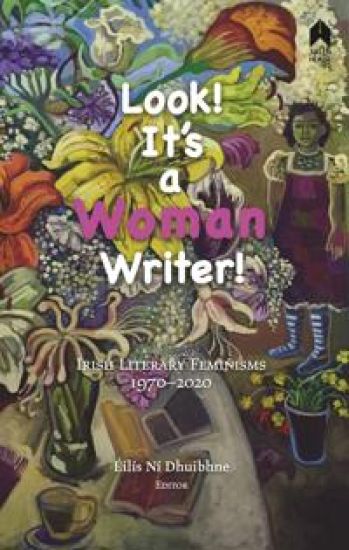
Look! It's a Woman Writer!

Look! It's a Woman Writer!

Medbh McGuckian; Mary O'Malley; Mary O'Donnell; Catherine Dunne; Moya Cannon; Anne Devlin; Evelyn Conlon; Mary Dorcey

ARLEN HOUSE
2021
nidottu
Mapping the changes that have occurred in Irish literature over the past fifty years, this volume includes twenty-one writers, poets, and playwrights from the North and South of Ireland, who tell their own stories. They are funny, tragic, angry, philosophical, but all are vivid personal accounts of their experiences as women writing during a pivotal period in the history of Ireland. With a foreword by Martina Devlin, and an introduction by Éilís Ní Dhuibhne, the anthology includes essays by Cherry Smyth, Mary Morrissy, Lia Mills, Moya Cannon, Aine Ní Ghlinn, Catherine Dunne, Éilís Ní Dhuibhne, Mary O’Donnell, Mary O’Malley, Ruth Carr, Evelyn Conlon, Anne Devlin, Ivy Bannister, Sophia Hillan, Medbh McGuckian, Mary Dorcey, Celia de Fréine, Máiríde Woods, Liz McManus, Mary Rose Callaghan, and Phyl Herbert.
Love, the Magician

Love, the Magician

Medbh McGuckian

Arlen House
2018
nidottu
One of Ireland's most internationally celebrated authors returns with a new feminist collection of poetry exploring the lives of women told through the language of men who exploited them. Despite the somber subject matter, McGuckian's collection is full of humor and light.
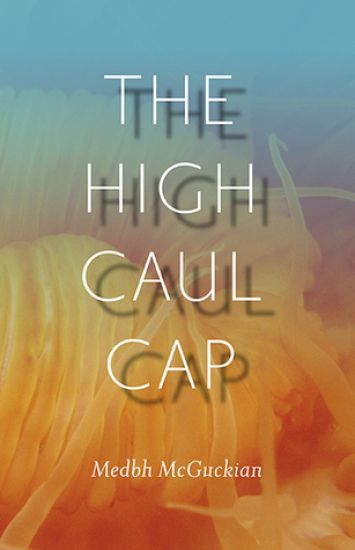
The High Caul Cap

The High Caul Cap

Medbh McGuckian

Wake Forest University Press
2013
nidottu
The High Caul Cap is both the name of a traditional Irish air and a symbol for the link remaining after birth between mother and child. The caul was superstitiously regarded as a good omen and so kept at the hearth as a preservative against drowning. This symbolic gesture helps us to fathom the watery imagery in this volume, which traces the decline and death of the poet's mother. Medbh McGuckian's writing is always profoundly sensual, but now, with the maternal body at stake in its meditations, the physical takes on supernatural powers. Poetry relies on the senses for proof, much as the doubter relies on touch to be convinced of the miraculous. Mother-daughter relationships move down the generations ("I discover a photograph / of my beautiful sculpted daughter" from "Corner of Field with Farm") trying to establish the exact nature of their love. As in many of McGuckian's books, blue is a sacred color (of the Madonna, the sea, the sky) and saints and angels appear throughout the volume as though to remind us of how the masters used such icons to transform their myths into art. McGuckian uses these icons to grieve for, interrogate, and transform into poetry her late mother's "tangible gaze."
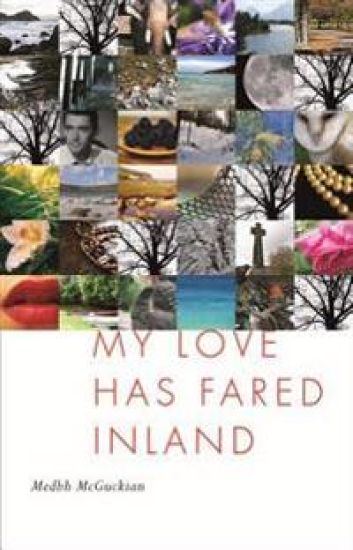
My Loved Has Fared Inland

My Loved Has Fared Inland

Medbh McGuckian

Wake Forest University Press
2010
nidottu
An elaborate collage of such themes as death, writing, nature, and love, Medbh McGuckian's My Love Has Fared Inland shows how failure, loss, the play of seasons, and light are the subjects of her spiritual and creative journey. McGuckian's poetry has always been self-reflexive and introverted, celebrating the aesthetic of language while mistrusting linguistic representation.
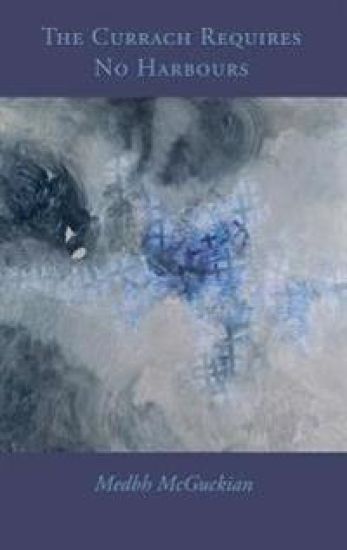
The Currach Requires No Harbours

The Currach Requires No Harbours

Medbh McGuckian

Wake Forest University Press
2007
nidottu
In this volume, Medbh McGuckian unfolds a beautiful array of themes--art, religion, landscape, nation, home--that will be as seductive to initiates as they are glowingly familiar to lovers of her work. We start with sensual understanding ("the form of feeling"), move among the various arenas of experience (sexuality, work, marriage), women's sensations in particular, and even more specifically the religious passions of women, and consider their lives on islands both symbolic and real, islands with which McGuckian has often signaled the existence of the individual, as well as Ireland's place in the larger world. The poems cast an hypnotic spell that grows until, in the deep acknowledgement of human suffering, the reader becomes a "picturesque believer" in "saints that have the gift of dreaming right" ("Galilee Porch"). The source of such visionary belief is in perception itself. Like the currach of its title, her style moves fleetly across its contents, requiring no particular harbors because all harbors, and subjects, are its own.
The Book of the Angel

The Book of the Angel

Medbh McGuckian

Wake Forest University Press
2004
sidottu
Medbh McGuckian's subject in The Book of the Angel is religious, but it is never conventional. The title is derived from the Liber Angeli, a Latin document of Early Christian Ireland in which Saint Patrick, speaking with an angel, is granted the ecclesiastical see of Armagh. The images are drawn from Mediaeval and Renaissance art and are as driven by the irreconcilable mysteries of Christ's Passion and Incarnation, by the sacred and profane, as was the work of the old masters. The poet's landscapes are tangible, painterly, moving from the angels of Ireland to those of Los Angeles and Hollywood--and toward unreality in the Baroque tradition of trompe l'oeil. McGuckian's poems remind one how different poetry is from prose; why it is a sister art of music and painting.
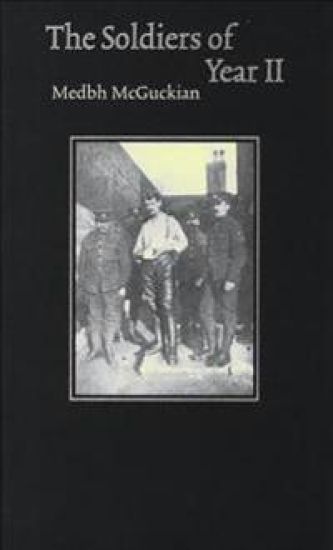
The Soldiers of Year II

The Soldiers of Year II

Medbh McGuckian

Wake Forest University Press
2002
nidottu
While The Soldiers of Year II is not overtly militant or nationalist, in poem after poem the enforced forms of peace seem only an inversion of those of the prior war. In these poems persists a suggestion that has come through in each of McGuckian's recent volumes: while the body may become a shared prison, nevertheless through its agency, through its ability, literally to act, the suffering and even the dead may find, if not release, then at least a common language.
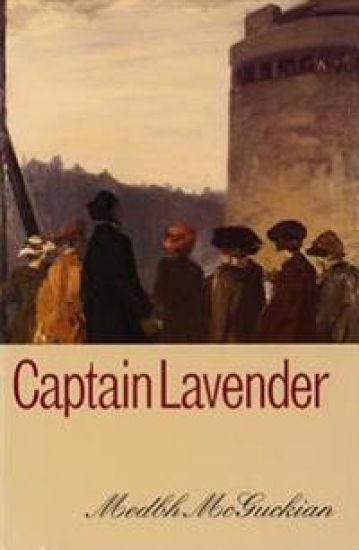
Captain Lavender

Captain Lavender

Medbh McGuckian

Wake Forest University Press
1995
sidottu
In this volume, Medbh McGuckian unfolds a beautiful array of themes--art, religion, landscape, nation, home--that will be as seductive to initiates as they are glowingly familiar to lovers of her work. We start with sensual understanding ("the form of feeling"), move among the various arenas of experience (sexuality, work, marriage), women's sensations in particular, and even more specifically the religious passions of women, and consider their lives on islands both symbolic and real, islands with which McGuckian has often signaled the existence of the individual, as well as Ireland's place in the larger world. The poems cast an hypnotic spell that grows until, in the deep acknowledgement of human suffering, the reader becomes a "picturesque believer" in "saints that have the gift of dreaming right" ("Galilee Porch"). The source of such visionary belief is in perception itself. Like the currach of its title, her style moves fleetly across its contents, requiring no particular harbors because all harbors, and subjects, are its own.