Kirjojen hintavertailu. Mukana 12 595 353 kirjaa ja 12 kauppaa.

Kirjailija

Meg Harris Williams

Kirjat ja teokset yhdessä paikassa: 15 kirjaa, julkaisuja vuosilta 1982-2026, suosituimpien joukossa Donald Meltzer. Vertaile teosten hintoja ja tarkista saatavuus suomalaisista kirjakaupoista.

15 kirjaa

Kirjojen julkaisuhaarukka 1982-2026.

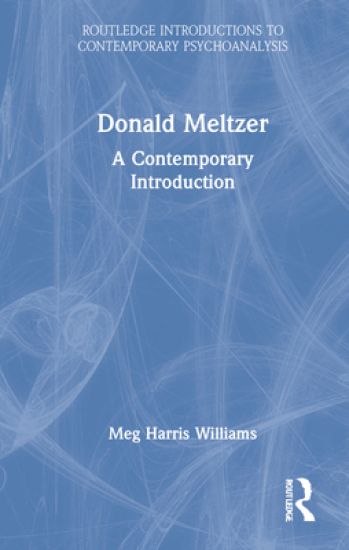
Donald Meltzer

Donald Meltzer

Meg Harris Williams

Routledge
2021
sidottu
In this intelligent and insightful work, Meg Harris Williams presents a clear and readable introduction to the works of influential psychoanalyst Donald Meltzer. The book covers Meltzer’s ideas on key themes including sexuality, dreams, psychosis, perversion and aesthetics, and his work with both children and adults.This book focuses especially on Meltzer’s views on the nature of psychoanalysis itself, as an investigative method conducted by the cooperation between two people. His intuitive understanding of dreams is underscored by a scholarly interest in philosophy and linguistics. The book will give readers a window into Meltzer’s clinical seminars and supervisions, as well as a comprehensive overview of his published work, all thoughtfully brought together by someone who worked with Meltzer for many years.Bringing Meltzer’s ideas into contemporary context, this fresh approach to his work makes his rich and complex theories about our inner world accessible to all. Part of the Routledge Introductions to Contemporary Psychoanalysis series, this book will be of great importance to psychoanalysts, clinicians and scholars familiar with Meltzer’s ideas, as well as those seeking an introduction to his work.
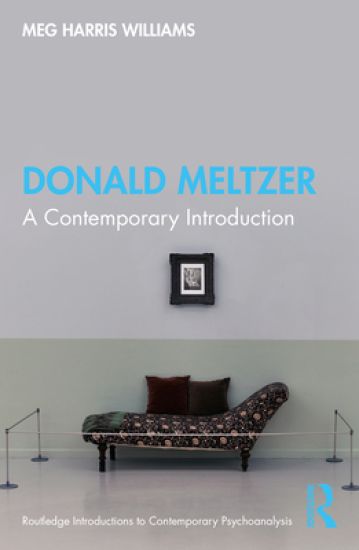
Donald Meltzer

Donald Meltzer

Meg Harris Williams

Routledge
2021
nidottu
In this intelligent and insightful work, Meg Harris Williams presents a clear and readable introduction to the works of influential psychoanalyst Donald Meltzer. The book covers Meltzer’s ideas on key themes including sexuality, dreams, psychosis, perversion and aesthetics, and his work with both children and adults.This book focuses especially on Meltzer’s views on the nature of psychoanalysis itself, as an investigative method conducted by the cooperation between two people. His intuitive understanding of dreams is underscored by a scholarly interest in philosophy and linguistics. The book will give readers a window into Meltzer’s clinical seminars and supervisions, as well as a comprehensive overview of his published work, all thoughtfully brought together by someone who worked with Meltzer for many years.Bringing Meltzer’s ideas into contemporary context, this fresh approach to his work makes his rich and complex theories about our inner world accessible to all. Part of the Routledge Introductions to Contemporary Psychoanalysis series, this book will be of great importance to psychoanalysts, clinicians and scholars familiar with Meltzer’s ideas, as well as those seeking an introduction to his work.
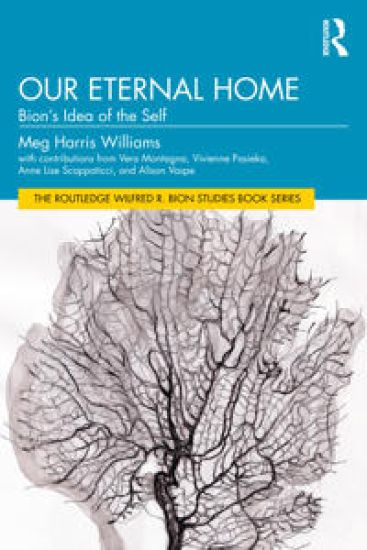
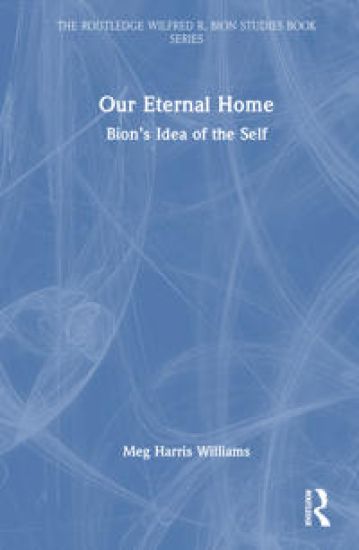
Our Eternal Home

Our Eternal Home

Meg Harris Williams

TAYLOR FRANCIS LTD
2026
nidottu
In this fascinating volume, Meg Harris Williams explores Wilfred Bion’s autobiographical works, analysing their theoretical importance and continued relevance to the personal experience of others. Williams shows how these works are less about Bion’s life and more about his way of thinking, in which episodes from his own experience are used to illustrate the mind in action. His model of the mind is vividly evoked through his own presentation of himself and his manner of noting and observing internal conflicts. His example constitutes a unique resource in the process of self-analysis, something which is illustrated here by the experiential responses of four contributing psychoanalysts: Vera Montagna, Vivienne Pasieka, Anne Lise Scappaticci and Alison Vaspe. This book is a fundamentally enriching tool for the practising psychoanalyst, and an invaluable resource for students of psychoanalysis and psychology, as well as those interested in autobiographical literature.
Our Eternal Home

Our Eternal Home

Meg Harris Williams

TAYLOR FRANCIS LTD
2026
sidottu
In this fascinating volume, Meg Harris Williams explores Wilfred Bion’s autobiographical works, analysing their theoretical importance and continued relevance to the personal experience of others. Williams shows how these works are less about Bion’s life and more about his way of thinking, in which episodes from his own experience are used to illustrate the mind in action. His model of the mind is vividly evoked through his own presentation of himself and his manner of noting and observing internal conflicts. His example constitutes a unique resource in the process of self-analysis, something which is illustrated here by the experiential responses of four contributing psychoanalysts: Vera Montagna, Vivienne Pasieka, Anne Lise Scappaticci and Alison Vaspe. This book is a fundamentally enriching tool for the practising psychoanalyst, and an invaluable resource for students of psychoanalysis and psychology, as well as those interested in autobiographical literature.
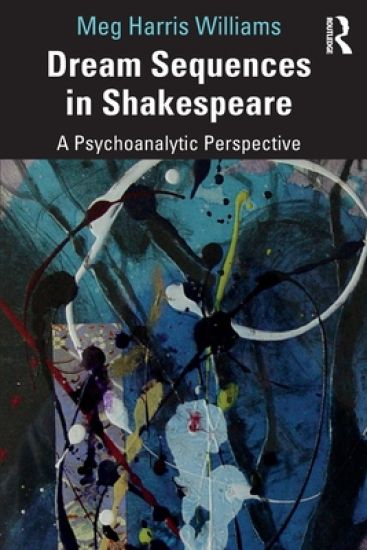
Dream Sequences in Shakespeare

Dream Sequences in Shakespeare

Meg Harris Williams

Routledge
2020
nidottu
This book takes a new approach to Shakespeare’s plays, exploring them as dream-thought in the modern psychoanalytic sense of unconscious thinking.Through his commitment to poetic language, Shakespeare offers images and dramatic sequences that illustrate fundamental developmental conflicts, the solutions for which are not preconceived but evolve through the process of dramatisation. In this volume, Meg Harris Williams explores the fundamental distinction between the surface meanings of plot or argument and the deep grammar of dreamlife, applied not only to those plays known as ‘dream-plays’ but also to critical sequences throughout Shakespeare’s oeuvre.Through a post-Kleinian model based on the thinking of Bion, Meltzer, and Money-Kyrle, this book sheds new light on both Shakespeare’s own relation to the play and on the identificatory processes of the playwright, reader, or audience. Dream Sequences in Shakespeare is important reading for psychoanalysts, playwrights, and students.
Dream Sequences in Shakespeare

Dream Sequences in Shakespeare

Meg Harris Williams

Routledge
2020
sidottu
This book takes a new approach to Shakespeare’s plays, exploring them as dream-thought in the modern psychoanalytic sense of unconscious thinking.Through his commitment to poetic language, Shakespeare offers images and dramatic sequences that illustrate fundamental developmental conflicts, the solutions for which are not preconceived but evolve through the process of dramatisation. In this volume, Meg Harris Williams explores the fundamental distinction between the surface meanings of plot or argument and the deep grammar of dreamlife, applied not only to those plays known as ‘dream-plays’ but also to critical sequences throughout Shakespeare’s oeuvre.Through a post-Kleinian model based on the thinking of Bion, Meltzer, and Money-Kyrle, this book sheds new light on both Shakespeare’s own relation to the play and on the identificatory processes of the playwright, reader, or audience. Dream Sequences in Shakespeare is important reading for psychoanalysts, playwrights, and students.
Bion's Dream

Bion's Dream

Meg Harris Williams

Routledge
2019
sidottu
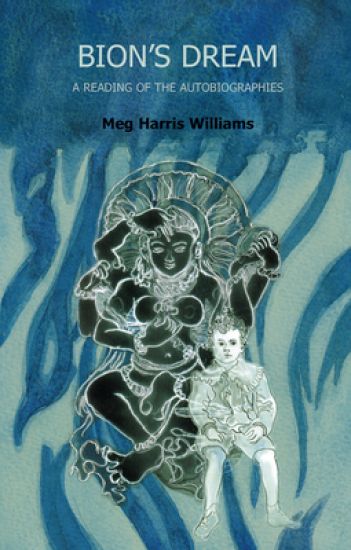
This book offers a definitive reading of Bion's remarkable autobiographical writings from a perspective embedded in the poetry of the ages, that of the Romantics in particular. It is at once learned and, utterly freshly, able to explore the inside story of Bion's life and mind. The volume is a distillation and elaboration of the work of many years. Whilst ostensibly an extended commentary on the autobiographical works themselves, it is also, in its own right, a tour de force, engaging, as it does, with the heart of the matter: with the development of a psychoanalyst, of a life, a self, a mind, thoroughly inward with the "dark and sombre world of thought".'- Margot Waddell, psychoanalyst and consultant child psychotherapist, Tavistock Clinic
The Vale of Soulmaking

The Vale of Soulmaking

Meg Harris Williams

Routledge
2019
sidottu
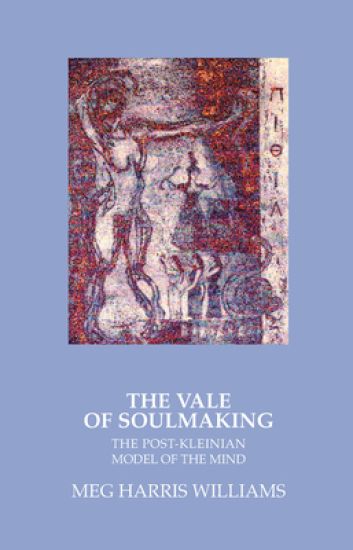
The post-Kleinian model of the mind, as developed by W. R. Bion and Donald Meltzer, is essentially an aesthetic one. It is founded on Melanie Klein's discovery of the "internal object" with its combined masculine and feminine qualities and ambiguous, awe-inspiring nature. Turbulent emotional experiences are repeatedly transformed through symbol-formation, on the basis of the internal relationship between the infant self and its object; and the aesthetic containment provided by this "counter-transference dream" (as Meltzer put it) enables the mind to digest its conflicts and develop.This search for a pattern that can make "contrary" emotions thinkable is modelled by all art forms and accounts for their universal significance. It is a process that can be observed particularly clearly in literature, in the form of the romance between the poet and his Muse (the traditional formulation of the psycho-analytic internal object).
The Aesthetic Development

The Aesthetic Development

Meg Harris Williams

Routledge
2019
sidottu
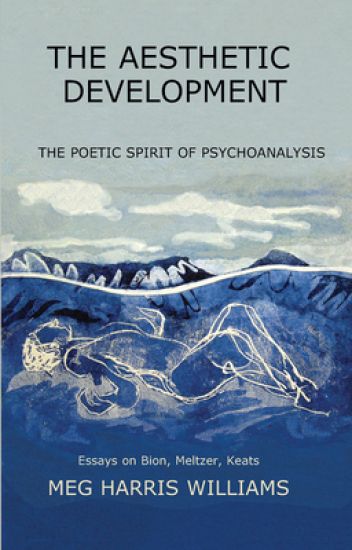
Few people would be better qualified than the author to write this innovative and eagerly anticipated post-Kleinian book. Deeply versed in the opus of Bion and Meltzer, the author enhances the concept of "catastrophic change". The analyst who "eschews memory and desire" observes the subtle interplay of transference and countertransference (Meltzer's "counter dreaming") as it works through aesthetic conflicts. The ensuing reciprocity of the patients and analysts unconscious is revealed as the aesthetical and ethical basis of psychoanalysis. In that sense the psychoanalytical process parallels that of poetic and artistic inspiration. They are all generated by creative internal objects. Harris Williams' intellectual tour de force demonstrates convincingly the human capacity for symbolic thinking that underlies literary, artistic and psychoanalytic creativity. Her encyclopaedic understanding of literature, art and psychoanalysis contributes to this book's virtuosity.'- Irene Freeden, Senior Member of the British Association of Psychotherapists
The Art of Personality in Literature and Psychoanalysis
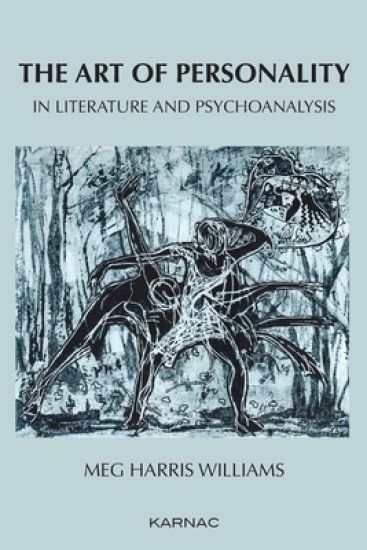
The Art of Personality is a diverse selection of talks and papers on psychoanalysis and literature given by the author over the past ten years. They elaborate on the goal expressed by Milton as 'becoming a true poem': that is, seeing parallels between the gradual construction of the personality and the construction of a work of art, following an internal evolution on the lines of Bion's description of an 'endoskeletonous personality'. The works discussed range from classic Greek drama to Dostoevsky, Kafka, and Patrick White. The author's thoughts on our interaction with literature stand alongside those of Adrian Stokes and Richard Wollheim on understanding paintings. She brings together a broad knowledge of ancient and modern writings with a deep understanding of the creatively imaginative mind, illuminated by post-Kleinian psychoanalysis. This book will be a source of pleasure and inspiration both to general lovers of literature and to psychoanalytic workers who value the poetic aspects of their patients and their own forms of expression.'
The Chamber of Maiden Thought (Psychology Revivals)

The Chamber of Maiden Thought (Psychology Revivals)

Meg Harris Williams; Margot Waddell

Routledge
2014
nidottu
Literature is recognised as having significantly influenced the development of modern psychoanalytic thought. In recent years psychoanalysis has drawn increasingly on the literary and artistic traditions of western culture and moved away from its original medical–scientific context. Originally published in 1991 The Chamber of Maiden Thought (Keats's metaphor for 'the awakening of the thinking principle') is an original and revealing exploration of the seminal role of literature in forming the modern psychoanalytic model of the mind.The crux of the 'post-Kleinian' psychoanalytic view of personality development lies in the internal relations between the self and the mind's 'objects'. Meg Harris Williams and Margot Waddell show that these relations have their origins in the drama of identifications which we can see played out metaphorically and figuratively in literature, which presents the self-creative process in aesthetic terms. They argue that psychoanalysis is a true child of literature rather than merely the interpreter or explainer of literature, illustrating this with some examples from clinical experience, but drawing above all on close scrutiny of the dynamic mental processes presented in the work of Shakespeare, Milton, the Romantic poets, Emily Bronte and George Eliot.The Chamber of Maiden Thought will encourage psychoanalytic workers to respond to the influence of literature in exploring symbolic mental processes. By bringing psychoanalysis into creative conjunction with the arts, it enables practitioners to tap a cultural potential whose insights into the human mind are of immense value.
The Chamber of Maiden Thought (Psychology Revivals)

The Chamber of Maiden Thought (Psychology Revivals)

Meg Harris Williams; Margot Waddell

Routledge
2013
sidottu
Literature is recognised as having significantly influenced the development of modern psychoanalytic thought. In recent years psychoanalysis has drawn increasingly on the literary and artistic traditions of western culture and moved away from its original medical–scientific context. Originally published in 1991 The Chamber of Maiden Thought (Keats's metaphor for 'the awakening of the thinking principle') is an original and revealing exploration of the seminal role of literature in forming the modern psychoanalytic model of the mind.The crux of the 'post-Kleinian' psychoanalytic view of personality development lies in the internal relations between the self and the mind's 'objects'. Meg Harris Williams and Margot Waddell show that these relations have their origins in the drama of identifications which we can see played out metaphorically and figuratively in literature, which presents the self-creative process in aesthetic terms. They argue that psychoanalysis is a true child of literature rather than merely the interpreter or explainer of literature, illustrating this with some examples from clinical experience, but drawing above all on close scrutiny of the dynamic mental processes presented in the work of Shakespeare, Milton, the Romantic poets, Emily Bronte and George Eliot.The Chamber of Maiden Thought will encourage psychoanalytic workers to respond to the influence of literature in exploring symbolic mental processes. By bringing psychoanalysis into creative conjunction with the arts, it enables practitioners to tap a cultural potential whose insights into the human mind are of immense value.