Kirjojen hintavertailu. Mukana 12 595 353 kirjaa ja 12 kauppaa.

Kirjailija

Mehran Kamrava

Kirjat ja teokset yhdessä paikassa: 32 kirjaa, julkaisuja vuosilta 1992-2025, suosituimpien joukossa Democracy in the Balance. Vertaile teosten hintoja ja tarkista saatavuus suomalaisista kirjakaupoista.

32 kirjaa

Kirjojen julkaisuhaarukka 1992-2025.

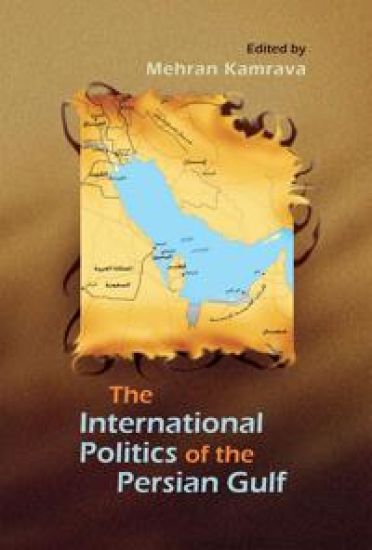
The International Politics of the Persian Gulf

The International Politics of the Persian Gulf

Mehran Kamrava

Syracuse University Press
2011
sidottu
For much of the contemporary history of the Middle East, the Persian Gulf has stood at the center of the region's strategic significance. At the same time, the Gulf has been wracked by political instability and tension. As far back as the late nineteenth and early twentieth centuries, Britain zeroed in on the Persian Gulf as a critical passageway to its crown jewel, India, and entered into protectorate agreements with local ruling families, thus bestowing on them international legitimacy and, eventually, the resources and support necessary to ascend to kingships. Today, the region is undergoing profound changes that range from rapid economic and infrastructural development to tumultuous social and cultural transformations. Far from eroding the area's political significance, these changes have only accentuated rivalries and tensions and have brought to the forefront new challenges to international security and stability.Together, the essays in this volume present a comprehensive, detailed, and accessible account of the international politics of the region. Focusing on the key factors that give the Persian Gulf its strategic significance, contributors look at the influence of vast deposits of oil and natural gas on international politics, the impact of the competing centers of power of Iran and Saudi Arabia, the nature of relationships among countries within the Persian Gulf, and the evolving interaction between Islam and politics. Throughout the collection, issues of internal and international security are shown to be central.Drawing on the comprehensive knowledge and experience of experts in the region, The International Politics of the Persian Gulf shines a bright light on this area, offering insights and thoughtful analyses on the critical importance of this troubled region to global politics.
Iran's Intellectual Revolution

Iran's Intellectual Revolution

Mehran Kamrava

Cambridge University Press
2008
sidottu
Since its revolution in 1979, Iran has been viewed as the bastion of radical Islam and a sponsor of terrorism. The focus on its volatile internal politics and its foreign relations has, according to Kamrava, distracted attention from more subtle transformations which have been taking place there in the intervening years. With the death of Ayatollah Khomeini a more relaxed political environment opened up in Iran, which encouraged intellectual and political debate between learned elites and religious reformers. What emerged from these interactions were three competing ideologies which Kamrava categorises as conservative, reformist and secular. As the book aptly demonstrates, these developments, which amount to an intellectual revolution, will have profound and far-reaching consequences for the future of the Islamic republic, its people and very probably for countries beyond its borders. This thought-provoking account of the Iranian intellectual and cultural scene will confound stereotypical views of Iran and its mullahs.
Iran's Intellectual Revolution

Iran's Intellectual Revolution

Mehran Kamrava

Cambridge University Press
2008
pokkari
Since its revolution in 1979, Iran has been viewed as the bastion of radical Islam and a sponsor of terrorism. The focus on its volatile internal politics and its foreign relations has, according to Kamrava, distracted attention from more subtle transformations which have been taking place there in the intervening years. With the death of Ayatollah Khomeini a more relaxed political environment opened up in Iran, which encouraged intellectual and political debate between learned elites and religious reformers. What emerged from these interactions were three competing ideologies which Kamrava categorises as conservative, reformist and secular. As the book aptly demonstrates, these developments, which amount to an intellectual revolution, will have profound and far-reaching consequences for the future of the Islamic republic, its people and very probably for countries beyond its borders. This thought-provoking account of the Iranian intellectual and cultural scene will confound stereotypical views of Iran and its mullahs.
Understanding Comparative Politics

Understanding Comparative Politics

Mehran Kamrava

Routledge
2008
nidottu
Comparative politics has undergone significant theoretical changes in recent decades. Particularly since the 1980s, a new generation of scholars have revamped and rejuvinated the study of the subject.Mehran Kamrava examines current and past approaches to the study of comparative politics and proposes a new framework for analysis. This is achieved through a comparative examination of state and social institutions, the interactions that occur between them, and the poltical cultures within which they operate. The book also offers a concise and detailed synthesis of existing comparative frameworks that, up to now at least, have encountered analytical shortcomings on their own.Although analytically different in its arguments and emphasis from the current "Mainstream" genre of literature on comparative politics, the present study is a logical outgrowth of the scholarly works of the last decade or so. It will be essential reading for all students of comparative politics.
Understanding Comparative Politics

Understanding Comparative Politics

Mehran Kamrava

Routledge
2008
sidottu
Comparative politics has undergone significant theoretical changes in recent decades. Particularly since the 1980s, a new generation of scholars have revamped and rejuvinated the study of the subject.Mehran Kamrava examines current and past approaches to the study of comparative politics and proposes a new framework for analysis. This is achieved through a comparative examination of state and social institutions, the interactions that occur between them, and the poltical cultures within which they operate. The book also offers a concise and detailed synthesis of existing comparative frameworks that, up to now at least, have encountered analytical shortcomings on their own.Although analytically different in its arguments and emphasis from the current "Mainstream" genre of literature on comparative politics, the present study is a logical outgrowth of the scholarly works of the last decade or so. It will be essential reading for all students of comparative politics.
Politics and Society in the Developing World
This book is a welcome new edition, which completely updates and revises the very popular first edition, Politics and Society in the Third World. Mehran Kamrava has brought the book in line with the major changes in global politics, and the politics and social issues of the developing world.The book examines key issues such as democratisation: civil society organisations and NGOs, 'political society', state collapse, democratic bargains and transition, consolidation and problems of legitimacy, elections, multi-party politics; industrial development; dependency theory and globalisation; the roles of the IMF and the World Bank, the GATT and other multinational institutions; urbanisation; social change; the increasing influence of western values, capital and institutions; urbanisation; social change; the increasing influence of western values, capital and institutions; political culture: its role and impact in newly democratic developing countries; revolution; and gives more examples from Africa, East Asia and rural societies.
Politics and Society in the Developing World
This book is a welcome new edition, which completely updates and revises the very popular first edition, Politics and Society in the Third World. Mehran Kamrava has brought the book in line with the major changes in global politics, and the politics and social issues of the developing world.The book examines key issues such as democratisation: civil society organisations and NGOs, 'political society', state collapse, democratic bargains and transition, consolidation and problems of legitimacy, elections, multi-party politics; industrial development; dependency theory and globalisation; the roles of the IMF and the World Bank, the GATT and other multinational institutions; urbanisation; social change; the increasing influence of western values, capital and institutions; urbanisation; social change; the increasing influence of western values, capital and institutions; political culture: its role and impact in newly democratic developing countries; revolution; and gives more examples from Africa, East Asia and rural societies.
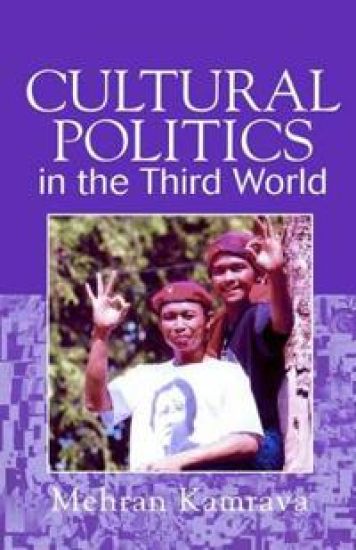
Cultural Politics in the Third World
First Published in 1999. This book does not aim to offer a new or radically different interpretation of the ongoing debate over cultural geography. Kamrava states nor does it seek to present a universal theory of what Third World countries have done or ought to do as they navigate the political, economic and sociocultural traumas of development. Instead, it tries to place culture in its proper political perspective in the Third World.
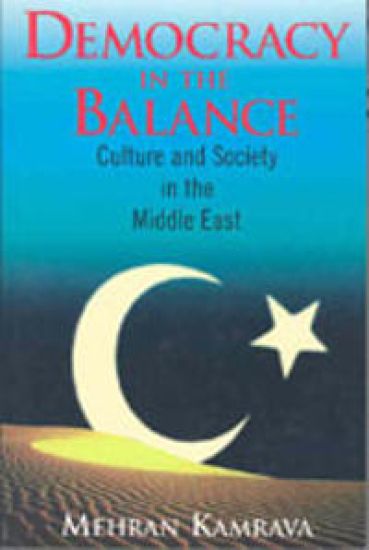
Democracy in the Balance

Democracy in the Balance

Mehran Kamrava

Chatham House Publishers Inc.,U.S.
1998
nidottu
Examining the social and cultural forces that have hindered the emergence and widespread development of democratic polities in the Middle East, Mehran Kamrava analyzes the effect politics, in particular, and society-based dynamics, in general, have had on the nature and evolution of Middle Eastern culture.
Revolutionary Politics

Revolutionary Politics

Mehran Kamrava

Praeger Publishers Inc
1992
sidottu
This book offers a thematic analysis of the phenomenon of revolution. The twentieth century has been witness to a number of historic revolutions, beginning with the Mexican and the Russian revolutions at the turn of the century and leading up to the Iranian and Nicaragua revolutions in the 1970s and 1980s. Despite their fundamental differences, these and the revolutions before them are characterized by parallel developments and processes. The focus of this book is to discern those social and political dynamics that bring about revolutions, determine their nature and overall direction, and in turn facilitate the emergence and success of revolutionary leaders and their attempts at institutionalizing their newly-won powers.Kamrava adds valuable insights into prevalent notions and theories concerning revolutions. There are, the author argues, several conditions necessary for the appearance and success of revolutionary movements. They include a weak state structure, a mobilizable society, and specific groups whose aim it is to overthrow the political system. Once the leaders of the revolution have been determined, they try to institutionalize their powers, in both the post-revolutionary state and society.