Kirjojen hintavertailu. Mukana 12 595 353 kirjaa ja 12 kauppaa.

Kirjailija

Mei Mei Evans

Kirjat ja teokset yhdessä paikassa: 2 kirjaa, julkaisuja vuosilta 2002-2013, suosituimpien joukossa Oil and Water. Vertaile teosten hintoja ja tarkista saatavuus suomalaisista kirjakaupoista.

2 kirjaa

Kirjojen julkaisuhaarukka 2002-2013.

Oil and Water

Oil and Water

Mei Mei Evans

University of Alaska Press
2013
nidottu
What happens when the American dream collides head-on with a nation's dependence on fossil fuels? "Oil and Water", a novel by Mei Mei Evans, focuses on precisely this question. Starting with a star-crossed supertanker, a wayward fishing boat, and a well-known hazard in the Gulf of Alaska, the story presents a region plunged into an oil-slicked crisis. As thousands of miles of shoreline and sea are obliterated, the spill threatens the lives and livelihoods of the coastal community of Selby. At the center of the disaster are Gregg, a down-on-his-luck skipper, and Lee, his lone deckhand. As they cross paths with the tanker and later the residents of Selby, they are faced with decisions that will have a lasting impact on the entire community. And when the residents are presented with a controversial deal - accept handouts in the form of work from the very company responsible for the disaster - they must learn just how important it is to find strength in the connections that bind humans to each other and the natural world. Evans' compelling story, influenced by her own experiences during the Exxon Valdez oil spill, is a provocative look at the choice that must be made between environmental safety and economic survival. A finalist for the PEN/Bellwether Prize, it will have readers reconsidering where they draw their own lines.
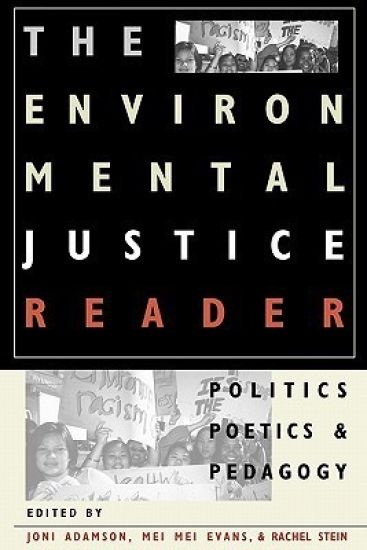
The Environmental Justice Reader

The Environmental Justice Reader

Joni Adamson; Mei Mei Evans; Rachel Stein

University of Arizona Press
2002
nidottu
From the First National People of Color Congress on Environmental Leadership to WTO street protests of the new millennium, environmental justice activists have challenged the mainstream movement by linking social inequalities to the uneven distribution of environmental dangers. Grassroots movements in poor communities and communities of color strive to protect neighborhoods and worksites from environmental degradation and struggle to gain equal access to the natural resources that sustain their cultures.This book examines environmental justice in its social, economic, political, and cultural dimensions in both local and global contexts, with special attention paid to intersections of race, gender, and class inequality. The first book to link political studies, literary analysis, and teaching strategies, it offers a multivocal approach that combines perspectives from organizations such as the Southwest Network for Environmental and Economic Justice and the International Indigenous Treaty Council with the insights of such notable scholars as Devon Peña, Giovanna Di Chiro, and Valerie Kuletz, and also includes a range of newer voices in the field.This collection approaches environmental justice concerns from diverse geographical, ethnic, and disciplinary perspectives, always viewing environmental issues as integral to problems of social inequality and oppression. It offers new case studies of native Alaskans' protests over radiation poisoning; Hispanos' struggles to protect their land and water rights; Pacific Islanders' resistance to nuclear weapons testing and nuclear waste storage; and the efforts of women employees of maquiladoras to obtain safer living and working environments along the U.S.-Mexican border.The selections also include cultural analyses of environmental justice arts, such as community art and greening projects in inner-city Baltimore, and literary analyses of writers such as Jimmy Santiago Baca, Linda Hogan, Barbara Neely, Nez Perce orators, Ken Saro-Wiwa, and Karen Yamashita—artists who address issues such as toxicity and cancer, lead poisoning of urban African American communities, and Native American struggles to remove dams and save salmon. The book closes with a section of essays that offer models to teachers hoping to incorporate these issues and texts into their classrooms. By combining this array of perspectives, this book makes the field of environmental justice more accessible to scholars, students, and concerned readers.