Kirjojen hintavertailu. Mukana 12 167 080 kirjaa ja 12 kauppaa.

Kirjailija

Mel Ainscow

Kirjat ja teokset yhdessä paikassa: 26 kirjaa, julkaisuja vuosilta 1998-2025, suosituimpien joukossa Inside the Autonomous School. Vertaile teosten hintoja ja tarkista saatavuus suomalaisista kirjakaupoista.

26 kirjaa

Kirjojen julkaisuhaarukka 1998-2025.

Inside the Autonomous School

Inside the Autonomous School

Maija Salokangas; Mel Ainscow

Routledge
2017
sidottu
Over recent years, education systems across the globe have experimented with the concept of the autonomous school. This takes a variety of forms and the schools involved have different titles, such as charter schools in the USA, academies in England, free schools in Sweden and independent public schools in Australia. As this radical trend in policy gains momentum, Inside the Autonomous School considers whether the model is achieving its desired aims. Drawing on evidence from an in-depth, longitudinal study of an academy located in an urban district in England, this book traces the various developments which took place in the school on its journey from ‘failing’, to achieving an inspection rating of ‘outstanding’.The authors present a rich, first-hand account of the impacts that various policies and practices have had on the autonomous school and at the same time, situate their accounts and analyses within a wider national and international context. This leads them to consider what can be done to ensure that school autonomy consistently promotes excellence and equity within education systems.A fascinating read and invaluable resource for practitioners, researchers and policy makers in the field of education, Inside the Autonomous School sheds much needed light on an increasingly established policy which is set to have far-reaching effects.

Inside the Autonomous School

Inside the Autonomous School

Maija Salokangas; Mel Ainscow

Routledge
2017
nidottu
Over recent years, education systems across the globe have experimented with the concept of the autonomous school. This takes a variety of forms and the schools involved have different titles, such as charter schools in the USA, academies in England, free schools in Sweden and independent public schools in Australia. As this radical trend in policy gains momentum, Inside the Autonomous School considers whether the model is achieving its desired aims. Drawing on evidence from an in-depth, longitudinal study of an academy located in an urban district in England, this book traces the various developments which took place in the school on its journey from ‘failing’, to achieving an inspection rating of ‘outstanding’.The authors present a rich, first-hand account of the impacts that various policies and practices have had on the autonomous school and at the same time, situate their accounts and analyses within a wider national and international context. This leads them to consider what can be done to ensure that school autonomy consistently promotes excellence and equity within education systems.A fascinating read and invaluable resource for practitioners, researchers and policy makers in the field of education, Inside the Autonomous School sheds much needed light on an increasingly established policy which is set to have far-reaching effects.
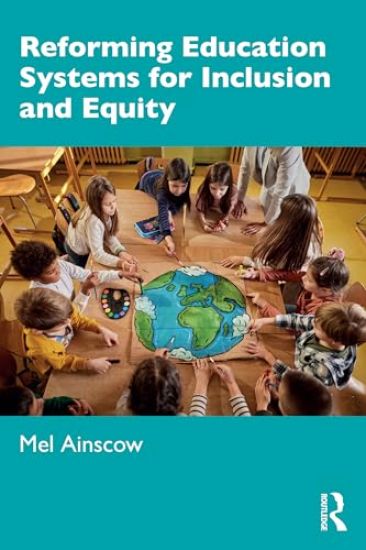
Reforming Education Systems for Inclusion and Equity
Reforming Education Systems for Inclusion and Equity addresses the universal challenge of developing forms of education that make a difference for all children and young people, no matter their characteristics or backgrounds. From renowned author Mel Ainscow, this impactful book offers guidance for developing, implementing, and monitoring policies for inclusion and equity in education systems. Drawing from the author’s extensive work across the globe as well as from international research contributions and literature in the field, Ainscow presents a framework to plan a strategy for reform, featuring six key ideas: centre inclusion and equity in educational policies; identify and address contextual barriers; support and encourage the development of all members of the learning environment; strengthen networking amongst schools; engage family and community partners; provide challenge and support locally. This exciting new book is written for school and system leaders, district administrators, community partners, and policy-makers.
Reforming Education Systems for Inclusion and Equity
Reforming Education Systems for Inclusion and Equity addresses the universal challenge of developing forms of education that make a difference for all children and young people, no matter their characteristics or backgrounds. From renowned author Mel Ainscow, this impactful book offers guidance for developing, implementing, and monitoring policies for inclusion and equity in education systems. Drawing from the author’s extensive work across the globe as well as from international research contributions and literature in the field, Ainscow presents a framework to plan a strategy for reform, featuring six key ideas: centre inclusion and equity in educational policies; identify and address contextual barriers; support and encourage the development of all members of the learning environment; strengthen networking amongst schools; engage family and community partners; provide challenge and support locally. This exciting new book is written for school and system leaders, district administrators, community partners, and policy-makers.
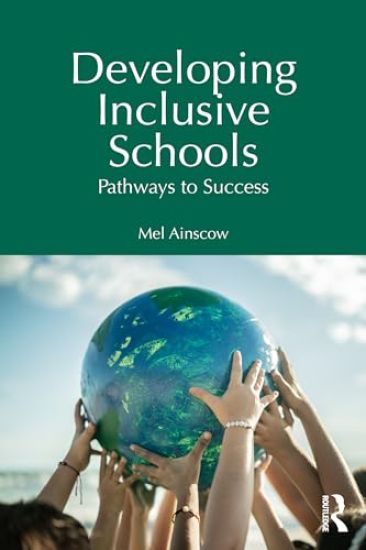
Developing Inclusive Schools

Developing Inclusive Schools

Mel Ainscow

TAYLOR FRANCIS LTD
2024
nidottu
In this groundbreaking book, one of the world’s leading authorities on ways of developing equitable education systems addresses the greatest challenge facing education systems around the world, that of developing schools that are effective in educating all children. Using evidence from research carried over the last 25 years in many countries, Mel Ainscow explains pathways to be followed in order to turn the global aspiration for inclusion and equity into policy and practices in the field.Making extensive use of examples from different parts of the world, Developing Inclusive Schools provides:Practical guidance for teachers regarding ways of making their lessons inclusiveAccounts of how this thinking has been implemented in schoolsAdvice for school leaders on how to create an inclusive culture within their organisationsExamples of how inclusion and equity have influenced national policies in different contextsExplanations of the implications for policy makers, researchers and teacher educatorsDeveloping Inclusive Schools will be of huge significance to researchers, educators and practitioners in the fields of education policy and politics, inclusion and special education around the world.
Developing Inclusive Schools

Developing Inclusive Schools

Mel Ainscow

TAYLOR FRANCIS LTD
2024
sidottu
In this groundbreaking book, one of the world’s leading authorities on ways of developing equitable education systems addresses the greatest challenge facing education systems around the world, that of developing schools that are effective in educating all children. Using evidence from research carried over the last 25 years in many countries, Mel Ainscow explains pathways to be followed in order to turn the global aspiration for inclusion and equity into policy and practices in the field.Making extensive use of examples from different parts of the world, Developing Inclusive Schools provides:Practical guidance for teachers regarding ways of making their lessons inclusiveAccounts of how this thinking has been implemented in schoolsAdvice for school leaders on how to create an inclusive culture within their organisationsExamples of how inclusion and equity have influenced national policies in different contextsExplanations of the implications for policy makers, researchers and teacher educatorsDeveloping Inclusive Schools will be of huge significance to researchers, educators and practitioners in the fields of education policy and politics, inclusion and special education around the world.
Changing Education Systems

Changing Education Systems

Mel Ainscow; Christopher Chapman; Mark Hadfield

Routledge
2019
sidottu
As countries seek to develop their education systems, achieving sustainable improvements amongst students from disadvantaged backgrounds remains a major challenge. This has considerable implications for those in the research community as they seek to influence developments in the field. Drawing on the authors’ extensive experiences as researchers, policy advisers and influencers, Changing Education Systems offers key insights on how to promote equity within education systems. Exploring three large-scale national reform programmes, the book: Presents a series of propositions that are the basis of a research-based approach to system change Explains the creation of relationships in which academic researchers collaborate in the process of development Considers smaller place-based projects that are set within policy contexts dominated by the idea of market forces as a strategy for improvement Explores the steps needed to overcome locally specific barriersChanging Education Systems is a must-read for policy-makers and practitioners involved in educational reforms, as well as researchers wishing to contribute to and learn from such developments.
Changing Education Systems

Changing Education Systems

Mel Ainscow; Christopher Chapman; Mark Hadfield

Routledge
2019
nidottu
As countries seek to develop their education systems, achieving sustainable improvements amongst students from disadvantaged backgrounds remains a major challenge. This has considerable implications for those in the research community as they seek to influence developments in the field. Drawing on the authors’ extensive experiences as researchers, policy advisers and influencers, Changing Education Systems offers key insights on how to promote equity within education systems. Exploring three large-scale national reform programmes, the book: Presents a series of propositions that are the basis of a research-based approach to system change Explains the creation of relationships in which academic researchers collaborate in the process of development Considers smaller place-based projects that are set within policy contexts dominated by the idea of market forces as a strategy for improvement Explores the steps needed to overcome locally specific barriersChanging Education Systems is a must-read for policy-makers and practitioners involved in educational reforms, as well as researchers wishing to contribute to and learn from such developments.
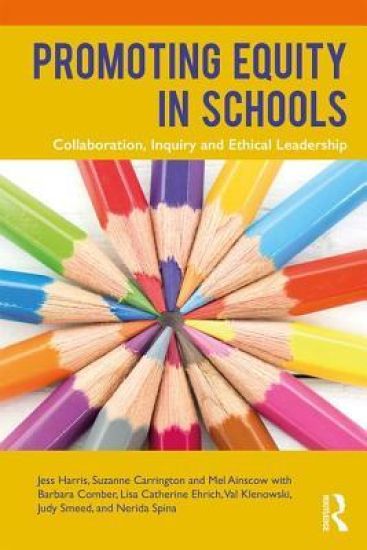
Promoting Equity in Schools

Promoting Equity in Schools

Jess Harris; Suzanne Carrington; Mel Ainscow

Routledge
2017
sidottu
Around the world, countries are searching for ways of making their schools more effective for all children and young people. This book offers a new way of thinking about how to address this challenge. It sees improvement as requiring a collective effort that involves contributions from all members of a school community. Crucial to this is the idea of ethical leadership.Promoting Equity in Schools is written by a team of academic researchers who had a most unusual opportunity to work with a network of schools over three years, experimenting to find more effective ways of including hard to reach learners. Bringing together practitioner knowledge and ideas from research carried out from a variety of perspectives, the authors provide rich accounts of what happened when the schools attempted to become more inclusive and fairer. In so doing, they throw light on the challenges this presents for school leaders.The accounts presented in the book are located in Queensland, Australia, where the school system faces significant difficulties in relation to equity that resonate with similar difficulties around the world. These difficulties relate to policies that emphasize high-stakes testing and school choice, which tend to promote increased segregation, to the particular disadvantage of young people from low income and minority backgrounds. The arguments presented suggest that even where worrying policies are in place, with leadership driven by a commitment to equity, schools can still find space to develop more equitable ways of working.
Promoting Equity in Schools

Promoting Equity in Schools

Jess Harris; Suzanne Carrington; Mel Ainscow

Routledge
2017
nidottu
Around the world, countries are searching for ways of making their schools more effective for all children and young people. This book offers a new way of thinking about how to address this challenge. It sees improvement as requiring a collective effort that involves contributions from all members of a school community. Crucial to this is the idea of ethical leadership.Promoting Equity in Schools is written by a team of academic researchers who had a most unusual opportunity to work with a network of schools over three years, experimenting to find more effective ways of including hard-to-reach learners. Bringing together practitioner knowledge and ideas from research carried out from a variety of perspectives, the authors provide rich accounts of what happened when the schools attempted to become more inclusive and fairer. In so doing, they throw light on the challenges this presents for school leaders.The accounts presented in the book are located in Queensland, Australia, where the school system faces significant difficulties in relation to equity that resonate with similar difficulties around the world. These difficulties relate to policies that emphasise high-stakes testing and school choice, which tend to promote increased segregation, to the particular disadvantage of young people from low-income and minority backgrounds. The arguments presented suggest that even where worrying policies are in place, schools with leadership driven by a commitment to equity can still find space to develop more equitable ways of working.
Struggles for Equity in Education
In the World Library of Educationalists series, international experts compile career-long collections of what they judge to be their finest pieces – extracts from books, key articles, salient research findings, major theoretical and practical contributions – so the world can read them in a single manageable volume. Readers will be able to follow the themes and strands and see how their work contributes to the development of the field.Spanning Mel Ainscow’s accomplished 30 year international career in education, the texts in this book trace his efforts to find ways of fostering more equitable forms of education. This has involved a series of struggles as he has experimented with different approaches - in a variety of contexts - to find new possibilities for responding to learner diversity. Over the years this has related to a variety of headline themes, starting from special education, through to integration, on to inclusive education, and then, more recently, educational equity.The readings have been chosen to illustrate the changes that have occurred in Ainscow’s thinking and practices and a short introduction is provided for each chapter that is intended to help readers to understand the significance of what is presented and how this relates to other chapters in the book. The writings in this text reinforce the idea that the promotion of equity in schools is essentially a social process that has to occur within particular contexts.
Creating the Conditions for School Improvement

Creating the Conditions for School Improvement

Mel Ainscow; John Beresford; Alma Harris; David Hopkins; Geoff Southworth; Mel West

Routledge
2016
sidottu
First Published in 2001. This is the second edition of this school’s improvement handbook of staff development activities by the IQEA (Improving Education for All) project. This book is not about what changes should be introduced into a school but rather about creating the conditions for supporting those changes which schools or individuals believe should be introduced. To be effective at managing change schools and teachers need to modify the internal conditions of the school at the same time as introducing changes in teaching or curriculum. The book therefore provides ideas and materials to help colleagues in school to create such conditions and suggests a strategic approach.
Struggles for Equity in Education
In the World Library of Educationalists series, international experts compile career-long collections of what they judge to be their finest pieces – extracts from books, key articles, salient research findings, major theoretical and practical contributions – so the world can read them in a single manageable volume. Readers will be able to follow the themes and strands and see how their work contributes to the development of the field.Spanning Mel Ainscow’s accomplished 30 year international career in education, the texts in this book trace his efforts to find ways of fostering more equitable forms of education. This has involved a series of struggles as he has experimented with different approaches - in a variety of contexts - to find new possibilities for responding to learner diversity. Over the years this has related to a variety of headline themes, starting from special education, through to integration, on to inclusive education, and then, more recently, educational equity.The readings have been chosen to illustrate the changes that have occurred in Ainscow’s thinking and practices and a short introduction is provided for each chapter that is intended to help readers to understand the significance of what is presented and how this relates to other chapters in the book. The writings in this text reinforce the idea that the promotion of equity in schools is essentially a social process that has to occur within particular contexts.
Towards Self-improving School Systems
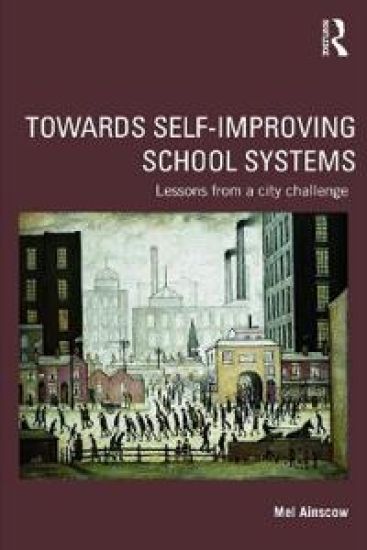
This important new book draws lessons from a large-scale initiative to bring about the improvement of an urban education system. Written from an insider perspective by an internationally recognized researcher, it presents a new way of thinking about system change. This builds on the idea that there are untapped resources within schools and the communities they serve that can be mobilized in order to transform schools from places that do well for some children so that they can do well for many more. Towards Self-improving School Systems presents a strategic framework that can help to foster new, more fruitful working relationships: between national and local government; within and between schools; and between schools and their local communities. What is distinctive in the approach is that this is mainly led from within schools, with senior staff having a central role as system leaders. The book will be relevant to a wide range of readers throughout the world who are concerned with the strengthening of their national educational systems, including teachers, school leaders, policy makers and researchers. The argument it presents is particularly important for the growing number of countries where increased emphasis on school autonomy, competition and choice is leading to fragmentation within education provision.Foreword by Andy Hargreaves, Thomas More Brennan Chair in Education, Boston College, USA
Towards Self-improving School Systems
This important new book draws lessons from a large-scale initiative to bring about the improvement of an urban education system. Written from an insider perspective by an internationally recognized researcher, it presents a new way of thinking about system change. This builds on the idea that there are untapped resources within schools and the communities they serve that can be mobilized in order to transform schools from places that do well for some children so that they can do well for many more. Towards Self-improving School Systems presents a strategic framework that can help to foster new, more fruitful working relationships: between national and local government; within and between schools; and between schools and their local communities. What is distinctive in the approach is that this is mainly led from within schools, with senior staff having a central role as system leaders. The book will be relevant to a wide range of readers throughout the world who are concerned with the strengthening of their national educational systems, including teachers, school leaders, policy makers and researchers. The argument it presents is particularly important for the growing number of countries where increased emphasis on school autonomy, competition and choice is leading to fragmentation within education provision.Foreword by Andy Hargreaves, Thomas More Brennan Chair in Education, Boston College, USA
Collaboration and Networking in Education

Collaboration and Networking in Education

Daniel Muijs; Mel Ainscow; Chris Chapman; Mel West

Springer
2014
nidottu
Collaboration and networking have recently come to the fore as major school improvement strategies in a number of countries. A variety of initiatives, from government and other agencies, have encouraged collaboration and led to a lot of practical activity in this area. However, at present there are no texts in education that explore collaboration and networking from both a theoretical and practical perspective. In this book, we aim to provide a theoretical background to educational collaboration, drawing on research and theory in policy studies, psychology and sociology, leading ultimately to a typology of networks. This theoretical base will be tested in the discussion of a number of case studies referring to specific initiatives such as the Federations programme, multi-agency collaboration and Networked Learning Communities. Lessons for practice will be drawn and presented in terms of factors internal and external to the school. The key issue of network leadership will be addressed here as well.
Developing Equitable Education Systems

Developing Equitable Education Systems

Mel Ainscow; Alan Dyson; Sue Goldrick; Mel West

Routledge
2011
nidottu
Despite consistent improvements in the school systems of over recent years, there are still too many children who miss out. It is not only children from disadvantaged backgrounds attending hard-pressed urban schools that the system is failing - even in the most successful schools there are often groups of learners whose experience of schooling is less than equitable.As a result of their close involvement with a group of schools serving a predominantly working-class community over five years, the authors of this book offer an analysis of how marginalisation within schools can arise, and provide suggestions for responding to this crucial policy agenda. They propose a teacher-led inquiry strategy that has proved to be effective in moving forward thinking and practice within individual schools. However, their research has shown that using the same strategy for system change is problematic within a policy context that emphasises competition and choice. Learning from this experience, the authors analyse the factors that inhibit the collaborative approach needed to reduce inequities that exist between the schools, in order to formulate proposals that can move the system as a whole towards more equitable provision.In Developing Equitable Education Systems, the authors focus on the way teachers’ sense of ‘fairness’ can become a powerful starting point, helping individual schools to inquire into and develop their own practice and provision. They provide practical suggestions for practitioners about ways of working that can create a greater sense of equity within particular school contexts, and highlight the barriers to a wider strategy for reducing system inequities that reside in local and national policies and traditions.At a time when government policies in many countries move to extend the diversity of educational provision - for example, through the introduction of charter schools in the USA, free schools in Sweden and academies in England - the authors also include a set of recommendations that offer a timely warning against the fragmentation of school systems in the misguided belief that competition benefits all children. They suggest that a more sensible approach would be to avoid situations whereby the improvement of one school leads to a decline in the resources available to, and subsequently the performance of, others.
Developing Equitable Education Systems

Developing Equitable Education Systems

Mel Ainscow; Alan Dyson; Sue Goldrick; Mel West

Routledge
2011
sidottu
Despite consistent improvements in the school systems of over recent years, there are still too many children who miss out. It is not only children from disadvantaged backgrounds attending hard-pressed urban schools that the system is failing - even in the most successful schools there are often groups of learners whose experience of schooling is less than equitable.As a result of their close involvement with a group of schools serving a predominantly working-class community over five years, the authors of this book offer an analysis of how marginalisation within schools can arise, and provide suggestions for responding to this crucial policy agenda. They propose a teacher-led inquiry strategy that has proved to be effective in moving forward thinking and practice within individual schools. However, their research has shown that using the same strategy for system change is problematic within a policy context that emphasises competition and choice. Learning from this experience, the authors analyse the factors that inhibit the collaborative approach needed to reduce inequities that exist between the schools, in order to formulate proposals that can move the system as a whole towards more equitable provision.In Developing Equitable Education Systems, the authors focus on the way teachers’ sense of ‘fairness’ can become a powerful starting point, helping individual schools to inquire into and develop their own practice and provision. They provide practical suggestions for practitioners about ways of working that can create a greater sense of equity within particular school contexts, and highlight the barriers to a wider strategy for reducing system inequities that reside in local and national policies and traditions.At a time when government policies in many countries move to extend the diversity of educational provision - for example, through the introduction of charter schools in the USA, free schools in Sweden and academies in England - the authors also include a set of recommendations that offer a timely warning against the fragmentation of school systems in the misguided belief that competition benefits all children. They suggest that a more sensible approach would be to avoid situations whereby the improvement of one school leads to a decline in the resources available to, and subsequently the performance of, others.
Collaboration and Networking in Education

Collaboration and Networking in Education

Daniel Muijs; Mel Ainscow; Chris Chapman; Mel West

Springer
2011
sidottu
Collaboration and networking have recently come to the fore as major school improvement strategies in a number of countries. A variety of initiatives, from government and other agencies, have encouraged collaboration and led to a lot of practical activity in this area. However, at present there are no texts in education that explore collaboration and networking from both a theoretical and practical perspective. In this book, we aim to provide a theoretical background to educational collaboration, drawing on research and theory in policy studies, psychology and sociology, leading ultimately to a typology of networks. This theoretical base will be tested in the discussion of a number of case studies referring to specific initiatives such as the Federations programme, multi-agency collaboration and Networked Learning Communities. Lessons for practice will be drawn and presented in terms of factors internal and external to the school. The key issue of network leadership will be addressed here as well.