Kirjojen hintavertailu. Mukana 12 390 323 kirjaa ja 12 kauppaa.

Kirjailija

Mel Bunce

Kirjat ja teokset yhdessä paikassa: 4 kirjaa, julkaisuja vuosilta 2022-2024, suosituimpien joukossa Humanitarian Journalists. Vertaile teosten hintoja ja tarkista saatavuus suomalaisista kirjakaupoista.

4 kirjaa

Kirjojen julkaisuhaarukka 2022-2024.

Humanitarian Journalists

Humanitarian Journalists

Martin Scott; Kate Wright; Mel Bunce

TAYLOR FRANCIS LTD
2024
nidottu
This book documents the unique reporting practices of humanitarian journalists – an influential group of journalists defying conventional approaches to covering humanitarian crises.Based on a 5-year study, involving over 150 in-depth interviews, this book examines the political, economic and social forces that sustain and influence humanitarian journalists. The authors argue that – by amplifying marginalised voices and providing critical, in-depth explanations of neglected crises – these journalists show us that another kind of humanitarian journalism is possible. However, the authors also reveal the heavy price these reporters pay for deviating from conventional journalistic norms. Their peripheral position at the ‘boundary zone’ between the journalistic and humanitarian fields means that a humanitarian journalist’s job is often precarious – with direct implications for their work, especially as ‘watchdogs’ for the aid sector. As a result, they urgently need more support if they are to continue to do this work and promote more effective and accountable humanitarian action.A rigorous study of how unique professional practices can be produced at the ‘boundary zone’ between fields, this book will interest students and scholars of journalism and communication studies, sociology and humanitarian studies. It will also appeal to those interested in studies of news and media work as occupational identities.
Humanitarian Journalists

Humanitarian Journalists

Martin Scott; Kate Wright; Mel Bunce

TAYLOR FRANCIS LTD
2022
sidottu
This book documents the unique reporting practices of humanitarian journalists – an influential group of journalists defying conventional approaches to covering humanitarian crises.Based on a 5-year study, involving over 150 in-depth interviews, this book examines the political, economic and social forces that sustain and influence humanitarian journalists. The authors argue that – by amplifying marginalised voices and providing critical, in-depth explanations of neglected crises – these journalists show us that another kind of humanitarian journalism is possible. However, the authors also reveal the heavy price these reporters pay for deviating from conventional journalistic norms. Their peripheral position at the ‘boundary zone’ between the journalistic and humanitarian fields means that a humanitarian journalist’s job is often precarious – with direct implications for their work, especially as ‘watchdogs’ for the aid sector. As a result, they urgently need more support if they are to continue to do this work and promote more effective and accountable humanitarian action.A rigorous study of how unique professional practices can be produced at the ‘boundary zone’ between fields, this book will interest students and scholars of journalism and communication studies, sociology and humanitarian studies. It will also appeal to those interested in studies of news and media work as occupational identities.
Capturing News, Capturing Democracy

Capturing News, Capturing Democracy

Kate Wright; Martin Scott; Mel Bunce

OXFORD UNIVERSITY PRESS INC
2024
nidottu
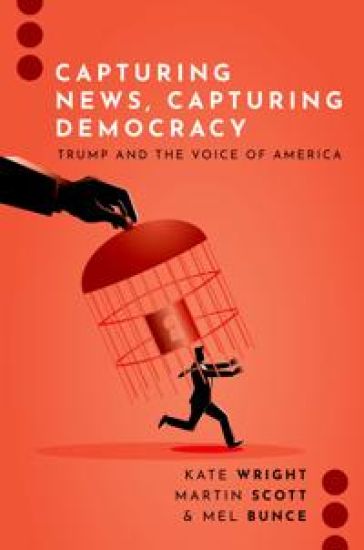
The Voice of America (VOA) is the oldest and largest US government-funded international media organization. In 2020, Donald Trump nominated Michael Pack, a right-wing documentarian and close friend of Steve Bannon, to lead the US Agency for Global Media - the independent federal agency overseeing US-funded international media. During Pack's seven-month tenure, more than thirty whistleblowers filed complaints against him, and a judge ruled that he had infringed journalists' constitutional right to freedom of speech. How did such a major international public service media network become intensely politicized by government allies in such a short time, despite having its editorial independence protected by law? Capturing News, Capturing Democracy puts these events in historical and international context—and develops a new analytical framework for understanding government capture and its connection to broader processes of democratic backsliding. Drawing from in-depth interviews with network managers and journalists, and analysis of private correspondence and internal documents, Kate Wright, Martin Scott, and Mel Bunce analyze how political appointees, White House officials, and right-wing media influenced VOA— changing its reporting of the Black Lives Matter movement and the 2020 presidential election. The authors stress that leaving the VOA unprotected leaves it and other public media open to targeting by authoritarian leadership and poses serious risks to US democracy. Further, they offer practical recommendations for how to protect the network and other international public service media better in the future.
Capturing News, Capturing Democracy

Capturing News, Capturing Democracy

Kate Wright; Martin Scott; Mel Bunce

OXFORD UNIVERSITY PRESS INC
2024
sidottu
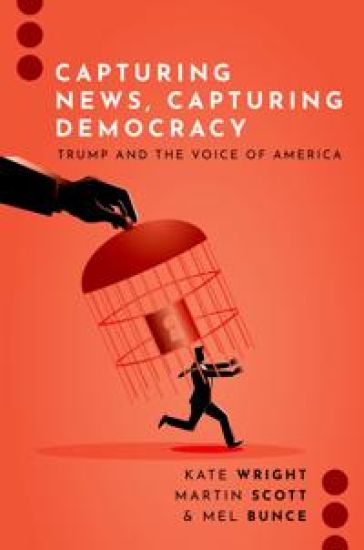
The Voice of America (VOA) is the oldest and largest US government-funded international media organization. In 2020, Donald Trump nominated Michael Pack, a right-wing documentarian and close friend of Steve Bannon, to lead the US Agency for Global Media - the independent federal agency overseeing US-funded international media. During Pack's seven-month tenure, more than 30 whistleblowers filed complaints against him, and a judge ruled that he had infringed journalists' constitutional right to freedom of speech. How did such a major international public service media network become intensely politicized by government allies in such a short time, despite having its editorial independence protected by law? Capturing News, Capturing Democracy puts these events in historical and international context—and develops a new analytical framework for understanding government capture and its connection to broader processes of democratic backsliding. Drawing from in-depth interviews with network managers and journalists, and analysis of private correspondence and internal documents, Kate Wright, Martin Scott, and Mel Bunce analyze how political appointees, White House officials, and right-wing media influenced VOA— changing its reporting of the Black Lives Matter movement and the 2020 presidential election. The authors stress that leaving the VOA unprotected leaves it and other public media open to targeting by authoritarian leadership and poses serious risks to US democracy. Further, they offer practical recommendations for how to protect the network and other international public service media better in the future.