Kirjojen hintavertailu. Mukana 12 595 353 kirjaa ja 12 kauppaa.

Kirjailija

Mel Eisman

Kirjat ja teokset yhdessä paikassa: 7 kirjaa, julkaisuja vuosilta 2005-2023, suosituimpien joukossa The Resilience Assessment Framework. Vertaile teosten hintoja ja tarkista saatavuus suomalaisista kirjakaupoista.

7 kirjaa

Kirjojen julkaisuhaarukka 2005-2023.

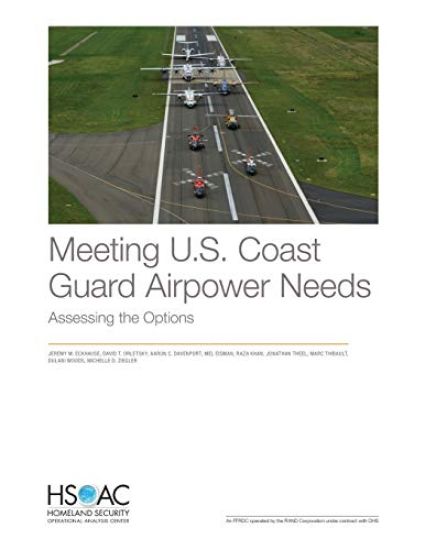
Meeting U.S. Coast Guard Airpower Needs

Meeting U.S. Coast Guard Airpower Needs

Jeremy M Eckhause; David T Orletsky; Aaron C Davenport; Mel Eisman; Raza Khan; Jonathan Theel; Marc Thibault; Dulani Woods; Michelle D Ziegler

RAND
2020
nidottu
Because U.S. Coast Guard (USCG) rotary-wing aircraft are nearing their ends of life, the USCG is reassessing its airpower needs for its current missions and future operational requirements. Researchers assessed what airpower mixes could help the USCG execute its missions across the entire geographic domain for operations in the next 30 years. In this report, they document their findings and make recommendations.
Maritime Tactical Command and Control Analysis of Alternatives

Maritime Tactical Command and Control Analysis of Alternatives

Bradley Wilson; Isaac R. Porche; Mel Eisman; Michael Nixon; Shane Tierney; John M. Yurchak; Kim Kendall; James Dryden; Sean Critelli

RAND
2016
pokkari
This report is about software systems that support situational awareness and command and control (C2) for the U.S. Navy. Specifically, this report provides the results of an analysis of alternatives for the follow-on to the Navy s Global C2 system Maritime (GCCS-M), and quantifies performance of mission tasks, cost, and analyzes risk for new systems that incorporate cloud technologies afloat and ashore."
Enhancing Space Resilience Through Non-Materiel Means

Enhancing Space Resilience Through Non-Materiel Means

Gary McLeod; George Nacouzi; Paul Dreyer; Mel Eisman; Myron Hura; Krista S. Langeland; David Manheim; Geoffrey Torrington

RAND
2016
pokkari
Space is now a congested, contested, and competitive environment. Space systems must become more resilient to potential adversary actions and system failures, but changes to space systems are costly. To reduce costs, the Air Force asked RAND to identify non-materiel means doctrine, organization, training, leadership and education, personnel, facilities, and policy to enhance space resilience over the near and far terms."
Improving the Cost Estimation of Space Systems

Improving the Cost Estimation of Space Systems

Obaid Younossi; Mark A. Lorell; Kevin Brancato; Cynthia R. Cook; Mel Eisman; Bernard Fox; John C. Graser; Kim Yool; Robert S. Leonard; Shari Lawrence Pfleeger

RAND
2008
pokkari
Why have the costs of acquiring space systems been so high? What are the sources of the problem? To answer these questions, RAND undertook an extensive study of two space systems - the Space Based Infrared SystemHigh (SBIRS) and the Global Positioning System (GPS).This title analyzes the reason for the comparatively high growth in the cost of space systems by means of an in-depth study of two systems: SBIRS-High and GPS.
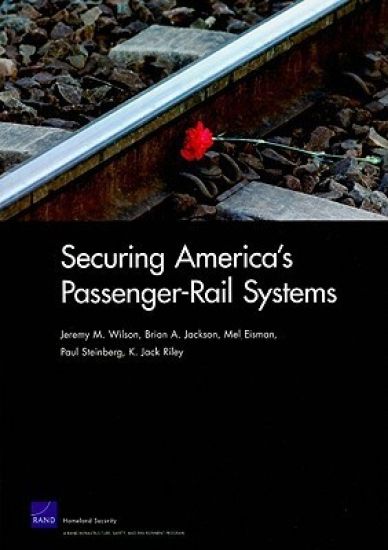
Securing America's Passenger-rail Systems

Securing America's Passenger-rail Systems

Jeremy M Wilson; Brian A Jackson; Mel Eisman; Paul Steinberg; Jack K Riley

RAND
2008
pokkari
U.S. communities depend on reliable, safe, and secure rail systems. Each weekday, more than 12 million passengers take to U.S. railways. This book explains a framework for security planners and policymakers to guide cost-effective rail-security planning, specifically for the risk of terrorism. Risk is a function of threat, vulnerability, and consequences. This book focuses on addressing vulnerabilities and limiting consequences.
Protecting Commercial Aviation Against the Shoulder-fired Missile Threat

Protecting Commercial Aviation Against the Shoulder-fired Missile Threat

James Chow; James Chiesa; Paul Dreyer; Mel Eisman; Theodore W. Karasik; Joel Kvitky; Sherrill Lingel; David A. Ochmanek; Chad Shirley

RAND
2005
pokkari
Examines the capabilities and costs of onboard technologies to divert missiles attacking commercial airliners. Given the significant uncertainties in the cost and effectiveness of countermeasures, a decision to install them should be postponed, and concurrent development efforts to reduce these uncertainties should proceed as rapidly as possible.