Kirjojen hintavertailu. Mukana 12 595 353 kirjaa ja 12 kauppaa.

Kirjailija

Mel I. Mendelson

Kirjat ja teokset yhdessä paikassa: 2 kirjaa, julkaisuja vuosilta 2013-2018, suosituimpien joukossa Learning Bio-Micro-Nanotechnology. Vertaile teosten hintoja ja tarkista saatavuus suomalaisista kirjakaupoista.

2 kirjaa

Kirjojen julkaisuhaarukka 2013-2018.

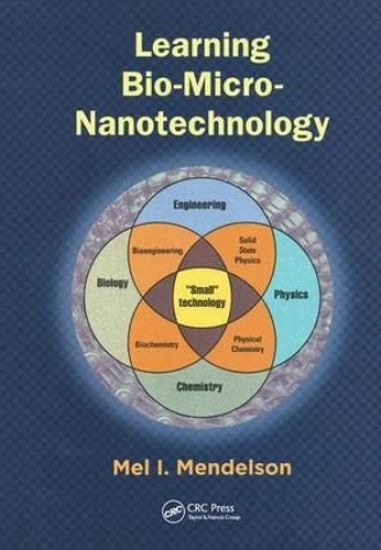
Learning Bio-Micro-Nanotechnology

Learning Bio-Micro-Nanotechnology

Mel I. Mendelson

CRC Press
2018
nidottu
Learning Bio-Micro-Nanotechnology is a primer on micro/nanotechnology that teaches the vocabulary, fundamental concepts, and applications of micro/nanotechnology in biology, chemistry, physics, engineering, electronics, computers, biomedicine, microscopy, ethics, and risks to humankind. It provides an introduction into the small world with a low fog index, emphasizing the concepts using analogies and illustrations to simplify the non-observables. The chapters have many "thinking exercises" and summaries with references at the end of each chapter. The questions at the end are divided into Bloom’s taxonomy of learning skills and also include team exercises and methods to assess learning. There are many calculations using dimensional analysis according to first principles, but the math is purposely kept at a low level and is used as a means of understanding the concepts. The appendices provide a math review and a glossary of terms.Carefully designed as an easy-to-read textbook and a practical reference, this book emphasizes learning micro/nanotechnology vocabulary, concepts, and applications from first principles and from a multi-disciplinary point of view. This makes it suitable for one- and two-semester courses as well as a reference for professionals in the field.
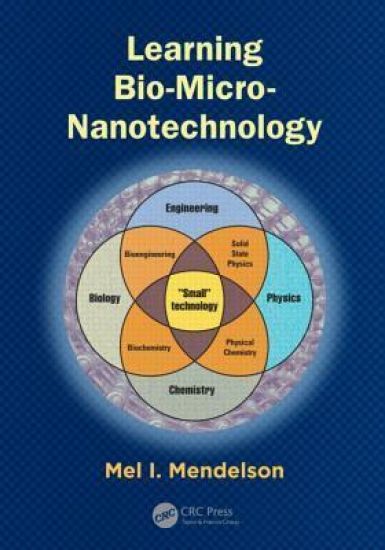
Learning Bio-Micro-Nanotechnology

Learning Bio-Micro-Nanotechnology

Mel I. Mendelson

CRC Press Inc
2013
sidottu
Learning Bio-Micro-Nanotechnology is a primer on micro/nanotechnology that teaches the vocabulary, fundamental concepts, and applications of micro/nanotechnology in biology, chemistry, physics, engineering, electronics, computers, biomedicine, microscopy, ethics, and risks to humankind. It provides an introduction into the small world with a low fog index, emphasizing the concepts using analogies and illustrations to simplify the non-observables. The chapters have many "thinking exercises" and summaries with references at the end of each chapter. The questions at the end are divided into Bloom’s taxonomy of learning skills and also include team exercises and methods to assess learning. There are many calculations using dimensional analysis according to first principles, but the math is purposely kept at a low level and is used as a means of understanding the concepts. The appendices provide a math review and a glossary of terms.Carefully designed as an easy-to-read textbook and a practical reference, this book emphasizes learning micro/nanotechnology vocabulary, concepts, and applications from first principles and from a multi-disciplinary point of view. This makes it suitable for one- and two-semester courses as well as a reference for professionals in the field.