Kirjojen hintavertailu. Mukana 12 560 791 kirjaa ja 12 kauppaa.

Kirjailija

Melanie Benson Taylor

Kirjat ja teokset yhdessä paikassa: 6 kirjaa, julkaisuja vuosilta 2008-2025, suosituimpien joukossa The Weird South. Vertaile teosten hintoja ja tarkista saatavuus suomalaisista kirjakaupoista.

6 kirjaa

Kirjojen julkaisuhaarukka 2008-2025.

The Weird South

The Weird South

Melanie Benson Taylor; Doug Thompson

UNIVERSITY OF GEORGIA PRESS
2025
sidottu
How do we read southern literature in a postplantation, postregional, and posthuman moment? How do we address the urgent contemporary catastrophes of the Anthropocene in these newly leveled landscapes? Put simply, how do we parse the levels of human responsibility––both for apocalypse and for deliverance––in contexts where settler-colonial and racial capitalist histories dramatically shape our reality?Reading modern and contemporary southern literary texts from a variety of perspectives, these lectures engage the new materialist, object-oriented ontologies that critique and decenter human agency while uncovering the lasting, determinative, haunting realities of humanity’s detention within what Timothy Morton calls the “weird” web of our entwined social, racial, economic, and natural ecologies.As a concept in the burgeoning conversation about Anthropocenic disaster and climate emergency, the “weird” is a powerful way to conceptualize not just human hubris but also humility: we are no different from, no more powerful than, any other living or inanimate objects—neither the organisms that take up residence in our bodies nor the myriad things that we imagine we create, fashion, patrol, and control.
The Weird South

The Weird South

Melanie Benson Taylor; Doug Thompson

UNIVERSITY OF GEORGIA PRESS
2025
pokkari
How do we read southern literature in a postplantation, postregional, and posthuman moment? How do we address the urgent contemporary catastrophes of the Anthropocene in these newly leveled landscapes? Put simply, how do we parse the levels of human responsibility––both for apocalypse and for deliverance––in contexts where settler-colonial and racial capitalist histories dramatically shape our reality?Reading modern and contemporary southern literary texts from a variety of perspectives, these lectures engage the new materialist, object-oriented ontologies that critique and decenter human agency while uncovering the lasting, determinative, haunting realities of humanity’s detention within what Timothy Morton calls the “weird” web of our entwined social, racial, economic, and natural ecologies.As a concept in the burgeoning conversation about Anthropocenic disaster and climate emergency, the “weird” is a powerful way to conceptualize not just human hubris but also humility: we are no different from, no more powerful than, any other living or inanimate objects—neither the organisms that take up residence in our bodies nor the myriad things that we imagine we create, fashion, patrol, and control.

The Indian in American Southern Literature

The Indian in American Southern Literature

Melanie Benson Taylor

Cambridge University Press
2020
sidottu
Indians are everywhere and nowhere in the US South. Cloaked by a rhetoric of disappearance after Indian Removal, actual southeastern tribal groups are largely invisible but immortalized in regional mythologies, genealogical lore, romanticized stereotypes, and unpronounceable place names. These imaginary 'Indians' compose an ideological fiction inextricable from that of the South itself. Often framed as hindrances to the Cotton Kingdom, Indians were in fact active participants in the plantation economy and chattel slavery before and after Removal. Dialectical tropes of Indigeneity linger in the white southern imagination in order to both conceal and expose the tangle of land, labor, and race as formative, disruptive categories of being and meaning. This book is not, finally, about the recovery of the region's lost Indians, but a reckoning with their inaccessible traces, ambivalent functions, and the shattering implications of their repressed significance for modern southern identity.
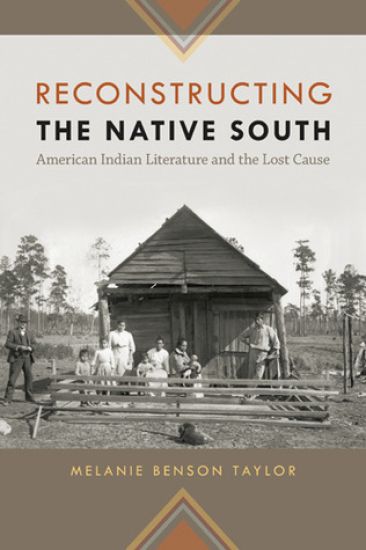
Reconstructing the Native South

Reconstructing the Native South

Melanie Benson Taylor

University of Georgia Press
2012
pokkari
In Reconstructing the Native South, Melanie Benson Taylor examines the diverse body of Native American literature in the contemporary U.S. South—literature written by the descendants of tribes who evaded Removal and have maintained ties with their southeastern homelands. In so doing Taylor advances a provocative, even counterintuitive claim: that the U.S. South and its Native American survivors have far more in common than mere geographical proximity. Both cultures have long been haunted by separate histories of loss and nostalgia, Taylor contends, and the moments when those experiences converge in explicit and startling ways have yet to be investigated by scholars. These convergences often bear the scars of protracted colonial antagonism, appropriation, and segregation, and they share preoccupations with land, sovereignty, tradition, dispossession, subjugation, purity, and violence.Taylor poses difficult questions in this work. In the aftermath of Removal and colonial devastation, what remains—for Native and non-Native southerners—to be recovered? Is it acceptable to identify an Indian “lost cause”? Is a deep sense of hybridity and intercultural affiliation the only coherent way forward, both for the New South and for its oldest inhabitants? And in these newly entangled, postcolonial environments, has global capitalism emerged as the new enemy for the twenty-first century? Reconstructing the Native South is a compellingly original work that contributes to conversations in Native American, southern, and transnational American studies.
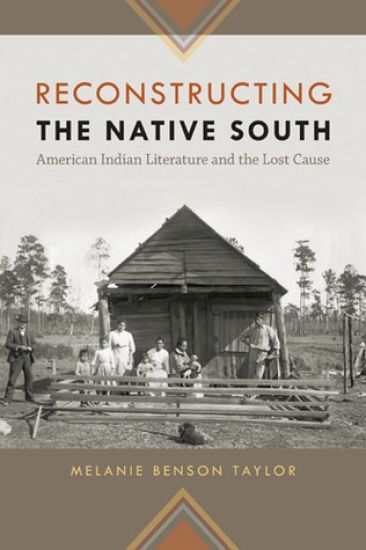
Reconstructing the Native South

Reconstructing the Native South

Melanie Benson Taylor

University of Georgia Press
2012
sidottu
In Reconstructing the Native South, Melanie Benson Taylor examines the diverse body of Native American literature in the contemporary U.S. South—literature written by the descendants of tribes who evaded Removal and have maintained ties with their southeastern homelands. In so doing Taylor advances a provocative, even counterintuitive claim: that the U.S. South and its Native American survivors have far more in common than mere geographical proximity. Both cultures have long been haunted by separate histories of loss and nostalgia, Taylor contends, and the moments when those experiences converge in explicit and startling ways have yet to be investigated by scholars. These convergences often bear the scars of protracted colonial antagonism, appropriation, and segregation, and they share preoccupations with land, sovereignty, tradition, dispossession, subjugation, purity, and violence.Taylor poses difficult questions in this work. In the aftermath of Removal and colonial devastation, what remains—for Native and non-Native southerners—to be recovered? Is it acceptable to identify an Indian “lost cause”? Is a deep sense of hybridity and intercultural affiliation the only coherent way forward, both for the New South and for its oldest inhabitants? And in these newly entangled, postcolonial environments, has global capitalism emerged as the new enemy for the twenty-first century? Reconstructing the Native South is a compellingly original work that contributes to conversations in Native American, southern, and transnational American studies.
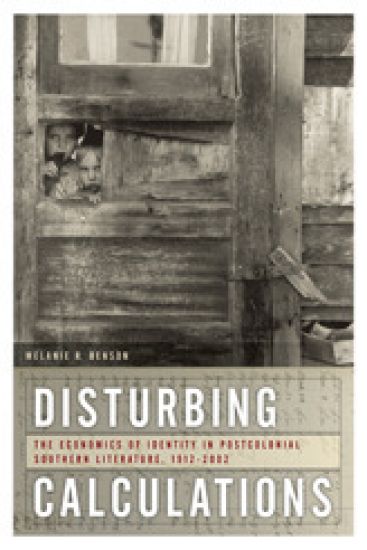
Disturbing Calculations

Disturbing Calculations

Melanie Benson Taylor

University of Georgia Press
2008
pokkari
In Thomas Wolfe’s Look Homeward, Angel, Margaret Leonard says, “Never mind about algebra here. That’s for poor folks. There’s no need for algebra where two and two make five.” Moments of mathematical reckoning like this pervade twentieth-century southern literature, says Melanie R. Benson. In fiction by a large, diverse group of authors, including William Faulkner, Anita Loos, William Attaway, Dorothy Allison, and Lan Cao, Benson identifies a calculation-obsessed, anxiety-ridden discourse in which numbers are employed to determine social and racial hierarchies and establish individual worth and identity.This “narcissistic fetish of number” speaks to a tangle of desires and denials rooted in the history of the South, capitalism, and colonialism. No one evades participation in these “disturbing equations,” says Benson, wherein longing for increase, accumulation, and superiority collides with repudiation of the means by which material wealth is attained. Writers from marginalized groups—including African Americans, Native Americans, women, immigrants, and the poor—have deeply internalized and co-opted methods and tropes of the master narrative even as they have struggled to wield new voices unmarked by the discourse of the colonizer.Having nominally emerged from slavery’s legacy, the South is now situated in the agonized space between free market capitalism and social progressivism. Elite southerners work to distance themselves from capitalism’s dehumanizing mechanisms, while the marginalized yearn to realize the uniquely American narrative of accumulation and ascent. The fetish of numbers emerges to signify the futility of both.