Kirjojen hintavertailu. Mukana 12 390 323 kirjaa ja 12 kauppaa.

Kirjailija

Melanie Nind

Kirjat ja teokset yhdessä paikassa: 12 kirjaa, julkaisuja vuosilta 1998-2020, suosituimpien joukossa Access to Communication. Vertaile teosten hintoja ja tarkista saatavuus suomalaisista kirjakaupoista.

12 kirjaa

Kirjojen julkaisuhaarukka 1998-2020.

Inclusive Research

Inclusive Research

Melanie Nind

Bloomsbury Academic
2020
sidottu
First published Open Access under a Creative Commons license as What is Inclusive Research?, this title is now also available as part of the Bloomsbury Research Methods series.This book describes and defines inclusive research, outlining how to recognize it, understand it, do it, and know when it is done well. In doing so it addresses the areas of overlap and distinctiveness in relation to participatory, emancipatory, user-led and partnership research as well as exploring the various practices encompassed within each of these inclusive approaches. The author, Melanie Nind, focuses on how and why more inclusive approaches to research have evolved. She positions inclusive research within the key debates and shifts in policy, defines key ideas and terms, discusses the contested nature of inclusive research and illustrates a range of approaches using exemplars. The aim is to discuss the range of challenges involved and to examine the degree to which these challenges have so far been met.
Inclusive Research

Inclusive Research

Melanie Nind

Bloomsbury Academic
2020
nidottu
First published Open Access under a Creative Commons license as What is Inclusive Research?, this title is now also available as part of the Bloomsbury Research Methods series.This book describes and defines inclusive research, outlining how to recognize it, understand it, do it, and know when it is done well. In doing so it addresses the areas of overlap and distinctiveness in relation to participatory, emancipatory, user-led and partnership research as well as exploring the various practices encompassed within each of these inclusive approaches. The author, Melanie Nind, focuses on how and why more inclusive approaches to research have evolved. She positions inclusive research within the key debates and shifts in policy, defines key ideas and terms, discusses the contested nature of inclusive research and illustrates a range of approaches using exemplars. The aim is to discuss the range of challenges involved and to examine the degree to which these challenges have so far been met.
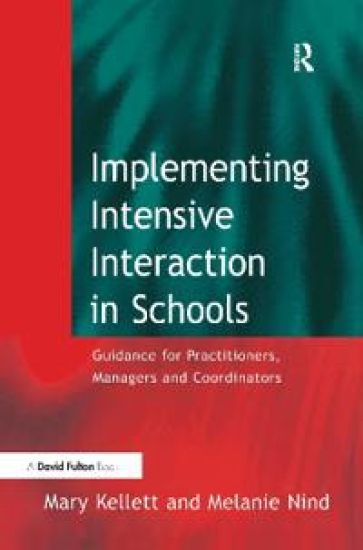
Implementing Intensive Interaction in Schools

Implementing Intensive Interaction in Schools

Mary Kellett; Melanie Nind

CRC Press
2016
sidottu
First Published in 2003. By taking a detailed look at the implementation and management of Intensive Interaction, the authors of this book offer practical guidance on how to get the most from the approach in the school context. This book includes: guidance on managing priorities, training issues, power dynamics and coping with Ofsted; advice on setting up and running evaluation projects; clear links to the National Curriculum for SEN; case studies from special and mainstream school and a glossary of terms. This book is for practitioners, coordinators and managers in schools using Intensive Interaction with pupils who have severe and complex learning difficulties.
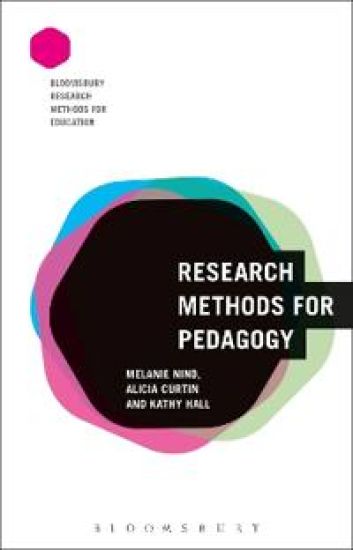
Research Methods for Pedagogy

Research Methods for Pedagogy

Melanie Nind; Alicia Curtin; Kathy Hall

Bloomsbury Academic
2016
nidottu
Aspects of pedagogy are frequently researched, but the concept itself is poorly understood. More than just teaching and learning, pedagogy is about values, identities, relationships and interactions bounded by context. As such, researchers of pedagogy face the challenge of working out what constitutes pedagogical texts, data or evidence, and how these can be generated and understood. Research Methods for Pedagogy begins by exploring the different conceptualisations of pedagogy and their implications for how it is researched. The authors reflect on how their sociocultural stance on pedagogy influences the methods they choose to focus on in the book. Moving beyond just schools and formal pedagogies into informal and everyday pedagogies, the authors use a range of case studies across educational sectors and cultures to discuss methods for researching pedagogy. Common approaches such as ethnography and action research are included alongside some quantitative and quasi-experimental methods and often less familiar participatory, multimodal and reflective methods. The authors demonstrate the relationships between theoretical stance, pedagogical context and research approach. Finally, the book addresses the complexity of pedagogy research through discussion of particular ethical and relational aspects as it highlights innovations and developments in research methods for pedagogy. Boxed case studies, reflections on real research projects, a glossary of key terms and an annotated list of further reading all help to guide students and scholars through their research design and choice of methods in this area.
Research Methods for Pedagogy

Research Methods for Pedagogy

Melanie Nind; Alicia Curtin; Kathy Hall

Bloomsbury Academic
2016
sidottu
Aspects of pedagogy are frequently researched, but the concept itself is poorly understood. More than just teaching and learning, pedagogy is about values, identities, relationships and interactions bounded by context. As such, researchers of pedagogy face the challenge of working out what constitutes pedagogical texts, data or evidence, and how these can be generated and understood. Research Methods for Pedagogy begins by exploring the different conceptualisations of pedagogy and their implications for how it is researched. The authors reflect on how their sociocultural stance on pedagogy influences the methods they choose to focus on in the book. Moving beyond just schools and formal pedagogies into informal and everyday pedagogies, the authors use a range of case studies across educational sectors and cultures to discuss methods for researching pedagogy. Common approaches such as ethnography and action research are included alongside some quantitative and quasi-experimental methods and often less familiar participatory, multimodal and reflective methods. The authors demonstrate the relationships between theoretical stance, pedagogical context and research approach. Finally, the book addresses the complexity of pedagogy research through discussion of particular ethical and relational aspects as it highlights innovations and developments in research methods for pedagogy. Boxed case studies, reflections on real research projects, a glossary of key terms and an annotated list of further reading all help to guide students and scholars through their research design and choice of methods in this area.
Interaction in Action

Interaction in Action

Dave Hewett; Melanie Nind

CRC Press
2016
sidottu
First Published in 1998. The authors’ aim in editing Interaction in Action is to follow up on the thinking and practical guidance contained in their previous work on Intensive Interaction: They hope to illustrate that Intensive Interaction is not just something that goes on in hospital schools. Here we see the approach used not only by teachers, but also by speech therapists, occupational therapists, social workers, psychologists and parents. We see the approach used in people's homes as well as in education and day centres. The contributors have been asked to share their insights, the way they think about Intensive Interaction as well as the way that they 'do' it. This means that the chapters contain both reflective analysis and vivid description. The contributions illustrate how Intensive Interaction has grown and developed as an educational approach and as a way of being with people, and they illustrate the impact on all those involved.
Access to Communication

Access to Communication

Melanie Nind; Dave Hewett

CRC Press
2016
sidottu
The award-winning creators of Intensive Interaction bring this groundbreaking book up to date with new material covering inclusion and emotional literacy. The book also includes:a brand new section looking at the program's implementation in preschool settingsthe particular benefits of Intensive Interaction for children who have Autistic Spectrum Disordersa 'how to do it' chapter including ideas for assessmentcase studies to help practitioners get to grips with the realities of using Intensive Interaction.This book has been updated to include the new SEN Disability Act (SENDA), and developments in new technology.
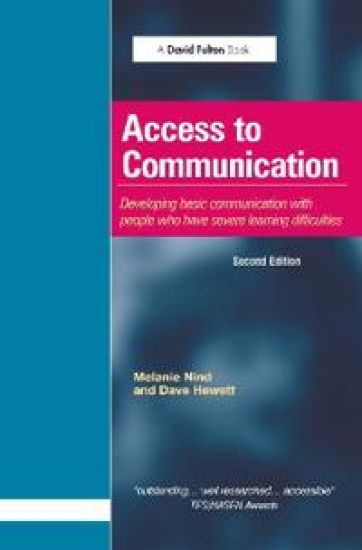
Access to Communication

Access to Communication

Melanie Nind; Dave Hewett

David Fulton Publishers Ltd
2006
nidottu
The award-winning creators of Intensive Interaction bring this groundbreaking book up to date with new material covering inclusion and emotional literacy. The book also includes:a brand new section looking at the program's implementation in preschool settingsthe particular benefits of Intensive Interaction for children who have Autistic Spectrum Disordersa 'how to do it' chapter including ideas for assessmentcase studies to help practitioners get to grips with the realities of using Intensive Interaction.This book has been updated to include the new SEN Disability Act (SENDA), and developments in new technology.
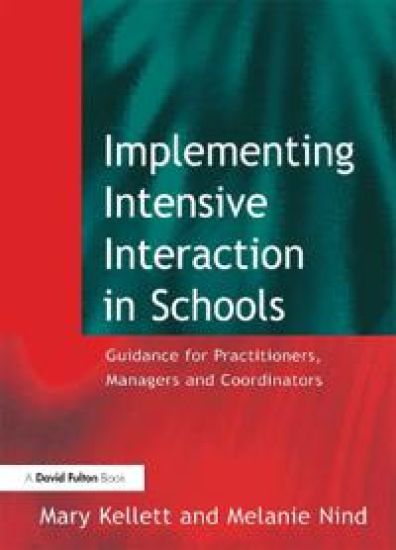
Implementing Intensive Interaction in Schools

Implementing Intensive Interaction in Schools

Mary Kellett; Melanie Nind

David Fulton Publishers Ltd
2003
nidottu
First Published in 2003. By taking a detailed look at the implementation and management of Intensive Interaction, the authors of this book offer practical guidance on how to get the most from the approach in the school context. This book includes: guidance on managing priorities, training issues, power dynamics and coping with Ofsted; advice on setting up and running evaluation projects; clear links to the National Curriculum for SEN; case studies from special and mainstream school and a glossary of terms. This book is for practitioners, coordinators and managers in schools using Intensive Interaction with pupils who have severe and complex learning difficulties.
Manifesto for Learning

Manifesto for Learning

Janet Collins; Joe Harkin; Melanie Nind

Continuum International Publishing Group Ltd.
2002
sidottu
What makes people learn effectively? What can we do to promote more effective learning?Innumerable researchers have studied these important and urgent questions, yet their findings tend to be fragmentary and disparate. Now Janet Collins, Joe Harkin and Melanie Nind provide the big picture. Drawing on research from all sectors of education the authors show that effective learning depends crucially on a few easily understood principles. These principles hold true regardless of the age or nature of the learner or the context in which the learner is working.Manifesto for Learning explains those principles and how to apply them, showing in the process how to make the vision of an effective learning society a reality.
Manifesto for Learning

Manifesto for Learning

Janet Collins; Joe Harkin; Melanie Nind

Continuum International Publishing Group Ltd.
2002
nidottu
What makes people learn effectively? What can we do to promote more effective learning? Innumerable researchers have studied these questions, yet their findings tend to be fragmentary and disparate. This book aims to provide the big picture. Drawing on research from all sectors of education, the authors show how effective learning depends crucially on a few easily understood principles. These hold good regardless of the age or nature of the learner or the context in which the learner is working. The book explains those principles and how to apply them, showing in the process how to make the vision of an effective learning society a reality.
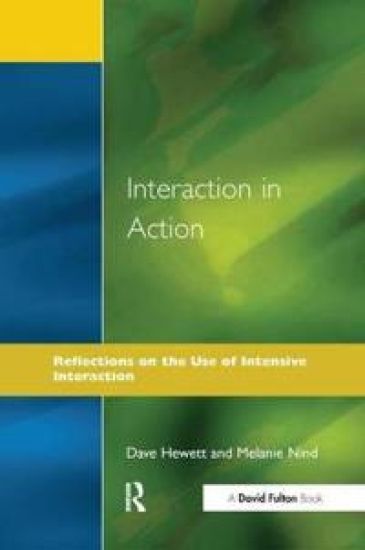
Interaction in Action

Interaction in Action

Dave Hewett; Melanie Nind

David Fulton Publishers Ltd
1998
nidottu
First Published in 1998. The authors’ aim in editing Interaction in Action is to follow up on the thinking and practical guidance contained in their previous work on Intensive Interaction: They hope to illustrate that Intensive Interaction is not just something that goes on in hospital schools. Here we see the approach used not only by teachers, but also by speech therapists, occupational therapists, social workers, psychologists and parents. We see the approach used in people's homes as well as in education and day centres. The contributors have been asked to share their insights, the way they think about Intensive Interaction as well as the way that they 'do' it. This means that the chapters contain both reflective analysis and vivid description. The contributions illustrate how Intensive Interaction has grown and developed as an educational approach and as a way of being with people, and they illustrate the impact on all those involved.