Kirjojen hintavertailu. Mukana 12 595 353 kirjaa ja 12 kauppaa.

Kirjailija

Melanie Simms

Kirjat ja teokset yhdessä paikassa: 4 kirjaa, julkaisuja vuosilta 2012-2019, suosituimpien joukossa What Do We Know and What Should We Do About the Future of Work?. Vertaile teosten hintoja ja tarkista saatavuus suomalaisista kirjakaupoista.

4 kirjaa

Kirjojen julkaisuhaarukka 2012-2019.

What Do We Know and What Should We Do About the Future of Work?
"An excellent summary of why and how we work." People Management magazine What do we know about the current state of work and employment and what does the future of work look like? Professor Melanie Simms provides a far-reaching overview of paid employment in the UK, examining why we work, how we work, and what the future of work will be like with changing demographics and the introduction of modern technologies. From zero-hour contracts, the gig economy and universal basic income, to automation, robotics and artificial intelligence, Simms analyses the most pressing issues facing traditional employment. Before outlining four priority areas where the UK should look to strengthen regulation of in order to face the coming challenges more effectively, but also, so that they benefit workers, as well as employers and managers. Written by leading social scientists, the What Do We Know and What Should We Do About...? series offers concise, up-to-date overviews of issues often oversimplified, misrepresented or misunderstood and shows you how to enact change. "Short, sharp and compelling." - Alex Preston, The Observer "If you want to learn a lot about what matters most, in as short a time as possible, this is the series for you."- Danny Dorling, 1971 Professor of Geography, University of Oxford
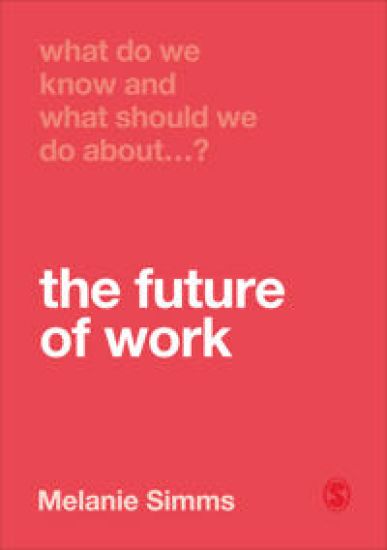
What Do We Know and What Should We Do About the Future of Work?
"An excellent summary of why and how we work." People Management magazine What do we know about the current state of work and employment and what does the future of work look like? Professor Melanie Simms provides a far-reaching overview of paid employment in the UK, examining why we work, how we work, and what the future of work will be like with changing demographics and the introduction of modern technologies. From zero-hour contracts, the gig economy and universal basic income, to automation, robotics and artificial intelligence, Simms analyses the most pressing issues facing traditional employment. Before outlining four priority areas where the UK should look to strengthen regulation of in order to face the coming challenges more effectively, but also, so that they benefit workers, as well as employers and managers. Written by leading social scientists, the What Do We Know and What Should We Do About...? series offers concise, up-to-date overviews of issues often oversimplified, misrepresented or misunderstood and shows you how to enact change. "Short, sharp and compelling." - Alex Preston, The Observer "If you want to learn a lot about what matters most, in as short a time as possible, this is the series for you."- Danny Dorling, 1971 Professor of Geography, University of Oxford

Union Voices

Union Voices

Melanie Simms; Jane Holgate; Edmund Heery

ILR Press
2012
pokkari
In Union Voices, the result of a thirteen-year research project, three industrial relations scholars evaluate how labor unions fared in the political and institutional context created by Great Britain's New Labour government, which was in power from 1997 to 2010. Drawing on extensive empirical evidence, Melanie Simms, Jane Holgate, and Edmund Heery present a multilevel analysis of what organizing means in the UK, how it emerged, and what its impact has been. Although the supportive legislation of the New Labour government led to considerable optimism in the late 1990s about the prospects for renewal, Simms, Holgate, and Heery argue that despite considerable evidence of investment, new practices, and innovation, UK unions have largely failed to see any significant change in their membership and influence. The authors argue that this is because of the wider context within which organizing activity takes place and also reflects the fundamental tensions within these initiatives. Even without evidence of any significant growth in labor influence across UK society more broadly, organizing campaigns have given many of the participants an opportunity to grow and flourish. The book presents their experiences and uses them to show how their personal commitment to organizing and trade unionism can sometimes be undermined by the tensions and tactics used during campaigns.
Union Voices

Union Voices

Melanie Simms; Jane Holgate; Edmund Heery

ILR Press
2012
sidottu
In Union Voices, the result of a thirteen-year research project, three industrial relations scholars evaluate how labor unions fared in the political and institutional context created by Great Britain's New Labour government, which was in power from 1997 to 2010. Drawing on extensive empirical evidence, Melanie Simms, Jane Holgate, and Edmund Heery present a multilevel analysis of what organizing means in the UK, how it emerged, and what its impact has been. Although the supportive legislation of the New Labour government led to considerable optimism in the late 1990s about the prospects for renewal, Simms, Holgate, and Heery argue that despite considerable evidence of investment, new practices, and innovation, UK unions have largely failed to see any significant change in their membership and influence. The authors argue that this is because of the wider context within which organizing activity takes place and also reflects the fundamental tensions within these initiatives. Even without evidence of any significant growth in labor influence across UK society more broadly, organizing campaigns have given many of the participants an opportunity to grow and flourish. The book presents their experiences and uses them to show how their personal commitment to organizing and trade unionism can sometimes be undermined by the tensions and tactics used during campaigns.