Kirjojen hintavertailu. Mukana 12 390 323 kirjaa ja 12 kauppaa.

Kirjailija

Melissa A Hardy

Kirjat ja teokset yhdessä paikassa: 2 kirjaa, julkaisuja vuosilta 1993-2013, suosituimpien joukossa Ending a Career in the Auto Industry. Vertaile teosten hintoja ja tarkista saatavuus suomalaisista kirjakaupoista.

Mukana myös kirjoitusasut: Melissa A. Hardy

2 kirjaa

Kirjojen julkaisuhaarukka 1993-2013.

Ending a Career in the Auto Industry

Ending a Career in the Auto Industry

Melissa A. Hardy; Lawrence Hazelrigg; Jill Quadagno

Springer-Verlag New York Inc.
2013
nidottu
During the 1980s the news media were filled with reports of soaring unemployment as 'downsizing' and `restructuring' became the new buzzwords. Firms managed their workforce reduction by increasing the attractiveness of their pension plans-especially their early-retirement plans. In this volume, the authors examine the U.S. auto industry and present a full-scale analysis of the work and retirement decisions of its workers. They address organizational context and the logic of financial incentives in employer-provided early retirement plans. The impact of pension provisions, layoffs, plant closures, attitudes about `generational equity', and other factors influencing the workers' evaluation of the optimum time to end their careers in the auto industry are explored.
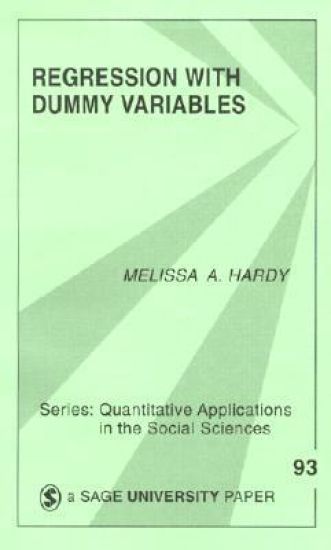
Regression with Dummy Variables

Regression with Dummy Variables

Melissa A Hardy

SAGE Publications Inc
1993
nidottu
Social scientists are often interested in studying differences in groups, such as gender or race differences in attitudes, buying behaviors, or socioeconomic characteristics. When the researcher seeks to estimate group differences through the use of independent variables that are qualitative (i.e., measured at only the nominal level), dummy variables will allow the researcher to represent information about group membership in quantitative terms without imposing unrealistic measurement assumptions on the categorical variables. Beginning with the simplest model, Hardy probes the use of dummy variable regression in increasingly complex specifications, exploring issues such as: interaction, heteroscedasticity, multiple comparisons and significance testing, the use of effects or contrast coding, testing for curvilinearity, and estimating a piecewise linear regression.