Kirjojen hintavertailu. Mukana 12 310 231 kirjaa ja 12 kauppaa.

Kirjailija

Melissa Curley

Kirjat ja teokset yhdessä paikassa: 2 kirjaa, julkaisuja vuosilta 1999-2026, suosituimpien joukossa Civil Society under Authoritarian Rule. Vertaile teosten hintoja ja tarkista saatavuus suomalaisista kirjakaupoista.

2 kirjaa

Kirjojen julkaisuhaarukka 1999-2026.

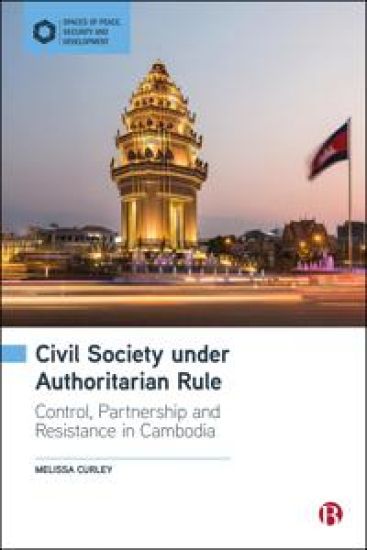
Civil Society under Authoritarian Rule

Civil Society under Authoritarian Rule

Melissa Curley

Bristol University Press
2026
sidottu
How does an authoritarian regime simultaneously suppress dissent whilst leveraging civil society for its own ends? This study examines Cambodia's transformation from the 1990s to today, revealing the state's strategy of 'flexible coerciveness'—a dual approach of restricting political space while co-opting civil society organizations for governance gains. Through rigorous analysis of state-civil society dynamics, this timely work exposes how Cambodia's government has undermined democratic institutions while maintaining strategic partnerships with NGOs and international donors. Essential reading for scholars of authoritarianism, Southeast Asian politics and development studies, the book offers fresh insights beyond traditional democratization theories for our increasingly complex global political landscape.
Changing Security Agendas and the Third World

Changing Security Agendas and the Third World

Lloyd Pettiford; Melissa Curley; Stephen Chan

Continuum International Publishing Group Ltd.
1999
sidottu
Security has long been a central organizing concept of international relations. Until the 1980s, students of the discipline understood its simple essence in terms of arms races and balances of power. However, the issues have changed considerably in the 1990s, and this text aims to help students understand these changes. Many attempts have been made to redefine the concept, leading to a proliferation of terms such as true security, global security, common security and environmental security, but there has been little precision associated with the use of these terms which have often been used in confusing and contradictory ways. In attempting to help students deal with the confusion, this book seeks to outline the theoretical tools at the disposal of students for their own rethinking of security. These tools offer innovative ways of looking at a central concept of the discipline. It outlines some of these alternatives in the context of the third world, which, it is argued, has been neglected by the traditional conceptualization of security.