Kirjojen hintavertailu. Mukana 12 554 089 kirjaa ja 12 kauppaa.
Kirjailija
Melissa Schrift
Kirjat ja teokset yhdessä paikassa: 3 kirjaa, julkaisuja vuosilta 2001-2013, suosituimpien joukossa Biography of a Chairman Mao Badge. Vertaile teosten hintoja ja tarkista saatavuus suomalaisista kirjakaupoista.
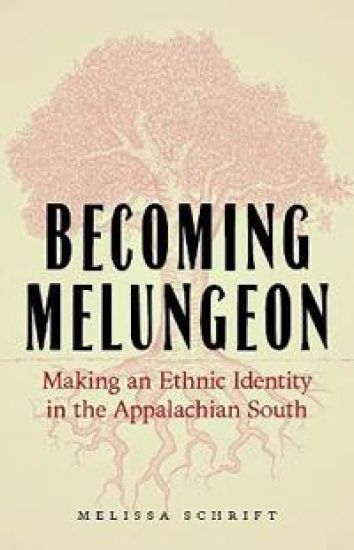
Appalachian legend describes a mysterious, multiethnic population of exotic, dark-skinned rogues called Melungeons who rejected the outside world and lived in the remote, rugged mountains in the farthest corner of northeast Tennessee. The allegedly unknown origins of these Melungeons are part of what drove this legend and generated myriad exotic origin theories. Though nobody self-identified as Melungeon before the 1960s, by the 1990s "Melungeonness" had become a full-fledged cultural phenomenon, resulting in a zealous online community and annual meetings where self-identified Melungeons gathered to discuss shared genealogy and history. Although today Melungeons are commonly identified as the descendants of underclass whites, freed African Americans, and Native Americans, this ethnic identity is still largely a social construction based on local tradition, myth, and media. In Becoming Melungeon, Melissa Schrift examines the ways in which the Melungeon ethnic identity has been socially constructed over time by various regional and national media, plays, and other forms of popular culture. Schrift explores how the social construction of this legend evolved into a fervent movement of a self-identified ethnicity in the 1990s. This illuminating and insightful work examines the shifting social constructions of race, ethnicity, and identity both in the local context of the Melungeons and more broadly in an attempt to understand the formation of ethnic groups and identity in the modern world.
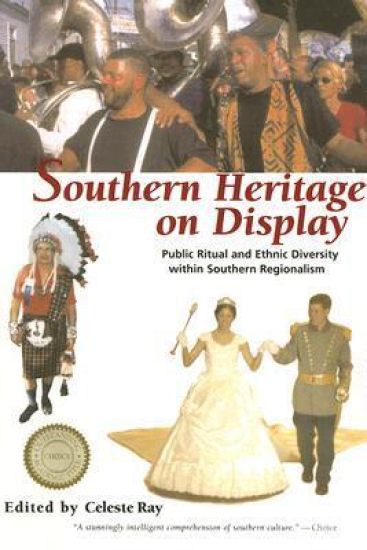
How ritualized public ceremonies affirm or challenge cultural identities associated with the American South* A Choice Outstanding Academic Title"From the jazz funeral processions in the streets of New Orleans to the annual Natchez Pilgrimage in Mississippi and the Scottish Highland games atop Grandfather Mountain in North Carolina, the reader is exposed to a diverse southern culture, or heritage, that is often overlooked by many people, both within and outside the South. The reality of a southern culture based in Mexican heritage or a celebration of [a] Southeastern tribe's heritage through the powwow helps deconstruct the myth of a solid southern culture as one that is simply portrayed as black and white."--Florida Historical Quarterly"The ambition Celeste Ray sets out in her introduction is to show how these groups are not only in the South but of it, how they interpret their diverse identities as Southern--put another way, to answer a question that arises in one noteworthy piece, why do Indians in North Carolina eat barbecue pork and collard greens at their powwows?"--Journal of American Ethnic History"Thought-provoking and well-crafted, Southern Heritage on Display is an innovative and important resource for regional studies and scholarship on public display."--Journal of Folklore ResearchW. J. Cash's 1941 observation that "there are many Souths and many cultural traditions among them" is certainly validated by this book. Although the Civil War and its "lost cause" tradition continues to serve as a cultural root paradigm in celebrations, both uniting and dividing loyalties, southerners also embrace a panoply of public rituals--parades, cook-offs, kinship homecomings, church assemblies, music spectacles, and material culture exhibitions--that affirm other identities. From the Appalachian uplands to the Mississippi Delta, from Kentucky bluegrass to Carolina piedmont, southerners celebrate in festivals that showcase their diverse cultural backgrounds and their mythic beliefs about themselves.The ten essays of this cohesive, interdisciplinary collection present event-centered research from various fields of study--anthropology, geography, history, and literature--to establish a rich, complex picture of the stereotypically "Solid South." Topics include the Mardi Gras Indian song cycle as a means of expressing African-American identity in New Orleans; powwow performances and Native American traditions in southeast North Carolina; religious healings in southern Appalachian communities; Mexican Independence Day festivals in central Florida; and, in eastern Tennessee, bonding ceremonies of melungeons who share Indian, Scots Irish, Mediterranean, and African ancestry. Seen together, these public heritage displays reveal a rich "creole" of cultures that have always been a part of southern life and that continue to affirm a flourishing regionalism.This book will be valuable to students and scholars of cultural anthropology, American studies, and southern history; academic and public libraries; and general readers interested in the American South. It contributes a vibrant, colorful layer of understanding to the continuously emerging picture of complexity in this region historically depicted by simple stereotypes.
With the Great Proletarian Cultural Revolution in 1966, the regime of Chairman Mao Zedong launched a propaganda campaign aimed at disseminating inspiring images of the chairman to a skeptical populace. Thus was born the "Mao badge," a political icon in the form of a pin that was widely distributed to create, sustain, and inflate the Mao personality cult during the Cultural Revolution (1966-1976). Scholars estimate that over two billion Mao badges, featuring over fifty thousand different designs and themes, were produced. As China now enters an era in which people can more openly express their views about the Cultural Revolution, these icons have taken on new meanings, and people are wearing and talking about them in subversive ways. Melissa Schrift suggests that the badges developed "lives" that far surpass the intentions of their creators, as the Chinese ironically commodified them, both during the Cultural Revolution and today. During the Mao years, people wore the objects to symbolize their unquestioned loyalty to Mao. Yet even then many Chinese subverted the badges' symbolic meaning. Using them in socially approved rituals, they gained a measure of political credibility that masked their practice of prohibited customary rites. Biography of a Chairman Mao Badge is a work of cultural history that contributes to our understanding not only of Chinese society but, more generally, of strategies people employ in responding to and transforming the meaning of propaganda campaigns and symbols.