Kirjojen hintavertailu. Mukana 12 509 221 kirjaa ja 12 kauppaa.

Kirjailija

Melvin A. Goodman

Kirjat ja teokset yhdessä paikassa: 7 kirjaa, julkaisuja vuosilta 1991-2021, suosituimpien joukossa The Wars of Eduard Shevardnadze. Vertaile teosten hintoja ja tarkista saatavuus suomalaisista kirjakaupoista.

Mukana myös kirjoitusasut: Melvin A. Goodman, Melvin A Goodman

7 kirjaa

Kirjojen julkaisuhaarukka 1991-2021.

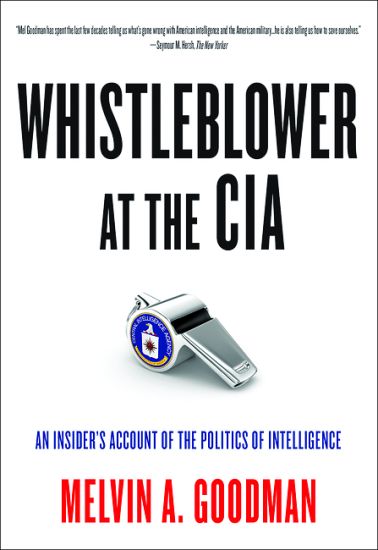
Whistleblower at the CIA

Whistleblower at the CIA

Melvin A. Goodman

City Lights Books
2017
pokkari
"Mel Goodman has spent the last few decades telling us what's gone wrong with American intelligence and the American military . . . he is also telling us how to save ourselves."--Seymour M. Hersh, The New Yorker "Whistleblower at the CIA offers a fascinating glimpse into the secret, behind-the-scenes world of U.S. intelligence. Melvin A. Goodman's first-person account of the systematic manipulation of intelligence at the CIA underscores why whistleblowing is so important, and why the institutional obstacles to it are so intense. . . . At its core it's an invaluable historical expose, a testimony to integrity and conscience, and a call for the U.S. intelligence community to keep its top leaders in check. Urgent, timely, and deeply recommended."--Daniel Ellsberg "In this fascinating and candid account of his years as a senior CIA analyst, Mel Goodman shows how the worst enemies of high quality intelligence can come from our own midst, and how the politicization of intelligence estimates can cause more damage to American security than its professed enemies. Whistleblower at the CIA is a must-read for anyone interested in the intricate web of intelligence-policymaking relations."--Uri Bar-Joseph, author of The Angel: The Egyptian Spy Who Saved Israel "Mel Goodman shines a critical whistleblower light into the dark recesses of the CIA as a former insider. His book serves in the public interest as a warning and wake-up call for what's at stake and why we cannot trust the CIA or the intelligence establishment to do the right thing."--Thomas Drake, former NSA senior executive and whistleblower"Mel Goodman's Whistleblower at the CIA is not just an insider's look at politics at the highest levels of government. It's also a personal account of the political odyssey Goodman had to negotiate for telling the truth. The CIA likes for its employees to believe that everything is a shade of grey. But some things are black or white, right or wrong. Mel Goodman did what was right. He may have paid with his career, but he's on the right side of history."--John Kiriakou, former CIA Counterterrorism Officer and former Senior Investigator, Senate Foreign Relations Committee"Mel Goodman's Whistleblower at the CIA confirmed for me what my own experience had revealed during six hectic days and seven sleepless nights at CIA headquarters, getting Colin Powell ready for his presentation to the UN Security Council on Iraq's 'Failure to Disarm' on February 5, 2003. Mr. Goodman provided exhaustive detail on why the agency has failed, again and again, and will continue to fail if some future president and congress do not step in and dramatically change the way CIA functions."--Lawrence Wilkerson, former chief of staff to secretary of state Colin Powell"A refreshingly honest, well-sourced expose of the CIA that not only furnishes the author's compelling personal story of standing up to inflated estimates sprinkled with little-known but historically significant details of the jewels and the warts, the successes and failures of decades of U.S. intelligence analysis. Especially instructive to our current era plagued by faulty group-think and the 'war on whistleblowers, ' the book chronicles how 'contrarian' analysts are often 'the best source for premonitory intelligence.' This book is a must-read not only for political historians and American citizens wanting to know the unvarnished and often surprising truth about the intelligence side of the CIA but for all students contemplating a career with the CIA or other intelligence agency."--Coleen Rowley, retired FBI agent Melvin Goodman's long career as a respected intelligence analyst at the CIA, specializing in US/Soviet relations, ended abruptly. In 1990, after twenty-four years of service, Goodman resigned when he could no longer tolerate the corruption he witnessed at the highest levels of the Agency. In 1991 he went public, blowing the whistle on top-level officials and leading the opposition against the appointment of Robert Gates as CIA director. In the widely covered Senate hearings, Goodman charged that Gates and others had subverted "the process and the ethics of intelligence" by deliberately misinforming the White House about major world events and covert operations. In this breathtaking expose, Goodman tells the whole story. Retracing his career with the Central Intelligence Agency, he presents a rare insider's account of the inner workings of America's intelligence community, and the corruption, intimidation, and misinformation that lead to disastrous foreign interventions. An invaluable and historic look into one of the most secretive and influential agencies of US government--and a wake-up call for the need to reform its practices. Melvin A. Goodman served as a senior analyst and Division Chief at the CIA from 1966 to 1990. His writing has appeared in the New York Times, Washington Post, Harper's, and many others. He is author of six books on US intelligence and international security.
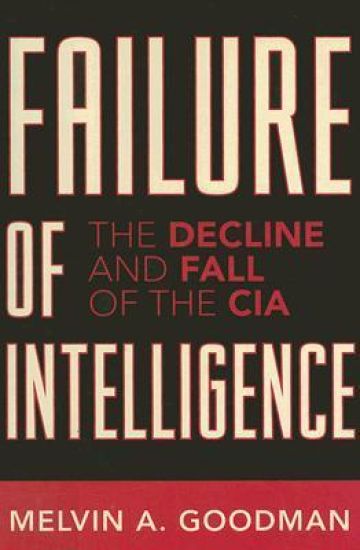
Failure of Intelligence

Failure of Intelligence

Melvin A. Goodman

Rowman Littlefield Publishers
2008
sidottu
The time for serious soul-searching regarding the role of the Central Intelligence Agency and the intelligence community in general is long overdue. The recent intelligence failures regarding the unanticipated collapse of the Soviet Union, the terrorist attacks of September 11, 2001, and the run-up to the Iraq war demonstrate a CIA and a $50 billion intelligence enterprise that cannot provide strategic warning to policymakers and, even worse, is capable of falsifying intelligence to suit political purposes. It will not be possible to reform the enterprise until we understand and debate the nexus between intelligence and policy, the important role of intelligence, and the need for an intelligence agency that is not beholden to political interests. The recent appointment of three general officers to the three most important positions in the intelligence community points to the militarization of overall national security policy, which must be reversed. The military domination of the intelligence cycle makes it more difficult to rebuild strategic intelligence and to provide a check on the Pentagon's influence over foreign policy and the use of force. Failure of Intelligence is designed to inform such a debate and suggest a reform agenda. In this timely and important book, the author offers a provocative mingling of historical description with contemporary political analysis and reform prescription that challenges the conventional wisdom on clandestine collection. The book ultimately and persuasively asserts that the failure to have diplomatic relations has led to the inability to collect intelligence.
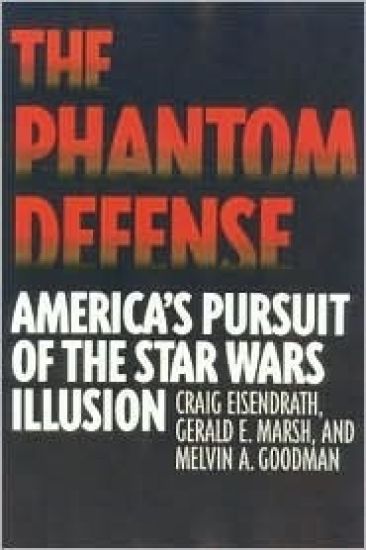
The Phantom Defense

The Phantom Defense

Craig Eisendrath; Melvin A. Goodman; Gerald E. Marsh

Praeger Publishers Inc
2001
sidottu
Drawn from the authors' insider information and expertise, a thought-provoking book discusses the effectiveness of the United States missile defense system and shows how thoughtful diplomacy is the key to meeting security goals.
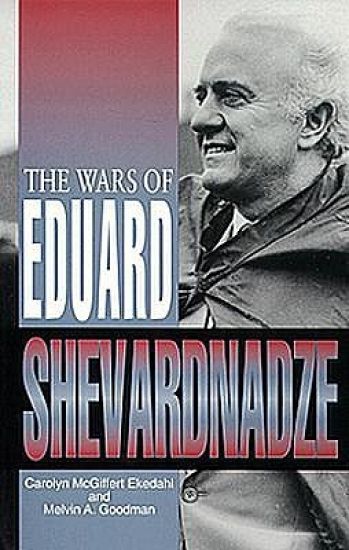
The Wars of Eduard Shevardnadze

The Wars of Eduard Shevardnadze

Carolyn Ekedahl; Melvin A. Goodman

Pennsylvania State University Press
1997
sidottu
When Eduard Shevardnadze resigned as foreign minister of the Soviet Union in 1990, he ended one of the most remarkable and controversial political partnerships in modern history. Together with Mikhail Gorbachev and Alexander Yakovlev, Shevardnadze led the dramatic Soviet about-face in the 1980s that ended the Cold War and transformed the international political climate. While Gorbachev and Yakovlev focused on domestic reform, Shevardnadze redirected foreign policy. His willingness to act decisively made him the "moral force" of new thinking and the point man for the policies of perestroika. This major book is the first to take a critical look at the many battles Shevardnadze has fought at home and abroad throughout his remarkable career. Carolyn Ekedahl and Melvin Goodman—veteran observers of the Soviet system—describe and analyze Shevardnadze’s career, beginning with his Georgian past. They assess his responsibility for the Soviet collapse and the leadership role he continues to play in the independent state of Georgia. While sympathetic to what he has achieved, the authors show how Shevardnadze was a product of the Soviet system he sought to change but would help to destroy. He has proven a skillful politician who exploited available instruments of power to advance his career and further his policy objectives. For this book, the authors have interviewed many high-ranking American, Georgian, Russian, and Soviet officials, including Shevardnadze himself and former secretaries of state George Shultz and James Baker. Both Shultz and Baker credit Shevardnadze with convincing them that Moscow was committed to serious negotiations. They conclude that history would have been far different if it were not for the personal diplomacy of Shevardnadze. As historians and specialists seek to explain the end of the Cold War in terms of endemic weaknesses in the Soviet system and the steadfast policies of the West, The Wars of Eduard Shevardnadze shows the folly of neglecting the essential role played by Soviet leaders who saw the need for reform and implemented policies designed to accomplish profound, but peaceful, change.
Gorbachev's Retreat

Gorbachev's Retreat

Melvin A. Goodman

Praeger Publishers Inc
1991
sidottu
In this fascinating inquiry into the Soviet retreat from the Third World, Melvin A. Goodman analyzes Gorbachev's policy from the standpoint of disillusionment with the Third World. He cites, among other reasons for the retreat, the diminished strategic significance of the Third World to current Soviet leadership, the limitations for Soviet power projection in distant areas, and the dilemmas in Moscow's relations with Third World regimes. Goodman contends that Gorbachev's foreign policy shift to achieve a more stable international arena and a less militant Soviet stance allowed Moscow to focus on its internal economic problems. This volume provides the first exploration of Afghanistan as a watershed in Soviet thinking on the Third World and discusses the current Soviet emphasis on conflict management and resolution in Third World states--particularly Afghanistan, Angola, Ethiopia, and Nicaragua. Gorbachev's Retreat explains how cooperation with the United States improves Moscow's image in the West and tends to stabilize Third World flash points. Up-to-the-minute data on Soviet military and economic assistance to the Third World as well as Third World responses to the new Soviet policy are also presented.The volume examines Soviet retrenchment and retreat in the Third World; analyzes Gorbachev's decisions relative to Third World relationships; zeroes in on the withdrawal from Afghanistan; explores some of the reasons for Soviet power limitations; and assesses the regional implications of Gorbachev's New Political Thinking. Gorbachev's Retreat then looks at Soviet power projection and crisis management, Soviet military and economic aid, and Soviet retreat in the 1990s. The volume will be particularly useful to undergraduate and graduate courses in foreign policy and international relations as a discussion of the impact of the new Soviet policy in the Third World and the consequences for U.S.-Soviet relations. Regional studies specialists will find its in-depth analyses of the limits on Soviet actions in the Third World cogent and timely.