Kirjojen hintavertailu. Mukana 12 595 353 kirjaa ja 12 kauppaa.
Kirjailija
Melvin Fitting
Kirjat ja teokset yhdessä paikassa: 8 kirjaa, julkaisuja vuosilta 2009-2024, suosituimpien joukossa First-Order Modal Logic. Vertaile teosten hintoja ja tarkista saatavuus suomalaisista kirjakaupoista.
This revised edition of the highly recommended book "First-Order Modal Logic", originally published in 1998, contains both new and modified chapters reflecting the latest scientific developments.
This revised edition of the highly recommended book "First-Order Modal Logic", originally published in 1998, contains both new and modified chapters reflecting the latest scientific developments. Fitting and Mendelsohn present a thorough treatment of first-order modal logic, together with some propositional background. They adopt throughout a threefold approach. Semantically, they use possible world models; the formal proof machinery is tableaus; and full philosophical discussions are provided of the way that technical developments bear on well-known philosophical problems. The book covers quantification itself, including the difference between actualist and possibilist quantifiers; equality, leading to a treatment of Frege's morning star/evening star puzzle; the notion of existence and the logical problems surrounding it; non-rigid constants and function symbols; predicate abstraction, which abstracts a predicate from a formula, in effect providing a scoping function for constants andfunction symbols, leading to a clarification of ambiguous readings at the heart of several philosophical problems; the distinction between nonexistence and nondesignation; and definite descriptions, borrowing from both Fregean and Russellian paradigms.Review of the First Edition: "This Text is an excellent and most useful volume. It is pitched correctly: the exercises are just right... It sets a high standard for anything following. It is to be highly recommended." (Bulletin of Symbolic Logic, 8:3)
The various number systems are usually taken for granted by most people, and rightly so. But at least once in the career of every person seriously interested in mathematics, they should be looked at with a critical eye. Why were they created, and why are their properties what they are? Numbers is intended to be a readable but rigorous book that addresses these points. Edmund Landau's 1930 book Grundlagen der Analysis (Foundations of Analysis) is still in print, showing the continuing desire for such a book, but it is extraordinarily terse, and is famous for it. It is a long string of definitions and theorems with no informal material at all. We have tried to find a good mix of informality and formal development. We spend much time on motivation, giving informal reasons why a formal development can proceed as it does. Then and only then do we present the formal material. Thus the reader learns not only the mechanism of the number systems, but also how formal mathematics gets created and thought about at a pre-formal level.The role of set theory and its relationship to the number systems is important, but in a book concentrating on numbers it is rather diversionary. Some set theory is necessary, of course, but the principles needed are simple and straightforward. We assume they are part of the reader's logical machinery and go on from there. A few foundational issues are mentioned, but this is not a book on set theory.Common pencil-and-paper algorithms for arithmetical computation are discussed along the way. They are, after all, among the great human creations and should be seen as such.The system of real numbers is often presented using Dedekind cuts or Cauchy sequences. We have chosen an approach whose intuition is more familiar to most: infinite decimals. We develop them in a simple, yet rigorous, way that builds naturally on what people have already had exposure to.Exercises are included. Some are computational and some are of the supply-a-proof type. If successfully done, the reader will not only have come to know something, but will have come to know that he or she has come to know it.
Classical logic is concerned, loosely, with the behaviour of truths. Epistemic logic similarly is about the behaviour of known or believed truths. Justification logic is a theory of reasoning that enables the tracking of evidence for statements and therefore provides a logical framework for the reliability of assertions. This book, the first in the area, is a systematic account of the subject, progressing from modal logic through to the establishment of an arithmetic interpretation of intuitionistic logic. The presentation is mathematically rigorous but in a style that will appeal to readers from a wide variety of areas to which the theory applies. These include mathematical logic, artificial intelligence, computer science, philosophical logic and epistemology, linguistics, and game theory.
There are many kinds of books on formal logic. Some have philosophers as their intended audience, some mathematicians, some computer scien tists. Although there is a common core to all such books, they will be very different in emphasis, methods, and even appearance. This book is intended for computer scientists. But even this is not precise. Within computer science formal logic turns up in a number of areas, from pro gram verification to logic programming to artificial intelligence. This book is intended for computer scientists interested in automated theo rem proving in classical logic. To be more precise yet, it is essentially a theoretical treatment, not a how-to book, although how-to issues are not neglected. This does not mean, of course, that the book will be of no interest to philosophers or mathematicians. It does contain a thorough presentation of formal logic and many proof techniques, and as such it contains all the material one would expect to find in a course in formal logic covering completeness but, not incompleteness issues. The first item to be addressed is, What are we talking about and why are we interested in it? We are primarily talking about truth as used in mathematical discourse, and our interest in it is, or should be, self evident. Truth is a semantic concept, so we begin with models and their properties. These are used to define our subject.
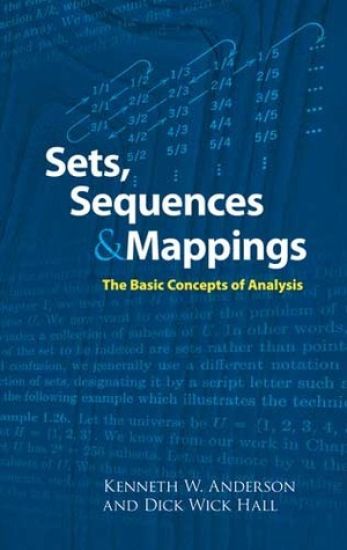
Students progressing to advanced calculus are frequently confounded by the dramatic shift from mechanical to theoretical and from concrete to abstract. This text bridges the gap, offering a systematic development of the real number system and careful treatment of mappings, sequences, limits, continuity, and metric spaces.The first five chapters consist of a systematic development of many of the important properties of the real number system, plus detailed treatment of such concepts as mappings, sequences, limits, and continuity. The sixth and final chapter discusses metric spaces and generalizes many of the earlier concepts and results involving arbitrary metric spaces.An index of axioms and key theorems appears at the end of the book, and more than 300 problems amplify and supplement the material within the text. Geared toward students who have taken several semesters of basic calculus, this volume is an ideal prerequisite for mathematics majors preparing for a two-semester course in advanced calculus.
A lucid, elegant, and complete survey of set theory, this volume is drawn from the authors' substantial teaching experience. The first of three parts focuses on axiomatic set theory. The second part explores the consistency of the continuum hypothesis, and the final section examines forcing and independence results.Part One's focus on axiomatic set theory features nine chapters that examine problems related to size comparisons between infinite sets, basics of class theory, and natural numbers. Additional topics include author Raymond Smullyan's double induction principle, super induction, ordinal numbers, order isomorphism and transfinite recursion, and the axiom of foundation and cardinals. The six chapters of Part Two address Mostowski-Shepherdson mappings, reflection principles, constructible sets and constructibility, and the continuum hypothesis. The text concludes with a seven-chapter exploration of forcing and independence results. This treatment is noteworthy for its clear explanations of highly technical proofs and its discussions of countability, uncountability, and mathematical induction, which are simultaneously charming for experts and understandable to graduate students of mathematics.