Kirjojen hintavertailu. Mukana 12 299 202 kirjaa ja 12 kauppaa.

Kirjailija

Melvin J. Lasky

Kirjat ja teokset yhdessä paikassa: 6 kirjaa, julkaisuja vuosilta 2005-2017, suosituimpien joukossa Media Warfare. Vertaile teosten hintoja ja tarkista saatavuus suomalaisista kirjakaupoista.

6 kirjaa

Kirjojen julkaisuhaarukka 2005-2017.

Voices in a Revolution

Voices in a Revolution

Melvin J. Lasky

Routledge
2017
sidottu
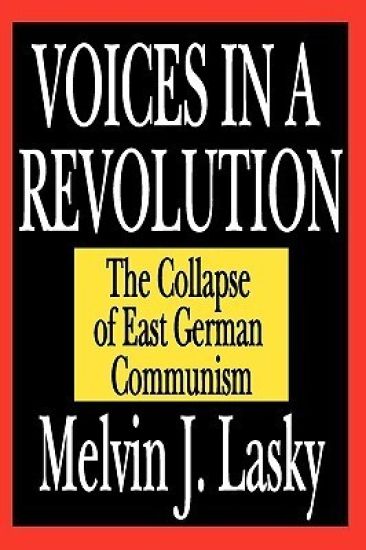
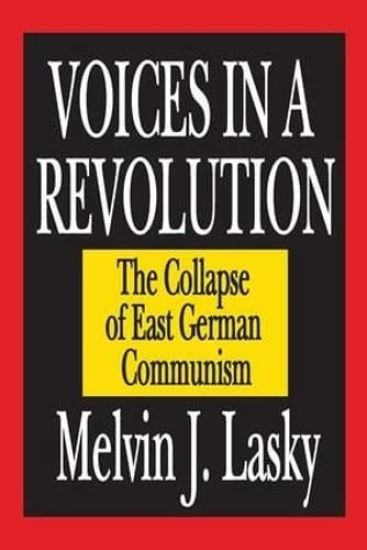
Afeatured article in Die Zeit, the leading German weekly, begins with "Melvin, du hast gewonnen"--Mel, you have won! In his extraordinary account of the final days of the German Democratic Republic (DDR) we see the reckoning of a regime, and also the vindication of a life-long devotee of European democracy. It is unlikely that any comparable memoir will be written, since Lasky's career spanned the entire history of wartime and postwar Germany, especially in divided and Wall-torn Berlin.Voices in a Revolution, now in paperback, offers an in-depth portrayal of the Communist police state before the breakdown, followed by a blow-by-blow account of the drama of breakdown and regime transformation. Characters in the everyday cultural world of Germany come alive as harbingers and heralds of the end of the old and the necessity of the new.Lasky understands the role of accident as well as of necessity. The West Germans had all but abandoned the slogan of One People, One Nation when they were faced with the immense task of supervising just such a reintegration. The work ends with the awakening conscience at the very point that the Berlin Wall came tumbling down. This is a memorable work--one likely to sear the conscience of lovers of freedom and analysts of tyranny alike.
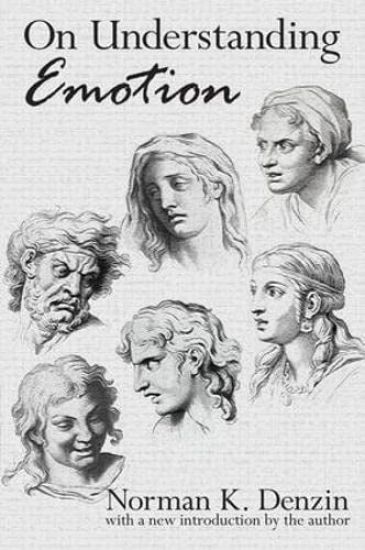
On Understanding Emotion

On Understanding Emotion

Melvin J. Lasky

Routledge
2017
sidottu
Emotions--fleeting, insubstantial, changeable, and ambiguous--seem to defy study and analysis. Nothing is more complex, mysterious, and subject to conflicting theories and interpretations than human emotion. Yet the central importance of emotion in human affairs is undeniable. Emotions affect all levels of life--personal, organizational, political, cultural, economic, and religious. Emotions give meaning to life. Emotional disturbances can destroy that meaning.How should emotions be studied? How can an understanding of the inner feelings of individuals illuminate important social interactions and human developments? In his book, Norman Denzin presents a systematic, in-depth analysis of emotion that combines new theoretical advances with practical applications. Based on an intensive, critical examination of classical and modern theoretical research--and on revealing personal interviews in which ordinary people express their emotional lives--he builds a new framework for understanding ordinary emotions and emotional disturbances.Denzin analyzes how people experience joy and pain, love and hate, anger and despair, friendship and alienation--and examines the personal, psychological, social, and cultural aspects of human emotion to provide new perspectives for understanding human experience and social interactions. He offers new insights on the role of emotions in family violence and recommends ways of helping people escape from recurring patterns of violence. And in criticizing current conceptions of emotionally disturbed people, he reveals the nature of their inner lives and the ways they perceive and relate to others. In sum, this book presents new insights on human relationships and human experience. It is now available in paperback for the first time, with a new introduction by the author.
On Understanding Emotion

On Understanding Emotion

Melvin J. Lasky

AldineTransaction
2007
nidottu
Emotions--fleeting, insubstantial, changeable, and ambiguous--seem to defy study and analysis. Nothing is more complex, mysterious, and subject to conflicting theories and interpretations than human emotion. Yet the central importance of emotion in human affairs is undeniable. Emotions affect all levels of life--personal, organizational, political, cultural, economic, and religious. Emotions give meaning to life. Emotional disturbances can destroy that meaning.How should emotions be studied? How can an understanding of the inner feelings of individuals illuminate important social interactions and human developments? In his book, Norman Denzin presents a systematic, in-depth analysis of emotion that combines new theoretical advances with practical applications. Based on an intensive, critical examination of classical and modern theoretical research--and on revealing personal interviews in which ordinary people express their emotional lives--he builds a new framework for understanding ordinary emotions and emotional disturbances.Denzin analyzes how people experience joy and pain, love and hate, anger and despair, friendship and alienation--and examines the personal, psychological, social, and cultural aspects of human emotion to provide new perspectives for understanding human experience and social interactions. He offers new insights on the role of emotions in family violence and recommends ways of helping people escape from recurring patterns of violence. And in criticizing current conceptions of emotionally disturbed people, he reveals the nature of their inner lives and the ways they perceive and relate to others. In sum, this book presents new insights on human relationships and human experience. It is now available in paperback for the first time, with a new introduction by the author.
Media Warfare

Media Warfare

Melvin J. Lasky

AldineTransaction
2007
nidottu
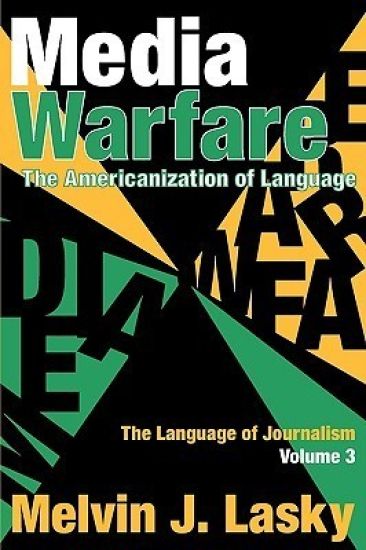
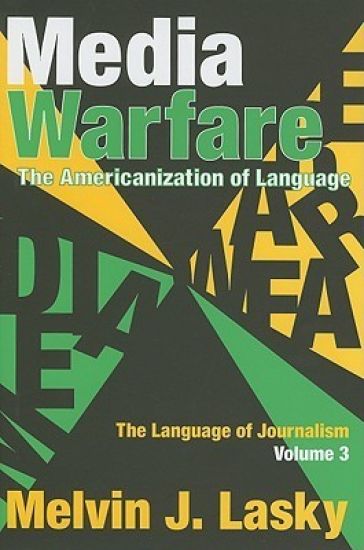
Media Warfare is the concluding volume of Melvin Lasky's monumental The Language of Journalism, a series that has been praised as a "brilliant" and "original" study in communications and contemporary language. Firmly rooted in the critical tradition of H. L. Mencken, George Orwell, and Karl Kraus, Lasky's incisive analysis of journalistic usage and misusage gauges both the cultural and political health of contemporary society as well the declining standards of contemporary journalism.As in the first two volumes, Lasky's scope is cross-cultural with special emphasis on the sometimes conflicting, sometimes mutually influential styles of American and British journalistic practice. His approach to changes in media content and style is closely keyed to changes in society at large. Media Warfare pays particular attention to the gradual easing and near disappearance of censorship rules in the 1960s and after and the attendant effects on electronic and print media. In lively and irreverent prose, Lasky anatomizes the dilemmas posed by the entrance of formerly "unmentionable" subjects into daily journalistic discourse, whether for reasons of profit or accurate reporting. He details the pervasive and often indirect influence of the worlds of fashion and advertising on journalism with their imperatives of sensationalism and novelty and, by contrast, how the freeing of language and subject matter in literature--the novels of Joyce and Lawrence, the poetry of Philip Larkin--have affected permissible expression for good or ill. Lasky also relates this interaction of high and low style to the spread of American urban slang, often with Yiddish roots and sometimes the occasion of anti-Semitic reaction, into the common parlance of British no less than American journalists.Media Warfare concludes with prescriptive thoughts on how journalism might still be revitalized in a "post-profane" culture. Witty, timely, and deeply learned, the three volumes of The Language of Journalism are a crowning achievement to a distinguished career.
Voices in a Revolution

Voices in a Revolution

Melvin J. Lasky

AldineTransaction
2006
nidottu
Afeatured article in Die Zeit, the leading German weekly, begins with "Melvin, du hast gewonnen"--Mel, you have won! In his extraordinary account of the final days of the German Democratic Republic (DDR) we see the reckoning of a regime, and also the vindication of a life-long devotee of European democracy. It is unlikely that any comparable memoir will be written, since Lasky's career spanned the entire history of wartime and postwar Germany, especially in divided and Wall-torn Berlin.Voices in a Revolution, now in paperback, offers an in-depth portrayal of the Communist police state before the breakdown, followed by a blow-by-blow account of the drama of breakdown and regime transformation. Characters in the everyday cultural world of Germany come alive as harbingers and heralds of the end of the old and the necessity of the new.Lasky understands the role of accident as well as of necessity. The West Germans had all but abandoned the slogan of One People, One Nation when they were faced with the immense task of supervising just such a reintegration. The work ends with the awakening conscience at the very point that the Berlin Wall came tumbling down. This is a memorable work--one likely to sear the conscience of lovers of freedom and analysts of tyranny alike.
Media Warfare

Media Warfare

Melvin J. Lasky

Transaction Publishers
2005
sidottu
Media Warfare is the concluding volume of Melvin Lasky's monumental The Language of Journalism, a series that has been praised as a "brilliant" and "original" study in communications and contemporary language. Firmly rooted in the critical tradition of H. L. Mencken, George Orwell, and Karl Kraus, Lasky's incisive analysis of journalistic usage and misusage gauges both the cultural and political health of contemporary society as well the declining standards of contemporary journalism.As in the first two volumes, Lasky's scope is cross-cultural with special emphasis on the sometimes conflicting, sometimes mutually influential styles of American and British journalistic practice. His approach to changes in media content and style is closely keyed to changes in society at large. Media Warfare pays particular attention to the gradual easing and near disappearance of censorship rules in the 1960s and after and the attendant effects on electronic and print media. In lively and irreverent prose, Lasky anatomizes the dilemmas posed by the entrance of formerly "unmentionable" subjects into daily journalistic discourse, whether for reasons of profit or accurate reporting. He details the pervasive and often indirect influence of the worlds of fashion and advertising on journalism with their imperatives of sensationalism and novelty and, by contrast, how the freeing of language and subject matter in literature--the novels of Joyce and Lawrence, the poetry of Philip Larkin--have affected permissible expression for good or ill. Lasky also relates this interaction of high and low style to the spread of American urban slang, often with Yiddish roots and sometimes the occasion of anti-Semitic reaction, into the common parlance of British no less than American journalists.Media Warfare concludes with prescriptive thoughts on how journalism might still be revitalized in a "post-profane" culture. Witty, timely, and deeply learned, the three volumes of The Language of Journalism are a crowning achievement to a distinguished career.