Kirjailija
Melvyn C. Goldstein
Kirjat ja teokset yhdessä paikassa: 10 kirjaa, julkaisuja vuosilta 1984-2019, suosituimpien joukossa The Struggle for Modern Tibet: The Autobiography of Tashi Tsering. Vertaile teosten hintoja ja tarkista saatavuus suomalaisista kirjakaupoista.
10 kirjaa
Kirjojen julkaisuhaarukka 1984-2019.
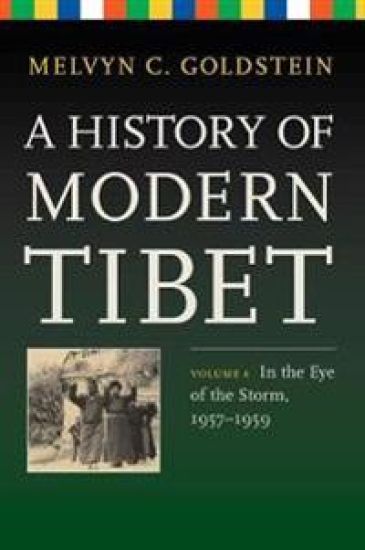
It is not possible to understand contemporary politics between China and the Dalai Lama without understanding what happened in the 1950s, especially the events that occurred in 1957–59. The fourth volume of Melvyn C. Goldstein's History of Modern Tibet series, In the Eye of the Storm, provides new perspectives on Sino-Tibetan history during the period leading to the Tibetan Uprising of 1959. The volume also reassesses issues that have been widely misunderstood as well as stereotypes and misrepresentations in the popular realm and in academic literature (such as in Mao’s policies on Tibet). Volume 4 draws on important new Chinese government documents, published and unpublished memoirs, new biographies, and a large corpus of in-depth, specially collected political interviews to reexamine the events that produced the March 10th uprising and the demise of Tibet’s famous Buddhist civilization. The result is a heavily documented analysis that presents a nuanced and balanced account of the principal players and their policies during the critical final two years of Sino-Tibetan relations under the Seventeen-Point Agreement of 1951.
It is not possible to fully understand contemporary politics between China and the Dalai Lama without understanding what happened in the 1950's. The third volume in Melvyn Goldstein's History of Modern Tibet series, The Calm before the Storm, examines the critical years of 1955 through 1957. During this period, the Preparatory Committee for a Tibet Autonomous Region was inaugurated in Lhasa, and a major Tibetan uprising occurred in Sichuan Province. Jenkhentsisum, a Tibetan anti-communist emigre group, emerged as an important player with secret links to Indian Intelligence, the Dalai Lama's Lord Chamberlain, the United States, and Taiwan. And in Tibet, Fan Ming, the acting head of the CCP's office in Lhasa, launched the "Great Expansion," which recruited many thousands of Han Cadres to Lhasa in preparation for beginning democratic reforms, only to be stopped decisively by Mao Zedong's "Great Contraction" which sent them back to China and ended talk of reforms in Tibet for the foreseeable future. In Volume III, Goldstein draws on never-before seen Chinese government documents, published and unpublished memoirs and diaries, and invaluable in-depth interviews with important Chinese and Tibetan participants (including the Dalai Lama) to offer a new level of insight into the events and principal players of the time. Goldstein corrects factual errors and misleading stereotypes in the history, and uncovers heretofore unknown information on the period to reveal in depth a nuanced portrait of Sino-Tibetan relations that goes far beyond anything previously imagined.
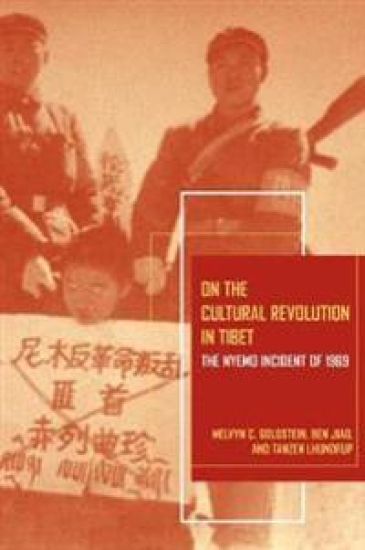
On the Cultural Revolution in Tibet
Melvyn C. Goldstein; Ben Jiao; Tanzen Lhundrup
University of California Press
2010
pokkari
Among the conflicts to break out during the Cultural Revolution in Tibet, the most famous took place in the summer of 1969 in Nyemo, a county to the south and west of Lhasa. In this incident, hundreds of villagers formed a mob led by a young nun who was said to be possessed by a deity associated with the famous warrior-king Gesar. In their rampage the mob attacked, mutilated, and killed county officials and local villagers as well as People's Liberation Army troops. This groundbreaking book, the first on the Cultural Revolution in Tibet, revisits the Nyemo Incident, which has long been romanticized as the epitome of Tibetan nationalist resistance against China. Melvyn C. Goldstein, Ben Jiao, and Tanzen Lhundrup demonstrate that far from being a spontaneous battle for independence, this violent event was actually part of a struggle between rival revolutionary groups and was not ethnically based. "On the Cultural Revolution in Tibet" proffers a sober assessment of human malleability and challenges the tendency to view every sign of unrest in Tibet in ethno-nationalist terms.
It is not possible to fully understand contemporary politics between China and the Dalai Lama without understanding what happened - and why - during the 1950s. In a book that continues the story of Tibet's history that he began in his acclaimed "A History of Modern Tibet, 1913-1951: The Demise of the Lamaist State", Melvyn C. Goldstein critically revises our understanding of that key period in midcentury. This authoritative account utilizes new archival material, including never before seen documents, and extensive interviews with Tibetans, including the Dalai Lama, and with Chinese officials. Goldstein furnishes fascinating and sometimes surprising portraits of these major players as he deftly unravels the fateful intertwining of Tibetan and Chinese politics against the backdrop of the Korean War, the tenuous Sino-Soviet alliance, and American cold war policy.
A Tibetan Revolutionary
Melvyn C. Goldstein; Dawei Sherap; William R. Siebenschuh
University of California Press
2006
pokkari
This is the as-told-to political autobiography of Phuntso Wangye (Phunwang), one of the most important Tibetan revolutionary figures of the twentieth century. Phunwang began his activism in school, where he founded a secret Tibetan Communist Party. He was expelled in 1940, and for the next nine years he worked to organize a guerrilla uprising against the Chinese who controlled his homeland. In 1949, he merged his Tibetan Communist Party with Mao's Chinese Communist Party. He played an important role in the party's administrative organization in Lhasa and was the translator for the young Dalai Lama during his famous 1954-55 meetings with Mao Zedong. In the 1950s, Phunwang was the highest-ranking Tibetan official within the Communist Party in Tibet. Though he was fluent in Chinese, comfortable with Chinese culture, and devoted to socialism and the Communist Party, Phunwang's deep commitment to the welfare of Tibetans made him suspect to powerful Han colleagues. In 1958 he was secretly detained; three years later, he was imprisoned in solitary confinement in Beijing's equivalent of the Bastille for the next eighteen years. Informed by vivid firsthand accounts of the relations between the Dalai Lama, the Nationalist Chinese government, and the People's Republic of China, this absorbing chronicle illuminates one of the world's most tragic and dangerous ethnic conflicts at the same time that it relates the fascinating details of a stormy life spent in the quest for a new Tibet.
The New Tibetan-English Dictionary of Modern Tibetan
Melvyn C. Goldstein
University of California Press
2001
sidottu
Surpasses existing dictionaries in both scope and comprehensiveness. The New Tibetan-English Dictionary of Modern Tibetan surpasses existing dictionaries in both scope and comprehensiveness. Containing more than 80,000 lexical items used in political, social, economic, literary, and scientific discourse, this invaluable sourcebook includes the tens of thousands of new words that have been coined or that have come into use since Tibet was incorporated into the People's Republic of China in 1951. The dictionary lists lexical items characteristic of the special written genre that was used by Tibetan government officials up to 1959 as well as new terminology used in the Tibetan exile communities in South Asia. It contains both the core lexical terminology used in everyday life and standard modern writing and many proverbs and sayings that appear frequently in contemporary literary materials. The entries provide spoken pronunciation and thousands of illustrative sentences.
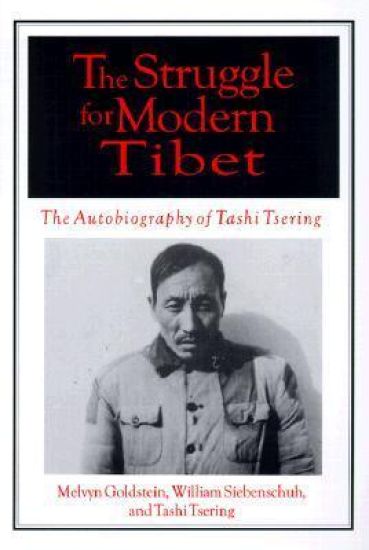
The Struggle for Modern Tibet: The Autobiography of Tashi Tsering
Melvyn C. Goldstein; William R Siebenschuh; Tashi Tsering
M.E. Sharpe
1997
sidottu
This captivating autobiography by a Tibetan educator and former political prisoner is full of twists and turns. Born in 1929 in a Tibetan village, Tsering developed a strong dislike of his country's theocratic ruling elite. As a 13-year-old member of the Dalai Lama's personal dance troupe, he was frequently whipped or beaten by teachers for minor infractions. A heterosexual, he escaped by becoming a drombo, or homosexual passive partner and sex-toy, for a well-connected monk. After studying at the University of Washington, he returned to Chinese-occupied Tibet in 1964, convinced that Tibet could become a modernized society based on socialist, egalitarian principles only through cooperation with the Chinese. Denounced as a 'counterrevolutionary' during Mao's Cultural Revolution, he was arrested in 1967 and spent six years in prison or doing forced labor in China. Officially exonerated in 1978, Tsering became a professor of English at Tibet University in Lhasa. He now raises funds to build schools in Tibet's villages, emphasizing Tibetan language and culture.
The Struggle for Modern Tibet: The Autobiography of Tashi Tsering
Melvyn C. Goldstein; William R Siebenschuh; Tashi Tsering
Routledge
1997
nidottu
This captivating autobiography by a Tibetan educator and former political prisoner is full of twists and turns. Born in 1929 in a Tibetan village, Tsering developed a strong dislike of his country's theocratic ruling elite. As a 13-year-old member of the Dalai Lama's personal dance troupe, he was frequently whipped or beaten by teachers for minor infractions. A heterosexual, he escaped by becoming a drombo, or homosexual passive partner and sex-toy, for a well-connected monk. After studying at the University of Washington, he returned to Chinese-occupied Tibet in 1964, convinced that Tibet could become a modernized society based on socialist, egalitarian principles only through cooperation with the Chinese. Denounced as a 'counterrevolutionary' during Mao's Cultural Revolution, he was arrested in 1967 and spent six years in prison or doing forced labor in China. Officially exonerated in 1978, Tsering became a professor of English at Tibet University in Lhasa. He now raises funds to build schools in Tibet's villages, emphasizing Tibetan language and culture.
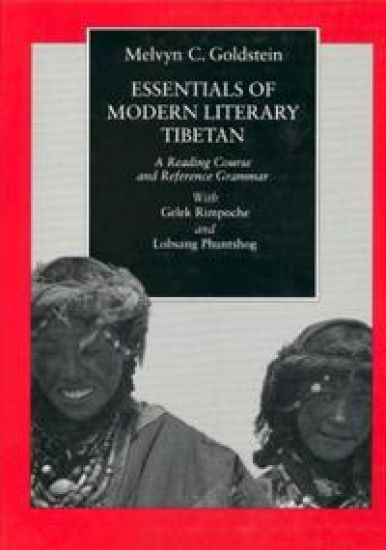
Essentials of Modern Literary Tibetan
Melvyn C. Goldstein; Gelek Rimpoche; Lobsang Phuntshog
University of California Press
1991
sidottu
"Half of the words are read by implication." This Tibetan saying explains the main difficulty Westerners face in learning to read Tibetan fluently. This book will allow beginners to understand the logic of Tibetan grammar and syntax through graded readings and narrative explanations. The large glossary, which is indexed by page, will serve as an invaluable reference grammar for readers of Tibetan at all levels. The reading course includes a wide range of modern literary styles from literature, history, current affairs, newspapers, and even communist political essays.
English-Tibetan Dictionary of Modern Tibetan
Melvyn C. Goldstein
University of California Press
1984
sidottu
The liberalization of political and intellectual life in China and the rise of Tibetan exile communities throughout the world have produced a resurgence of spoken and written Tibetan. These developments, together with increasing contacts between Western scholars and Tibetans, have created a widening circle of English-speakers - in government, business, academia, and elsewhere - who need to speak or write Tibetan with precision and clarity. For these people, and for others who want to communicate with Tibetans in their own language, Professor Goldstein's Dictionary will be an indispensable aid. The first scholarly English-Tibetan dictionary, as well as the only one that is semantically sensitive, this work specifies the Tibetan terms that correspond to the submeanings of a single English term. Containing roughly 16,000 main entries, most of which have multiple subentries, the Dictionary treats a total of 45,000 lexical items. Each entry includes both the written Tibetan orthography and a phonemic notation to indicate pronunciation. Grammatical features are also noted, and all examples of usage are presented with the romanticization of the written Tibetan and phonemic notation of the spoken forms. An introductory essay familiarizes users with the main features of Tibetan grammar.