Kirjojen hintavertailu. Mukana 12 390 323 kirjaa ja 12 kauppaa.

Kirjailija

Meredith L. Weiss

Kirjat ja teokset yhdessä paikassa: 10 kirjaa, julkaisuja vuosilta 2005-2026, suosituimpien joukossa Politics in a Pandemic. Vertaile teosten hintoja ja tarkista saatavuus suomalaisista kirjakaupoista.

10 kirjaa

Kirjojen julkaisuhaarukka 2005-2026.

Politics in a Pandemic

Politics in a Pandemic

Meredith L. Weiss

Cambridge University Press
2026
pokkari
The COVID-19 pandemic offers unique insight into how regimes govern in 'hard times.' In Southeast Asia, public health and economic strain revealed the scope for adaptation in the face of crisis, against the pull of path-dependent habits and patterns. Recent experience of SARS and other outbreaks, as well as wider political and economic contexts, shaped readiness and responses. Especially important were legacies of the developmental-state model. Even largely absent a prior welfarist turn, core developmentalist attributes helped foster citizen buy-in and compliance: how efficiently and well states could coordinate provision of necessary infrastructure, spur biomedical innovation, marshal resources, tamp down political pressure, and constrain rent-seeking, all while maintaining popular trust. Also salient to pandemic governance were the actual distribution of authority, beyond what institutional structures imply, and the extent to which state–society relations, including habits of coercion or rent-seeking, encourage more or less programmatic or confidence-building frames and approaches.

Politics in a Pandemic

Politics in a Pandemic

Meredith L. Weiss

Cambridge University Press
2026
sidottu
The COVID-19 pandemic offers unique insight into how regimes govern in 'hard times.' In Southeast Asia, public health and economic strain revealed the scope for adaptation in the face of crisis, against the pull of path-dependent habits and patterns. Recent experience of SARS and other outbreaks, as well as wider political and economic contexts, shaped readiness and responses. Especially important were legacies of the developmental-state model. Even largely absent a prior welfarist turn, core developmentalist attributes helped foster citizen buy-in and compliance: how efficiently and well states could coordinate provision of necessary infrastructure, spur biomedical innovation, marshal resources, tamp down political pressure, and constrain rent-seeking, all while maintaining popular trust. Also salient to pandemic governance were the actual distribution of authority, beyond what institutional structures imply, and the extent to which state–society relations, including habits of coercion or rent-seeking, encourage more or less programmatic or confidence-building frames and approaches.
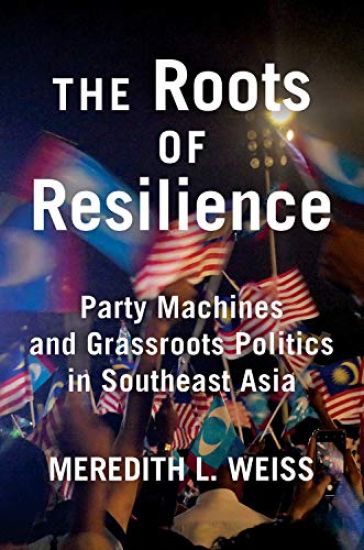
The Roots of Resilience

The Roots of Resilience

Meredith L. Weiss

CORNELL UNIVERSITY PRESS
2025
pokkari
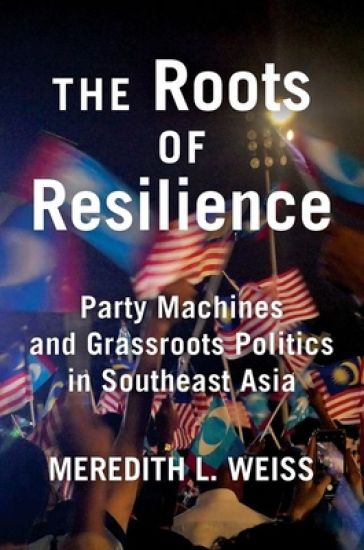
In The Roots of Resilience Meredith L. Weiss examines governance from the ground up in the world's two most enduring electoral authoritarian or "hybrid" regimes—Singapore and Malaysia—where politically liberal and authoritarian features blend, evading substantive democracy. Weiss explains that while key attributes of these regimes differ, affecting the scope, character, and balance among national parties and policies, local machines, and personalized linkages, the similarity in the overall patterns in these countries confirms the salience of those dimensions. The Roots of Resilience shows that high levels of authoritarian acculturation, amplifying the political payoffs of what parties and politicians actually provide their constituents, explain why electoral turnover alone is insufficient for real regime change in either state.
Mobilizing for Elections

Mobilizing for Elections

Edward Aspinall; Meredith L. Weiss; Allen Hicken; Paul D. Hutchcroft

Cambridge University Press
2024
pokkari
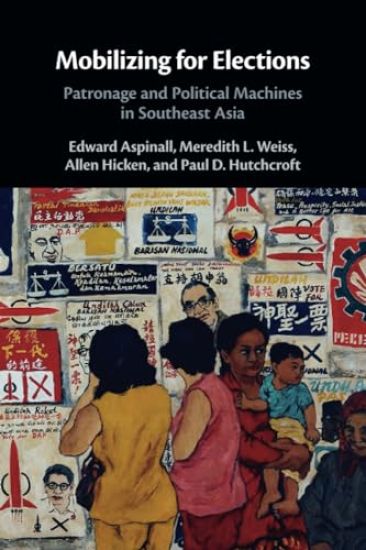
Politicians in Southeast Asia, as in many other regions, win elections by distributing cash, goods, jobs, projects, and other benefits to supporters, but the ways in which they do this vary tremendously, both across and within countries. Mobilizing for Elections presents a new framework for analyzing variation in patronage democracies, focusing on distinct forms of patronage and different networks through which it is distributed. The book draws on an extensive, multi-country, multi-year research effort involving interactions with hundreds of politicians and vote brokers, as well as surveys of voters and political campaigners across the region. Chapters explore how local machines in the Philippines, ad hoc election teams in Indonesia, and political parties in Malaysia pursue distinctive clusters of strategies of patronage distribution – what the authors term electoral mobilization regimes. In doing so, the book shows how and why patronage politics varies, and how it works on the ground.
Mobilizing for Elections

Mobilizing for Elections

Edward Aspinall; Meredith L. Weiss; Allen Hicken; Paul D. Hutchcroft

Cambridge University Press
2022
sidottu
Politicians in Southeast Asia, as in many other regions, win elections by distributing cash, goods, jobs, projects, and other benefits to supporters, but the ways in which they do this vary tremendously, both across and within countries. Mobilizing for Elections presents a new framework for analyzing variation in patronage democracies, focusing on distinct forms of patronage and different networks through which it is distributed. The book draws on an extensive, multi-country, multi-year research effort involving interactions with hundreds of politicians and vote brokers, as well as surveys of voters and political campaigners across the region. Chapters explore how local machines in the Philippines, ad hoc election teams in Indonesia, and political parties in Malaysia pursue distinctive clusters of strategies of patronage distribution – what the authors term electoral mobilization regimes. In doing so, the book shows how and why patronage politics varies, and how it works on the ground.
The Roots of Resilience

The Roots of Resilience

Meredith L. Weiss

Cornell University Press
2020
sidottu
In The Roots of Resilience Meredith L. Weiss examines governance from the ground up in the world's two most enduring electoral authoritarian or "hybrid" regimes—Singapore and Malaysia—where politically liberal and authoritarian features blend, evading substantive democracy. Weiss explains that while key attributes of these regimes differ, affecting the scope, character, and balance among national parties and policies, local machines, and personalized linkages, the similarity in the overall patterns in these countries confirms the salience of those dimensions. The Roots of Resilience shows that high levels of authoritarian acculturation, amplifying the political payoffs of what parties and politicians actually provide their constituents, explain why electoral turnover alone is insufficient for real regime change in either state.
Student Activism in Malaysia

Student Activism in Malaysia

Meredith L. Weiss

Southeast Asia Program Publications, Cornell University
2011
sidottu
This work traces the early rise and subsequent decline of politically effective student activism in Malaysia. During the 1970s, the state embarked on a project of "intellectual containment" that both suppressed ongoing mobilization of university students and delegitimized further activism. That project has been notably successful in curbing student protest, erasing a legacy of past engagement, and stemming the production of potentially subversive new ideas. Innovative student proposals for reform that were once sanctioned and even welcomed (within bounds) are now illicit and discouraged, reflecting not only changes in Malaysia's political regime, but changes in the political culture overall. This incisive study sheds new light on the dynamics of mobilization and on the key role of students and universities in postcolonial political development. This analysis is based on extensive research, including interviews with dozens of past and present student activists and a close study of archives, government reports, firsthand accounts, and student publications extending over decades. Student Activism in Malaysia traces how higher education and student activism have developed and interacted, beginning with the start of tertiary education in early twentieth-century Singapore and extending to present-day Malaysia. In the process, Weiss calls into question the conventional wisdom that Malaysian students—and Malaysians overall—have become "apathetic." The author demonstrates that this apparent state of apathy is not inevitable, cultural, or natural, but is the outcome of a sustained project of pacification and depoliticization carried out by an ambitiously developmental state.
Student Activism in Malaysia

Student Activism in Malaysia

Meredith L. Weiss

Southeast Asia Program Publications, Cornell University
2011
pokkari
This work traces the early rise and subsequent decline of politically effective student activism in Malaysia. During the 1970s, the state embarked on a project of "intellectual containment" that both suppressed ongoing mobilization of university students and delegitimized further activism. That project has been notably successful in curbing student protest, erasing a legacy of past engagement, and stemming the production of potentially subversive new ideas. Innovative student proposals for reform that were once sanctioned and even welcomed (within bounds) are now illicit and discouraged, reflecting not only changes in Malaysia's political regime, but changes in the political culture overall. This incisive study sheds new light on the dynamics of mobilization and on the key role of students and universities in postcolonial political development. This analysis is based on extensive research, including interviews with dozens of past and present student activists and a close study of archives, government reports, firsthand accounts, and student publications extending over decades. Student Activism in Malaysia traces how higher education and student activism have developed and interacted, beginning with the start of tertiary education in early twentieth-century Singapore and extending to present-day Malaysia. In the process, Weiss calls into question the conventional wisdom that Malaysian students—and Malaysians overall—have become "apathetic." The author demonstrates that this apparent state of apathy is not inevitable, cultural, or natural, but is the outcome of a sustained project of pacification and depoliticization carried out by an ambitiously developmental state.
Protest and Possibilities

Protest and Possibilities

Meredith L. Weiss

Stanford University Press
2005
sidottu
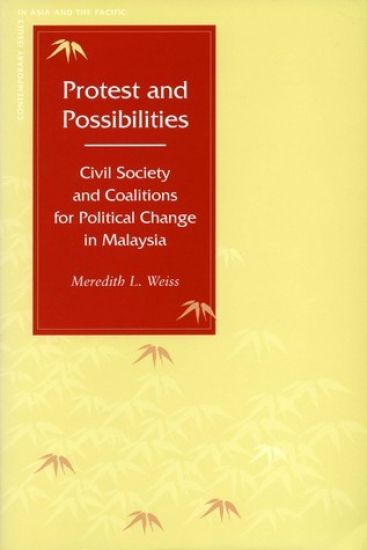
Protest and Possibilities explores the pursuit of political reform in Malaysia, an illiberal democracy, and contrasts coalition-building and reform processes there with those of electoral authoritarian Indonesia. The study considers the roles of civil society agents (CSAs) in promoting alternative (especially noncommunal) political norms and helping to find common ground among opposition political actors, and compares recent reformist initiatives with past political trajectories. The nature of illiberal democracy encourages a combination of contained and transgressive contention, with CSAs and political parties performing distinct but complementary roles. Enough space has been allowed over time for CSAs and political parties to accumulate coalitional capital, or the mutual trust and understanding necessary for groups to find common cause and work in coalition. In addition, shifts in political opportunities and threats encourage both CSAs and political parties to alter their strategies and thinking to take advantage of windows for change, facilitating long-term normative as well as institutional change.
Protest and Possibilities

Protest and Possibilities

Meredith L. Weiss

Stanford University Press
2005
pokkari
Protest and Possibilities explores the pursuit of political reform in Malaysia, an illiberal democracy, and contrasts coalition-building and reform processes there with those of electoral authoritarian Indonesia. The study considers the roles of civil society agents (CSAs) in promoting alternative (especially noncommunal) political norms and helping to find common ground among opposition political actors, and compares recent reformist initiatives with past political trajectories. The nature of illiberal democracy encourages a combination of contained and transgressive contention, with CSAs and political parties performing distinct but complementary roles. Enough space has been allowed over time for CSAs and political parties to accumulate coalitional capital, or the mutual trust and understanding necessary for groups to find common cause and work in coalition. In addition, shifts in political opportunities and threats encourage both CSAs and political parties to alter their strategies and thinking to take advantage of windows for change, facilitating long-term normative as well as institutional change.