Kirjojen hintavertailu. Mukana 12 595 353 kirjaa ja 12 kauppaa.

Kirjailija

Merrill Dennis

Kirjat ja teokset yhdessä paikassa: 3 kirjaa, julkaisuja vuosilta 2009-2010, suosituimpien joukossa Bread and the Ballot. Vertaile teosten hintoja ja tarkista saatavuus suomalaisista kirjakaupoista.

3 kirjaa

Kirjojen julkaisuhaarukka 2009-2010.

Bread and the Ballot

Bread and the Ballot

Merrill Dennis

The University of North Carolina Press
2010
nidottu
Dennis Merrill examines the origins and implementation of U.S. economic assistance programs in India from independence in 1947 to the height of John F. Kennedy's development decade in 1963. As the Cold War spread to the Third World in the late 1940s and 1950s, American policymakers tried to use economic aid to draw neutral India into the Western camp. Citing the country as the world's largest democracy, the Americans hoped to establish India as a showcase for American-sponsored development and a counterweight to the Communist model in the People's Republic of China.By the early 1960s, India has become one of the Third World's leading recipients of American economic assistance. Yet, as Merrill demonstrates, India remained dedicated to a nonaligned status, and Prime Minister Jawaharlal Nehru's frequent criticism of U.S. foreign policy tried the patience of Cold War strategists. Even in the area of economic policy, the two nations differed on a wide variety of developmental issues. Thus, argues Merrill, the Indian case offers a keen vantage point from which to explores modern American foreign policy and the complexities of the foreign aid process.Bread and the Ballot is one of the first studies of U.S. attitudes toward Third World development in the decades following World War II to be based largely on recently declassified government documents. Merrill's study draws on materials from the Harry S. Truman, Dwight D. Eisenhower, and John F. Kennedy presidential libraries, U.S. State Department records, and the papers of Chester Bowles, who served as ambassador to India under both Truman and Kennedy. In addition, Merrill's extensive research in Britain and Indian public records gives this work a multinational perspective.Originally published in 1990.A UNC Press Enduring Edition -- UNC Press Enduring Editions use the latest in digital technology to make available again books from our distinguished backlist that were previously out of print. These editions are published unaltered from the original, and are presented in affordable paperback formats, bringing readers both historical and cultural value.
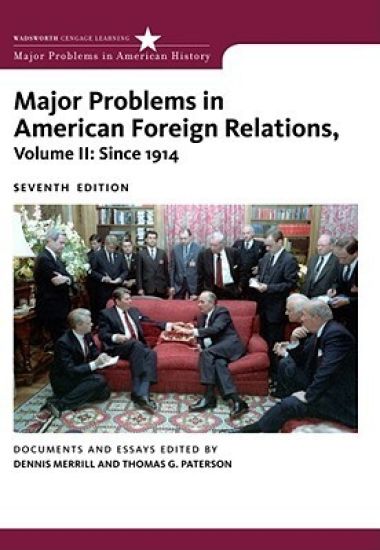
Major Problems in American Foreign Relations, Volume II: Since 1914
Designed to encourage critical thinking about history, this reader uses a carefully selected group of primary sources and analytical essays to allow students to test the interpretations of distinguished historians and draw their own conclusions about the history of American foreign policy. This text serves as an effective educational tool for courses on U.S. foreign policy, recent U.S. history, or 20th Century U.S. history. Some of the new literature spotlights cultural relations, and the ways in which culturally constructed attitudes about class, gender, race, and national identity have shaped American's perceptions of the world and subsequently its overseas relationships.
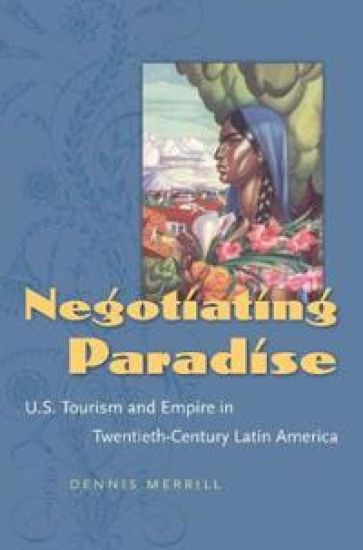
Negotiating Paradise

Negotiating Paradise

Merrill Dennis

The University of North Carolina Press
2009
nidottu
How tourism transformed the context of foreign policy. Accounts of U.S. empire building in Latin America typically portray politically and economically powerful North Americans descending on their southerly neighbors to engage in lopsided negotiations. Dennis Merrill's comparative history of U.S. tourism in Latin America in the twentieth century demonstrates that empire is a more textured, variable, and interactive system of inequality and resistance than commonly assumed. In his examination of interwar Mexico, early Cold War Cuba, and Puerto Rico during the Alliance for Progress, Merrill demonstrates how tourists and the international travel industry facilitated the expansion of U.S. consumer and cultural power in Latin America. He also shows the many ways in which local service workers, labor unions, business interests, and host governments vied to manage the Yankee invasion. While national leaders negotiated treaties and military occupations, visitors and hosts navigated interracial encounters in bars and brothels, confronted clashing notions of gender and sexuality at beachside resorts, and negotiated national identities. Highlighting the everyday realities of U.S. empire in ways often overlooked, Merrill's analysis provides historical context for understanding the contemporary debate over the costs and benefits of globalization.