Kirjojen hintavertailu. Mukana 12 390 323 kirjaa ja 12 kauppaa.

Kirjailija

Merve Emre

Kirjat ja teokset yhdessä paikassa: 9 kirjaa, julkaisuja vuosilta 2017-2024, suosituimpien joukossa The Ferrante Letters. Vertaile teosten hintoja ja tarkista saatavuus suomalaisista kirjakaupoista.

9 kirjaa

Kirjojen julkaisuhaarukka 2017-2024.

The Ferrante Letters

The Ferrante Letters

Sarah Chihaya; Merve Emre; Katherine Hill; Juno Jill Richards

Columbia University Press
2020
sidottu
Like few other works of contemporary literature, Elena Ferrante’s Neapolitan novels found an audience of passionate and engaged readers around the world. Inspired by Ferrante’s intense depiction of female friendship and women’s intellectual lives, four critics embarked upon a project that was both work and play: to create a series of epistolary readings of the Neapolitan Quartet that also develops new ways of reading and thinking together.In a series of intertwined, original, and daring readings of Ferrante’s work and her fictional world, Sarah Chihaya, Merve Emre, Katherine Hill, and Juno Jill Richards strike a tone at once critical and personal, achieving a way of talking about literature that falls between the seminar and the book club. Their letters make visible the slow, fractured, and creative accretion of ideas that underwrites all literary criticism and also illuminate the authors’ lives outside the academy. The Ferrante Letters offers an improvisational, collaborative, and cumulative model for reading and writing with others, proposing a new method the authors call collective criticism. A book for fans of Ferrante and for literary scholars seeking fresh modes of intellectual exchange, The Ferrante Letters offers incisive criticism, insouciant riffs, and the pleasure of giving oneself over to an extended conversation about fiction with friends.
The Ferrante Letters

The Ferrante Letters

Sarah Chihaya; Merve Emre; Katherine Hill; Juno Jill Richards

Columbia University Press
2020
pokkari
Like few other works of contemporary literature, Elena Ferrante’s Neapolitan novels found an audience of passionate and engaged readers around the world. Inspired by Ferrante’s intense depiction of female friendship and women’s intellectual lives, four critics embarked upon a project that was both work and play: to create a series of epistolary readings of the Neapolitan Quartet that also develops new ways of reading and thinking together.In a series of intertwined, original, and daring readings of Ferrante’s work and her fictional world, Sarah Chihaya, Merve Emre, Katherine Hill, and Juno Jill Richards strike a tone at once critical and personal, achieving a way of talking about literature that falls between the seminar and the book club. Their letters make visible the slow, fractured, and creative accretion of ideas that underwrites all literary criticism and also illuminate the authors’ lives outside the academy. The Ferrante Letters offers an improvisational, collaborative, and cumulative model for reading and writing with others, proposing a new method the authors call collective criticism. A book for fans of Ferrante and for literary scholars seeking fresh modes of intellectual exchange, The Ferrante Letters offers incisive criticism, insouciant riffs, and the pleasure of giving oneself over to an extended conversation about fiction with friends.
I Am Alien to Life

I Am Alien to Life

Djuna Barnes; Merve Emre

McNally Jackson Books
2024
nidottu
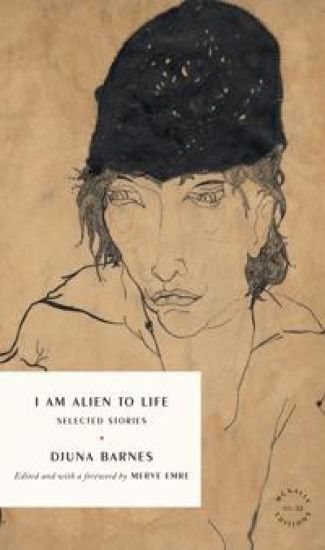
Djuna Barnes is rightly remembered for Nightwood, her breakthrough and final novel: a hallmark of modernist literature, championed by T. S. Eliot, and one of the first, strangest, and most brilliant novels of love between women to be published in the twentieth century. Barnes’s career began long before Nightwood, however, with journalism, essays, drama, and satire of extraordinary wit and courage. Long into her later life, after World War II, when she published nothing more, it was her short fiction above all that she prized and would continue to revise. Here are all the stories Barnes sought to preserve, in the versions she preferred, as well as a smattering of rarities as selected by critic and New Yorker contributor Merve Emre. These are tales of women “‘tragique’ and ‘triste’ and ‘tremendous’ all at once,” of sons and daughters being initiated into the ugly comedy of life, monuments all to a worldview singular and scathing. As Emre writes in her foreword, “[Barnes’s] themes are love and death, especially in Paris and New York; the corruption of nature by culture; the tainted innocence of children; and the mute misery of beasts . . . her characters may be alien to life, but they are alive - spectacularly, grotesquely alive.”
The Annotated Mrs. Dalloway

The Annotated Mrs. Dalloway

Merve Emre; Virginia Woolf

Liveright Publishing Corporation
2021
sidottu
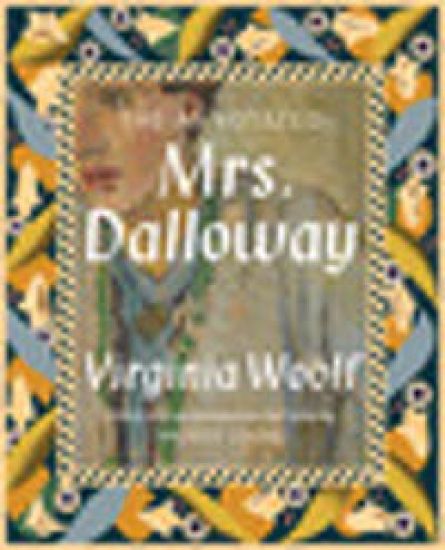
"Mrs. Dalloway said she would buy the flowers herself." So begins Virginia Woolf’s beloved fourth novel. First published in 1925, Mrs. Dalloway has long been considered Woolf’s masterpiece. A pivotal work of literary modernism, its simple plot—centred on an upper-class Londoner preparing to give a party—is complicated by Woolf’s satire of the English social system. For decades, Woolf’s rapturous style and vision of individual consciousness have challenged and inspired readers, novelists and scholars alike. In this annotated volume based on the original British edition, acclaimed essayist and Oxford don Merve Emre mines Woolf’s diaries and notes on writing to take us into the making of Mrs. Dalloway, revealing the novel’s artistry and astonishing originality. Alongside her generous commentary, Emre offers hundreds of illustrations and little-seen photographs from Woolf’s life. The result is not only an essential volume for students and Woolf devotees but an incomparable gift to all lovers of literature.
Vilken typ är du? : varför du inte kan lita på personlighetstester
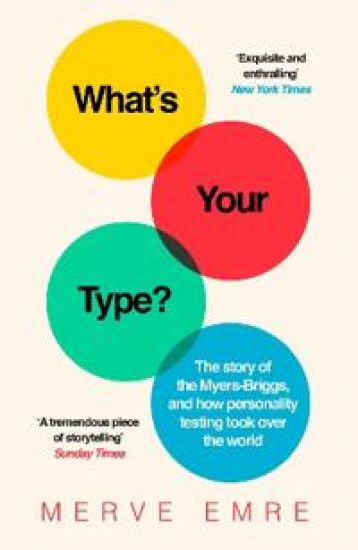
Vad är det som gör dig, till dig? Under 1920-talet försökte Katherine Briggs och Isabel Briggs Myers, mor och dotter, att svara på den frågan. De var uttråkade hemmafruar och amatör-psykoanalytiker, som ville tillgängliggöra Carl Jungs doktrin om arketyper. Resultatet blev ett personlighetstest.Deras teori plockades upp av den amerikanska militären i deras försök att förstå de tyska nazisterna dock utan framgång eftersom det inte gick att bekräfta vetenskaplig. Trots detta fick testet genomslag i betydelsefulla styrelserum i USA och blev en succé. Testet används idag av allt från börsföretag och politiska lobbyorganisationer till grundskolor och hälsoretreats. Vad är det hos Myers-Briggstestet som förtrollar oss?I Vilken typ är du? berättar Merve Emre, docent i engelska vid Oxford University, historien om Myers-Briggs-testets skapare. Hon tar med oss på en hisnande resa i sin undersökning av vår kollektiva vilja att kategorisera varandra och oss själva. Merve Emre är docent i engelska vid Oxfords Universitet och forskardocent vid Worcester College. Hon är författare till Paraliterary: The Making of Bad Readers in Postwar America. Hennes arbete har förekommit eller kommer att förekomma i The New Yorker, Harpers Magazine, The New Republic, samt Los Angeles Review of Books, där hon tidigare varit redaktör.
Whatâ??s Your Type?

Whatâ??s Your Type?

Merve Emre

Harper Collins UK
2019
pokkari
A SPECTATOR BOOK OF THE YEAR â??History that reads like biography that reads like a novel â?? a fluid narrative that defies expectations and plays against typeâ?? New York Times â??Brilliant and savageâ?? Philip Hensher
The Personality Brokers: The Strange History of Myers-Briggs and the Birth of Personality Testing
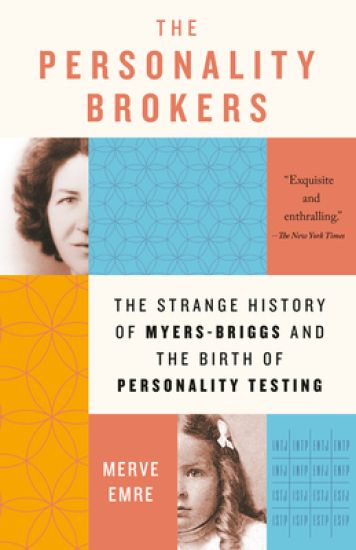
An unprecedented history of the personality test conceived a century ago by a mother and her daughter--fiction writers with no formal training in psychology--and how it insinuated itself into our boardrooms, classrooms, and beyond. The basis for the HBO Max documentary, Persona The Myers-Briggs Type Indicator is the most popular personality test in the world. It is used regularly by Fortune 500 companies, universities, hospitals, churches, and the military. Its language of personality types--extraversion and introversion, sensing and intuiting, thinking and feeling, judging and perceiving--has inspired television shows, online dating platforms, and Buzzfeed quizzes. Yet despite the test's widespread adoption, experts in the field of psychometric testing, a $2 billion industry, have struggled to validate its results--no less account for its success. How did Myers-Briggs, a homegrown multiple choice questionnaire, infiltrate our workplaces, our relationships, our Internet, our lives? First conceived in the 1920s by the mother-daughter team of Katherine Briggs and Isabel Briggs Myers, a pair of devoted homemakers, novelists, and amateur psychoanalysts, Myers-Briggs was designed to bring the gospel of Carl Jung to the masses. But it would take on a life entirely its own, reaching from the smoke-filled boardrooms of mid-century New York to Berkeley, California, where it was administered to some of the twentieth century's greatest creative minds. It would travel across the world to London, Zurich, Cape Town, Melbourne, and Tokyo, until it could be found just as easily in elementary schools, nunneries, and wellness retreats as in shadowy political consultancies and on social networks. Drawing from original reporting and never-before-published documents, The Personality Brokers takes a critical look at the personality indicator that became a cultural icon. Along the way it examines nothing less than the definition of the self--our attempts to grasp, categorize, and quantify our personalities. Surprising and absorbing, the book, like the test at its heart, considers the timeless question: What makes you, you?
Paraliterary

Paraliterary

Merve Emre

University of Chicago Press
2017
nidottu
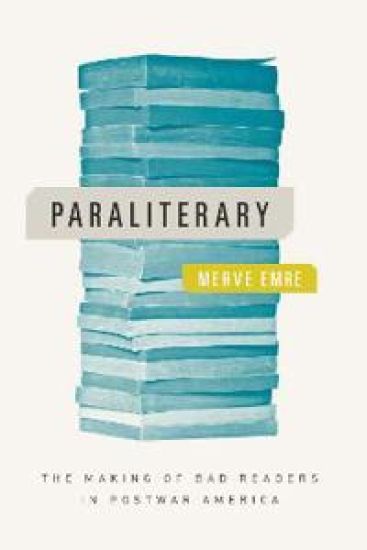
Literature departments are staffed by, and tend to be focused on turning out, "good" readers attentive to nuance, aware of history, interested in literary texts as self-contained works. But the vast majority of readers are, to use Merve Emre's tongue-in-cheek term, "bad" readers. They read fiction and poetry to be moved, distracted, instructed, improved, engaged as citizens. How should we think about those readers, and what should we make of the structures, well outside the academy, that generate them? We should, Emre argues, think of such readers not as non-literary but as paraliterary thriving outside the institutions we take as central to the literary world. She traces this phenomenon to the postwar period, when literature played a key role in the rise of American power. At the same time as American universities were producing good readers by the hundreds, many more thousands of bad readers were learning elsewhere to be disciplined public communicators, whether in diplomatic and ambassadorial missions, private and public cultural exchange programs, multinational corporations, or global activist groups. As we grapple with literature's diminished role in the public sphere, Paraliterary suggests a new way to think about literature, its audience, and its potential, one that looks at the civic institutions that have long engaged readers ignored by the academy.
Paraliterary

Paraliterary

Merve Emre

University of Chicago Press
2017
sidottu
Literature departments are staffed by, and tend to be focused on turning out, "good" readers attentive to nuance, aware of history, interested in literary texts as self-contained works. But the vast majority of readers are, to use Merve Emre's tongue-in-cheek term, "bad" readers. They read fiction and poetry to be moved, distracted, instructed, improved, engaged as citizens. How should we think about those readers, and what should we make of the structures, well outside the academy, that generate them? We should, Emre argues, think of such readers not as non-literary but as paraliterary thriving outside the institutions we take as central to the literary world. She traces this phenomenon to the postwar period, when literature played a key role in the rise of American power. At the same time as American universities were producing good readers by the hundreds, many more thousands of bad readers were learning elsewhere to be disciplined public communicators, whether in diplomatic and ambassadorial missions, private and public cultural exchange programs, multinational corporations, or global activist groups. As we grapple with literature's diminished role in the public sphere, Paraliterary suggests a new way to think about literature, its audience, and its potential, one that looks at the civic institutions that have long engaged readers ignored by the academy.