

Kirjailija
Michael A. Flannery
Kirjat ja teokset yhdessä paikassa: 6 kirjaa, julkaisuja vuosilta 2017-2025, suosituimpien joukossa Nature's Prophet. Vertaile teosten hintoja ja tarkista saatavuus suomalaisista kirjakaupoista.
Mukana myös kirjoitusasut: Michael A Flannery
6 kirjaa
Kirjojen julkaisuhaarukka 2017-2025.
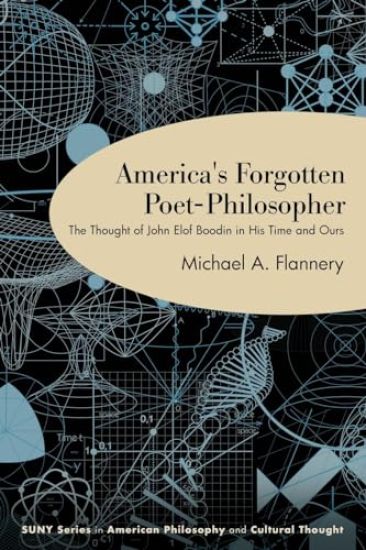
America's Forgotten Poet-Philosopher
Michael A. Flannery
STATE UNIVERSITY OF NEW YORK PRESS
2024
pokkari
Illuminating study of the ideas and influences of a near-forgotten American philosopher.This book examines the ideas and influences of a nearly forgotten Swedish-American philosopher, John Elof Boodin (1869–1950). A friend and student of William James and protégé of Josiah Royce at Harvard, Boodin combined Jamesian pragmatism and Roycean idealism in developing original scholarship (nearly sixty articles and eight books) from 1900 to 1947, in addition to a volume of posthumous papers published in 1957. Although he is seldom remembered today, the enduring importance of pragmatism and the rising influence of process theology today suggests that his close reading of early to mid-twentieth-century science and vast grasp of philosophical issues warrants a renewed interest in his work that can be a valuable antidote to the sterile and constricting effects of reductionism and dogmatic materialism prevalent today in both those fields.
America's Forgotten Poet-Philosopher
Michael A. Flannery
STATE UNIVERSITY OF NEW YORK PRESS
2023
sidottu
Illuminating study of the ideas and influences of a near-forgotten American philosopher.This book examines the ideas and influences of a nearly forgotten Swedish-American philosopher, John Elof Boodin (1869–1950). A friend and student of William James and protégé of Josiah Royce at Harvard, Boodin combined Jamesian pragmatism and Roycean idealism in developing original scholarship (nearly sixty articles and eight books) from 1900 to 1947, in addition to a volume of posthumous papers published in 1957. Although he is seldom remembered today, the enduring importance of pragmatism and the rising influence of process theology today suggests that his close reading of early to mid-twentieth-century science and vast grasp of philosophical issues warrants a renewed interest in his work that can be a valuable antidote to the sterile and constricting effects of reductionism and dogmatic materialism prevalent today in both those fields.
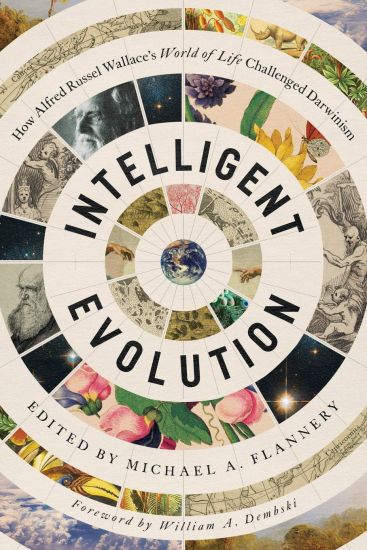
Intelligent Evolution
Michael A Flannery; Alfred Russel Wallace; William A Dembski
Erasmus Press
2020
pokkari
Alfred Russel Wallace (1823-1913), co-discoverer of natural selection, was second only to Charles Darwin as the 19th century's most noted English naturalist. Yet his belief in spiritualism caused him to be ridiculed and dismissed by many, leaving him a comparatively obscure and misunderstood figure. In this volume Wallace is finally allowed to speak in his own defense through his grand evolutionary synthesis The World of Life published over a century ago in 1910. More than just a reprinting of a near-forgotten work, Michael A. Flannery places Wallace in historical context and includes the very latest historiography relating to both Darwin and Wallace in his detailed introduction. Flannery exposes Charles Darwin's now-famous theory of evolution as little more than a naturalistic cover for an extreme philosophical materialism borrowed as a youth from Edinburgh radicals. This is juxtaposed by his sympathetic account of what he calls Wallace's intelligent evolution, a thoroughly teleological alternative to Darwin's stochastic processes. Though based upon very different formulations of natural selection, the Wallace/Darwin dispute as presented by Flannery shows a metaphysical clash of worldviews coextensive with modern evolutionary theory itself-design and purpose versus randomness and chance. This book is for anyone seeking to understand the historical and philosophical roots of a controversy that still rages today.This book contains an abridgment of Alfred Russel Wallace's The World of Life and Reverend John Magens Mello's essay, "The Mystery of Life and Mind."

An astute study of Alfred Russel Wallace’s path to natural theology.A spiritualist, libertarian socialist, women’s rights advocate, and critic of Victorian social convention, Alfred Russel Wallace was in every sense a rebel who challenged the emergent scientific certainties of Victorian England by arguing for a natural world imbued with purpose and spiritual significance. Nature’s Prophet:Alfred Russel Wallace and His Evolution from Natural Selection to Natural Theology is a critical reassessment of Wallace’s path to natural theology and counters the dismissive narrative that Wallace’s theistic and sociopolitical positions are not to be taken seriously in the history and philosophy of science.Author Michael A. Flannery provides a cogent and lucid account of a crucial—and often underappreciated—element of Wallace’s evolutionary worldview. As co-discoverer, with Charles Darwin, of the theory of natural selection, Wallace willingly took a backseat to the well-bred, better known scientist. Whereas Darwin held fast to his first published scientific explanations for the development of life on earth, Wallace continued to modify his thinking, refining his argument toward a more controversial metaphysical view which placed him within the highly charged intersection of biology and religion.Despite considerable research into the naturalist’s life and work, Wallace’s own evolution from natural selection to natural theology has been largely unexplored; yet, as Flannery persuasively shows, it is readily demonstrated in his writings from 1843 until his death in 1913. Nature’s Prophet provides a detailed investigation of Wallace’s ideas, showing how, although he independently discovered the mechanism of natural selection, he at the same time came to hold a very different view of evolution from Darwin.Ultimately, Flannery shows, Wallace’s reconsideration of the argument for design yields a more nuanced version of creative and purposeful theistic evolution and represents one of the most innovative contributions of its kind in the Victorian and Edwardian eras, profoundly influencing a later generation of scientists and intellectuals.
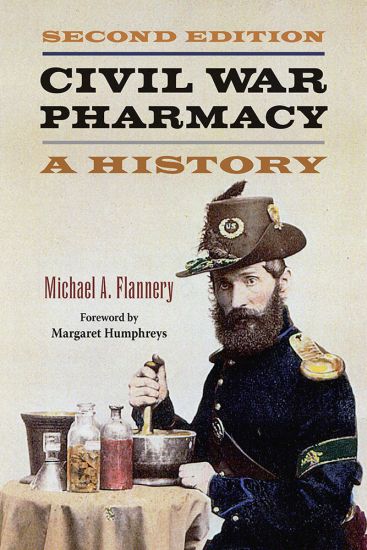
Civil War Pharmacy
Michael A Flannery; Margaret Humphreys
Southern Illinois University Press
2017
nidottu
When the Civil War began, the U.S. pharmaceutical industry was concentrated almost exclusively in Philadelphia and was dominated by just a few major firms; when the war ended, Union laboratories were poised to expand nationwide. Civil War Pharmacy is the first book to delineate how the growing field of pharmacy gained respect and traction in, and even distinction from, the medical world because of the large-scale manufacture and dispersion of drug supplies and therapeutics during the Civil War. Flannery captures the full societal involvement in drug provision, on both the Union and Confederate sides, and places it within the context of what was then assumed about health and healing. He examines the roles of physicians, hospital stewards, and nurses—both male and female—and analyzes how the blockade of Southern ports meant fewer pharmaceutical supplies were available for Confederate soldiers, resulting in reduced Confederate troop strength. His exploration of battlefield and naval military pharmacy is unique and valuable. Flannery provides a thorough overview of the professional, economic, and military factors comprising pharmacy from 1861 to 1865 and includes the long-term consequences of the war for the pharmaceutical profession. This book is a complete study of a major aspect of health care during a pivotal moment in American history.