Kirjojen hintavertailu. Mukana 12 595 353 kirjaa ja 12 kauppaa.

Kirjailija

Michael A. Gomez

Kirjat ja teokset yhdessä paikassa: 6 kirjaa, julkaisuja vuosilta 1993-2019, suosituimpien joukossa Black Crescent. Vertaile teosten hintoja ja tarkista saatavuus suomalaisista kirjakaupoista.

6 kirjaa

Kirjojen julkaisuhaarukka 1993-2019.

Reversing Sail

Reversing Sail

Michael A. Gomez

Cambridge University Press
2019
pokkari
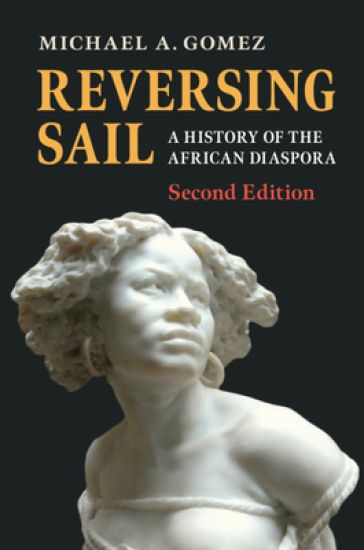
Beginning with antiquity, Reversing Sail: A History of the African Diaspora captures the essential political, cultural, social, and economic developments that shaped the black experience. In this second edition, Michael A. Gomez updates the text to include the most recent research on the African Diaspora. Continuing to pay particular attention to the lives of the working classes, the second edition expands its temporal boundaries to include developments into the twenty-first century, as well as integrating women and feminist perspectives more thoroughly. It also widens the geographical span to include Latin America, while incorporating more on African experiences in Europe, North Africa, and the Persian Gulf. Assessing the impact of religion, global trade, slavery and resistance, and the challenges of modernity, this edition further connects the experiences of Africans and their descendants over time and space, attending to both convergences and divergences, while explaining how the deep past informs subsequent developments.
Reversing Sail

Reversing Sail

Michael A. Gomez

Cambridge University Press
2019
sidottu
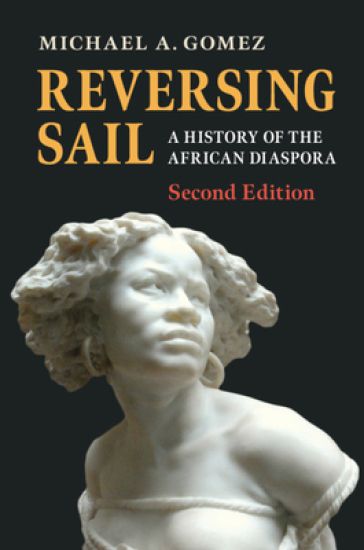
Beginning with antiquity, Reversing Sail: A History of the African Diaspora captures the essential political, cultural, social, and economic developments that shaped the black experience. In this second edition, Michael A. Gomez updates the text to include the most recent research on the African Diaspora. Continuing to pay particular attention to the lives of the working classes, the second edition expands its temporal boundaries to include developments into the twenty-first century, as well as integrating women and feminist perspectives more thoroughly. It also widens the geographical span to include Latin America, while incorporating more on African experiences in Europe, North Africa, and the Persian Gulf. Assessing the impact of religion, global trade, slavery and resistance, and the challenges of modernity, this edition further connects the experiences of Africans and their descendants over time and space, attending to both convergences and divergences, while explaining how the deep past informs subsequent developments.
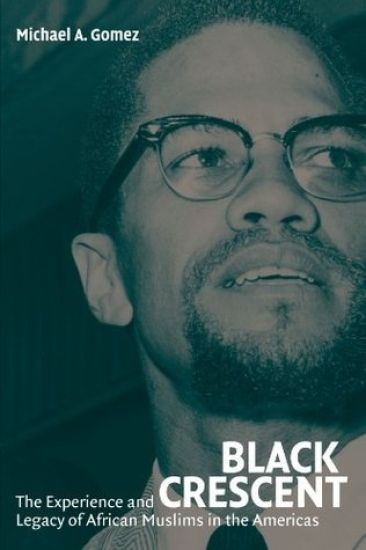
Black Crescent

Black Crescent

Michael A. Gomez

Cambridge University Press
2005
pokkari
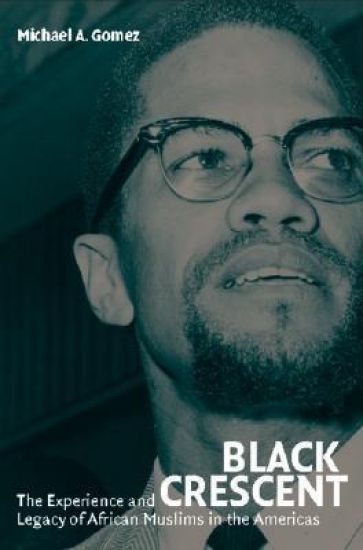
Beginning with Latin America in the fifteenth century, this book, first published in 2005, is a social history of the experiences of African Muslims and their descendants throughout the Americas, including the Caribbean. The record under slavery is examined, as is the post-slavery period into the twentieth century. The experiences vary, arguably due to some extent to the Old World context. Muslim revolts in Brazil are also discussed, especially in 1835, by way of a nuanced analysis. The second part of the book looks at the emergence of Islam among the African-descended in the United States in the twentieth century, with successive chapters on Noble Drew Ali, Elijah Muhammad, and Malcolm X, with a view to explaining how orthodoxy arose from varied unorthodox roots.
Black Crescent

Black Crescent

Michael A. Gomez

Cambridge University Press
2005
sidottu
Beginning with Latin America in the fifteenth century, this book, first published in 2005, is a social history of the experiences of African Muslims and their descendants throughout the Americas, including the Caribbean. The record under slavery is examined, as is the post-slavery period into the twentieth century. The experiences vary, arguably due to some extent to the Old World context. Muslim revolts in Brazil are also discussed, especially in 1835, by way of a nuanced analysis. The second part of the book looks at the emergence of Islam among the African-descended in the United States in the twentieth century, with successive chapters on Noble Drew Ali, Elijah Muhammad, and Malcolm X, with a view to explaining how orthodoxy arose from varied unorthodox roots.
Pragmatism in the Age of Jihad

Pragmatism in the Age of Jihad

Michael A. Gomez

Cambridge University Press
2002
pokkari
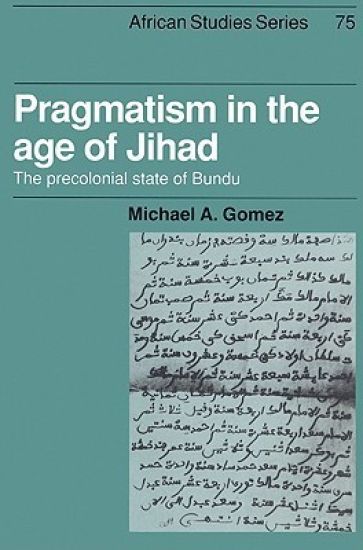
Bundu was an anomaly among the precolonial Muslim states of West Africa. Founded during the jihads which swept the savannah in the eighteenth and nineteenth centuries, it developed a pragmatic policy, unique in the midst of fundamentalist, theocratic Muslim states. Located in the Upper Senegal and with access to the Upper Gambia, Bundu played a critical role in regional commerce and production and reacted quickly to the stimulus of European trade. Drawing upon a wide range of sources both oral and documentary, Arabic, English and French, Dr Gomez provides the first full account of Bundu’s history. He analyses the foundation and growth of an Islamic state at a crossroads between the Saharan and trans-Atlantic trade, paying particular attention to the relationship between Islamic thought and court policy, and to the state’s response to militant Islam in the early nineteenth century.
Pragmatism in the Age of Jihad

Pragmatism in the Age of Jihad

Michael A. Gomez

Cambridge University Press
1993
sidottu
Bundu was an anomaly among the precolonial Muslim states of West Africa. Founded during the jihads which swept the savannah in the eighteenth and nineteenth centuries, it developed a pragmatic policy, unique in the midst of fundamentalist, theocratic Muslim states. Located in the Upper Senegal and with access to the Upper Gambia, Bundu played a critical role in regional commerce and production and reacted quickly to the stimulus of European trade. Drawing upon a wide range of sources both oral and documentary, Arabic, English and French, Dr Gomez provides the first full account of Bundu’s history. He analyses the foundation and growth of an Islamic state at a crossroads between the Saharan and trans-Atlantic trade, paying particular attention to the relationship between Islamic thought and court policy, and to the state’s response to militant Islam in the early nineteenth century.