Kirjojen hintavertailu. Mukana 12 595 353 kirjaa ja 12 kauppaa.

Kirjailija

Michael Adrian Peters

Kirjat ja teokset yhdessä paikassa: 11 kirjaa, julkaisuja vuosilta 2008-2017, suosituimpien joukossa Neoliberalism and After?. Vertaile teosten hintoja ja tarkista saatavuus suomalaisista kirjakaupoista.

11 kirjaa

Kirjojen julkaisuhaarukka 2008-2017.

The Digital University

The Digital University

Michael Adrian Peters; Petar Jandric

Peter Lang Publishing Inc
2017
sidottu
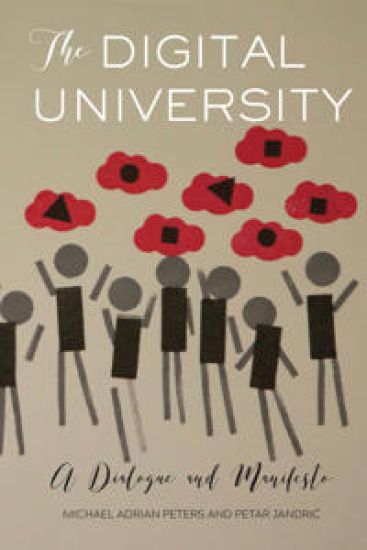
The Digital University: A Dialogue and Manifesto focuses on teaching, learning, and research in the age of the digital reason and their relationships to the so-called knowledge economy. The first part of the book, ‘The University in the Epoch of Digital Reason,’ presents the authors’ insights into the nature of the contemporary university. The second part, ‘Collective Intelligence and the Co-creation of Social Goods,’ explores various collective ways of knowledge creation, dissemination, and education. The final part, ‘Digital Teaching, Digital Learning and Digital Science,’ presents an ongoing series of one-to one dialogues between Michael Adrian Peters and Petar Jandric about philosophy of education in the age of digital reason, relationships between learning, creative col(labor)ation, and knowledge cultures, digital reading, digital self, digital being, radical openness, creative labour, and the co-production of symbolic goods. Situated in, against, and beyond the current state of affairs, the book ends with the Digital University Manifesto, which explores what is to be done in and for a better future of the digital university.
Education, Science and Knowledge Capitalism

Education, Science and Knowledge Capitalism

Michael Adrian Peters

Peter Lang Publishing Inc
2012
sidottu
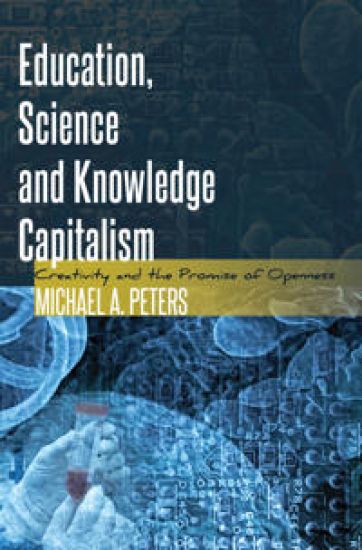
We live in the age of global science – but not, primarily, in the sense of ‘universal knowledge’ that has characterized the liberal metanarrative of ‘free’ science and the ‘free society’ since its early development in the Enlightenment. Today, an economic logic links science to national economic policy, while globalized multinational science dominates an environment where quality assurance replaces truth as the new regulative ideal. This book examines the nature of educational and science-based capitalism in its cybernetic, knowledge, algorithmic and bioinformational forms before turning to the emergence of the global science system and the promise of openness in the growth of international research collaboration, the development of the global knowledge commons and the rise of the open science economy. Education, Science and Knowledge Capitalism explores the nature of cognitive capitalism, the emerging mode of social production for public education and science and its promise for the democratization of knowledge.
Education, Science and Knowledge Capitalism

Education, Science and Knowledge Capitalism

Michael Adrian Peters

Peter Lang Publishing Inc
2012
nidottu
We live in the age of global science – but not, primarily, in the sense of ‘universal knowledge’ that has characterized the liberal metanarrative of ‘free’ science and the ‘free society’ since its early development in the Enlightenment. Today, an economic logic links science to national economic policy, while globalized multinational science dominates an environment where quality assurance replaces truth as the new regulative ideal. This book examines the nature of educational and science-based capitalism in its cybernetic, knowledge, algorithmic and bioinformational forms before turning to the emergence of the global science system and the promise of openness in the growth of international research collaboration, the development of the global knowledge commons and the rise of the open science economy. Education, Science and Knowledge Capitalism explores the nature of cognitive capitalism, the emerging mode of social production for public education and science and its promise for the democratization of knowledge.
Neoliberalism and After?

Neoliberalism and After?

Michael Adrian Peters

Peter Lang Publishing Inc
2011
sidottu
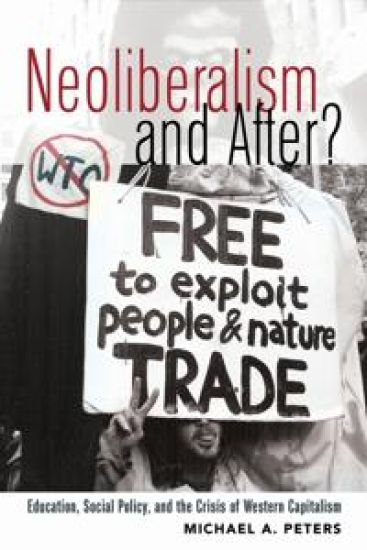
The era that began with the election of the Thatcher and Reagan governments has been dominated by contemporary forms of neoliberalism-based market fundamentalism, globalization as world economic integration and the ideology of «free trade,» and an attack on «big» government and social welfare. This book is a historical and theoretical investigation of contemporary neoliberalism in relation to education policy and its rollback of the Keynesian welfare state. It argues that education is the basis of an open society and is a social welfare right in the merging knowledge economy. Drawing on the theoretical lens of Michel Foucault’s work on governmentality understood as a form of radical political economy, the book explores and critiques neoliberalism as the ruling ideological consensus. It also questions whether and to what extent its influence will continue, in the face of the destabilization of markets that followed the financial crisis and the global recession that began in 2007, in the advanced liberal economies of the United States and the European Union.
Neoliberalism and After?

Neoliberalism and After?

Michael Adrian Peters

Peter Lang Publishing Inc
2011
nidottu
The era that began with the election of the Thatcher and Reagan governments has been dominated by contemporary forms of neoliberalism-based market fundamentalism, globalization as world economic integration and the ideology of «free trade,» and an attack on «big» government and social welfare. This book is a historical and theoretical investigation of contemporary neoliberalism in relation to education policy and its rollback of the Keynesian welfare state. It argues that education is the basis of an open society and is a social welfare right in the merging knowledge economy. Drawing on the theoretical lens of Michel Foucault’s work on governmentality understood as a form of radical political economy, the book explores and critiques neoliberalism as the ruling ideological consensus. It also questions whether and to what extent its influence will continue, in the face of the destabilization of markets that followed the financial crisis and the global recession that began in 2007, in the advanced liberal economies of the United States and the European Union.
The Last Book of Postmodernism

The Last Book of Postmodernism

Michael Adrian Peters

Peter Lang Publishing Inc
2011
sidottu
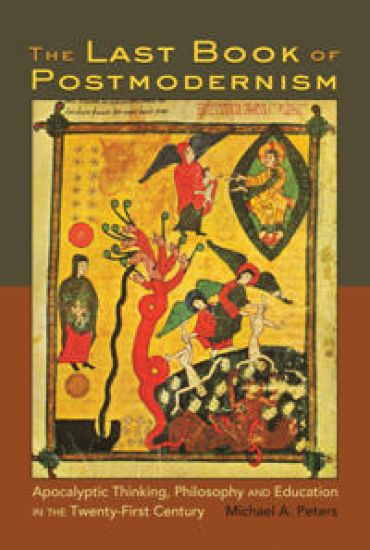
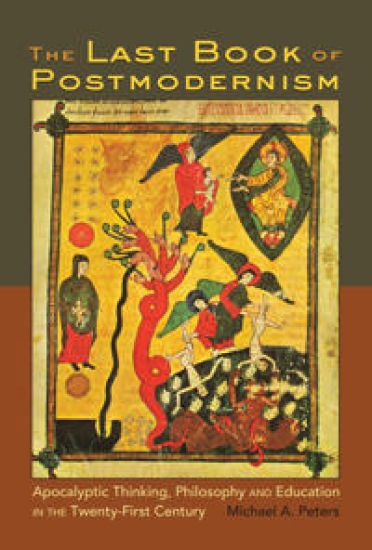
The Last Book of Postmodernism comprises set of essays written on and about ‘postmodernism’ and education. It is written in an apocalyptic tone that treats themes of religion and spiritualism, drawing on poststructuralist sources of inspiration, to contrast the present ‘postmodern condition’ and the philosophical significance and historical influence of Nietzsche’s statement ‘God is dead.’ The book considers the meaning of the ‘end’ of Christendom and the prospect of global spirituality. It also considers the ‘end’ of literature and the beginning of user-generated cultures and the implications of this shift for education and the philosophical model of dialogue that has dominated the humanities in the West. It charts the ‘end’ of philosophy and the rise of ‘body’ criticism, the promise of the Enlightenment, the relation between education, power and freedom, geophilosophy and the pedagogy of the concept, and the narrative turn as a basis for a new critical language for educational studies. Finally, the book considers post-postmodernism and the ‘end’ of the linguistic turn in educational theory.
The Last Book of Postmodernism

The Last Book of Postmodernism

Michael Adrian Peters

Peter Lang Publishing Inc
2011
nidottu
The Last Book of Postmodernism comprises set of essays written on and about ‘postmodernism’ and education. It is written in an apocalyptic tone that treats themes of religion and spiritualism, drawing on poststructuralist sources of inspiration, to contrast the present ‘postmodern condition’ and the philosophical significance and historical influence of Nietzsche’s statement ‘God is dead.’ The book considers the meaning of the ‘end’ of Christendom and the prospect of global spirituality. It also considers the ‘end’ of literature and the beginning of user-generated cultures and the implications of this shift for education and the philosophical model of dialogue that has dominated the humanities in the West. It charts the ‘end’ of philosophy and the rise of ‘body’ criticism, the promise of the Enlightenment, the relation between education, power and freedom, geophilosophy and the pedagogy of the concept, and the narrative turn as a basis for a new critical language for educational studies. Finally, the book considers post-postmodernism and the ‘end’ of the linguistic turn in educational theory.
Imagination

Imagination

Peter Murphy; Michael Adrian Peters; Simon Marginson

Peter Lang Publishing Inc
2010
sidottu
Advancement in the arts and sciences is a primary driver of economic production and social policy in post-industrial societies. Imagination steps back and asks ‘what advances the arts and sciences?’ This book explores the collective, social and global dimension of human imagining–and the ambivalent relationship of social institutions, including universities, schools, economies, media and culture industries, to the collective imagination. Basic discovery requires high levels of creative thinking: Imagination looks at the social conditions that make path-breaking thought possible on a large scale. It examines the role of aesthetic, pictorial, digital, paradoxical and other imaginative styles of thinking, and the times and places in which such styles become socially prominent and a significant force in economic and cultural production. It looks at successful societies as they are approaching their peak, when new ideas are driving them forward.
Imagination

Imagination

Peter Murphy; Michael Adrian Peters; Simon Marginson

Peter Lang Publishing Inc
2010
nidottu
Advancement in the arts and sciences is a primary driver of economic production and social policy in post-industrial societies. Imagination steps back and asks ‘what advances the arts and sciences?’ This book explores the collective, social and global dimension of human imagining–and the ambivalent relationship of social institutions, including universities, schools, economies, media and culture industries, to the collective imagination. Basic discovery requires high levels of creative thinking: Imagination looks at the social conditions that make path-breaking thought possible on a large scale. It examines the role of aesthetic, pictorial, digital, paradoxical and other imaginative styles of thinking, and the times and places in which such styles become socially prominent and a significant force in economic and cultural production. It looks at successful societies as they are approaching their peak, when new ideas are driving them forward.
Creativity and the Global Knowledge Economy

Creativity and the Global Knowledge Economy

Michael Adrian Peters; Simon Marginson; Peter Murphy

Peter Lang Publishing Inc
2008
sidottu
This is a major work by three international scholars at the cutting edge of new research that investigates the emerging set of complex relationships between creativity, design, research, higher education and knowledge capitalism. It highlights the role of the creative and expressive arts, of performance, of aesthetics in general, and the significant role of design as an underlying infrastructure for the creative economy. This book tracks the most recent mutation of these serial shifts – from postindustrial economy to the information economy to the digital economy to the knowledge economy to the ‘creative economy’ – to summarize the underlying and essential trends in knowledge capitalism and to investigate post-market notions of open source public space. The book hypothesizes that creative economy might constitute an enlargement of its predecessors that not only democratizes creativity and relativizes intellectual property law, but also emphasizes the social conditions of creative work. It documents how these profound shifts have brought to the forefront forms of knowledge production based on the commons and driven by ideas, not profitability per se; and have given rise to the notion of not just ‘knowledge management’ but the design of ‘creative institutions’ embodying new patterns of work.
Creativity and the Global Knowledge Economy

Creativity and the Global Knowledge Economy

Michael Adrian Peters; Simon Marginson; Peter Murphy

Peter Lang Publishing Inc
2008
nidottu
This is a major work by three international scholars at the cutting edge of new research that investigates the emerging set of complex relationships between creativity, design, research, higher education and knowledge capitalism. It highlights the role of the creative and expressive arts, of performance, of aesthetics in general, and the significant role of design as an underlying infrastructure for the creative economy. This book tracks the most recent mutation of these serial shifts – from postindustrial economy to the information economy to the digital economy to the knowledge economy to the ‘creative economy’ – to summarize the underlying and essential trends in knowledge capitalism and to investigate post-market notions of open source public space. The book hypothesizes that creative economy might constitute an enlargement of its predecessors that not only democratizes creativity and relativizes intellectual property law, but also emphasizes the social conditions of creative work. It documents how these profound shifts have brought to the forefront forms of knowledge production based on the commons and driven by ideas, not profitability per se; and have given rise to the notion of not just ‘knowledge management’ but the design of ‘creative institutions’ embodying new patterns of work.