Kirjojen hintavertailu. Mukana 12 390 323 kirjaa ja 12 kauppaa.

Kirjailija

Michael Affenzeller

Kirjat ja teokset yhdessä paikassa: 3 kirjaa, julkaisuja vuosilta 2009-2024, suosituimpien joukossa Genetic Algorithms and Genetic Programming. Vertaile teosten hintoja ja tarkista saatavuus suomalaisista kirjakaupoista.

3 kirjaa

Kirjojen julkaisuhaarukka 2009-2024.

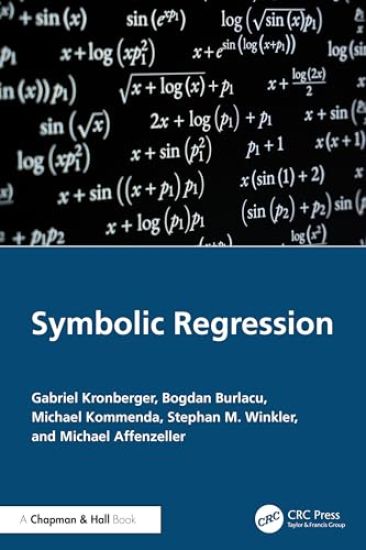
Symbolic Regression

Symbolic Regression

Gabriel Kronberger; Bogdan Burlacu; Michael Kommenda; Stephan M. Winkler; Michael Affenzeller

TAYLOR FRANCIS LTD
2024
sidottu
Symbolic regression (SR) is one of the most powerful machine learning techniques that produces transparent models, searching the space of mathematical expressions for a model that represents the relationship between the predictors and the dependent variable without the need of taking assumptions about the model structure. Currently, the most prevalent learning algorithms for SR are based on genetic programming (GP), an evolutionary algorithm inspired from the well-known principles of natural selection. This book is an in-depth guide to GP for SR, discussing its advanced techniques, as well as examples of applications in science and engineering.The basic idea of GP is to evolve a population of solution candidates in an iterative, generational manner, by repeated application of selection, crossover, mutation, and replacement, thus allowing the model structure, coefficients, and input variables to be searched simultaneously. Given that explainability and interpretability are key elements for integrating humans into the loop of learning in AI, increasing the capacity for data scientists to understand internal algorithmic processes and their resultant models has beneficial implications for the learning process as a whole.This book represents a practical guide for industry professionals and students across a range of disciplines, particularly data science, engineering, and applied mathematics. Focused on state-of-the-art SR methods and providing ready-to-use recipes, this book is especially appealing to those working with empirical or semi-analytical models in science and engineering.
Genetic Algorithms and Genetic Programming

Genetic Algorithms and Genetic Programming

Michael Affenzeller; Stefan Wagner; Stephan Winkler; Andreas Beham

CRC Press
2018
nidottu
Genetic Algorithms and Genetic Programming: Modern Concepts and Practical Applications discusses algorithmic developments in the context of genetic algorithms (GAs) and genetic programming (GP). It applies the algorithms to significant combinatorial optimization problems and describes structure identification using HeuristicLab as a platform for algorithm development.The book focuses on both theoretical and empirical aspects. The theoretical sections explore the important and characteristic properties of the basic GA as well as main characteristics of the selected algorithmic extensions developed by the authors. In the empirical parts of the text, the authors apply GAs to two combinatorial optimization problems: the traveling salesman and capacitated vehicle routing problems. To highlight the properties of the algorithmic measures in the field of GP, they analyze GP-based nonlinear structure identification applied to time series and classification problems. Written by core members of the HeuristicLab team, this book provides a better understanding of the basic workflow of GAs and GP, encouraging readers to establish new bionic, problem-independent theoretical concepts. By comparing the results of standard GA and GP implementation with several algorithmic extensions, it also shows how to substantially increase achievable solution quality.
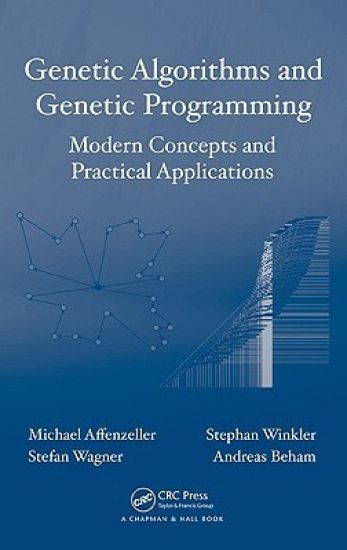
Genetic Algorithms and Genetic Programming

Genetic Algorithms and Genetic Programming

Michael Affenzeller; Stefan Wagner; Stephan Winkler; Andreas Beham

Chapman Hall/CRC
2009
sidottu
Genetic Algorithms and Genetic Programming: Modern Concepts and Practical Applications discusses algorithmic developments in the context of genetic algorithms (GAs) and genetic programming (GP). It applies the algorithms to significant combinatorial optimization problems and describes structure identification using HeuristicLab as a platform for algorithm development.The book focuses on both theoretical and empirical aspects. The theoretical sections explore the important and characteristic properties of the basic GA as well as main characteristics of the selected algorithmic extensions developed by the authors. In the empirical parts of the text, the authors apply GAs to two combinatorial optimization problems: the traveling salesman and capacitated vehicle routing problems. To highlight the properties of the algorithmic measures in the field of GP, they analyze GP-based nonlinear structure identification applied to time series and classification problems. Written by core members of the HeuristicLab team, this book provides a better understanding of the basic workflow of GAs and GP, encouraging readers to establish new bionic, problem-independent theoretical concepts. By comparing the results of standard GA and GP implementation with several algorithmic extensions, it also shows how to substantially increase achievable solution quality.