Kirjojen hintavertailu. Mukana 12 290 406 kirjaa ja 12 kauppaa.

Kirjailija

Michael B. First

Kirjat ja teokset yhdessä paikassa: 21 kirjaa, julkaisuja vuosilta 2000-2025, suosituimpien joukossa SCID-5-PD Handbok. Vertaile teosten hintoja ja tarkista saatavuus suomalaisista kirjakaupoista.

Mukana myös kirjoitusasut: Michael B First

21 kirjaa

Kirjojen julkaisuhaarukka 2000-2025.

SCID-5-PD Handbok

SCID-5-PD Handbok

Michael B. First; Janet B.W. Williams; Lorna Smith Benjamin; Robert L. Spitzer

Liber
2023
nidottu
Presenterar principerna för SCID-5-PD; en semistrukturerad intervju för psykiatrisk diagnostik av personlighetssyndrom enligt DSM-5. Här ges detaljerade, praktiska anvisningar för hur intervjun ska genomföras och anvisningar för självskattningsformuläret Structured Clinical Interview for DSM-5 Screening Personality Questionnaire (SCID-5-SPQ). I handboken finns också vägledning i hur patienternas svar på intervjufrågor ska bedömas med utgångspunkt i kriterierna för DSM-5. Ett korrekt användande av SCID-5-PD ökar reliabiliteten vid diagnostik av personlighetssyndrom.Handboken kan dels användas av sjukvårdspersonal i det kliniska arbetet med psykiatrisk diagnostik, dels i utbildning av studenter på universitetsutbildningar och vid vidareutbildning av professionella inom vården.I SCID-5-PD Handbok anges DSM-5-kriterierna ordagrant så som de översatts i MINI-D 5 (utgiven av Pilgrim Press). ICD-koder har översatts till dess svenska motsvarighet ICD-10-SE, enligt Socialstyrelsens riktlinjer och i enlighet med översättningen i MINI-D 5.Om författarnaMichael B. First, M.D. Janet B.W. Williams, Ph.D. Lorna Smith Benjamin, Ph.D. Robert L. Spitzer, M.D.Faktagranskning och textbearbetningJohanna Motilla Hoppe; leg. psykolog, filosofie doktor,Mia Ramklint; leg. läkare, specialist i psykiatri, professor och Linda Bylin; leg. psykolog, specialist i klinisk psykologi, leg. psykoterapeut, psykoterapihandledare.RättigheterFörst publicerad i USA av American Psychiatric Association (APA), Washington DC. Copyright 2016 (SCID-5-PD). Alla rättigheter reserverade. Först publicerad i Sverige av Liber AB på svenska. Liber AB har exklusiv förlagsrätt till SCID-5-PD Intervju samt SCID-5-PD Handbok första utgåvan (copyright 2016) författad av Michael B. First, M.D., Janet B. W. Williams, Ph.D., Lorna Smith Benjamin, Ph.D. och Robert L. Spitzer, M.D. på svenska för distribution över hela världen.Skriftligt tillstånd från Liber AB krävs för återgivning i någon form av material från det översatta verket. APA har inte på något sätt bidragit till översättningen av det här verket från engelska till svenska och ansvarar inte för eventuella felaktigheter, utelämnanden eller andra möjliga brister i översättningen av verket.
SCID-5-PD Intervju

SCID-5-PD Intervju

Robert L. Spitzer; Michael B. First; Janet B.W. Williams; Lorna Smith Benjamin

Liber
2023
kierre
SCID-5-PD Intervju är en semistrukturerad diagnostisk intervju som kan användas av personer som är utbildade i psykiatrisk diagnostik för att diagnostisera personlighetssyndrom enligt DSM-5.SCID-5-PD Intervju inleds med en översiktsintervju med öppna frågor, där patienten får möjlighet att beskriva sina besvär med egna ord. Därefter följer intervjufrågor för bedömning av de generella diagnostiska kriterierna för personlighetssyndrom samt frågor för att värdera de diagnostiska kriterierna för vart och ett av de specifika personlighetssyndromen i DSM-5.Resultaten dokumenteras i SCID-5-PD Sammanställningsprotokoll som finns i intervjuprotokollets början. SCID-5-PD är en del i en diagnostisk process som möjliggör en reliabel och valid diagnostik av personlighetssyndrom.I SCID-5-PD Intervju ingår SPQ som är ett självskattningsformulär utformat för att användas som screening av personlighetssyndrom inför intervjun.Intervjun kan dels användas av sjukvårdspersonal i det kliniska arbetet med psykiatrisk diagnostik, dels i utbildning av studenter på universitetsutbildningar och vid vidareutbildning av professionella inom vården.I SCID-5-PD Intervju anges DSM-5-kriterierna ordagrant så som de översatts i MINI-D 5 (utgiven av Pilgrim Press). ICD-koder har översatts till dess svenska motsvarighet ICD-10-SE, enligt Socialstyrelsens riktlinjer och i enlighet med översättningen i MINI-D5.Om författarnaMichael B. First, M.D. Janet B.W. Williams, Ph.D. Lorna Smith Benjamin, Ph.D. Robert L. Spitzer, M.D.Faktagranskning och textbearbetningJohanna Motilla Hoppe; leg. psykolog, filosofie doktor,Mia Ramklint; leg. läkare, specialist i psykiatri, professor ochLinda Bylin; leg. psykolog, specialist i klinisk psykologi, leg. psykoterapeut, psykoterapihandledare.RättigheterFörst publicerad i USA av American Psychiatric Association (APA), Washington DC. Copyright 2016 (SCID-5-PD). Alla rättigheter reserverade. Först publicerad i Sverige av Liber AB på svenska. Liber AB har exklusiv förlagsrätt till SCID-5-PD Intervju första utgåvan (copyright 2016) författad av Michael B. First, M.D., Janet B. W. Williams, Ph.D., Lorna Smith Benjamin, Ph.D. och Robert L. Spitzer, M.D. på svenska för distribution över hela världen.Skriftligt tillstånd från Liber AB krävs för återgivning i någon form av material från det översatta verket. APA har inte på något sätt bidragit till översättningen av det här verket från engelska till svenska och ansvarar inte för eventuella felaktigheter, utelämnanden eller andra möjliga brister i översättningen av verket.
SCID-5-CV Klinisk version Intervju

SCID-5-CV Klinisk version Intervju

Michael B. First; Janet B. W. Williams; Rhonda S. Karg; Robert L. Spitzer

Liber
2022
nidottu
SCID-5-CV Intervju är en semistrukturerad diagnostisk intervju som kan användas av personer utbildade i psykiatrisk diagnostik för att ställa de vanligaste psykiatriska diagnoserna i DSM-5.SCID-5-CV Intervju inleds med en översiktsintervju med öppna frågor, där patienten får möjlighet att beskriva sina besvär med egna ord. Därefter är intervjun indelad i 10 olika diagnostiska moduler som innehåller frågor som intervjuaren ställer för att värdera om patienten uppfyller diagnoskriterierna i DSM-5. Resultaten dokumenteras i SCID-5-CV Sammanställningsprotokoll som finns i intervjuprotokollets början.SCID-5-CV är en del i en diagnostisk process som möjliggör en reliabel och valid diagnostik av psykiatriska syndrom.Intervjun kan dels användas av sjukvårdspersonal i det kliniska arbetet med psykiatrisk diagnostik, dels i utbildning av studenter på universitetsutbildningar och vid vidareutbildning av professionella inom vården.Bokenär ett semistrukturerat intervjustöd för psykiatrisk diagnostik enligt DSM-5underlättar en reliabel och valid diagnostisk psykiatrisk bedömningger den senaste versionen av SCID-5-CV på svenska.I SCID-5-CV Intervju anges DSM-5-kriterierna ordagrant så som de översatts i MINI-D 5 (utgiven av Pilgrim Press). ICD-koder har översatts till dess svenska motsvarighet ICD-10-SE, enligt Socialstyrelsens riktlinjer och i enlighet med översättningen i MINI-D 5.Om författarnaMichael B. First, M.D. Janet B.W. Williams, PhD, Rhonda S. Karg, Ph.D. Robert L. Spitzer, M.D.Texten är faktagranskad och bearbetad av: Johanna Motilla Hoppe; leg. psykolog, filosofie doktor, Mia Ramklint; leg. läkare, specialist i psykiatri, professor och Linda Bylin; leg. psykolog, specialist i klinisk psykologi, leg. psykoterapeut, psykoterapihandledare.Först publicerad i USA av American Psychiatric Association (APA), Washington DC. Copyright ©2015 (SCID-5-CV). Alla rättigheter reserverade. Först publicerad i Sverige av Liber AB på svenska. Liber AB har exklusiv förlagsrätt till SCID-5-CV, Klinisk version Intervju första utgåvan (copyright ©2015) författad av Michael B. First, M.D., Janet B. W. Williams, Ph.D., Rhonda S. Karg, Ph.D. och Robert L. Spitzer, M.D. på svenska för distribution över hela världen. Skriftligt tillstånd från Liber AB krävs för återgivning i någon form av material från det översatta verket. APA har inte på något sätt bidragit till översättningen av det här verket från engelska till svenska och ansvarar inte för eventuella felaktigheter, utelämnanden eller andra möjliga brister i översättningen av verket.
SCID-5-CV Klinisk version Handbok

SCID-5-CV Klinisk version Handbok

Michael B. First; Janet B. W. Williams; Rhonda S. Karg; Robert L. Spitzer

Liber
2022
nidottu
SCID-5-CV Handbok presenterar principerna för SCID-5-CV Intervju, som är en semistrukturerad intervju för psykiatrisk diagnostik enligt DSM-5.Här ges detaljerade, praktiska anvisningar för hur intervjun ska genomföras och svaren bedömas. I handboken finns vägledning i hur patienternas svar på intervjufrågor ska bedömas med utgångspunkt i kriterierna för DSM-5. Ett korrekt användande av SCID-5-CV ökar reliabiliteten vid diagnostik av psykiatriska syndrom.SCID-5-CV Handbok innehåller också utbildningsmaterial med fallbeskrivningar och övningsuppgifter. Handboken kan dels användas av sjukvårdspersonal i det kliniska arbetet med psykiatrisk diagnostik, dels i utbildning av studenter på universitetsutbildningar och vid vidareutbildning av professionella inom vården.Bokenger detaljerade instruktioner för SCID-5-CV Intervju och bedömning av DSM-5-diagnoskriterierinnehåller utbildningsmaterial för att träna bedömning av diagnoskriterierunderlättar en reliabel och valid diagnostisk bedömning.I SCID-5-CV Handbok anges DSM-5-kriterierna ordagrant så som de översatts i MINI-D 5 (utgiven av Pilgrim Press). ICD-koder har översatts till dess svenska motsvarighet ICD-10-SE, enligt Socialstyrelsens riktlinjer och i enlighet med översättningen i MINI-D 5.Om författarnaMichael B. First, M.D. Janet B.W. Williams, PhD, Rhonda S. Karg, Ph.D. Robert L. Spitzer, M.D.Texten är faktagranskad och bearbetad av: Johanna Motilla Hoppe; leg. psykolog, filosofie doktor, Mia Ramklint; leg. läkare, specialist i psykiatri, professor och Linda Bylin; leg. psykolog, specialist i klinisk psykologi, leg. psykoterapeut, psykoterapihandledare.Först publicerad i USA av American Psychiatric Association (APA), Washington DC. Copyright ©2015 (SCID-5-CV). Alla rättigheter reserverade. Först publicerad i Sverige av Liber AB på svenska. Liber AB har exklusiv förlagsrätt till SCID-5-CV, Klinisk version Handbok första utgåvan (copyright ©2015) författad av Michael B. First, M.D., Janet B. W. Williams, Ph.D., Rhonda S. Karg, Ph.D. och Robert L. Spitzer, M.D. på svenska för distribution över hela världen. Skriftligt tillstånd från Liber AB krävs för återgivning i någon form av material från det översatta verket. APA har inte på något sätt bidragit till översättningen av det här verket från engelska till svenska och ansvarar inte för eventuella felaktigheter, utelämnanden eller andra möjliga brister i översättningen av verket.
Learning DSM-5® by Case Example

Learning DSM-5® by Case Example

Michael B. First; Andrew E. Skodol; Janet B. W. Williams; Robert L. Spitzer

American Psychiatric Association Publishing
2016
pokkari
With at least one case presentation for each of the mental disorders catalogued in DSM-5—and multiple cases for nearly half of the disorders—Learning DSM-5 by Case Example has been meticulously designed to aid practitioners and students of all levels in psychology, psychiatry, social work, counseling, and psychiatric nursing develop internalized prototypes of DSM-5 disorders by first describing each disorder in relatable terms and subsequently illustrating how these symptom constellations manifest in real-life settings using clinical case material. The nearly 200 cases featured in this guide are drawn from the clinical experience of well over 100 clinicians, many of whom are well-known experts in particular areas of diagnosis and treatment. Sensitive to the fact that one of the hallmarks of mental disorders is the wide range of presentations that are encountered in a real-world setting, many of the disorders described include multiple cases that vary in symptom presentation, gender, age, clinical course, associated impairment in psychosocial functioning, and developmental factors, thus giving readers an appreciation for the heterogeneity typical of these disorders. Each case is complemented by a discussion that elaborates the ways in which the case conforms to the DSM-5 prototype or highlights those features of the case that illustrate the heterogeneity. With definitions of potentially unfamiliar medical and psychiatric terms, Learning DSM-5 by Case Example is an accessible resource for readers of all disciplines. And because it guides the reader through the organizational structure of DSM-5, it is also an ideal reference for courses on psychopathology or abnormal psychology.
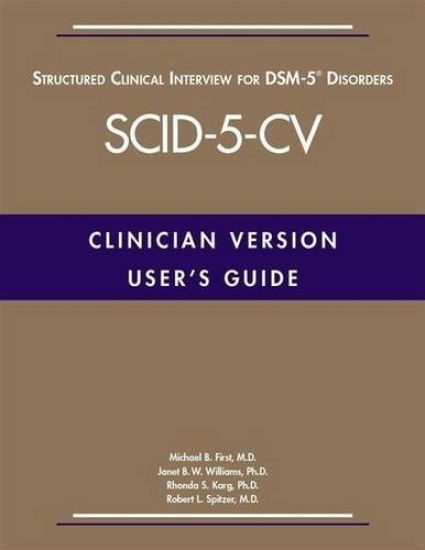
User's Guide for the Structured Clinical Interview for DSM-5® Disorders—Clinician Version (SCID-5-CV)

User's Guide for the Structured Clinical Interview for DSM-5® Disorders—Clinician Version (SCID-5-CV)

Michael B. First; Janet B. W. Williams; Rhonda S. Karg; Robert L. Spitzer

American Psychiatric Publishing
2016
pokkari
The Structured Clinical Interview for DSM-5 Disorders—Clinician Version (SCID-5-CV) guides the clinician step-by-step through the DSM-5 diagnostic process. Interview questions are provided conveniently along each corresponding DSM-5 criterion, which aids in rating each as either present or absent. A unique and valuable tool, the SCID-5-CV covers the DSM-5 diagnoses most commonly seen in clinical settings. The User's Guide for the SCID-5-CV provides comprehensive instructions on how to use the SCID-5-CV effectively and accurately. It not only describes the rationale, structure, conventions, and usage of the SCID-5-CV, but also discusses in detail how to interpret and apply the specific DSM-5 criteria for each of the disorders included in the SCID-5-CV. A number of sample role-play and homework cases are also included to help clinicians learn how to use the SCID-5-CV. Together with the SCID-5-CV, the User's Guide for the SCID-5-CV will prove invaluable to clinicians, researchers, interviewers, and students in the mental health professions who seek to integrate time-tested interview questions corresponding to the DSM-5 criteria into their DSM-5 diagnostic assessment process.
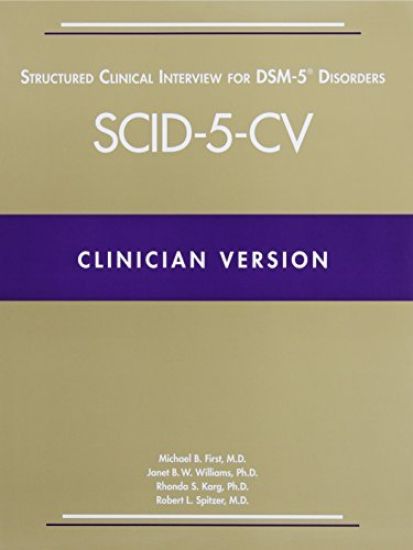
Structured Clinical Interview for DSM-5® Disorders—Clinician Version (SCID-5-CV)

Structured Clinical Interview for DSM-5® Disorders—Clinician Version (SCID-5-CV)

Michael B. First; Janet B. W. Williams; Rhonda S. Karg; Robert L. Spitzer

American Psychiatric Association Publishing
2016
pokkari
The Structured Clinical Interview for DSM-5 —Clinician Version (SCID-5-CV) guides the clinician step-by-step through the DSM-5 diagnostic process. Interview questions are provided conveniently along each corresponding DSM-5 criterion, which aids in rating each as either present or absent. The SCID-5-CV is an abridged and reformatted version of the Research Version of the SCID, the structured diagnostic interview most widely used by researchers for making DSM diagnoses for the past 30 years. A unique and valuable tool, the SCID-5-CV covers the DSM-5 diagnoses most commonly seen in clinical settings: depressive and bipolar disorders; schizophrenia spectrum and other psychotic disorders; substance use disorders; anxiety disorders (panic disorder, agoraphobia, social anxiety disorder, generalized anxiety disorder); obsessive-compulsive disorder; posttraumatic stress disorder; attention-deficit/hyperactivity disorder; and adjustment disorder. It also screens for 17 additional DSM-5 disorders. Versatile in function, the SCID-5-CV can be used in a variety of ways. For example, it can ensure that all of the major DSM-5 diagnoses are systematically evaluated in adults; characterize a study population in terms of current psychiatric diagnoses; and improve interviewing skills of students in the mental health professions, including psychiatry, psychology, psychiatric social work, and psychiatric nursing. Enhancing the reliability and validity of DSM-5 diagnostic assessments, the SCID-5-CV will serve as an indispensible interview guide.
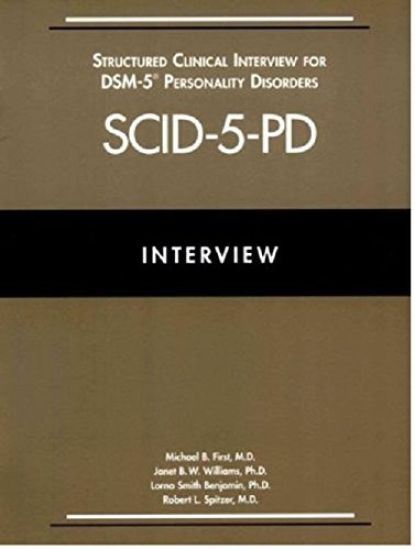
Structured Clinical Interview for DSM-5® Personality Disorders (SCID-5-PD)

Structured Clinical Interview for DSM-5® Personality Disorders (SCID-5-PD)

Michael B. First; Janet B. W. Williams; Lorna Smith Benjamin; Robert L. Spitzer

American Psychiatric Association Publishing
2015
pokkari
The Structured Clinical Interview for DSM-5 Personality Disorders (SCID-5-PD) is a semistructured diagnostic interview for clinicians and researchers to assess the 10 DSM-5 Personality Disorders across Clusters A, B, and C as well as Other Specified Personality Disorder. Designed to build rapport, the SCID-5-PD can be used to make personality disorder diagnoses, either categorically (present or absent) or dimensionally. The SCID-5-PD includes interview and the handy self-report screening questionnaire for patients or subjects, the Structured Clinical Interview for DSM-5 Screening Personality Questionnaire (SCID-5-SPQ). The SCID-5-PD is the updated version of the former Structured Clinical Interview for DSM-IV Axis II Personality Disorders (SCID-II). The SCID-5-PD name reflects the elimination of the multiaxial system in DSM-5. Although the DSM-IV Personality Disorder criteria are unchanged in DSM-5, the SCID-5-PD interview questions have been thoroughly reviewed and revised to optimally capture the construct embodied in the diagnostic criteria. In addition, a dimensional scoring component has been added to the SCID-5-PD. The basic structure of the SCID-5-PD is similar to the other SCID-5 interviews (such as the Research Version, SCID-5-RV; and the Clinician Version, SCID-5-CV) that cover non–personality DSM-5 disorders. Features include the following: • Questions assessing the DSM-5 criteria for each of the 10 personality disorders: Avoidant Personality Disorder, Dependent Personality Disorder, Obsessive-Compulsive Personality Disorder, Paranoid Personality Disorder, Schizotypal Personality Disorder, Schizoid Personality Disorder, Histrionic Personality Disorder, Narcissistic Personality Disorder, Borderline Personality Disorder, and Antisocial Personality Disorder.• An optional SCID-5-SPQ that serves as a brief, 20-minute self-report screening tool to reduce the time of the SCID-5-PD clinical interview. The SCID-5-SPQ requires an eighth grade or higher reading level (as determined by the Flesch-Kincaid formula). Its 106 questions correspond directly to each first question in the full SCID-5-PD. The SCID-5-PD can be used in various types of research studies, just as the SCID-II. It has been used to investigate patterns of Personality Disorders co-occurring with other mental disorders or medical conditions; select a group of study subjects with a particular Personality Disorder; investigate the underlying structure of personality pathology; and compare with other assessment methods for Personality Disorders. The SCID-5-PD will serve as a valuable resource to help clinicians and researchers more accurately diagnose Personality Disorders.
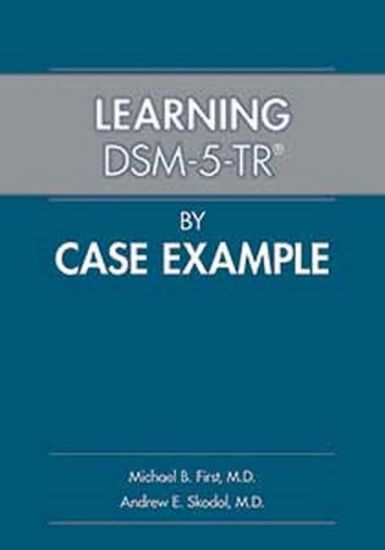
Learning DSM-5-TR® by Case Example

Learning DSM-5-TR® by Case Example

Michael B. First; Andrew E. Skodol

American Psychiatric Association Publishing
2025
pokkari
Engaging case studies drawn from the real-world practice of a diverse group of experts bring DSM-5-TR to life in this exhaustive new volume. Designed to familiarize undergraduate, graduate, and postgraduate students in psychology, psychiatry, social work, counseling, and psychiatric nursing with the diagnosis of psychopathology, this guide is equally useful for experienced clinicians seeking to improve their understanding of the new concepts and terminology in DSM-5-TR. Organized according to the order of the 19 diagnostic groupings as they appear in DSM-5-TR, this book includes at least one case for each mental disorder listed in DSM-5-TR. In each richly detailed chapter, readers will find:An overview of the manifestation of the various diagnoses in the corresponding disorder class.A table summarizing key characteristics of each individual disorder.Comprehensive sections on the individual diagnoses that describe hallmark features, prevalence data, clinical course, and common comorbidities, among other topics.Where specific factors—including severity, course, and symptom presentation—affect the manifestation of a disorder, the book includes multiple cases that illustrate that diagnostic heterogeneity. Unique to this edition are four new, cutting-edge cases: two that are included in the Conditions for Further Study section in DSM-5-TR and an additional two included in the current edition of the World Health Organization’s International Classification of Diseases, 11th revision. The book concludes with an alphabetical index of case names and a comprehensive index of diagnoses with their related cases for ease of reference. Unmatched in its scope and detail, Learning DSM-5-TR by Case Example is an essential resource for all those looking to translate the latest diagnostic criteria to real world practice.
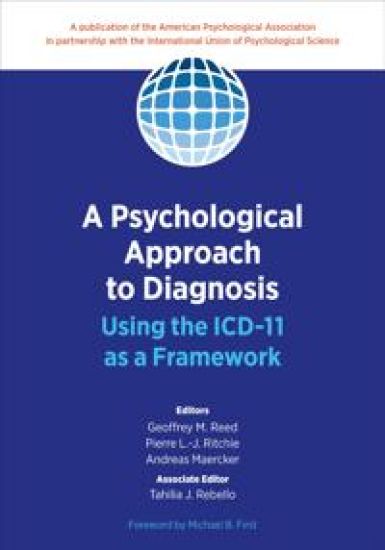
A Psychological Approach to Diagnosis

A Psychological Approach to Diagnosis

Michael B. First

American Psychological Association
2024
pokkari
This groundbreaking volume, published by the American Psychological Association in partnership with the International Union of Psychological Science, provides a detailed guide to clinical diagnosis by psychologists and other health professionals based on the eleventh revision of the World Health Organization's International Classification of Diseases (ICD- ). The ICD- was adopted by the World Health Assembly in 2 9 and came into effect as the global standard for health information and reporting in 2 22. The ICD is the diagnostic system for mental disorders most widely used by mental health professionals around the world in their day-to-day clinical practice. This edited volume offers a step-by-step approach to diagnosis, giving mental health professionals around the world the tools they need to apply ICD- diagnostic requirements for mental, behavioral, and neurodevelopmental disorders as the basis for delivering high quality, evidence-informed care. A psychological approach to diagnosis is a conceptually driven, person-oriented, biopsychosociocultural formulation that integrates pertinent history, behavior, symptoms, phenomenology, and functioning. A psychological approach focuses on psychological mechanisms and principles as an aspect of diagnostic practice and case formulation, regardless of professional discipline. The chapters of this book cover the major groupings of mental disorder as well as related areas that are important parts of psychological practice, such as sexual dysfunctions, sleep-wake disorders, and relationship problems and maltreatment. The authors of this book are leading global experts in each area, many of whom were integrally involved in developing the respective sections of the ICD- . Authors describe the overarching logic for the classificatory arrangement and the elements of a psychological approach to the set of disorders discussed in each chapter, including psychological models for conceptualizing their symptoms and recommendations for psychological assessment. The chapters also discuss presentations and symptom patterns for each major group of disorders, specifiers and subtypes, the threshold between normal variation and disorder, differential diagnoses, co-occurring disorders, developmental course, cultural and contextual considerations, and gender-related features. A Psychological Approach to Diagnosis is the first comprehensive training resource on WHO amp rsquo s ICD- classification of mental, behavioural and neurodevelopmental disorders. It provides practicing psychologists and other mental health professionals, primary care clinicians, educators, and trainees with essential tools for the competent practice of diagnosis using the ICD- as a framework.
DSM-5-TR® Handbook of Differential Diagnosis

DSM-5-TR® Handbook of Differential Diagnosis

Michael B. First

American Psychiatric Association Publishing
2024
pokkari
The preeminent guide to differential diagnosis for both clinicians and students learning psychiatric diagnosis, offering a rich selection of diagnostic lenses through which to consider symptomatic presentations in an easy-to-use format. An invaluable addition to the DSM-5-TR collection and an important contribution to the mental health profession.
Quick Structured Clinical Interview for DSM-5 Disorders (QuickSCID-5)

Quick Structured Clinical Interview for DSM-5 Disorders (QuickSCID-5)

Michael B. First; Janet B. W. Williams

American Psychiatric Association Publishing
2020
pokkari
QuickSCID-5 is a fully structured diagnostic instrument that employs interview questions adapted from the Structured Clinical Interview for DSM-5® (SCID-5), widely regarded to be the "gold standard" structured psychiatric diagnostic interview since the initial release of SCID in 1985. The impetus for developing the QuickSCID-5 was to create a briefer, more time-efficient version of the SCID designed to be administered usually in 30 minutes or less. The shorter administration time results from the fact that QuickSCID-5 consists almost entirely of closed-ended questions that can be answered "YES" or "NO" by the patient, dispensing with the requirement in the standard SCID that the interviewer elicit descriptive examples and ask enough follow-up questions until the interviewer has enough information to determine whether the DSM-5 diagnostic criteria are met. Consequently, unlike the standard SCID, which requires the interviewer to have specialized training in diagnostic interviewing, QuickSCID can be administered by any clinician, including those in training. Other features include a visually appealing format and easy to follow skip instructions.QuickSCID has a modular design so that only modules of interest need be administered. Modules include an optional Overview, Module A (Mood Episodes and Disorders), Module B (Psychotic Symptoms Screen), Module C (Alcohol and Other Substance Use Disorders), Module D (Anxiety Disorders), Module E (Obsessive-Compulsive Disorder); Module F (Adult Attention-Deficit/Hyperactivity Disorder), Module G (Posttraumatic Stress Disorder), Module H (Eating Disorders), Module I (Screening for Other Disorders), and Module J (Rule Out Mental Disorders Due to a Medical Condition and Substance/Medication-induced Mental Disorders). In recognition of the fact that it is not recommended to make a diagnosis of a psychotic disorder such as schizophrenia using questions that can only be answered "YES" or "NO," QuickSCID-5 only screens for psychotic symptoms and is not intended to be used to diagnose psychotic disorders. These diagnoses are not included in QuickSCID-5.Although the absence of a requirement for the interviewer to elicit descriptive examples may lead to more false positives than the standard SCID, the savings in administration time and its allowance for it to be administered by less trained interviewers can constitute a reasonable trade-off depending on the setting (e.g., for screening patients for the presence of a mental disorder).
User's Guide for the Structured Clinical Interview for the DSM-5® Alternative Model for Personality Disorders (SCID-5-AMPD)

User's Guide for the Structured Clinical Interview for the DSM-5® Alternative Model for Personality Disorders (SCID-5-AMPD)

Michael B. First; Andrew E. Skodol; Donna S. Bender; John M. Oldham

American Psychiatric Association Publishing
2018
pokkari
Expertly designed, the Structured Clinical Interview for the DSM-5 Alternative Model for Personality Disorders (SCID-5-AMPD) is a semistructured diagnostic interview that guides clear assessment of the defining components of personality pathology as presented in the DSM-5 Alternative Model. The paramount tool for the use of SCID-5-AMPD, the User's Guide for the SCID-5-AMPD provides readers with an essential manual to effectively understand and use any SCID-5-AMPD module. Integrating an overview of the DSM-5 Alternative Model, this companion guide provides instructions for every SCID-5-AMPD module and features completed samples of all modules in full, with corresponding sample patient cases and commentary. The modular format of the SCID-5-AMPD allows the researcher or clinician to focus on those aspects of the Alternative Model of most interest. The User's Guide for the SCID-5-AMPD fully explicates each module—available individually or in customized sets: • Module I is devoted to the dimensional assessment of self and interpersonal functioning using the Level of Personality Functioning Scale.• Module II focuses on the dimensional assessment of the five pathological personality trait domains and corresponding 25 trait facets. • Module III is a comprehensive assessment of each of the six specific personality disorders of the DSM-5 Alternative Model, as well as Personality Disorder–Trait-Specified, and includes a global assessment of the level of personality functioning. Trained clinicians with a basic knowledge of the concepts of personality and personality psychopathology will find the SCID-5-AMPD a valuable tool in the assessment and study of personality disorders.
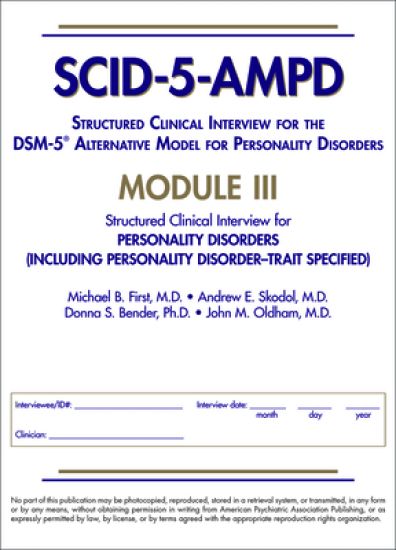
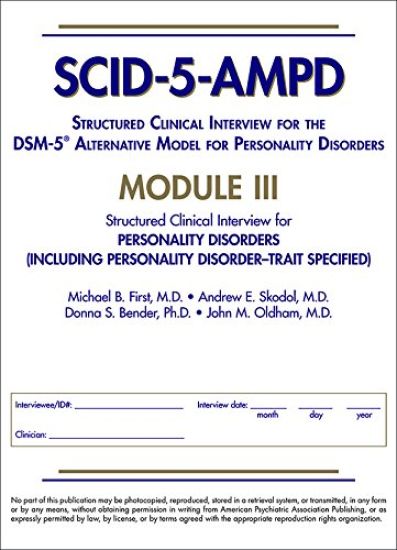
Structured Clinical Interview for the DSM-5® Alternative Model for Personality Disorders (SCID-5-AMPD) Module III

Structured Clinical Interview for the DSM-5® Alternative Model for Personality Disorders (SCID-5-AMPD) Module III

Michael B. First; Andrew E. Skodol; Donna S. Bender; John M. Oldham

American Psychiatric Association Publishing
2017
nidottu
Expertly designed, the Structured Clinical Interview for the DSM-5 Alternative Model for Personality Disorders (SCID-5-AMPD) is a semistructured diagnostic interview that guides clear assessment of the defining components of personality pathology as presented in the DSM-5 Alternative Model. The modular format of the SCID-5-AMPD allows the researcher or clinician to focus on those aspects of the Alternative Model of most interest.Module III: Structured Clinical Interview for Personality Disorders (Including Personality Disorder–Trait Specified) provides a comprehensive assessment of each of the six specific personality disorders of the Alternative Model. It features clear guidance through the new diagnosis of Personality Disorder–Trait-Specified and elucidates when this diagnosis is applicable. The module concludes with a global assessment of the level of personality functioning and includes a survey of all the personality disorder diagnoses in the module.Module III can be used independently or in combination with any of the following SCID-5-AMPD modules:• Module I dimensionally assesses self and interpersonal functioning using the Level of Personality Functioning Scale.• Module II dimensionally assesses the five pathological personality trait domains and their corresponding 25 trait facets. Also available is the User’s Guide for the SCID-5-AMPD: the essential tool for the effective use of any SCID-5-AMPD module. This companion guide provides instructions for each SCID-5-AMPD module and features completed samples of all modules in full, with corresponding sample patient cases and commentary.Trained clinicians with a basic knowledge of the concepts of personality and personality psychopathology will benefit from the myriad applications and insights offered by the SCID-5-AMPD.
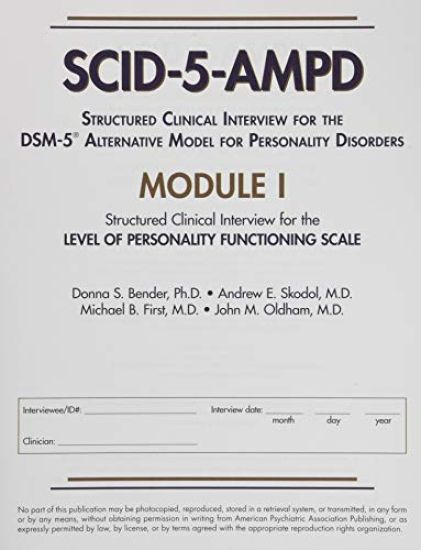
Structured Clinical Interview for the DSM-5® Alternative Model for Personality Disorders (SCID-5-AMPD) Module I

Structured Clinical Interview for the DSM-5® Alternative Model for Personality Disorders (SCID-5-AMPD) Module I

Donna S. Bender; Andrew E. Skodol; Michael B. First; John M. Oldham

American Psychiatric Association Publishing
2017
nidottu
Expertly designed, the Structured Clinical Interview for the DSM-5 Alternative Model for Personality Disorders (SCID-5-AMPD) is a semistructured diagnostic interview that guides clear assessment of the defining components of personality pathology as presented in the DSM-5 Alternative Model. The modular format of the SCID-5-AMPD allows the researcher or clinician to focus on those aspects of the Alternative Model of most interest.Module I: Structured Clinical Interview for the Level of Personality Functioning Scale is devoted to the linchpin of dimensional assessment—self and interpersonal functioning—using the Level of Personality Functioning Scale. Module I provides both a global functioning score and an innovative, detailed assessment of all four domains of functioning (Identity, Self-Direction, Empathy, and Intimacy) and their corresponding subdomains.Module I can be used independently or in combination with any of the following SCID-5-AMPD modules:• Module II dimensionally assesses the five pathological personality trait domains and their corresponding 25 trait facets. • Module III comprehensively assesses each of the six specific personality disorders of the Alternative Model, as well as Personality Disorder–Trait-Specified.Also available is the User’s Guide for the SCID-5-AMPD: the essential tool for the effective use of any SCID-5-AMPD module. This companion guide provides instructions for each SCID-5-AMPD module and features completed samples of all modules in full, with corresponding sample patient cases and commentary.Trained clinicians with a basic knowledge of the concepts of personality and personality psychopathology will benefit from the myriad applications and insights offered by the SCID-5-AMPD.
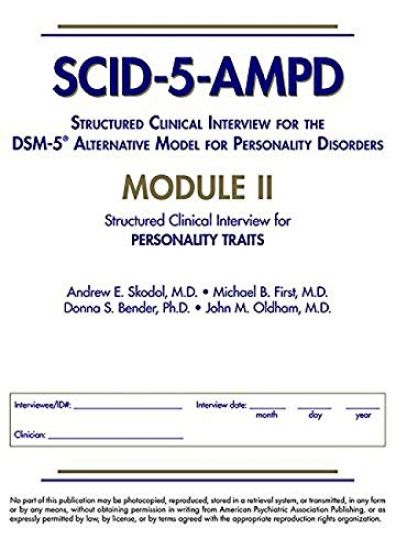
Structured Clinical Interview for the DSM-5® Alternative Model for Personality Disorders (SCID-5-AMPD) Module II

Structured Clinical Interview for the DSM-5® Alternative Model for Personality Disorders (SCID-5-AMPD) Module II

Andrew E. Skodol; Michael B. First; Donna S. Bender; John M. Oldham

American Psychiatric Association Publishing
2017
nidottu
Expertly designed, the Structured Clinical Interview for the DSM-5 Alternative Model for Personality Disorders (SCID-5-AMPD) is a semistructured diagnostic interview that guides clear assessment of the defining components of personality pathology as presented in the DSM-5 Alternative Model. The modular format of the SCID-5-AMPD allows the researcher or clinician to focus on those aspects of the Alternative Model of most interest.Module II: Structured Clinical Interview for Personality Traits focuses on the dimensional assessment of the five pathological personality trait domains in the Alternative Model and their corresponding 25 trait facets. This comprehensive review of the trait domains (Negative Affectivity, Detachment, Antagonism, Disinhibition, and Psychoticism) identifies multiple areas of personality variation and provides a visual profile of trait facets across the trait domains.Module II can be used independently or in combination with any of the following SCID-5-AMPD modules:• Module I dimensionally assesses self and interpersonal functioning using the Level of Personality Functioning Scale.• Module III comprehensively assesses each of the six specific personality disorders of the Alternative Model, as well as Personality Disorder–Trait-Specified.Also available is the User’s Guide for the SCID-5-AMPD: the essential tool for the effective use of any SCID-5-AMPD module. This companion guide provides instructions for each SCID-5-AMPD module and features completed samples of all modules in full, with corresponding sample patient cases and commentary.Trained clinicians with a basic knowledge of the concepts of personality and personality psychopathology will benefit from the myriad applications and insights offered by the SCID-5-AMPD.
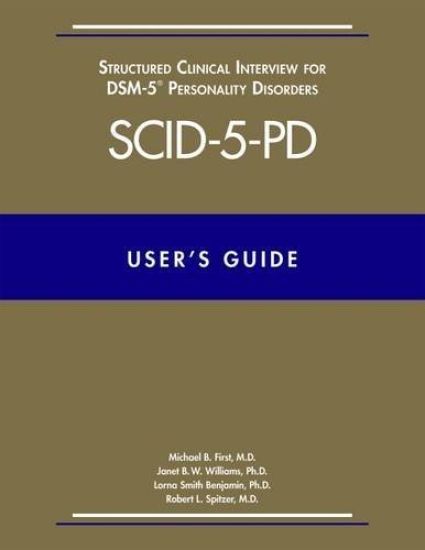
User’s Guide for the Structured Clinical Interview for DSM-5 Personality Disorders (SCID-5-PD)

User’s Guide for the Structured Clinical Interview for DSM-5 Personality Disorders (SCID-5-PD)

Michael B. First; Janet B. W. Williams; Lorna Smith Benjamin; Robert L. Spitzer

American Psychiatric Association Publishing
2015
pokkari
The Structured Clinical Interview for DSM-5 Personality Disorders (SCID-5-PD) is a semistructured diagnostic interview for clinicians and researchers to assess the 10 DSM-5 Personality Disorders across Clusters A, B, and C as well as Other Specified Personality Disorder. Designed to build rapport, the SCID-5-PD can be used to make personality disorder diagnoses, either categorically (present or absent) or dimensionally. The SCID-5-PD includes the indispensable User's Guide for the SCID-5-PD, as well as a handy self-report screening questionnaire for patients or subjects, the Structured Clinical Interview for DSM-5 Screening Personality Questionnaire (SCID-5-SPQ). The SCID-5-PD is the updated version of the former Structured Clinical Interview for DSM-IV Axis II Personality Disorders (SCID-II). The SCID-5-PD name reflects the elimination of the multiaxial system in DSM-5. Although the DSM-IV Personality Disorder criteria are unchanged in DSM-5, the SCID-5-PD interview questions have been thoroughly reviewed and revised to optimally capture the construct embodied in the diagnostic criteria. In addition, a dimensional scoring component has been added to the SCID-5-PD. The basic structure of the SCID-5-PD is similar to the other SCID-5 interviews (such as the Research Version, SCID-5-RV; and the Clinician Version, SCID-5-CV) that cover non–personality DSM-5 disorders. Features include the following: • Questions assessing the DSM-5 criteria for each of the 10 personality disorders: Avoidant Personality Disorder, Dependent Personality Disorder, Obsessive-Compulsive Personality Disorder, Paranoid Personality Disorder, Schizotypal Personality Disorder, Schizoid Personality Disorder, Histrionic Personality Disorder, Narcissistic Personality Disorder, Borderline Personality Disorder, and Antisocial Personality Disorder.• A User's Guide for the SCID-5-PD containing essential guidance for use of the SCID-5-PD, including an appendix of a completed SCID-5-PD and SCID-5-SPQ for a sample patient.• An optional SCID-5-SPQ that serves as a brief, 20-minute self-report screening tool to reduce the time of the SCID-5-PD clinical interview. The SCID-5-SPQ requires an eighth grade or higher reading level (as determined by the Flesch-Kincaid formula). Its 106 questions correspond directly to each first question in the full SCID-5-PD. The SCID-5-PD can be used in various types of research studies, just as the SCID-II. It has been used to investigate patterns of Personality Disorders co-occurring with other mental disorders or medical conditions; select a group of study subjects with a particular Personality Disorder; investigate the underlying structure of personality pathology; and compare with other assessment methods for Personality Disorders. The SCID-5-PD will serve as a valuable resource to help clinicians and researchers more accurately diagnose Personality Disorders.
DSM-5® Handbook of Differential Diagnosis

DSM-5® Handbook of Differential Diagnosis

Michael B. First

American Psychiatric Publishing
2014
pokkari
The DSM-5 Handbook of Differential Diagnosis is the preeminent guide to differential diagnosis for both clinicians and students learning psychiatric diagnosis. Based closely on the Diagnostic and Statistical Manual of Mental Disorders, Fifth Edition, it offers a rich selection of perspectives in an easy-to-use format. The author, an expert on psychiatric diagnosis and assessment, recognizes that psychological distress cannot be reduced to a rubric. The clinician must have empathy, listening skills, the ability to identify symptoms and contextualize them, and a familiarity with the body of knowledge represented by DSM-5. The handbook brings these critical skills together in a well-written, accessible, and reader-friendly volume that is grounded in the latest research and standard of practice. The handbook offers an assortment of approaches to differential diagnosis, and a number of features designed to benefit clinicians in the exam room, including: • A six-step framework for diagnosing patients that proceeds from determining if the symptom is real to establishing the boundary between disorder and normality, with intermediary steps to rule out substance etiology and medical conditions, as well as to determine the primary disorder and to differentiate adjustment disorders from other mental disorders.• Twenty-nine symptom-oriented decision trees that provide detailed decision points to facilitate the process of generating the differential diagnosis based on the presenting symptoms and eliminate formulating premature conclusions.• Sixty-six differential diagnosis tables, one for each of the most important DSM-5 disorders, cross-referenced with the terminal branches of the decision trees presented in the handbook to provide a head-to-head comparison of each disorder, highlighting similarities and differences.• The DSM-5 classification, to facilitate coding and to provide an overview of all of the DSM-5 diagnoses that must be considered in formulating a differential diagnosis.• Alphabetical indexes of the decision trees and differential diagnosis tables to help readers readily locate desired material. DSM-5 Handbook of Differential Diagnosis provides a comprehensive overview of the process of diagnosing DSM-5 disorders while serving as a reference guide to assist in the differential diagnosis of individual patients. The handbook is an invaluable addition to the DSM-5 collection and an important contribution to the mental health profession.
Clinical Guide to the Diagnosis and Treatment of Mental Disorders

Clinical Guide to the Diagnosis and Treatment of Mental Disorders

Michael B. First; Allan Tasman

John Wiley Sons Inc
2010
nidottu
Two key challenges face mental health practitioners: making the correct psychiatric diagnosis and choosing the most appropriate treatment option. This book aims to help with both. Clinical Guide to the Diagnosis and Treatment of Mental Disorders - Second Edition combines clinically-relevant information about each of theDSM-IV-TR diagnoses with clear, detailed information on treatment options, giving full clinical management advice. Once again, the editors, both leading psychiatrists, have condensed the chapters on Disorders from Tasman et al’s acclaimed two volume textbook of Psychiatry (now in its Third Edition), retaining only the content they deem particularly relevant to the clinician for ease of use. Each disorder is discussed under the headings of Diagnosis (including Assessment Issues, Comorbidity, Course, and Differential Diagnosis, giving diagnostic decision trees where relevant) and Treatment (listing all therapeutic options, giving practical advice for patient management, summarising treatment specifics with tables and treatment flowcharts). The original edition established itself as the first point of reference for any clinician or mental health practitioner needing expert advice on therapeutic options for any psychiatric disorder. This edition features an additional chapter on the psychiatric interview and assessment of mental status to increase its utility. It echoes the progress in psychiatry regarding the establishment of an evidenced-based model of taxonomy, diagnosis, etiology, and treatment. Indeed, from a psychologist's perspective, the equal consideration provided to empirically supported psychosocial treatments versus somatic treatment is a significant development in the field of psychiatry. Jonathan Weinand in PsycCritiques, the American Psychological Association Review of Books