
Kirjojen hintavertailu. Mukana 12 390 323 kirjaa ja 12 kauppaa.

Kirjailija

Michael B. Mackuen

Kirjat ja teokset yhdessä paikassa: 2 kirjaa, julkaisuja vuosilta 2001-2002, suosituimpien joukossa The Macro Polity. Vertaile teosten hintoja ja tarkista saatavuus suomalaisista kirjakaupoista.

2 kirjaa

Kirjojen julkaisuhaarukka 2001-2002.

The Macro Polity

The Macro Polity

Robert S. Erikson; Michael B. Mackuen; James A. Stimson

Cambridge University Press
2002
pokkari
The Macro Polity provides the first comprehensive model of American politics at the system level. Focusing on the interactions between citizen evaluations and preferences, government activity and policy, and how the combined acts of citizens and governments influence one another over time, it integrates understandings of matters such as economic outcomes, presidential approval, partisanship, elections, and government policy-making into a single model. Borrowing from the perspective of macroeconomics, it treats electorates, politicians, and governments as unitary actors, making decisions in response to the behavior of other actors. The macro and longitudinal focus makes it possible to directly connect the behaviors of electorate and government. The surprise of macro-level analysis, emerging anew in every chapter, is that order and rationality dominate explanations. This book argues that the electorates and governments that emerge from these analyses respond to one another in orderly and predictable ways.
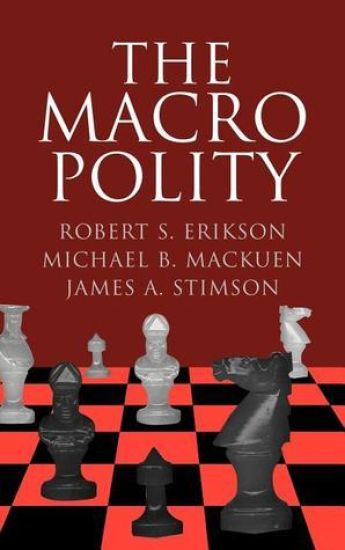
The Macro Polity

The Macro Polity

Robert S. Erikson; Michael B. Mackuen; James A. Stimson

Cambridge University Press
2001
sidottu
The Macro Polity, first published in 2002, provides a comprehensive model of American politics at the system level. Focusing on the interactions between citizen evaluations and preferences, government activity and policy, and how the combined acts of citizens and governments influence one another over time, it integrates understandings of matters such as economic outcomes, presidential approval, partisanship, elections, and government policy-making into a single model. Borrowing from the perspective of macroeconomics, it treats electorates, politicians, and governments as unitary actors, making decisions in response to the behavior of other actors. The macro and longitudinal focus makes it possible to directly connect the behaviors of electorate and government. The surprise of macro-level analysis, emerging anew in every chapter, is that order and rationality dominate explanations. This book argues that the electorates and governments that emerge from these analyses respond to one another in orderly and predictable ways.