Kirjailija
Michael Barlow
Kirjat ja teokset yhdessä paikassa: 17 kirjaa, julkaisuja vuosilta 2006-2026, suosituimpien joukossa Writing the Psychology Research Article. Vertaile teosten hintoja ja tarkista saatavuus suomalaisista kirjakaupoista.
17 kirjaa
Kirjojen julkaisuhaarukka 2006-2026.
What do published psychology writers actually do? Not what textbooks say they should do-what they actually do, sentence by sentence, section by section, across hundreds of peer-reviewed articles? Using a text corpus, Writing the Psychology Research Article answers that question with data. Drawing on a purpose-built corpus of 231 psychology research articles comprising over 1.6 million words, this book reveals the hidden architecture of successful academic writing in psychology: the recurring rhetorical moves, preferred constructions, and frequency patterns that published writers implicitly rely on. The findings are striking. When psychology writers transition from reviewing literature to announcing their own study, they overwhelmingly reach for the phrase "In the present study"-a construction so dominant it appears at a rate unmatched by any competing alternative. When they report statistical findings, they follow a consistent three-part template. When they hedge in the Discussion, they draw on a small, predictable set of constructions. These aren't rules pulled out of the air; they're patterns that emerge when you let the data speak. The book is organized into eleven units across four parts. Part 1 maps the rhetorical moves writers make within each major section-Introduction, Method, Results, Discussion, Conclusion, and Abstract-identifying which moves are near-universal and which are optional. The title also covers the macrostructure of Psychology articles. Although Method is rearely used as a heading, the moves described in the book cover what is accomplished under headings such as Experiment 1. Part 2 examines how writers open and close each section, revealing the sentence-level strategies that signal transitions and frame arguments. Part 3 tracks features that shift across the entire paper: tense usage, citation density, and the balance between hedging and boosting. A capstone unit synthesizes everything, showing how the entire article serves a single macro-argument: there is a gap in knowledge, and we fill it. Every frequency, every pattern, and every example sentence comes directly from the corpus. The book is an evidence-based guide that shows writers the full range of options available to them, along with how common each option is. The approach replaces intuition with frequency, making visible the patterns that experienced writers know. Designed for graduate students, early-career researchers, writing instructors, and anyone writing for publication in psychology, this book offers a practical three-step method: conceptualize, consult, compose. The book is particularly valuable for non-native English speakers navigating the conventions of a discipline where rhetorical expectations are strong but rarely made explicit.
What do published engineering researchers actually do when they write? What they really do, sentence by sentence, section by section, across an entire paper. This book answers that question using a corpus of 163 engineering research articles comprising approximately 610,000 words; it reveals the patterns that define good engineering papers. One problem is most academic writing guides are built around the IMRDC model (Introduction, Methods, Results, Discussion, Conclusion) borrowed from the social sciences. But engineering papers don't work that way. Only 1.2% of the articles in this corpus follow a full IMRDC structure. The vast majority organise their content under technical headings such as Finite Element Analysis, Computational Domain, Experimental Programme. They blend methods, results, and interpretation into a single integrated flow. The corpus analysis spans nine engineering sub-disciplines, from aerospace to chemical engineering, and identifies five distinct paper structures (Theory + Experiment, Theory/Simulation, Experimental, Analysis/Evaluation, and Thematic), each with its own logic, its own section balance, and its own rhetorical demands. Whether you're writing a computational fluid dynamics paper or a structural testing study, you'll find your paper type here, along with specific, data-driven guidance for every section you need to write. Across 16 units, the book covers every stage of the engineering research article: macrostructure and headings, abstracts, introductions, mathematical and theoretical development, experimental and computational methods, results and interpretation, the validation move unique to engineering, discussion, and conclusions. It also examines cross-paper features that most writing guides ignore entirely - how tense shifts from section to section, where figure references cluster and why, how citation density changes across the paper, how hedging gives way to boosting as the argument builds, and how authorial presence strengthens from Introduction to Conclusion. This book is for graduate students writing their first journal article, postdocs refining their publication strategy, and experienced researchers who want to understand the conventions they've absorbed intuitively. It is also invaluable for non-native English speakers navigating the rhetorical expectations of international engineering journals. The approach is descriptive, not prescriptive: the corpus shows you what is common so you can decide what is right for your study.
Writing the Humanities Research Article: A Corpus-Based Guide to Structure and Language is a practical writing guide for humanities scholars at every stage - from graduate students drafting their first article to experienced researchers refining their prose. Unlike most academic writing guides, which draw on social science models, this book is built on a dedicated humanities corpus of approximately 450 peer-reviewed articles comprising nearly 2 million words. Because humanities papers rarely follow the standard IMRDC structure (Introduction, Methods, Results, Discussion, Conclusion), advice designed for social science writers often misses the mark. This book addresses that gap directly. The book opens by mapping the distinctive macrostructure of humanities articles, identifying three organisational paths: the thematic paper (Introduction, thematic body sections, Conclusion), the hybrid paper (thematic sections followed by a Discussion), and the empirical paper (the familiar IMRDC model used in a minority of humanities research). Writers learn to identify which path suits their project and how to design effective thematic headings. The core of the book moves section by section through the research article. Each unit identifies the rhetorical moves that define a section - establishing a territory, creating a gap, occupying a niche in the Introduction; restating findings, comparing with literature, and explaining results in the Discussion - and provides the language constructions most commonly used to accomplish those moves. Rather than prescribing templates, the book shows what published humanities writers actually do, sentence by sentence. Beyond individual sections, dedicated units trace the patterns that span an entire paper: how tense shifts across sections, how citation density rises and falls to mark the argumentative arc, and how hedging and boosting interact to control the strength of claims from Introduction through Conclusion. A unit on structuring the thematic paper - the dominant form in the humanities - provides specific guidance unavailable in standard writing guides. The approach throughout is practical and writer-centred. Every pattern and example comes directly from the corpus. The book encourages a three-stage process: conceptualise first (deciding what you want to say), then consult the corpus evidence to find constructions that fit your purpose, and finally compose in your own voice. The corpus provides a repertoire of options; your argument determines which options to choose.
AI (AGI) is here and it is already having an impact on education, and on society at large. In this100-page book, we explore in detail the capabilities and the weaknesses of AI as a language or writing assistant. We might think of AI as a tool now, but it will become an environment, an integral part of our studying and working life. The changes to educational institutions will be revolutionary, more transformative than the introduction of computers and the internet. To prepare for that, we need to understand what AI can and cannot do. We have to play our part as creative humans with our own identity and voice so that we can interact efficiently with AI assistants to become better and more productive writers. In the book, we also consider the ethical uses of AI and how we adapt, as teachers and students, to this new environment.
In this book, Michael Barlow describes ways in which corpus data can be used to provide insights into various aspects of grammar, taking a usage-based perspective. The book deals with both the practical and the theoretical aspects of using corpora for language analysis. Some of the topics covered include corpora and usage-based linguistics, collocations and constructions, categorisation in everyday language, blends, and discourse organisation. A couple of recurring themes in the volume are (i) the relationship between theory and data and (ii) the importance and consequences of looking at individual variation in language use.
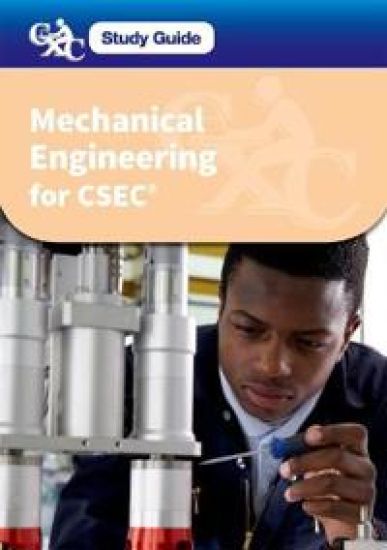
CXC Study Guide: Mechanical Engineering for CSEC
Michael Barlow; Errol Clarke; Philbert Crossfield; Jerry Simpson
Oxford University Press
2019
muu
Written by experienced teachers and experts, Mechanical Engineering for CSEC takes a skills-led approach. It concentrates on the development of skills, critical thinking and teamwork providing a firm foundation for the SBA, further study and beyond.
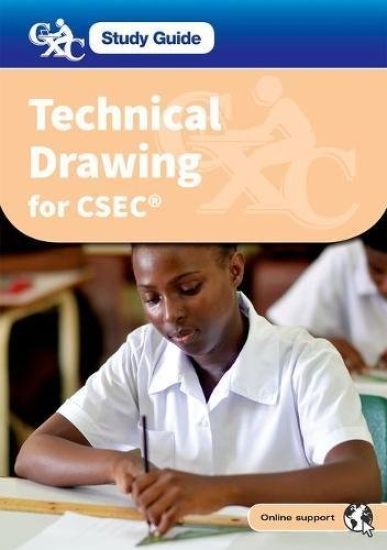
CXC Study Guide: Technical Drawing for CSEC
Michael Barlow; Frank Archer; David Davis; Estellita Rene
Oxford University Press
2017
muu
Written by experienced teachers and experts, Technical Drawing for CSEC takes a skills-led approach. It concentrates on the development of skills, critical thinking and teamwork providing a firm foundation for the SBA, further study and beyond.
The week the circus arrives in Shudup Tiny and Toby become friends and Toby finds himself with five wishes. How will he use them?
Typical cases of agreement are easy to identify, but where the boundaries of agreement lie depend on what aspects of the agreement relation are considered to be defining properties. It is a short step from viewing agreement in the traditional way, as a matching of features, to defining agreement as any relation that ensures consistency of information in two separate structures. This book takes as its topic agreement as it is traditionally conceived, one that only involves morphosyntactic categories.
The first study of the life and music of the composer George Butterworth [1885-1916], including some of his own writings on music. The career of the composer George Butterworth was cruelly cut short by a sniper's bullet at the Somme. His name is kept alive by the popularity of his orchestral tone-poems, such as The Banks of Green Willow and A Shropshire Lad, and his songs. In this book, the first full-length study of Butterworth, Michael Barlow traces his brief life: from preparatory school through Eton and Oxford, a teaching post at Radley, study at the Royal College ofMusic, a period as a music critic for The Times - and his enlisting in August 1914 which, two years later, led to his heroic death at the Somme. All of Butterworth's surviving compositions are discussed, and important chapters examine his Housman settings and his friendship with Vaughan Williams. Butterworth was also prominent in the folksong revival, and chronicled here for the first time are his extensive activities as a folksong and dance collector. The book also includes some of Butterworth's own writings on music.
ParaConc and Parallel Corpora in Contrastive and Translation Studies
Michael Barlow
Athelstan Publications
2009
pokkari