
Kirjailija
Michael Baum
Kirjat ja teokset yhdessä paikassa: 19 kirjaa, julkaisuja vuosilta 2003-2026, suosituimpien joukossa D.D.A.D.. Vertaile teosten hintoja ja tarkista saatavuus suomalaisista kirjakaupoista.
19 kirjaa
Kirjojen julkaisuhaarukka 2003-2026.


Dieses Buch basiert auf den Erfahrungen und Erkenntnissen, die w hrend und durch den C-Kurs des SKT an der DHBW Stuttgart gesammelt wurden. Ausgehend von einigen Algorithmen, die in den Natur- und Ingenieurswissenschaften, aber auch in der reinen Informatik Verwendung finden, wird der grundlegende Ablauf eines Programms dargestellt, was dann in der Programmiersprache C eine konkrete Umsetzung findet. Die wesentliche Syntax und Semantik wird anhand der Entwicklung von Beispielprogrammen eingef hrt und vertieft, sowie durch das eigenst ndige Bearbeiten von Aufgaben zu verschiedenen Themen gefestigt. L sungen zu jeder im Buch gestellten Aufgabe finden sich im Anhang. Die Programme werden schrittweise mit neuen Funktionen versehen und erreichen am Ende schon eine gr ere Komplexit t. Auch auf die Projektf hrung (Strukturierung, Kommentierung, Programmierstil) wird von Anfang an Wert gelegt, sodass der Leser auch gr ere Programme sicher entwickeln kann.

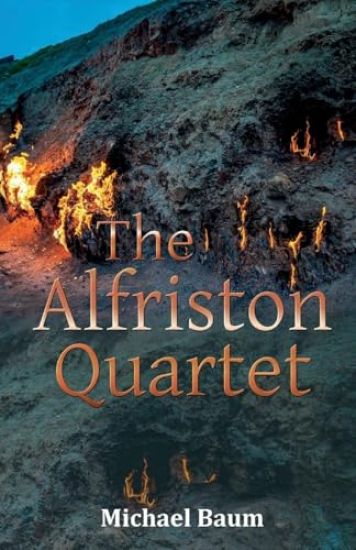
Elderly retired surgeon, on a holiday in Alfriston, a village in Sussex, finds a first edition of Gray's Anatomy in a second-hand bookshop. He discovers that written in the title page were the signatures of two previous owners. The second owner turned out to be Harry Quatermain who joins the Royal Army Medical Corps. Harry is dispatched to join the brigade at Peshawar where a war waging for control of the Khyber Pass. He then is promoted to brigadier and head of the RAMC in the taking of Jerusalem in 1917. A mortally wounded Arabian soldier dies in Harry's hands but not before he hands over a screw top tube the contents have a message could influence the outcome of the war. He then hides the container and contents leaving a cryptogram for others to decipher it in the future. The rest of the story describes the consequences in Israel, England and Azerbaijan of deciphering the message in the current era.



In 1955 four young men bond over a cadaver in an anatomy class while doing their medical training, and then take off in different directions. Alastair ends up as a GP in rural Scotland and is involved in the first antismoking campaign, the prescription of the contraceptive pill, the distribution of the oral vaccine for poliomyelitis, and screening for cervical cancer. Dylan, the son of a coal miner in south Wales, ends up as an epidemiologist and contributes to the discovery of the links of coal dust to lung and stomach cancer amongst coal miners. He is also present at the Aberfan disaster. Matthew trains as a psychiatrist at the pivotal time when Freudian psychoanalysis is being replaced by rational rather than metaphysical concepts. Huge asylums for the insane are being closed and cruel and futile therapies are being abandoned. Peter trains as a surgeon and is involved in the early days of organ transplantation and contributes to the movement to replace radical mastectomy with kinder treatments, for women with early breast cancer.
There is no sound archaeological evidence for the biblical story of the exodus from Egypt, but this work of fiction revisits the Bible story using clues from Egyptology and molecular genealogy of three mysterious mummies discovered nearby the Saqqara step pyramid. A group of English and Egyptian archaeologists and geneticists working together discover that one of the mummies carried a gene that confirms he was from the tribe of the Cohanim, and one of the mummies must be that of Nefertiti, the wife of the monotheist pharaoh, Akhenaten. From this they deduce the identity of Moses from the Bible and then follow clues for the route taken by the Israelites from Egypt to the Promised Land. Along the way they are able to discover rational explanations for the ten plagues and the parting of the Red Sea. These observations are not welcomed by the extreme orthodox community of Jews intent on rebuilding the temple in Jerusalem and ultimately end up in a battle on the Temple Mount. For this the army of the modern Israelites find common purpose with the Palestinian militias to protect the ground that is holy to both Muslims and Jews.

The book starts by considering mankind's role in the complex ecological system of our planet and then considers the place of mankind in the cosmos while also looking inward at our own microcosm. It then explains how these scientific insights lead to the ontological search for God. The good, the bad, and the ugly sides of religious beliefs are considered and it is suggested that we are looking for ""God"" in the wrong place. The book then explains a justification for the author's apparent cognitive dissonance of retaining a Jewish identity whilst denying the existence of a God with the attributes of man. The author then argues that we should look for ""God"" in the infinitely small spaces within ourselves instead of the infinitely large spaces of the universe. His ""God"" would not mind whether individuals believed in ""him"" or not, so long as they practiced their life as the author practices his medicine: in a never-ending quest to improve the length and quality of the lives of his patients. This book should improve the reader's knowledge of the philosophers who wrote on the ontology of God. It also rediscovers that Baruch Spinoza had already reached the conclusions of modern-day thinkers more than 350 years ago.

The book starts by considering mankind's role in the complex ecological system of our planet and then considers the place of mankind in the cosmos while also looking inward at our own microcosm. It then explains how these scientific insights lead to the ontological search for God. The good, the bad, and the ugly sides of religious beliefs are considered and it is suggested that we are looking for ""God"" in the wrong place. The book then explains a justification for the author's apparent cognitive dissonance of retaining a Jewish identity whilst denying the existence of a God with the attributes of man. The author then argues that we should look for ""God"" in the infinitely small spaces within ourselves instead of the infinitely large spaces of the universe. His ""God"" would not mind whether individuals believed in ""him"" or not, so long as they practiced their life as the author practices his medicine: in a never-ending quest to improve the length and quality of the lives of his patients. This book should improve the reader's knowledge of the philosophers who wrote on the ontology of God. It also rediscovers that Baruch Spinoza had already reached the conclusions of modern-day thinkers more than 350 years ago.

C-Programmieren in 10 Tagen
Jan Peter Gehrke; Patrick Köberle; Christoph Tenten; Michael Baum
de Gruyter Oldenbourg
2020
pokkari
Dieses Buch basiert auf den Erfahrungen und Erkenntnissen, die w hrend und durch den C-Kurs des SKT an der DHBW Stuttgart gesammelt wurden. Ausgehend von einigen Algorithmen, die in den Natur- und Ingenieurswissenschaften, aber auch in der reinen Informatik Verwendung finden, wird der grundlegende Ablauf eines Programms dargestellt, was dann in der Programmiersprache C eine konkrete Umsetzung findet. Die wesentliche Syntax und Semantik wird anhand der Entwicklung von Beispielprogrammen eingef hrt und vertieft, sowie durch das eigenst ndige Bearbeiten von Aufgaben zu verschiedenen Themen gefestigt. L sungen zu jeder im Buch gestellten Aufgabe finden sich im Anhang. Die Programme werden schrittweise mit neuen Funktionen versehen und erreichen am Ende schon eine gr ere Komplexit t. Auch auf die Projektf hrung (Strukturierung, Kommentierung, Programmierstil) wird von Anfang an Wert gelegt, sodass der Leser auch gr ere Programme sicher entwickeln kann.

Camp's Over, Now What?: 102 Free Things to Do for Kids and Teens
Michael Baum
Michael Baum
2015
nidottu

Psychological Aspects of Early Breast Cancer
Colette Ray; Michael Baum
Springer-Verlag New York Inc.
2011
nidottu
Physical illness cannot be effectively treated other than in the context of the psychological factors with which it is associated. The body may have the disease, but it is the patient who is ill. Research psychologists from a number of different backgrounds have, in the past few decades, turned increasingly to the study of physical illness, and there is now an extensive literature on preventive behaviors, the role of stress in the etiology of illness, the patient's reactions to illness and its treatment, and the physician-patient relationship. At the same time practicing clinical psychologists have extended their concern beyond the treatment of speci fically psychiatric disorders, to include also the psychological care of people experiencing distress through illness or injury. Traditionally, these patients have tended to fall through the net, unless their distress is so great that it assumes the proportion of a psychiatric disorder that can then be treated in its own right. Because the physical disorder is the primary one, its existence has detracted from the salience of the very real emotional disturbance to which it can give rise. Moreover, emotional reactions in this setting, being the norm, seems to have been regarded as not meriting special attention and care. This situation is chang ing, and it is not just psychologists or psychiatrists who are responsible for the shift in attitudes. Within general medicine itself, there is now a renewed empha sis on the care of the whole patient and not just the disease.

All subjects have their canon of literature that should be studied before serious students can advance in their chosen fields. Containing papers carefully compiled not merely for their historical importance but also for their contemporary relevance, Classic Papers in Breast Disease is that resource. A team of experts shares their experience in researching, diagnosing, and treating breast disease. Each chapter contains not just a compilation of papers, but a critical commentary on the papers, their strengths and weaknesses, and their relevance to current practice and research. The commentary, always insightful and straightforward, ranges from theory to practice, from physical to psychological. Each chapter also has a brief introduction to set the scene as the author sees it. All the papers share in common their place as building blocks, as judged by the refraction of history, in the current knowledge base or in current research.