Kirjojen hintavertailu. Mukana 12 229 279 kirjaa ja 12 kauppaa.

Kirjailija

Michael Bell

Kirjat ja teokset yhdessä paikassa: 29 kirjaa, julkaisuja vuosilta 1988-2025, suosituimpien joukossa F.R. Leavis. Vertaile teosten hintoja ja tarkista saatavuus suomalaisista kirjakaupoista.

29 kirjaa

Kirjojen julkaisuhaarukka 1988-2025.

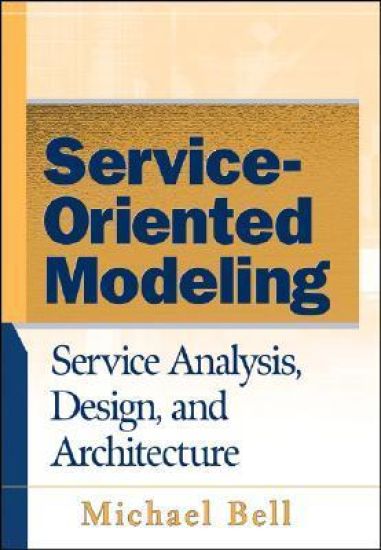
Service-Oriented Modeling

Service-Oriented Modeling

Michael Bell

John Wiley Sons Inc
2008
sidottu
Answers to your most pressing SOA development questions How do we start with service modeling? How do we analyze services for better reusability? Who should be involved? How do we create the best architecture model for our organization? This must-read for all enterprise leaders gives you all the answers and tools needed to develop a sound service-oriented architecture in your organization. Praise for Service-Oriented Modeling Service Analysis, Design, and Architecture "Michael Bell has done it again with a book that will be remembered as a key facilitator of the global shift to Service-Oriented Architecture. . . . With this book, Michael Bell provides that foundation and more-an essential bible for the next generation of enterprise IT." -Eric Pulier, Executive Chairman, SOA Software "Michael Bell's insightful book provides common language and techniques for business and technology organizations to take advantage of the SOA paradigm. By focusing modeling techniques on the business problem, Bell provides a way for professionals to work throughout the life cycle to create reusable and enduring services." -Mike Zbranak, CIO, Chase Card Services "This book will become an imperative business and technology service-oriented modeling recipe for any manager, architect, modeler, analyst, and developer in today's software development industry." -Jeff Schneider, CEO, MomentumSI "'Innovative' and 'groundbreaking' are words that best describe Michael Bell's Service-Oriented Modeling. It depicts a true service modeling approach that elegantly closes a clear and critical service modeling gap in the SOA industry. This holistic book ties these concepts together using real-world examples across a service life cycle that transitions services from ideas and concepts into production assets that deliver business value. A must-read for business and technical SOA practitioners." -Eric A. Marks, CEO, AgilePath Corporation "As hot as SOA is today, many business and technology professionals still find it challenging to mind the gap between their disparate methodologies and objectives. Herein Michael Bell speaks clearly to both camps in straightforward language, outlining disciplines each can use to communicate effectively and advance the realization of corporate aims. This book is a bible for all who seek to drive business/technology into the future." -Mark Edward Goodrich, Director, Investing Product Management, Reuters Media "This book takes senior IT architects and systems designers into the depths of modeling for SOA, with a fresh new perspective on tools, terminology, and how to turn the theory into practice. His full life-cycle approach balances process, control, and accountability to align all the participants in the delivery pipeline-clearing the road for successful SOA business solutions." -Phil Gilligan, Chief Technology Officer, EBS

Open Secrets

Open Secrets

Michael Bell

Oxford University Press
2007
sidottu
Open Secrets reflects on contemporary humanistic pedagogy by examining the limits of the teachable in this domain. The Goethean motif of the open secret refers not to a revealed mystery but to an utterance that is not understood, the likely fate of any instruction based purely on authority. Revisiting the European Bildungsroman, it studies the pedagogical relationship from the point of view of the tutor or mentor figure rather than with the usual focus on the young hero. The argument is not confined to works of fiction, however, but examines texts in which the category of fiction has a crucial and constitutive function, for a growing awareness of limited authority on the part of the mentor figures is closely related to fictive self-consciousness in the texts. Rousseau's Emile, as a semi-novelised treatise, whose fictiveness is at once overt and yet unmarked, is relatively unaware of the imaginary nature of its envisaged authority. Passing through Laurence Sterne, C. M. Wieland, Goethe and Nietzsche, the situation is gradually reversed, culminating with the conscious impasse of authority in Thus Spoke Zarathustra. All these writers have achieved their pedagogical impact despite, indeed by means of, their internal scepticism. By contrast, in the three subsequent writers, D. H. Lawrence, F. R. Leavis and J. M. Coetzee, the impasse of pedagogical authority becomes more literal as the authority of Bildung is eroded in the wider culture. The awareness of pedagogical authority as a species of fiction, to be conducted in an aesthetic spirit, remains a significant prophylactic against the perennial pressure of reductive conceptions of the education as form of instructional 'production'.
Literature, Modernism and Myth

Literature, Modernism and Myth

Michael Bell

Cambridge University Press
2006
pokkari
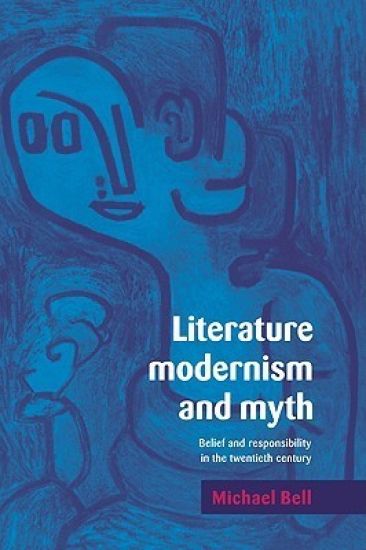
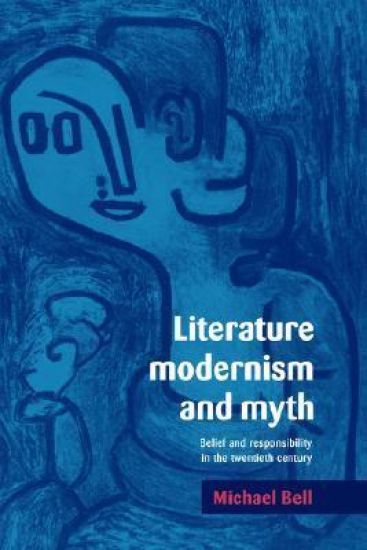
The use of myth in Modernist literature is a misleadingly familiar theme. Joyce's appropriation of Homer's Odyssey and Eliot's of Frazer's Golden Bough are, like Lawrence's primitivism or Yeats's nationalist folklore, attempts to discover an underlying metaphysic in an increasingly fragmented world. In Literature, Modernism and Myth Michael Bell also examines the relationship of myth and modernism to postmodernism. Myth, Bell shows, is inherently flexible; it was used to justify Pound's totalizing vision of society which eventually descended into fascism, and the liberal, ironic vision of human existence Joyce and Mann expressed. Those theorists who present myth as another form of mystification, a search for false origins, ignore its use by modernists to emphasise the ultimate contingency of all values. This anti-foundational element, Bell claims, enables myth to act as a corrective to the claims of ideological critique. Bell shows how postmodern concerns with political and social responsibility, and the role literature plays in formulating this, have in fact been inherited from modernism.
Service-Oriented Architecture

Service-Oriented Architecture

Eric A. Marks; Michael Bell

John Wiley Sons Inc
2006
sidottu
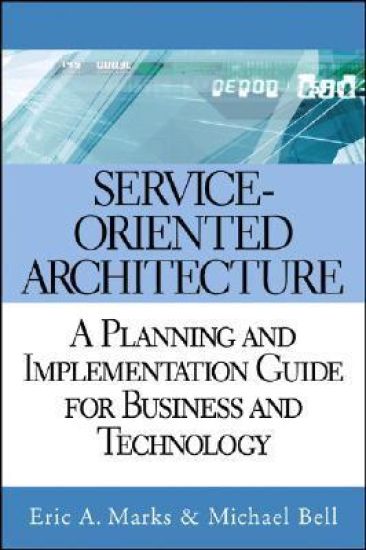
Praise for Service-Oriented Architecture "This book provides a superb overview of the SOA topic. Marks and Bell provide practical guidance across the entire SOA life cycle-from business imperatives and motivations to the post-deployment business and technical metrics to consider. With this book, Marks and Bell demonstrate a unique ability to take the complex dynamics of SOA, and through an eloquent set of metaphors, models, and principles, provide an understandable and insightful how-to manual for both technical and business executives. This will become a required handbook for any organization implementing SOA." —Dan Bertrand, Enterprise Technology Officer & EDS Fellow, EDS Corporation "A fundamental breakthrough in the business and technology perspectives of SOA-this book belongs in every software developer, architect, and IT executive library. Marks and Bell demonstrate a creative and practical approach to building complex, service-oriented systems. I especially liked the hands-on perspective brought to multiple aspects of SOA. A must-have guide in the technology turbulence of the future." —Ariel Aloni, Chief Technology Officer, SunGard Data Management Solutions "This outstanding text gets straight to the heart of the matter, cutting through the hyperbole and discussing how to drive real business value through SOA. It will certainly impact my behavior, our governance models, and, subsequently, the successful business outcomes we derive as we continue to embrace SOA. A must-read for battle-scarred SOA veterans and fledgling architects alike." —Christopher Crowhurst, Vice President and Chief Architect, Thomson Learning "Too often, SOA has been perceived as 'all about the technology'-standards, technology stacks, operational monitoring, and the like. In this book, Marks and Bell expand beyond the technology to provide a refreshing business-driven perspective to SOA, connecting the dots between business requirements, architecture, and development and operations, and overlaying these perspectives with tried-and-true governance techniques to keep SOA initiatives on track. A must-read for those leading the charge to adopt SOA within their enterprise." —Brent Carlson, Chief Technology Officer, LogicLibrary and coauthor of San Francisco Design Patterns: Blueprints for Business Software "Marks and Bell have captured a wealth of practical experience and lessons learned in what has become the hottest topic in software development. In this book, they explain in detail what works and what does not, from procedural issues to technical challenges. This book is an invaluable reference for organizations seeking the benefits of SOAs." —Dr. Jeffrey S. Poulin, System Architect, Lockheed Martin and author of Measuring Software Reuse: Principles, Practices, and Economic Models "One of the last things companies often consider when implementing a business solution such as SOA is the impact on people. Marks and Bell provide an in-depth look at 'what has to change' from a process standpoint to make any SOA implementation a success. A great read for those considering to embark on an enterprise SOA and looking for the right mix of people, process, and products." —Alan Himler, Vice President of Product Management and Marketing, LogicLibrary SOA is a complex topic and a complex organizational goal Service-Oriented Architecture: A Planning and Implementation Guide for Business and Technology shows you how to plan, implement, and achieve SOA value through its prescriptive approach, joining the business and strategic perspective to the technical and architectural perspective. Applicable to all industries, technology platforms, and operating environments, this innovative book provides you with the essential strategies to drive greater value from your SOA and realize your business goals.
The Voluptuous Gardener

The Voluptuous Gardener

Michael Bell; Joe Rosenblatt

Press Porcepic,Ontario
1999
pokkari
Applauded as a witty and eccentric pioneer of Canadian poetry, Joe Rosenblatt is also a talented visual artist. Though several books have included Rosenblatt's black and white sketches to supplement his poetry, The Voluptuous Gardener is the first book to celebrate Joe Rosenblatt as an artist in his own right. The voluptuous gardener may well be a gardener in Eden, surrounded by the pleasure and innocence of a new world, but also dangerous temptation. The garden is populated with gentle beasts and the beast within us, sleepy cats and the brutal world of insects. An introduction by Michael Bell outlines the evolution of Rosenblatt's artwork, highlighting the archetypal nature of his images and the uneasy mixture of innocence and perversity.
Literature, Modernism and Myth

Literature, Modernism and Myth

Michael Bell

Cambridge University Press
1997
sidottu
The use of myth in Modernist literature is a misleadingly familiar theme. Joyce's appropriation of Homer's Odyssey and Eliot's of Frazer's Golden Bough are, like Lawrence's primitivism or Yeats's nationalist folklore, attempts to discover an underlying metaphysic in an increasingly fragmented world. In Literature, Modernism and Myth Michael Bell also examines the relationship of myth and modernism to postmodernism. Myth, Bell shows, is inherently flexible; it was used to justify Pound's totalizing vision of society which eventually descended into fascism, and the liberal, ironic vision of human existence Joyce and Mann expressed. Those theorists who present myth as another form of mystification, a search for false origins, ignore its use by modernists to emphasise the ultimate contingency of all values. This anti-foundational element, Bell claims, enables myth to act as a corrective to the claims of ideological critique. Bell shows how postmodern concerns with political and social responsibility, and the role literature plays in formulating this, have in fact been inherited from modernism.
Gabriel García Márquez

Gabriel García Márquez

Michael Bell

Red Globe Press
1993
nidottu
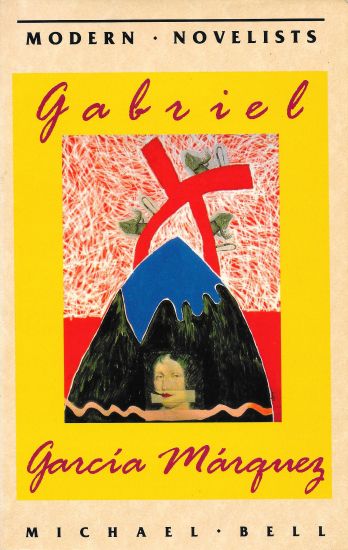
Much good criticism of Mrquez came in the wake of One Hundred Years of Solitude and the perception of his fiction has been dominated by that novel. It seemed the implicit goal to which the earlier fiction has been striving. By concentrating on the later novels, including The General in his Labyrinth, this study brings out the internal dialogue between the novels so that One Hundred Years of Solitude then stands out, like Don Quixote in Cervantes' oeuvre, as untypical yet more deeply representative. Behind the popular impact of its 'magical realism' lies Mrquez' abiding meditation on the nature of fictional and historical truth.
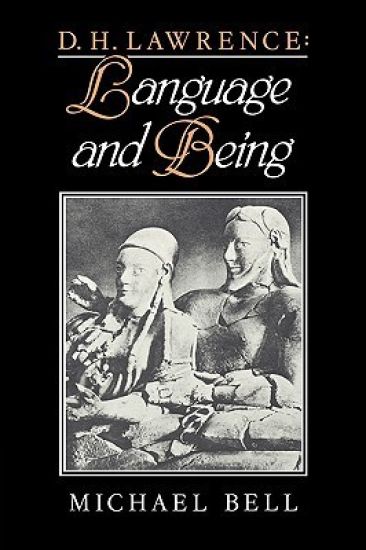
D. H. Lawrence: Language and Being

D. H. Lawrence: Language and Being

Michael Bell

Cambridge University Press
1992
sidottu
D. H. Lawrence once wrote that ‘we have no language for the feelings’. The remark testifies to the struggle in his novels to express his sophisticated understanding of the nature of being through the intransigent medium of language. Michael Bell argues that Lawrence’s currently unfashionable status stems from a failure to perceive within his informal expression the nature and complexity of his ontological vision. He traces the evolution of the struggle for its articulation through the novels, and looks at the way in which Lawrence himself made it a conscious theme in his writing. Embracing in this argument Lawrence’s failures as a writer, his rhetorical stridency and also his primitivist extremism, Michael Bell creates a powerful and fresh sense of his true importance as a novelist.
F.R. Leavis

F.R. Leavis

Michael Bell

Routledge
1988
nidottu
First published in 1988. Leavis's examples and preoccupations still largely underlie the teaching of English literature in the universities and he remains the most substantial embodiment of the liberal humanist conception of criticism with its insistence on a 'canon' of on personal judgement within a literary tradition. Hence while recent theorists have rejected his methods, he remains the most potent single influence on the practical teaching of literature. This book locates Leavis within the critical tradition, suggests whence he derived his characteristic commitments and rhetoric, and assesses his limitations in relation to his continuing value.