Kirjojen hintavertailu. Mukana 12 290 406 kirjaa ja 12 kauppaa.

Kirjailija

Michael Berger

Kirjat ja teokset yhdessä paikassa: 33 kirjaa, julkaisuja vuosilta 1985-2025, suosituimpien joukossa Henry David Thoreau. Vertaile teosten hintoja ja tarkista saatavuus suomalaisista kirjakaupoista.

33 kirjaa

Kirjojen julkaisuhaarukka 1985-2025.

Easy Birdhouses & Feeders

Easy Birdhouses & Feeders

Michael Berger

Cool Springs Press
2014
nidottu
Discover tested, reliable (and easy) plans for building houses and feeders that attract the most popular backyard birds in North America. DIY birdhouses and feeders are inexpensive and relatively easy to make, even if you don't own a shop's worth of tools or you have very limited carpentry experience. With a few materials and some entry-level skills, you can build cozy homes and an inviting backyard snack bar for all of your favorite feathered friends. In "Birdwatcher's Digest Easy Birdhouses & Feeders," 30 original birdhouse and birdfeeder plans are covered by longtime expert Michael Berger, whose trusty mix of birding and handyman knowledge is backed by the reputation of "Birdwatcher's Digest" magazine. The book includes 16 plans for birdhouses and 14 for feeders and birdbaths. All plans feature friendly, complete illustrations and cutting lists, along with assembly instructions and helpful tips and photos. Recommendations for siting and hanging strategies are included, too. Species Covered: American KestrelAmerican RobinBarred OwlBluebirdChickadeeFlickerFlycatcherHouse WrenNuthatchPurple MartinScreech OwlTitmouseWood DuckWoodpecker
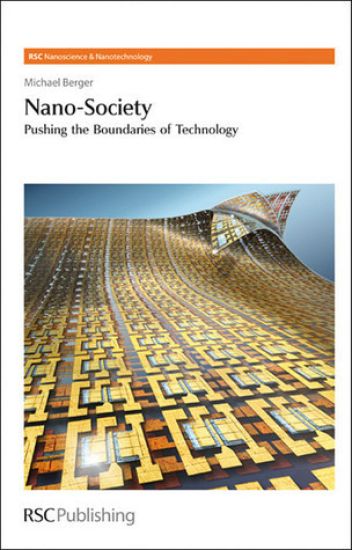
Nano-Society

Nano-Society

Michael Berger

Royal Society of Chemistry
2009
sidottu
Major technology shifts do not happen overnight and rarely are they the result of a single breakthrough discovery. Nowhere is this more true than for the broad set of enabling technologies that we have come to simply call "nanotechnology". Rather than standing on the shoulders of a few intellectual giants, nanotechnologies are created by tens of thousands of researchers and scientists working on minute and sometimes arcane aspects of their fields of expertise in areas as diverse as medicine, telecommunications, solar cells, filtration, coatings, or ever smaller transistors for electronic devices. They come from different sciences, live in different parts of the world and work for different organizations (government laboratories, industry laboratories, universities, private research facilities) and follow their own set of rules - get papers reviewed and published; achieve scientific recognition from their peers; struggle to get funding for new ideas; look to make that breakthrough discovery that leads to the ultimate resumÚ item - a nobel prize; get pushed by their funders to secure patent rights and commercialize new discoveries. This book puts a spotlight on some of the scientists who are pushing the boundaries of technology and it gives examples of their work and how they are advancing knowledge one little step at a time. The book shatters the monolithic term "nanotechnology" into the myriad of facets that it really is. It is a journey through the world of nanotechnology research and development, taking a personal look at how nanotechnologies get created today and by whom. The book covers 122 specific research projects that are happening in laboratories around the world and provides commentaries from the scientists in their own words. However, the collection of stories in this book barely scratches the surface of the vast and growing body of research that leads us into the nanotechnology age. The selection presented in the book is not meant to rank some laboratories and scientists higher than others, nor to imply that the work introduced in the book is more important or valuable than all the work that is not covered. The intention is to give the interested reader an idea of the incredibly diverse aspects that make up nanotechnology research and development - the results of which will bring about a new era of industrial and medical technologies. Nanoscience and nanotechnology research is a truly multidisciplinary and international effort. Each of the chapters is based on a particular scientific paper that has been published in a peer-reviewed journal and, while each story revolves around one or two scientists who were interviewed for this book, many, if not most, of the scientific accomplishments covered in the book are the result of collaborative efforts by several scientists and research groups, often from different organizations and from different countries. The book is different to other books in this field because it provides a novel human touch to nanotechnology research by not only covering a wide range of research topics but also the (often nameless) scientists behind this research. The book is a collection of Spotlight articles from the popular Nanowerk website and each article has been crafted with the author(s) of a scientific paper and signed off by them prior to being posted on Nanowerk. The book is intended for two broad groups of audiences - scientists and nanoscience students who want a bite-size, quick read to get a good first impression of what nanotechnologies are about and how they affect not only their own field but also neighbouring fields and other scientific disciplines further away. And a non-scientific readership that needs to (because it affects their organization and they have to acquaint themselves with nanotechnology) or wants to get a 'non-threatening' (i.e. no formulas, complex diagrams, or unexplained scientific terms) introduction, written by a non-scientist for non-scientists.
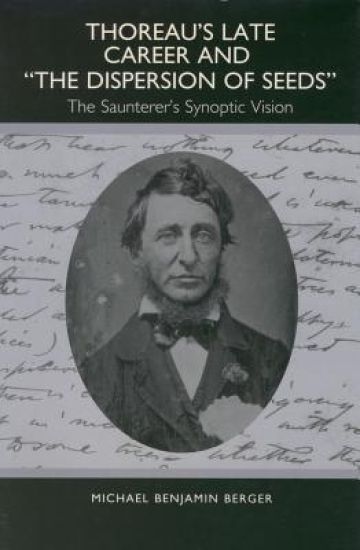
Thoreau's Late Career and The Dispersion of Seeds
The first detailed study of a major but neglected work by Thoreau. Until very recently, only a handful of Thoreau specialists knew of the existence of 'The Dispersion of Seeds', an ecological treatise written during the last years of Thoreau's life, which has been reconstructed and edited, and was published for the first time in 1993. Thoreau's Late Career and the Dispersion of Seeds, the first full-length study of this important late work by Thoreau, analyzes literary features of 'The Dispersion of Seeds' that make it an accomplished work of the imagination, and applies interdisciplinary scholarship in order to relate Thoreau's prescient ecology to scientific issues of his day and ours. Thus it demonstrates that in his late career Thoreauwas working as scientist and poet simultaneously. Berger further explores how Thoreau managed the philosophical and rhetorical tensions involved in bridging the supposed gap between science and poetry, and how, in his later career, he embraced the empirical method of scientific discovery while challenging the reductive assumptions of scientific materialism. In these specific ways Berger's study advances new understandings of Thoreau's purposes and accomplishments during his post-Walden career. Michael Berger, Ph.D., is Associate Professor of English and Communications at The Christ College of Nursing and Health Sciences in Cincinnati. He is on the Board of Directors ofThe Thoreau Society.
Praxis der Insulintherapie

Praxis der Insulintherapie

Michael Berger; Viktor Jörgens

Springer-Verlag Berlin and Heidelberg GmbH Co. K
1990
nidottu
Ubersichtlich und aktuell fasst dieses Taschenbuch die praktischen Aspekte der Insulinbehandlung zusammen: Fur viele Arzte ist dieses Buch zum wichtigsten Leitfaden der Insulintherapie geworden. Die 4. Auflage wurde vollstandig uberarbeitet. Der Leser kann sicher sein, alle neueren fur die praktischen Belange notwendigen Fakten in diesem Buch zu finden. Bald wird es in der Bundesrepublik ca. eine halbe Million Menschen geben, die Insulin spritzen - von Arzten aller Fachgebiete erwartet der Patient, dass sie mit dieser Therapie vertraut sind. Auch fur Medizinstudenten ist dieses Buch sehr gut geeignet.
Zur Geschichte der Diabetesdiät

Zur Geschichte der Diabetesdiät

Detlef Oyen; Ernst A. Chantelau; Michael Berger

Springer-Verlag Berlin and Heidelberg GmbH Co. K
1985
nidottu
Die Medizingeschichte dürfte wohl wenige Beispiele für eine derart wechselvolle und kontroverse Einschätzung einer grundlegenden therapeutischen Maßnahme bie­ ten, wie dasjenige der Diätbehandlung des Diabetes Mellitus. In den letzten zwei­ hundert Jahren sind auf diesem Bereich wohl alle theoretisch überhaupt nur denk­ baren Empfehlungen und Therapiekonzepte entwickelt und jeweils mit Nachdruck und Verve vertreten worden. In der Zeit vor dem Ersten Weltkrieg wurden diese Auseinandersetzungen zwischen einzelnen Arbeitsgruppen und Wissenschaftlern sehr häufig außerordentlich persönlich und verletzend ausgetragen und man kann über die Jahrzehnte mit Genugtuung verfolgen, wie viel zivilisierter die Diskussio­ nen um den Stellenwert und die Zusammensetzung der geeigneten Diätformen für den Diabetes Mellitus doch geworden sind. Möglicherweise sind die Diskussionen um die Diabetes Diät auch deswegen über lange Zeit so kontrovers geführt worden, weil insbesondere vor der Einführung der Insulintherapie kaum eine Möglichkeit bestand, die Effektivität der unterschiedlichen Diäten miteinander zu vergleichen. In späteren Jahren sind derartige Möglichkeiten zur naturwissenschaftlichen Nach­ prüfung der Wirkung von diätetischen Behandlungskonzepten nur recht selten ge­ sucht und genutzt worden. Die Gründe dafür dürften vielfältig sein. Sicher ist, daß die Durchführung von aussagekräftigen, kontrollierten Studien zum Nachweis des Langzeiteffektes einer definierten Diät außerordentlich aufwendig und schwierig ist. Vielleicht liegt es insbesondere an diesem Umstand, daß es in dem gesamten Bereich der Ernährungswissenschaften so viele Thesen mit so wenig gesicherten Fakten gibt.